≡ Menu

Judge Rules EA has “1st Amendment Right” to Depict College Football Players: “U.S. District Court dismisses former NCAA athlete’s suit, declares that EA’s right to free speech outweighs player’s right to control the use of his name and likeness.”  (H/t Skip Oliva)

 A minor victory. Very minor. Thin gruel. This is just the First Amendment versus Copyright. We cannot realistically count on the FedGov, which creates Copyright, to use its “free speech” principles to counter copyright. (See my post Copyright Censorship versus Free Speech and Human Rights; Excessive Fines and the Eighth Amendment.)

Share
{ 0 comments }

Leonard Read on Copyright and the Role of Ideas

See


[Mises]

One of the most influential figures behind the modern libertarian movement was Leonard Read, founder of the Foundation for Economic Education. (I discuss Read’s role in the origin of modern libertarianism (and in adoption of the term “libertarian”) in my post The Origin of “Libertarianism”.) I read a great deal of his books 20-30 years ago, as well a The Freeman. By the time I read Read I was already libertarian, so can’t myself claim him as a big influence, though many others have come into libertarianism via Read (others via Friedman, Rothbard, Rand, Mises). But I read several of his books and profited from it.

Recently I was reading through some of the Read books I hadn’t read for over 20 years, and noticed some perspicacious comments on the topics of copyright and intellectual property, in his 1972 book To Free or Freeze, in the short chapter 18, “On Plagiarism,” which I reprint in full below. I bolded a few choice comments, but notice his early recognition of why IP is not natural and property rights are not applicable to information and ideas:

18: On Plagiarism

There is a difference between imitating a good man and counterfeiting him.
—Franklin

THE DICTIONARY defines plagiarism: “to take and pass off as one’s own (the ideas, writings, etc. of another).” At first blush, the plagiarist appears to be a despicable cad-nothing less than a thief. But perhaps this is too hasty a judgment.

What makes plagiarism a vice is knowingly to pass off as one’s own the ideas and writings of another, that is, to make a liar of self. For it is easily demonstrable that practically every idea we espouse and pass off as our own is unknowingly taken from others. Indeed, were this not the case, that is, were we to traffic exclusively in our own original ideas and writings—ideas never thought of by anyone else before—communication would come to a near halt. A few observations on this point:

  • Originality is nothing but judicious imitation. The most original writers borrowed one from another. The instruction we find in books is like fire. We fetch it from our neighbors, kindle it at home, communicate it to others, and it becomes the property of all.
  • One couldn’t carry on life comfortably without a little blindness to the fact that everything has been said better than we can put it ourselves.
  • People are always talking about originality; but what do they mean? As soon as we are born the world begins to work upon us; and this goes on to the end. And, after all, what can we call our own except energy, strength, and will? If I could give an account of all that l owe to great predecessors and contemporaries, there would be but a small balance in my favor.
  • Originality is simply a pair of fresh eyes.
  • If we can advance propositions both true and new, these are our own by right of discovery; and if we can repeat what is old, more briefly and brightly than others, this also becomes our own, by right of conquest.
  • It is almost impossible for anyone who reads much, and reflects a good deal, to be able, on every occasion, to determine whether a thought was another’s or his own. I have several times quoted sentences out of my own writings, in aid of my own arguments, in conversation, thinking that I was supporting them by some better authority!
  • Those writers who lie on the watch for novelty can have little hope of greatness; for great things cannot have escaped former observation.
  • It is not strange that remembered ideas should often take advantage of the crowd of thoughts and smuggle themselves in as original. Honest thinkers are always stealing unconsciously from each other. Our minds are full of waifs and estrays which we think our own. Innocent plagiarism turns up everywhere. Literature is full of coincidences. There are thoughts always abroad in the air which it takes more wit to avoid than to hit upon.
  • Plagiarists have, at least, the merit of preservation.

The background of these nine observations has an interesting instruction for us. Upon deciding to explore this topic, I turned to The Dictionary of Thought, selecting the quotations which more or less squared with my own thinking on originality and plagiarism, opinions I believed to have been more or less my own. Not one of these observations am I aware of having read before. Now, had I not discovered what others had written and had I put these same thoughts in my own phrasing, I would have been unknowingly taking from others. Not a thing wrong with that—nothing, whatsoever; it would have had “at least the merit of preservation.” On the other hand, suppose that after discovering these observations I had used the exact phrasing and claimed them as my own! What a liar! Such a tactic would have done no harm to those authors who live only in our memory and no offense to my readers. Just self-injury!

Finding the original of a given idea probably is not possible. For instance, in October 1970 a book of mine was published entitled Talking to Myself. Some months later, the celebrated Pearl Bailey’s Talking to Myself was announced. It is a reasonable certainty that neither of us took the title from the other; it simply occurred to both of us at the same time. Such is the synchronistic nature of ideas occurring to different minds simultaneously. The record is studded with examples. The Swiss psychiatrist, Carl Jung, wrote a book on this phenomenon: Synchronicity.

Equally phenomenal is the way in which ideas develop. We hear or read an idea new to us. It insinuates itself into the subconscious or some womb of the mind, goes through a period of gestation for days, weeks, or years and, if it does not die in embryo, emerges as one’s very own—an “original.” I have been able to identify such “originals” in my own experience, the gestation periods ranging from six months to thirty years.

There is, in fact, no way to fasten ownership claims to an idea, which is spiritual, as we do with material things—copyright laws and legal jargon to the contrary notwithstanding. Might as well try to draw property lines around a cloud or a wish or a dream or Creation. Ideas are forever in a state of fusion and/or flux and they defy any precise earmarking.

One might conclude that this evaluation is at odds with the free market, private ownership way of life which, of course, lays stress on the profit motive—and, quite properly. This, however, is to gloss over the fact that there are two kinds of profit: psychic and monetary, the former being no less a motivator of creative action than the latter. And no less rewarding!

Robert Louis Stevenson gave us this aphorism: “I take my milk from many cows but I make my own butter.” And I do precisely the same, my “butter” being a nonprescriptive philosophy: no man-concocted restraints against the release of creative energy.

Do I resent the taking and using of my ideas by others? To the contrary, the more others adopt them the greater is my satisfaction: psychic profit. Suppose my ideas on liberty were so widely accepted by others that freedom might prevail as our way of life. I would prefer this above all the dollars in Christendom. And as for credit, I couldn’t care less. Personal fame is of small consequence in contrast with individual liberty and equal opportunity for all, even from the standpoint of pure self-interest. I fare well precisely because others do.

And speaking of fare, one of my hobbies is cooking. I have taken my milk from many cows—culinary artists—but now and then “ad lib,” adding a spice or herb or a touch of this and that which imparts gastronomic novelty. When an appreciative guest expresses a desire for the recipe, it is given with the greatest of pleasure; never withheld as my monopoly. First, there is a psychic profit in this giving, sufficient unto itself. And, second, should I dine at that other person’s table, his or her best fare will be served to me.

The same principle of exchange and sharing elevates ideas just as it improves the quality of food. The more I share ideas with others, the more and better are my own, and the better are the ones offered to me. This is the process of putting the best foot forward.

Ideas come from we know not where; they are of a spiritual nature. When we receive and understand them they are ours or, perhaps, it would be more accurate to say we are theirs. In any event, good ideas are not to be put in storage but are to be shared—as freely given as received.

Unsurprisingly, Read was also an early pioneer of the open, copyright-free sharing of ideas. As Jeff Tucker, in The Works of Leonard E. Read, noted Leonard Read’s pioneering open-source vision:

The works of Leonard E. Read, who founded the Foundation for Economic Education (FEE) in 1946, are now online at the Mises Institute. It is probably not the complete collected works, but it is all that he collected in book form. These are books that shaped several generations of activists, donors, writers, and intellectuals. They are the books that kick-started the libertarian movement after World War II. The sons of FEE went on to do great good for the world, and FEE is often called the father of all libertarian think tanks — institutions that work outside official academia to advance radical ideas.

Read did more than merely sponsor lectures and publish. As a matter of fact, others were doing the same. So far as I know, no one has yet noticed that he used a secret weapon in his struggle, something that made him truly different and unusually effective. He eschewed the use of exclusive copyright. That is to say, he encouraged the widest possible distribution of his work and did not forbid others from copying his infinitely reproducible ideas.

Pick up any book or publication from FEE before the 1990s. You will see a remarkable and visionary sentence on the copyright page:

Permission to reprint granted without special request.

This one sentence is what made it happen. Any newspaper could print a column. Any publisher could include an essay. Indeed, he invited any publisher to take any FEE book and publish it and sell it, owing no royalties and asking no permissions.

“He was an evangelist spreading the news. He wanted to be pirated so that he could see that he was making a difference.”

The publisher was not even asked to acknowledge its source! So, in this sense, he was even more radical than the Creative Commons attribution license.

(See also Tucker’s Leonard Read’s Open-Source Vision and also his Editorial Preface to Gary Galles’s book Apostle of Peace The Radical Mind of Leonard Read.)1

[Mises]

FEE CC-BY I'd Push the ButtonUpdate: It appears FEE now (sometimes) uses a CC-BY license; see the epub download of I’d Push the Button (1946). The use of CC-BY is not terrible but not as open as the previous policy: “Permission to reprint granted without special request,” since that does not require even attribution and thus is closer to creative commons zero (CC0). The CC-BY is more restrictive as it requires attribution. This is arguably legally ineffective insofar as the previous proto-CC0 license was already “granted” by FEE in 1946 and cannot be made more restrictive now.
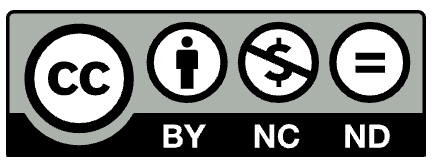
CC-ND at misesThe Mises Institute also used to use CC-BY during Jeff Tucker’s tenure but now apparently uses the totally worthless CC BY-NC-ND 4.0 license (see e.g. this recent article), although some still seem to use CC-BY (e.g. QJAE articles and JLS articles), unless you view them on the main Mises site. So… what is the current policy of the Mises Institute? Not clear. What this means in practice is that any serious publisher wanting to republish this content will take the safe approach and view it as simply subject to copyright and unable to reprinted without permission, just as with any other work.

***

  1. See Jeffrey Tucker, “A Theory of Open“; Doug French, “The Intellectual Revolution Is in Process“; Jeffrey Tucker, and “up with iTunes U“; Kinsella, “Teaching an Online Mises Academy Course”; Kinsella, “Fifteen Minutes that Changed Libertarian Publishing” (2); Gary North, “A Free Week-Long Economics Seminar”. []
Share
{ 8 comments }

RIAA & MPAA: People who copy and learn are CRIMINALS

From Demand Progress:

Urge Congress To Reject The PROTECT IP Act

PLEASE USE THE FORM AT RIGHT TO EMAIL YOUR LAWMAKERS

Disgusting. Check out this ad the Recording Industry Association, the Motion Picture Association, and others just took out as they try to push their Internet censorship legislation: They think their customers should be treated like criminal suspects.

Under the Internet Blacklist Bill — S.968, formally called the PROTECT IP Act — the Department of Justice would force search engines, browsers, and service providers to block users’ access to websites that have been accused of copyright infringement — without even giving them a day in court.

We need to rally more opposition to this bill — please use the form at right to email your lawmakers, and use these links to share the video and petition with your friends …

Share
{ 0 comments }

Christianity and IP

Interesting article by Paul Green, “Christianity and IP,” from LewRockwell.com, in 2009.

Share
{ 2 comments }

Don’t Invest in Copyright-Protected Companies, by Gary North

From LewRockwell.com, Nov. 5, 2003, a good article by Gary North, “Don’t Invest in Copyright-Protected Companies,” which also contains a fascinating history of the origin of copyright censorship. An excerpt is below:

THE END IS IN SITE

New technologies are now making it very expensive for monopolists who possess the legal right to distribute copyrighted ideas and images to retain rents created by this monopoly grant of privilege. This development is seen by some people — perhaps even tens of millions — as an assault on private property. At the same time, most of these millions shrug their shoulders and conclude, “So what?” They don’t care. They want digital copies of movies and music. Soon, they will be able to download best-selling books from servers located in copyright-ignoring nations.

Self-regulation is not working. The cost of suing 60 million Americans, one by one, is too high. All such talk is nothing but public relations fantasy. Similarly, the cost of suing companies that are incorporated in island tax havens, with site-servers set up in copyright-ignoring countries, is astronomical. Lawyers hired by American companies — not exactly beloved in foreign nations — will have to seek convictions in two or more jurisdictions for each violation. This will take many years for each case. If successful, which is unlikely, the convicted company will be found to have no assets. A mirror image of its site will then appear, overnight, in some other nation. The legal process will have to start over.

Copyright is just about over, short of a one-world state.

The defenders of copyright privilege present their moral case as defenders of private property. Most people who pay any attention to copyright laws — a small group — think of copyright as originally designed to protect authors. This legal protection, we are assured by many economists and all publishers, promotes the free flow of ideas to the public. We are assured that if writers were not able to establish property rights over their words, most of them would cease writing.

This moral defense of copyright was not always popular. In fact, the opposite was true. Copyright was an unpredicted outcome of government policies to restrict the free flow of ideas.

COPYRIGHT AND POLITICALLY CORRECT IDEAS

Prior to about 1700, there was no copyright protection for authors in the English-speaking world. An author could not keep his books from being reprinted. He saw his ideas spread if he was successful, but he collected no income as a result.

Beginning on Oct. 31, 1517, Martin Luther transformed northern Europe by means of his uncopyrighted pamphlets. He launched what soon became the Protestant Reformation by means of a list of 95 questions for formal academic debate, written in Latin, which he posted on the door of the Wittenberg church on Oct. 31. The questions dealt with papal indulgences — a means of purchasing immunity from posthumous punishment for certain past sins. He did not predict or plan what happened next. No one could have. Without Luther’s permission, a printer translated these 95 questions into German and published them. They sold well. Other printers stole the book. [continue reading…]

Share
{ 1 comment }

Ayn Rand Finally Right about the First-to-File US Patent System

From Mises blog; archived comments below.

As I noted in Against Intellectual Property, in her confused and flawed attempt to justify patent and copyright monopolies, Ayn Rand mistakenly assumed that under US patent law, the first inventor to file has priority over later filers, in the case of multiple independent inventors of the same idea. Then she bent into contortions trying to defend such an obviously unfair, and artificial and arbitrary, rule. As she wrote:

As an objection to the patent laws, some people cite the fact that two inventors may work independently for years on the same invention, but one will beat the other to the patent office by an hour or a day and will acquire an exclusive monopoly, while the loser’s work will then be totally wasted. This type of objection is based on the error of equating the potential with the actual. The fact that a man might have been first, does not alter the fact that he wasn’t. Since the issue is one of commercial rights, the loser in a case of that kind has to accept the fact that in seeking to trade with others he must face the possibility of a competitor winning the race, which is true of all types of competition.

(Rand was also wrong when she wrote: “An idea as such cannot be protected until it has been given a material form. An invention has to be embodied in a physical model before it can be patented ….” Actually, the inventor does not need to ever make a working embodiment of an invention to get a patent on it; if he never makes a working model, then the filing of the patent application, containing a written description of the invention, is considered a “constructive reduction to practice.” See Reduction to Practice (Wikipedia); Brunswick Corp. v. U.S., 34 Fed. Cl. 532, 584 (1995); Hybritech Inc. v. Monoclonal Antibodies, Inc., 802 F.2d 1367, 1376 (Fed.Cir.1 986). For other mistakes she made about how the actual IP system works, see Ayn Rand and Atlas Shrugged, Part II: Confused on Copyright and Patent.)

It’s interesting that she recognizes the patent is a monopoly (see my post Are Patents “Monopolies”?), but her defense of the first to file rule makes no sense whatsoever, and she even has the chutzpah to classify as competition the race to be awarded by the state an anti-competitive patent monopoly privilege. If anything, she should have argued that where there are multiple independent inventors, this shows the invention was inevitable, that its time had come, that it is too obvious for anyone to deserve a patent in the first place.

Libertarian Controversies: A Mises Academy Course by Stephan Kinsella, Sep. 19-Oct. 23, 2011 In any case, her assumption was wrong: the US system at the time was a first to invent, not a first to file, system–unlike patent systems around the world, which she may have been thinking of. That is, if A invents X first, then B independently invents X later, and they both file patent applications for X, then in a so-called “interference proceeding,” A would get the patent, not B, even if B filed first.1 But she thought it was first to file, so found a way to justify what she thought was the current statutory implementation of the Constitution’s patent clause. After all, the US Constitution and legal system were in her eyes almost perfect, almost Objectivist (to be fair, it’s not hard to see why she could make this naive mistake, coming from Soviet Russia, compared to which the much freer US system must have seemed like paradise)–which is why Judge Narragansett at the end of Atlas Shrugged only has to make a few tweaks to the US Constitution to make it Perfectly Rational:

The rectangle of light in the acres of a farm was the window of the library of Judge Narragansett. He sat at a table, and the light of his lamp fell on the copy of an ancient document. He had marked and crossed out the contradictions in its statements that had once been the cause of its destruction. He was now adding a new clause to its pages: “Congress shall make no law abridging the freedom of production and trade …”

It also explains why Rand initially favored eminent domain–because the Constitution implicitly authorized it (until around 1954, when Herb Cornuelle convinced her to oppose eminent domain). (I’ve been told this is indicated in Murray Rothbard’s correspondence, as I also noted in my Ideas Are Free: The Case Against Intellectual Property.)

Doubtlessly, if Rand had realized the US had a first to invent patent system, she would have found a way to justify that, and that her modern followers, realizing her mistaken assumption, are laboring to find a way to justify the first to invent system without criticizing Rand.

Well, no need to worry, modern Randian defenders of state monopoly privilege grants! For our Great Leader Obama will soon sign into law the America Invents Act, which was passed today by the Senate in an 89 to 9 vote. This patent “reform” legislation will institute a first to file system. (See the Apple Insider post US government approves patent bill in effort to reform system for the usual propaganda about how this patent reform will be good for innovation and business yada yada.) As noted in an email newsletter from the Oppedahl Patent Law Firm:

US Congress passes patent reform bill

 The US Senate today passed a version of the patent reform bill that had been previously passed by the US House of Representatives.  The bill now goes to the White House where President Obama is expected to sign the bill, thereby enacting it into law.

The bill, when enacted, will bring US patent law more nearly into harmony with the many countries around the world in which patents are awarded to the first inventor to file. (Heretofore US patent law contained provisions according to which someone who was second to file might sometimes prevail over the first filer, by showing an earlier date of invention.)

The bill makes dozens of other changes to US patent law, a few of which are tied to very narrow special interests but most of which will indeed promote the progress of science and useful arts. …

Of course, this “reform” bill does not improve the patent system, nor does it make any significant changes–even the change from first to invent to first to file will make virtually no difference to inventors, and no difference to victims of patent aggression–it doesn’t matter to them whether they are sued by patentee A or patentee B for “infringing” patented invention X.

Of course the best reform would be outright and immediate abolition of both patent and copyright. But other reforms, short of abolition, could also improve matters by significantly reducing the cost of patent and copyright. Of course no such real reform is being considered, nor will the vested interests in Hollywood and Big Tech and Big Pharma allow it. On a Mises blog post last year I outlined some real reform that would actually improve matters, which I reproduce below:

How to Improve Patent, Copyright, and Trademark Law [continue reading…]

  1. Some have argued that the US patent system briefly first to file, for a few years in its inception right after the Constitution’s ratification, until changed to the first to invent system. But it was definitely first to invent in Rand’s lifetime. []
Share
{ 2 comments }

NFL GPS IP Blackouts

Skip Oliva relayed this interesting tidbit to me:

A colleague explained to me earlier that the NFL has a new mobile app that allows you to watch live streaming video from games. Unless your game is “blacked out” — the NFL deprives fans of their own team’s footage if the stadium doesn’t sell out — or you’re actually near the stadium itself. Then the app uses GPS to determine your location and deprive you of the relevant video.

Share
{ 0 comments }

Patenting Body Parts

Latest news: Spare body parts could be grown in factories in years after scientists implant lab-produced organs in humans: great news, scientifically; but we can imagine IP law descending to ruin it. Imagine patents on body parts. “Sir, Sir! Your kidney is not authorized! We are here to retrieve it and steamroll it!” Farfetched? Not at all. The IP overlords are already after our skin markings (tattoos) (see Maori Angry About Mike Tyson’s Tattoo Artist Claiming To Own Maori-Inspired Design; ;Guy Who Did Mike Tyson’s Tattoo Sues Warner Bros. For Copyright Infringement).

Share
{ 0 comments }

Denver Post to cut ties with Righthaven as momentum turns against copyright troll

Good, but thin gruel.

(h/t Brian Martinez)

Share
{ 0 comments }

Anti-Copyright Flyer for Universities

H/t Jeff Tucker


Share
{ 0 comments }

Great post by Mike Masnick on Techdirt. Send this to CEOs of startups to urge them to sign the letter

Top Entrepreneurs Warn Congress: PROTECT IP Will Stifle Innovation & Hurt Job Growth

from the speak-up dept

Lots of people have been speaking up about why PROTECT IP is a terrible, terrible idea that will have massive unintended consequences for innovation online. We’ve seen the biggest names in venture capital tell Congress that PROTECT IP would chill investment in new innovations. We’ve seen top technologists explain how PROTECT IP messes with fundamental infrastructure and security elements of the internet. And we’ve had a bunch of well respected law professors explain to Congress that the bill is almost certainly unconstitutional.

One voice has been missing, however: the actual tech entrepreneurs and startup execs who will be impacted most directly, because PROTECT IP will put both the costs of compliance and the burdens of liability directly on their shoulders. Entrepreneurs are famous for staying out of policy debates like this. This isn’t a surprise. Entrepreneurs are focused on building the next great innovation and the next great company — creating lots of new jobs both directly in their companies and via the new innovations and platforms they create.

PROTECT IP is such a dreadful, job killing bill that it’s finally sparked entrepreneurs to speak out. A large group of entrepreneurs, both well known and less well known, have teamed up to send a letter to Congress warning about the impact of PROTECT IP, and asking them to reject this bill which is nothing more than an attempt to give a handout to the entertainment industry. Over 135 entrepreneurs have already signed on (yes, including me). Collectively, these entrepreneurs have directly created over 50,000 new jobs in their companies, but more importantly have created hundreds of thousands, if not millions, of jobs via their innovations, platforms and services.

It’s great to see such a diverse group of startup entrepreneurs — many of them serial entrepreneurs — team up on such an issue. The list of participants includes folks like Evan Williams, the founder of Twitter and Blogger, Ian Rogers, the CEO of TopSpin, Mark Pincus, founder and CEO of Zynga, Dennis Crowley, founder & CEO of FourSquare, Joel Spolsky from StackExchange & Fog Creek Software and Reid Hoffman of LinkedIn. It includes people like Chris Shipley of Guidewire Group, who for years ran the DEMO conferences and Tim O’Reilly (who I’ll just assume you know because you’ve read the books he’s published). It includes entrepreneurs from great platforms like Kickstarter, IndieGoGo and GiltGroupe. And there may be some names on the list that you might not recognize today, but who are building the next generation of great startups to produce services that you will use in the future. It’s really a who’s who of entrepreneurs who helped build the key internet services you use today and will use in the future — and they’re all quite reasonably scared of what PROTECT IP means and how it will chill innovation in the startup community.

All of us who put together this letter want to make sure that the voice of entrepreneurs is heard loud and clear — and as such, we’re still accepting additional signatures from entrepreneurs. If you’ve been a founder or held a job-creating role at a startup, please sign the letter as well, following the instructions at the top of the document, and we can continue to make sure that the voice of the folks who really create new jobs and support the economy are actually heard from in DC.

Members of Congress and the President claim that they’re focused on passing legislation that creates jobs. So why are so many pushing for PROTECT IP, when the companies who actually innovate and create the new jobs for the future are so against it?

Share
{ 1 comment }

Patent Fee Diversion and Patent Reform Whining

As a practicing patent lawyer, I am on lots of patent lists and the like, and get regularly inundated with pro-patent propaganda. Case in point: a day or two ago I received an email blast from patent shill “Dr. Jose Melendez,” “the founder and CEO of Patent Calls, Inc., a company focused on providing technology based patent understandings that can be trusted”. The email is reproduced in his blog post, The $600M Innovation Tax, which whines that upcoming patent reform legislation1 will “divert” Patent and Trademark Office (PTO) fees to the fedgov, instead of letting the PTO “keep” the fees to “improve” patent “quality” (double-sic). Congress-critter Tom Coburn makes similar whines on NRO, calling the patent fee “diversion” a “tax on innovation.”

I then received an email sent by a fellow member of one of the patent lawyer email lists I’m on, urging all of us patent practitioners to fight the patent fee diversion. The email commended and quoted Patent Fee Diversion Is a Tax on Innovation by Senator Tom Coburn, and approvingly included the following excerpts from Coburn’s propaganda:

“Fee diversion is the practice of congressional appropriators’ diverting fees that innovators and entrepreneurs pay when applying for patents and trademarks to other government programs. Fee diversion saps the lifeblood of the American economy — innovation and invention — in order to subsidize the desire of career politicians and appropriators in Congress to avoid hard choices. Fee diversion operates like a tax on innovation, because it requires entrepreneurs to spend more money.
The Senate has already voted to end fee diversion, by a margin of 95 to 5. …………I intend to give Senate appropriators the chance to back up that claim by voting on my amendment to end fee diversion. If my amendment fails, I will do everything in my power to slow the bill and highlight this egregious tax on innovation.
If politicians in Washington want to be taken seriously in the jobs debate, ending a practice that steals from job creators would be a good first step. ……. Congress should fix the patent bill immediately and restore my language ending fee diversion. If Congress does not make this fix, President Obama should veto it. Otherwise, he will be complicit in a scheme that is rigged to rob the very people we say we want to help — America’s job creators.”

The email said in part that “Essentially everybody agrees that fee diversion, the raiding of fees paid into the patent office is a bad thing and should be ended. The Senate voted 95-5 in March to end fee diversion. But the bill that eventually passed the House ( H.R. 1249) continues to allow fee diversion. The Senate should continue to stand by its original vote to end fee diversion by supporting the Coburn amendment.”

I replied to all the lawyers on the list as follows:

It is not true that everybody agrees fee diversion is a bad thing. The money collected by the PTO is somewhat arbitrary given the monopoly power (to grant monopoly patent grants) given to it by the state, and given that the PTO is basically “owned” by fedgov. Just as a parent company may do what it likes with a subsidiary, so here. It is not clear at all that all of the “profits” of the subsidiary-PTO are necessary to fund its operations. Suppose Congress ordered it to quadruple patent filing fees tomorrow. This may well result in a huge windfall. It is not immediately obvious that all the surplus profit would need to be diverted to the PTO for spending on operations. The idea that all of the fees the PTO generates (using the state monopoly granted to it) need to be kept by it to fund operations presupposes that it will never make a profit.

The opposition to fee diversion also rests on other controversial assumptions–namely, that it is good that the PTO be well-staffed and funded; and that the PTO itself is a good thing. For someone who believes patents are harmful and a plague that should be ended (and believe me there are many companies besieged by patent assaults who think this), they might prefer the PTO to be starved of funds to hasten its demise and/or the reduction in the perception of patent quality/legitimacy.

In short I think it is inappropriate for patent attorneys to automatically urge a political stance to their fellows based solely on their status as recipients of the patent system. It is an outright political stance and ought not to be characterized as anything else; the “should” in the comments below belies this. It is not something “everyone agrees to”; and I fail to see why a list of patent practitioners is to be used to push any political stance here any more than it ought be used to favor Republicans over Democrats or vice-versa. Or, if the list is to be used for political views, I’d like to urge everyone here to consider urging their lawmakers to severely curtail the anti-property, anti-market, anti-competition patent monopoly privileges that the unjust patent system generates.

Yes, my fellow patent parasites probably hate me. I am a bit curious what it takes to be kicked off one of these lists.

  1. See Senate moves forward with patent-reform bill; I critique this patent “reform” in Patent Reform is Here! O Joy! and variously here. []
Share
{ 6 comments }

Insanity(TM): Apple Claims Ownership of Leaf Shape

From TUAW:

Apple not happy with food company’s logo

Apple is accusing a Chinese food company of trademark infringement over its fruit-themed logo. The Sichuan Fangguo Food Co., Ltd. uses a round red logo with a stem and leaf. Apple claims this logo borrows conceptual elements, specifically the leaf, from its logo.

Apple wants Fanggou to remove the leaf from its logo, also a representation of a type of apple, but it has refused, noting that “it’s a fruit, if the leaf is removed, it’ll just look like a bomb.”

Update: Kellogg’s Stakes Claim To Toucans, Mayan Imagery; Issues Cease-and-Desist To Guatemalan Non-Profit

Share
{ 0 comments }

In a recent Techdirt post, France: Copyright Is More Important Than Human Rights, Mike Masnick points out that France’s Nicolas Sarkozy, “a strong supporter of more draconian copyright laws, … has also been talking about the need to clamp down on free expression online.” And that he even declared

that copyright is more important than human rights online:

The Foreign Ministry said that France does not wish to sign a UN declaration favorable to the defense of human rights on the Internet until there is no consensus on the fact that freedom expression and communication does not take precedence over other rights, including intellectual property.

That’s from a Google translation of the French which is a little awkward. Using a different translator, it translates the “until there is no consensus” to be “as long as there will be no consensus.” French speakers, feel free to confirm. But it appears the French government is saying that it refuses to sign a declaration concerning human rights online unless those who sign on agree to admit that freedom of expression and communication is less important than copyright. That’s insane.

Of course this should not be a surprise, since copyright originated in censorship and still results in censorship (see examples here, here, and here).

A recent example of copyright censorship was discussed on a This Week in Law #127: Smells Like Albert Einstein: the DMCA takedown of iJustine’s YouTube video tribute to Steve Jobs, sung to the tune of a Lada Gaga song. (Here’s one of the videos pulled from YouTube; one is still up, for now, and embedded below.)

As the TWiL hosts note, this kind of use of a copyrighted work may not be covered by the “parody” fair use exception, since it’s not a parody of the Lady Gaga song; it’s using a version of the song for another purpose–even if it was to parody Steve Jobs, it’s not a parody of the work itself.

One of the hosts, Evan Brown, opined that though such a takedown might seem like an infringement of free speech, a violation of the First Amendment, it’s not, because it’s private action not state action (I’m paraphrasing Brown). I’m not sure if this analysis is right, since copyright is a private right granted by the state and enforced in state courts. Imagine if the central state were to give a right to people to sue people for practicing Mormonism–such a law, such a grant, would surely infringe the freedom of religion in the First Amendment. (Incidentally, when the Supreme Court overturned laws banning flag-burning in 1990, Louisiana purportedly enacted a statute penalizing people engaged in battery of a flag burner with a $25 fine. Not sure if this is apocrypha or not; I haven’t seen found the statute.)

I think the stronger argument that copyright-caused censorship does not violate the First Amendment is that the Constitution itself authorizes copyright law. So copyright and its censorious effects must be compatible with the First Amendment. I suppose someone could argue that the First Amendment came laterthan the copyright clause (1791, two years after the Constitution was ratified), and therefore, to the extent there is incompatiblity between the two–namely, copyright gives rise to censorship that abridges freedom of speech–the later provision prevails, i.e. the (1789) copyright clause would be held to be at least partially unconstitutional as incompabitle with the 1791 First Amendment. In other words, the argument would be that the First Amendment partially repealed the copyright clause, just as the Twenty-first Amendment (1933) repealed the alcohol prohibition of the Eighteenth Amendment (1919). I think such an argument has some merit, even if those who drafted and ratified the Bill of Rights might not have been aware of this conflict. If I were on the Court, I’d side with the First Amendment over the Copyright Clause.

Another point worth considering: in light of extremely excessive penalties and damages awarded for copyright (and patent) infringement (millions of dollars for downloading a few songs, far beyond actual damages, e.g., in the Jammie Thomas case; see the $4.5 billion per year estimate by John Tehranian, in We are all copyright criminals: John Tehranian’s “Infringement Nation”), could it be argued that such penalties are “excessive fines” in violation of the Eighth Amendment? As far as I know this has not been argued against, but I see no immediately obvious reason why such argument might not work (especially given that the Eighth Amendment was ratified in 1791, two years after the Copyright and Patent Clause).


Update: See also Eighth Amendment and copyright trolls; Tom W. Bell, “Copyright Porn Trolls, Wasting Taxi Medallions, and the Propriety of “Property,” Chapman L. Rev. 18, no 3, Art. 8 (2015); Mike Masnick’s Techdirt post Do The Statutory Damages Rates For Copyright Infringement Violate The Eighth Amendment?.

Share
{ 14 comments }