Ross Emmett is preparing a book on “Innovation As an Act of Love: and why it matters for fostering an innovative society.” You can find a quick overview of his argument in his TEDx Lansing talk and some of the pieces of the argument on his website. Ross is a professor at James Madison College @ MSU and tells me he would love to converse with C4SIF readers about what he should say regarding IP and innovative freedom. Feel free to comment below.
It’s bad enough that IP advocates dishonestly use the word “theft” to describe use of your own property in contravention of a monopoly issued by the state. (After all, as Nina Paley reminds us, copying is not theft; when you use information to guide your action or configure your own property, the originator of the idea still has it.) But use of the word “piracy” to describe pattern-copying is going too far. Real pirates storm boats, rape, loot, murder; they break things; they leave the victims dead, injured, enslaved or at the least missing many former possessions. Modern IP “pirates,” of course, do none of these things.
So it is indeed ironic that in there is a connection between IP and real piracy: namely, they go hand in hand.
Patent and copyright originated in the machinations of sovereigns (monarchs, etc.) to win the loyalty and services of entrepreneurs and artists. “Letters Patent” and later copyrights were exclusive monopolies protecting various goods and services and their authors or purveyors for a period of time. As Historian Patricia Seed notes:
The word “patent” comes from the Latin patente, signifying “open.” Letters patent are open letters, as distinguished from letters close, private letters closed up or sealed. Letters patent came from a sovereign … and were used to … confer a right, title, or property, or authorize or command something to be done.
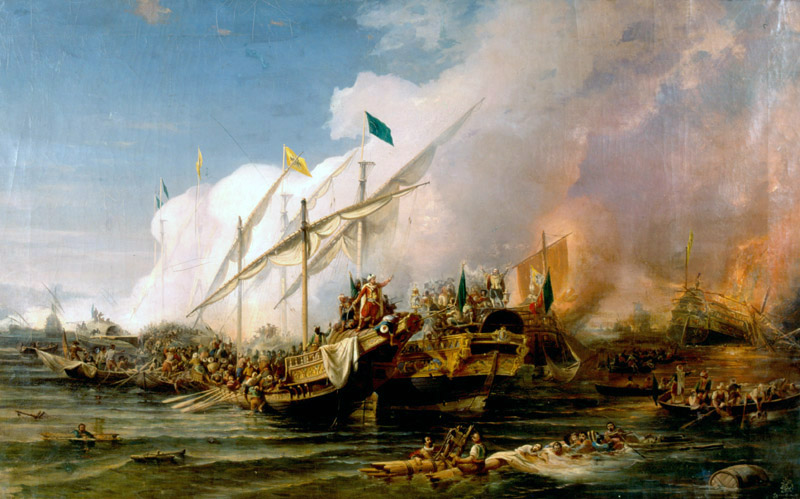
In fact, Letters Patent were used by the British Crown to entice pirates to become “privateers” (a fancy name for legitimized piracy), by giving them a monopoly over some of the spoils of their piracy for a given time. A notorious example is Francis Drake (I won’t call this slaver and pirate “sir”) who was given a Letter Patent March 15, 1587 to authorize his piracy, such as attacking Spanish ships sailing back from South America laden with silver, handing it over to the Queen after taking his share. (See David Koepsell, Let’s Get Small: An Introduction to Transitional Issues in Nanotech and Intellectual Property.) According to Wikipedia, Maritime History of England, Drake
made the first English slaving voyages, taking Africans to the New World. Drake attacked Spanish ships sailing back from South America laden with silver. He took their treasure for himself and his queen. He also raided Spanish and Portuguese ports. He undertook a circumnavigation of the world in 1572 and 1573. He discovered that Tierra del Fuego was not part of the Southern Continent and explored the west coast of South America. He plundered ports in Chile and Peru and captured treasure ships. He sailed up to California and then across the Pacific Ocean to the East Indies. He returned to England with his ship full of spices and treasure, so gaining great acclaim.
In other words, patents were originally used to authorize actual piracy. So it is ironic that modern defenders of IP claim to be opposed to IP “pirates”—even though real pirates (like Francis Drake) kill people, break things, and take things from people (and delivered slaves into bondage), while “information pirates” do none of these things.
Of course, Letters Patent evolved into modern patents. At first employed sporadically by monarchs, later they became “democratized” as part of entrenched and more predictable state institutions. (One of the first patent statutes was England’s Statute of Monopolies of 1624.)
Related: see my post Don’t Call Them “Pirates”; and my article Intellectual Freedom and Learning Versus Patent and Copyright.

I’ve long followed Mike Masnick’s frequent posts–most related to business, technology, innovation and IP–to the Techdirt blog. We are pleased to announce that Mike has joined the Center’s Advisory Board. Mike is the founder and CEO of Floor64, and oversees all editorial aspects of the Floor64’s public and customer sites. Prior to founding Floor64 Inc., he worked in business development and marketing at Release Software, an e-commerce startup, and in marketing at Intel. Mike has a bachelor’s degree in Industrial and Labor Relations and an MBA, both from Cornell University.
See below for a fascinating, insightful talk by Masnick at the 2009 Conversational Marketing Summit, “High Order Bit: From Content to Conversational Marketing,” describing how he took Techdirt from being a content site to a conversational marketing platform.
In The Patent, Copyright, Trademark, and Trade Secret Horror Files, I collected some examples of how copyright and other forms of IP can or do lead to literal censorship or similar infringements on freedom, such as:
- Microsoft antipiracy efforts caught up in Russian political scandal (Russian authorities are using piracy “investigations” as a pretext for seizing computers and other materials from political opponents of the government and news organizations);
- Susan Boyle prevented from singing a Lou Reed song because of copyright;
- Pro wrestler sues rapper over hand gesture: Yet Another Example of how Intellectual Property is Partial Enslavement (trademark)
- German Publishers Want Monopoly On Sentences (in Germany, newspaper publishers are lobbying for ‘a new exclusive right conferring the power to monopolize speech e.g. by assigning a right to re-use a particular wording in the headline of a news article anywhere else without the permission of the rights holder)
- The case where the seminal German silent film “Nosferatu” was deemed a derivative work of “Dracula” and courts ordered all copies destroyed.
- Shortly before his death, author J.D. Salinger, author of Catcher in the Rye, convinced U.S. courts to ban the publication of a novel called 60 Years Later: Coming Through the Rye.” (See also my post Book Banning Courtesy of Copyright Law)
The latest in this parade of horribles is “S. 3804, the Combating Online Infringement and Counterfeits Act (COICA), introduced by Sen. Patrick Leahy (D-VT) and Sen. Orrin Hatch (R-UT). It’s currently being considered by the Senate Judiciary Committee.” Hatch has become the Darth Vader of IP in the Senate. As explained in the EFF post Censorship of the Internet Takes Center Stage in “Online Infringement” Bill:
This flawed bill would allow the Attorney General and the Department of Justice to break the Internet one domain at a time — by requiring domain registrars/registries, ISPs, DNS providers, and others to block Internet users from reaching certain websites. The bill would also create two Internet blacklists. The first is a list of all the websites hit with a censorship court order from the Attorney General. The second, more worrying, blacklist is a list of domain names that the Department of Justice determines — without judicial review — are “dedicated to infringing activities.” The bill only requires blocking for domains in the first list, but strongly suggests that domains on the second list should be blocked as well by providing legal immunity for Internet intermediaries and DNS operators who decide to block domains on the second blacklist as well. (It’s easy to predict that there will be tremendous pressure for Internet intermediaries of all stripes to block these “deemed infringing” sites on the second blacklist.)
COICA is a fairly short bill, but it could have a longstanding and dangerous impact on freedom of speech, current Internet architecture, copyright doctrine, foreign policy, and beyond. In 2010, if there’s anything we’ve learned about efforts to re-write copyright law to target “piracy” online, it’s that they are likely to have unintended consequences.
This is a censorship bill that runs roughshod over freedom of speech on the Internet. …
… this bill allows the government to suppress truthful speech and could block access to a wealth of non-infringing speech, and the end result will do little to protect artists or mollify the industries that profit from them. Stay tuned for more analysis, information, and steps you can take to fight Internet censorship.
From a post by C4SIF Advisory Board Member Karl Fogel on QuestionCopyright. We here at C4SIF echo Karl’s congratulations to Nina!
Nina Paley Wins IP3 Award from Public Knowledge!
Submitted by admin on Tue, 2010-08-03 14:45
Congratulations to our artist-in-residence Nina Paley, whom we just learned has won a 2010 “IP3” award from Public Knowledge! She’s in good company: this year’s other winners are Pamela Samuelson, Susan Crawford, and Michael Geist, all names well known to those who follow copyright and Internet freedom. The IP3 awards are given to
individuals who over the past year (or over the course of their careers) who have advanced the public interest in one of the three areas of ‘IP’ –Intellectual Property, Information Policy and Internet Protocol
and will be presented at a ceremony in Washington, D.C. on October 13th.
Congratulations, Nina — you’ve earned it!
On the comments to a Mises Blog post, one perennial amateur IP shill argues that “IP infringement can indeed take something real and tangible (specifically, usable energy)”. Ah. I see. Calling innocent people “pirates” didn’t work, so I guess now they’ll start calling them “energy vampires” or something.
IP infringement, of course, just means violating an artificial state monopolistic grant of privilege to use a given pattern. Amazing how if the state happens to protect one type of pattern by law, some energy theft occurs when people use that pattern, but this energy drain doesn’t occur when there is no “IP infringement,” that is, when the state has not defined it as such. So the laws of physics bow to the legislative definitions of the state. Just another example of how IP is bound up with legal positivism.
From StephanKinsella.com:
My speech, “How Intellectual Property Hampers Capitalism,” presented last weekend at the Mises Institute Supporters’ Summit 2010 (Oct. 8-9 2010, Auburn Alabama), is online now; here is the Audio file; the video is below. The conference’s theme was “The Economic Recovery: Washington’s Big Lie.”
From StephanKinsella.com:
Rethinking Intellectual Property: History, Theory, and Economics: An Interview with Jeff Tucker, Mises Podcast (Oct. 9, 2010) (discussing the upcoming “Rethinking Intellectual Property: History, Theory, and Economics,” Mises Academy)
rom Jeff Tucker on the Mises Blog:
Information vs. The State
October 14, 2010 by Jeffrey Tucker
Several publishers have told me that there is a massive debate inside their management structures concerning book “piracy” (I hate that term because it means stealing and copying isn’t theft). Some favor Crackdown and will stop at nothing. Others are realizing that it is mistake for a business to regard a peaceful customer as the enemy much less alienate future peaceful customers. In any case, Lew sent me this fascinating article: Your Time is Up, Publishers; Book Piracy is About to Arrive on a Massive Scale. It is all true. What this article does not address is the most ridiculous sector of all: textbooks and academic book publishers. Don’t get me started.
From The Daily Anarchist
Intellectual Property And Libertarianism
September 24th, 2010 Submitted by Seth King

Sadly, there aren’t very many high-quality videos out there that discuss why Intellectual Property is antithetical to the philosophy of liberty. But this one comes close.
The truth is intellectual property hasn’t been a very contentious issue in this country until the last decade or so, when software and file sharing really kicked into high gear and corporations like Monsanto started patenting the very ingredients necessary to life. But now that IP is being debated, it really is past time the libertarians re-examine their position in the matter.
Libertarianism and Constitutionalism have so often gone hand-in-hand together and governments have been so egregious in their myriad other offenses that intellectual property got a pass by default, merely because it was, after all, Constitutional.
To be honest, I was quite a bit skeptical about getting rid of Intellectual Property laws when I ordered Stephan Kinsella’s book. I had always been raised to think that stalwart libertarian Benjamin Frankilin had invented Intellectual Property as the cornerstone to capitalism and progress. Had the book been written by a leftist I likely wouldn’t have given it the time of day. But it was written by one of our own at the Mises Institute, and for that I decided to read it with an open mind.
I am encouraged to see that the Daily Paul crowd is starting to question the legitimacy of IP. I also feel confident that they will, in time, come to view Intellectual Property as I do: anti-freedom.
On a side note, books are always better than videos and Against Intellectual Property is a short, easy read. However, I think it would be difficult to fully appreciate many of Stephan’s arguments against Intellectual Property if one does not already have a good understanding of Austrian Economics. This is why I put the book fourth in the queue of four books that are offered in my store. I encourage viewers that enjoy this video to read the book afterwards.
Mises blog post by Jeff Tucker:
Library of Congress Warns of Music Copyright Disaster
October 13, 2010 by Jeffrey Tucker
The law is dooming old recordings because of absurd restrictions on reproduction, says the Library of Congress.
“All U.S. recordings, both commercially released and unpublished, created before February 15, 1972, are protected by a complex network of disparate state civil, criminal, and common laws,” the study explains. The consequence is that all sounds recordings made before 1972 will have their copyright expire in 2067 – 95 years after the placement of these recordings under federal protection in 1972. This means that the oldest sound recordings in the US dating from 1890, will only enter the public domain after 177 years. …
This headline of this post by The Daily Bell seems tailor-made for posting by your not-so-humble Director:
Copyright Redux and the Brilliance of Kinsella
Tuesday, October 12, 2010 – by Staff Report
Making a copycat product based on an Apple (NSDQ: AAPL) concept is always dangerous. Today, Meizu is on the receiving end of an order from the Chinese Intellectual Property Office directing the electronics maker to cease production of its iPhone knock-off. Meizu, a Chinese device manufacturer, was asked to cease production of its M8 smartphone, a dead ringer for Apple’s iPhone, according to TG Daily. Jack Wong wrote in a Meizu forum post that the company would be halting sales but not ceasing production. The Chinese Intellectual Property Office has threatened to shut down Meizu’s factories if it doesn’t comply. – CRN
Dominant Social Theme: It’s STILL mine and you can’t have it!
Free-Market Analysis: We can see from the above article that when Steve Jobs wanted a Chinese manufacturer to cease and desist from copying Apple’s iPhone, he got the Chinese government to apply pressure to the rogue manufacturer. This is an example of the point we were trying to make yesterday in our first article on the subject of intellectual property. It is mostly the state that is charged with enforcing intellectual property laws (copyright and patent law) and this is a most dangerous trend, as we are sure at least some libertarians (certainly not all!) would agree. The dominant social theme: “Without state interference, people would surely lose the value of their hard-earned products and services.”
In this follow-up article, we will deal with some formal libertarian perspectives regarding intellectual property – concepts we did not touch on in previously. A quick summary: Yesterday we offered an analysis of how intellectual property was changing in the era of the Internet. We advocated for marketplace enforcements of intellectual property rather than state involvement, which we see as invasive, coercive, arbitrary and increasingly dangerous to the rights of everyone, including the artists that are purportedly served. We argued for a natural law approach to intellectual property rights and that people should try to enforce intellectual property rights via private means and leave the state out of it. [continue reading…]
Nice piece by The Daily Bell:
Monday, October 11, 2010 – by Staff Report
US Trade Rep Releases Text Of Global Anti-counterfeiting Agreement … Washington, DC (Top40 Charts/ RIAA) – The Office of the United States Trade Representative (USTR) today released the full text of the Anti-Counterfeiting Trade Agreement (ACTA) following the final round of negotiations among ACTA parties earlier this week. The Recording Industry Association of America (RIAA)’s Neil Turkewitz, Executive Vice President, International, offered the following comments on the report. “While ACTA does not provide all of the answers about how governments will move forward to tackle online piracy, it is a very important multilateral statement concerning the importance of finding solutions to online theft. It may not be a precise roadmap, but it is a powerful expression of a common vision and unity of purpose. We applaud the U.S. government and the other ACTA negotiating parties for having reached a milestone in their negotiations to produce an agreement that will enhance the global protection of intellectual property. We urge the parties to finalize an agreement as quickly as possible.” – Top40Charts.com
Dominant Social Theme: It’s mine and you can’t have it!
Free-Market Analysis: The Internet has greatly increased the argument over copyrights and “intellectual property” and now comprehensive treaties (see article above) are being negotiated to harmonize intellectual property rights across the globe. Sub dominant social theme: “Thank goodness for international cooperation organized by concerned world leaders and their ability to write thousand-page treaties that help enforce the rights of people like you and me.”
Famous free-market economist Murray Rothbard was pro-copyright and anti-patent, using the rationale that copyrights were a kind of common law evolution whereas patents were state-developed and administered. Rothbard, (as we recall) being an anarcho-capitalist believed that communities would band together to enforce copyright but that patent law was unnecessary. However, Rothbard may have been operating without the complete historical narrative. What has emerged as of late from a historical standpoint (thanks, Mises Institute!) was that copyright was in fact an invention of the elite of the day in response to … books. [continue reading…]


Follow Us!