≡ Menu

From TorrentFreak:

‘Struggling’ Screenwriter Sued By Twentieth Century Fox For $12 Million

Written by enigmax on November 28, 2010

Described online as a struggling screenwriter who sells flowers to make ends meet, P.J. McIlvaine is now facing the biggest struggle of her life. After creating a free online library of Hollywood movie scripts to assist other screenwriters, she incurred the wrath of Twentieth Century Fox. Without any previous contact, the movie giant sent private investigators to P.J’s home to gather information and has now sued for a mind boggling $12 million.

Read more>>

Share
{ 7 comments }

The Effects of Patent and Copyright on Hollywood Movies

From the Mises blog. Archived comments below.

Related

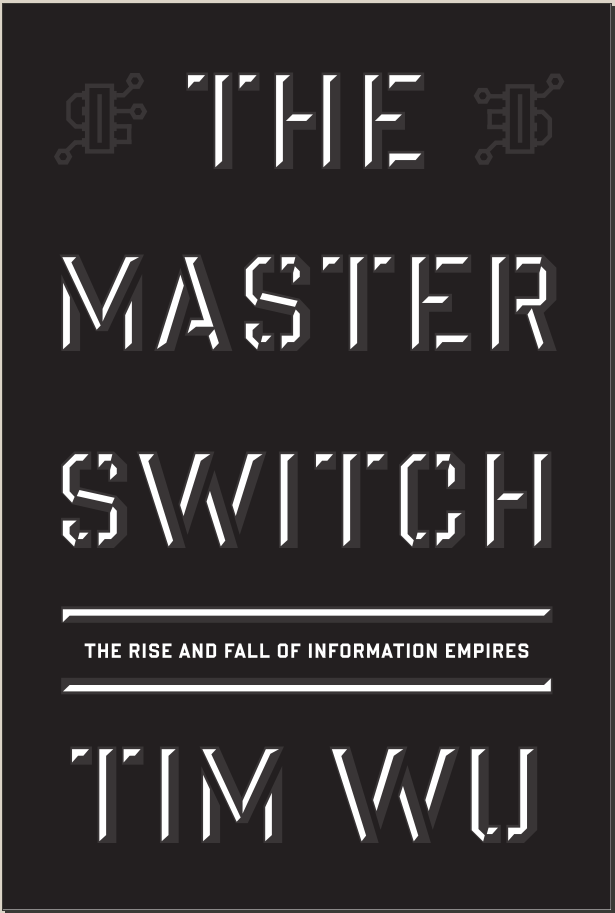
My post The Perils of Centralized Innovation concerned a fascinating excerpt from The Master Switch by Tim Wu (excerpts on scribd and google books). I have since downloaded and begun to read this fascinating book. I noticed that it contains some illuminating discussions of the effect of patent and copyright on the development of the American movie industry. One of the points of Wu’s book is how dominant information-based firms often resort to state help when their dominance is threatened. As Wu observes (quoted here in a post by Cory Doctorow):

The problem is that dominant firms are like congressional incumbents and African dictators: They rarely give up even when they are clearly past their prime. Facing decline, they do everything possible to stay in power. And that’s when the rest of us suffer.

AT&T’s near-absolute dominion over the telephone lasted from about 1914 until the 1984 breakup, all the while delaying the advent of lower prices and innovative technologies that new entrants would eventually bring. The Hollywood studios took effective control of American film in the 1930s, and even now, weakened versions of them remain in charge. Information monopolies can have very long half-lives.

Declining information monopolists often find a lifeline of last resort in the form of Uncle Sam. The government has conferred its blessing on monopolies in information industries with unusual frequency. Sometimes this protection has yielded reciprocal benefits, with the owner of an information network offering the state something valuable in return, like warrantless wiretaps.

Wu’s description of the evolution of Hollywood’s rise to dominance and the role state monopolies played in its structure is fascinating. In ch. 4, he notes how in France one Louis Lumière invented a working camera and projector in 1895. The same year, Charles Francis Jenkins in the US invented a projector called the “Phantoscope.” [continue reading…]

Share
{ 4 comments }

From Yahoo! News: Hershey is claiming ownership of orange, brown and tan wrappings:

Hershey sues Mars over similar candy packaging

HARRISBURG, Pa. – Bitter rivals in the candy aisle may also duke it out in court.

The Hershey Co. sued Mars Inc. this week in federal district court, with the maker of Hershey’s and Reese’s chocolate candies accusing the maker of Snickers, M&Ms and Dove candies of mimicking some of its packaging.

Hershey is claiming trademark dilution and infringement, and unfair competition.

The lawsuit, filed Monday in Harrisburg, contends that Mars’ packaging of its Dove peanut butter chocolate Promise squares is trying to piggyback on the patented orange, brown and tan wrappings of the Reese’s peanut butter chocolate products that Hershey has marketed for decades.

McLean, Va.-based Mars did not respond to telephone messages Friday seeking comment. The image of the Dove peanut butter Promises squares package on the Dove website is different from the image cited in Hershey’s lawsuit.

Read more>>

Share
{ 0 comments }

UK High Court Ruling Implies Headlines Are Copyright

Interesting post on TechCrunch:

UK High Court Ruling Implies Headlines Are Copyright. Not a Good Idea.

The UK’s High Court has ruled thatnews monitoring agencies will have to pay publishing companies to use their web content, effectively re-classifying headlines as separate literary works subject to copyright.

The moves follows a legal battle between the Newspaper Licensing Agency, owned by eight of the UK’s largest newspaper groups, and Meltwater, a news monitoring agency. Meltwater plans to appeal against the decision, but if it’s upheld, you can expect a wave of more legal actions, claims that links are copyright and the break down of the UK’s internet industry. Well done High Court. …

The ruling is of interest because titles (of books, movies, etc.) are typically regarded as being too short to receive copyright protection. But it’s not surprise; lobbying for IP expansion is incessant. See, e.g., German Publishers Want Monopoly On Sentences (in Germany, newspaper publishers are lobbying for ‘a new exclusive right conferring the power to monopolize speech e.g. by assigning a right to re-use a particular wording in the headline of a news article anywhere else without the permission of the rights holder).

Share
{ 0 comments }

Doctorow: What do we want copyright to do?

The always-interesting Cory Doctorow has a provocative piece out in The Guardian, What do we want copyright to do?

While I cannot agree completely with his managerial state, utilitarian approach, his own approach and application of his general principles would result in far better (less bad) copyright law, and he has some gems sprinkled throughout his piece. A few choice excerpts below:

Let’s start by saying that there is only one regulation that would provide everyone who wants to be an artist with a middle-class income. It’s a very simple rule: “If you call yourself an artist, the government will pay you £40,000 a year until you stop calling yourself an artist.”

… For example, it’s been more than a century since legal systems around the world took away songwriters’ ability to control who performed their songs. This began with the first records, which were viewed as a form of theft by the composers of the day. You see, composers back then were in the sheet-music business: they used a copying device (the printing press) to generate a product that musicians could buy.

When recording technology came along, musicians began to play the tunes on the sheet music they’d bought into microphones and release commercial recordings of their performances. The composers fumed that this was piracy of their music, but the performers said: “You sold us this sheet music – now you’re telling us we’re not allowed to play it? What did you think we were going to do with it?”

… There is an ancient copyright agreement that Victor Hugo came up with called the Berne Convention that most western nations are parties to. If you read the agreement closely, it seems to make this whole business of blanket licensing illegal. When I’ve asked international copyright specialists how all these Berne nations can have radio stations and karaoke bars and hairdressers and such playing music without negotiating all their playlists one at a time, the usual answer is: “Well, technically, I suppose, they shouldn’t. But there’s an awful lot of money changing hands, mostly in the direction of labels and artists, so who’s going to complain, really?”…. Rather than having the right to specify who may use your works, you merely get the right to get paid when the use takes place.

Now, on hearing this, you might be thinking: “Good God, that’s practically Stalinist! Why can’t a poor creator have the right to choose who can use her works?” Well, the reason is that creators (and, notably, their industrial investors) are notoriously resistant to new media. The composers damned the record companies as pirates; the record labels damned the radio for its piracy; broadcasters vilified the cable companies for taking their signals; cable companies fought the VCR for its recording “theft.” Big entertainment tried to kill FM radio, TV remote controls (which made it easy to switch away from adverts), jukeboxes, and so on, all the way back to the protestant reformation’s fight over who got to read the Bible. [Emphasis added. –SK]

Given that new media typically allow new creators to create new forms of material that is pleasing to new audiences, it’s hard to justify giving the current lotto winners a veto over the next generation of disruptive technologies. Especially when the winners of today were the pirates of yesteryear. Turnabout is fair play.

… in the US, which has the largest, most profitable broadcast and cable industry in the world, the law gives no compensation rights to rightsholders for home recording of TV shows. There’s no levy on blank cassettes or PVRs in exchange for the right to record off the telly. It’s free, and it has conspicuously failed to destroy American TV.

There are whole classes of creation and copying that fall into this category: in fashion, for example, designs enjoy limited or no protection under the law. And each year’s designer rags are instantaneously pirated by knock-down shops as soon as they appear on the runway. But should we protect fashion the way we do music or books?

It’s hard to see why, apart from a foolish consistency: certainly, every currently ascendant fashion designer who’d benefit from such a thing started out by knocking off other designers. And there’s no indication that fashion is under-invested, or fails to attract new talent, or that there is a lack of new fashion available to the public. Creating exclusive rights for fashion designers might allow more money to be made by today’s winners, but these winners are already making as many designs as they can, and so the net diversity of fashion available to the world would fall off.

… say that tomorrow, the number of architects did shelve off radically, and no one could find anyone to draw up plans for a new conservatory or mansard roof anymore.How could we save architecture? Well, we could give architects a copyright in the likeness of their buildings, and essentially put architects in the rent-collecting business: rather than devoting all their time to designing buildings, architects would spend most of their time sending legal threats to sites like Flickr and Picasa and TwitPic whenever some poor sod uploaded a picture of his flat’s exterior Christmas decorations and inadvertently violated the architect’s copyright.

This would certainly make more money for some architects (especially ones whose buildings were situated near public webcams – everyone who operated one of those would have to stump up for a license!). But the public cost would be enormous. Instead of the mere absurdity of coppers going around ticking off tourists for photographing public buildings (as though bombing was a precision undertaking, requiring that terrorists photograph buildings in detail before wandering into them with bombs under their coats and blowing themselves up); we’d have vast armies of private security guards representing the far-flung descendants of Christopher Wren and that miserable bastard who designed the awful tower-block at the end of my road in 1965 or so, hassling anyone who took out a camera to snap a picture of the car that just ran them over, or their kids adorably eating ice-cream, or their mates heaving up a kebab into the gutter after a night’s revels.

Google Street View would be impossible. So would holiday snaps. Amateur photography. Fashion shoots. News photography. Documentary film-making.

Essentially, the cost of recording your life as you live it, capturing your memorable moments, would go to infinity, as you had to figure out how to contact and buy licences from thousands of obscure architects or their licencees. Surely in this case, the costs outweigh the benefits (and yes, I’m perfectly aware that certain European countries were stupid enough to give architects this right – there are also places in the world that prohibit women from driving cars, where they chop down rainforests to graze cattle, and where the used car adverts feature florid men wearing foam cowboy hats screaming into a camera – if everyone in France jumped off the Eiffel Tower, would you do it too?).

… Now, take $300m CGI summer blockbuster films: if the producers of these things are to be believed, the ongoing capacity to produce glitzy, big budget productions demands that services like YouTube be shut off (see, for example, Viacom’s lawsuit against Google over YouTube).If this is true – I’m no movie exec, maybe it is – then we need to ask ourselves the “balance” question: YouTube’s users produce 29 hours of video every minute and the vast majority of it is not infringing TV and movie clips, it is independently produced material that accounts for more viewer-minutes than television. So, the big studios’ demand amounts to this: “You must shut down the system that delivers billions of hours of enjoyment to hundreds of millions of people so that we can go on delivering about 20 hours’ worth of big budget film every summer.”

To me, this is a no brainer. I mean, I love sitting in an air-conditioned cave watching Bruce Willis beat up a fighter jet with his bare hands as much as the next guy, but if I have to choose between that and all of YouTube, well, sorry Bruce.


Share
{ 4 comments }

Copyright Troll Backs Down

As reported in ‘Copyright troll’ Righthaven looks to dismiss suit against Democratic Underground, Copyright troll Righthaven has decided “to drop its claim against a liberal forum community which it sued over a four-paragraph excerpt from The Las Vegas Review Journal.”Apparently this is in response to some fair use ruling by the court in another case (if anyone knows what ruling this is please let me know). But notice their politically weaselly explanation:

Righthaven’s sensible reaction to the intervening, immediately relevant fair use ruling recently issued by this court, all in the spirit of judicial economy,” Righthaven said in its motion, according to Steve Green, reporting for The Las Vegas Sun. “Though Righthaven firmly believes that the defendants are liable for copyright infringement, the non-holistic nature of the defendant’s unauthorized textual reproduction is such that reasonable minds may disagree as to the legitimacy of a fair use defense.”

An excerpt from the post is below:

Citing “the spirit of judicial economy,” Righthaven, LLC., a company that makes its money by forcing settlements through copyright lawsuits, said it wanted to drop its claim against a liberal forum community which it sued over a four-paragraph excerpt from The Las Vegas Review Journal.

The company’s recent motion to dismiss noted that they wanted to drop the suit due to a decision by Nevada federal judge Larry Hicks, who recently dismissed a similar claim brought by Righthaven.

After being sued, Democratic Underground (DU) sought the help of the Electronic Frontiers Foundation (EFF), which filed a counter-claim on their behalf. Righthaven asked that EFF’s suit be dropped as well.

“This motion represents Righthaven’s sensible reaction to the intervening, immediately relevant fair use ruling recently issued by this court, all in the spirit of judicial economy,” Righthaven said in its motion, according to Steve Green, reporting for The Las Vegas Sun. “Though Righthaven firmly believes that the defendants are liable for copyright infringement, the non-holistic nature of the defendant’s unauthorized textual reproduction is such that reasonable minds may disagree as to the legitimacy of a fair use defense.”

“Righthaven has brought over 130 lawsuits in Nevada federal court claiming copyright infringement, even though they do not create, produce or distribute any content,” EFF explained. “Instead, they create lawsuits by scouring the Internet for content from Review-Journal stories posted on blogs and online forums, acquiring the copyright to that particular story from Stephens Media LLC (the Review-Journal’s publisher), and then suing the poster for infringement.

“As part of its lawsuit business model, Righthaven claims damages of up to $150,000 under the Copyright Act’s statutory damages provisions and uses that threat to attempt to push defendants into a quick settlement. In the answer and counterclaim filed Monday, Democratic Underground asked the court to affirm that the excerpt of the article does not infringe copyright and is a fair use of the material, with no damages due to Righthaven.”

By wielding copyright law as a blunt instrument, Righthaven has the effect of “chilling free and open discussion on the Internet,” DU founder David Allen claimed in a media advisory.

Critics have come to know the company as a “copyright troll”: a slang that seems to have stuck.

“Despite what Righthaven claims, it’s hard to interpret these lawsuits as anything else besides a way to bully Internet users into paying unnecessary settlements,” EFF attorney Kurt Opsahl added. “At the same time, Righthaven is trying to discourage the practice of quoting and linking that is both essential to the interconnected Internet and helps drive significant traffic to newspapers online.”

In a profile by Wired, Righthaven CEO Steve Gibson claimed his company has secured an agreement to expand their copyright lawsuit business to all Stephens Media properties, which includes 70 newspapers in nine states.

Update: the fair use ruling is apparently the one described here[continue reading…]

Share
{ 0 comments }

Are Patents “Monopolies”?

NOTE: See instead now this post: Are Patents and Copyrights “Monopolies”? .

Share
{ 5 comments }

Universities attacking high schools over trademarks

From NYTimes: University of Florida claims it owns use of alligators in connection with sports:

Universities Tell High Schools Logos Are Off Limits

Marc Serota for The New York Times

Dr. Robert Egley, the headmaster at Glades Day School in Florida, which was told by the University of Florida to stop using the Gator logo because it was a trademark violation.

By ADAM HIMMELSBACH
Published: November 26, 2010

Glades Day School sits on the edge of swampland in Belle Glade, Fla., and its headmaster, Dr. Robert Egley, often drives past alligators lazing in canals on his way to work. When the school was founded in 1965, its location made the Gator an ideal mascot, and its logo, aside from being green and gold, was nearly identical to the University of Florida’s.

Egley, a Florida alumnus, said it was a form of flattery. But this year, Florida said it was a trademark violation, and the university demanded that the 390-student private school cease use of the designs.“It just hurts; it has a sting to it,” Egley said. “We send them our students, we send them our money and we support them. It just flies in the face of common sense that they would come after us.”

Read more>>

(h/t Skip Oliva)

Update: The Florida State Seminoles are at it too: Florida State-Bradenton Southeast logo war over. (H/t Mike Muehleck)

Share
{ 1 comment }

EFF rescues ASL Ally’s sign-language YouTube music videos

Cory Doctorow noted, in EFF rescues ASL Ally’s sign-language YouTube music videos:

When popular YouTuber ASL Ally — who posts videos that interpret song lyrics in American Sign Language for deaf and hard-of-hearing people — had her YouTube channel yanked after complaints by Warner and Universal, the Electronic Frontier Foundation’s Cindy Cohn came to the rescue. Cohn called up YouTube, and YouTube contacted the rightsholders, and everyone agreed that there was nothing wrong with Ally’s wonderful work. However:

“The problem is that the various music groups hire zombies and trained monkeys who scour the Internet searching for any use of their licensed material regardless of the context or purpose,” Cohn said by phone on Monday.”Often, this leads to flagged entries and complaints on sites like YouTube that really should have been approached with greater discretion.”

Share
{ 0 comments }

The Perils of Centralized Innovation

Nice post from Geoffrey Allan Plauché from The Libertarian Standard. As I noted in a comment there, this interesting insight seems to complement the Austrian argument that the calculation problem places an upper limit on the size of the firm (see, e.g., Peter Klein, “Economic Calculation and the Limits of Organization,” in The Capitalist and the Entrepreneur).

***

The Perils of Centralized Innovation

by Geoffrey Allan Plauché on November 25, 2010 @ 4:34 pm · 3 comments[edit]

in (Austrian) Economics,Business,Corporatism,Technology

Gizmodo has an interesting post about How Ma Bell Shelved the Future for 60 Years. It is an excerpt from The Master Switch by Tim Wu.

Here is the money quote:

This is the essential weakness of a centralized approach to innovation: the notion that it can be a planned and systematic process, best directed by a kind of central intelligence; that it is simply of matter of assembling all the best minds and putting them to work in unison. Were it so, the future could be planned and executed in a scientific manner.

Yes, Bell Labs was great. But AT&T, as an innovator, bore a serious genetic flaw: it could not originate technologies that might, by the remotest possibility, threaten the Bell system. In the language of innovation theory, the output of the Bell Labs was practically restricted to sustaining inventions; disruptive technologies, those that might even cast a shadow of uncertainty over the business model, were simply out of the question.

~*~

Cross-posted at Prometheus Unbound.

Share
{ 1 comment }

Patent Litigation Facts

A recent item in Forbes about the plight of smaller companies who can be bankrupted by patent lawsuits and threats from the medical device giants (see my post Going Toe To Toe With Medical Device Giants) concludes with an interesting and, for some, perhaps, eye-opening set of statistics about the costs associated with patent litigation and related facts. I append it below. For other interesting facts about the IP system, see my estimate of the costs of the patent system (Reducing the Cost of IP Law), as well as a growing collection of IP horror stories (The Patent, Copyright, Trademark, and Trade Secret Horror Files).

Pricey Patents

Intellectual property is a precious asset–if you can afford to protect it.

$10 million: Cost to defend a high-stakes patent suit
$3.8 million: Median damages awarded in patent infringement cases from 2001-07
482,871: Patent applications filed in 2009
191,927: Patents issued in 2009
2,700: Average number of patent-infringement lawsuits filed per year
$1,000: Hourly rate charged by top patent litigators
100: Average number of patent cases that go to trial each year
57%: Percentage of trials won by patent holders
34.6: Average number of months to secure a patent

Sources: USPTO website; General Patent Corp.; Stanford IP Database; Ropes & Gray; PricewaterhouseCoopers

[Mises cross-post]


Share
{ 0 comments }

The Mountain of IP Legislation

[From my Webnote series]

I observed in “Legislation and Law in a Free Society” (longer and updated version in Legal Foundations of a Free Society) various problems with using legislation to “make” law. For one thing, it requires a legislature, which requires a state. For another, it conceives of law as being “made” by human will rather than natural principles “found” by people seeking justice. One problem with IP law—mainly patent and copyright, but also trade secret and trademark, to varying degrees—is that it requires modern state legislation. It cannot be created without it.

I was working on lecture #4 for my Mises Academy course “Rethinking Intellectual Property: History, Theory, and Economics” [KOL175] and was compiling some of the key statutes, treaties, international bodies, and pending legislation and treaties that undergird modern patent, copyright, and other types of IP law. Just seeing it all in one place is striking; it cannot fail to make the libertarian advocate of IP a bit queasy, one would think.

I list some below with minimal commentary, and links.

Key IP Statutes and Treaties

Historical

  • 1624: Statute of Monopolies 1623 (England): key patent statute
  • 1710: Statute of Anne 1709 (England): key copyright statute
  • 1691: South Carolina enacts first “general” patent law (as distinguished from authorization to the Crown to make patent grants). Note, this is still a specific legislative grant of monopoly rights to Peter Guerard for a rice-husking machine rather than a general statute establishing a patent system for future inventors. (See Fritz Machlup, An Economic Review of the Patent System (1958), 79-80, Part II.B. Grok note: Fritz Machlup credits South Carolina with the first “general” patent law in the colonies in 1691. However, the 1691 act was a specific grant to one person rather than a general statute. Modern historians generally regard South Carolina’s 1784 “Act for the Encouragement of Arts and Sciences” as the first true general patent statute in what became the United States.)
  • 1784: South Carolina: “Modern legal historians generally regard South Carolina’s 1784 ‘Act for the Encouragement of Arts and Sciences’—which created a standing framework offering 14-year exclusive rights to inventors of useful machines—as the first true general patent statute in what became the United States.” (see previous item)
  • Ad hoc patent grants in the US:
    • Grok
    • Founders’ Design for Intellectual Property: Ad Hoc State Patent Grants & Congressional Private Bills

      Source: Federalist Society “America 250” Webinar – “What Was the Founders’ Design for Intellectual Property?” (June 2026)

      1. Pre-1789: Ad Hoc Private Patent Grants by State Legislatures

      Before the U.S. Constitution and the federal Patent Act of 1790, there was no uniform national patent system. Patents were granted on a case-by-case basis through private bills passed by individual state legislatures (or colonial assemblies).

      Professor Zvi Rosen explained this practice clearly:

      “When I say private patents, I mean it was a private bill from [the] legislature granting a patent. So, there wasn’t a uniform state system. In some cases, like I know Oliver Evans got some patents from Delaware and it was not under a system. It was just the legislature said we grant this patent.”

    • Pre-1789 Ad Hoc Patent Grants by State Legislatures

      Pre-1789 ad hoc/private patent grants by state (and colonial) legislatures were common in

Share
{ 16 comments }

Good story on Engadget showing how trademark law also leads to absurd results:

Gibson sues WowWee, retailers over Paper Jamz toy guitars; would rather some other company get all that free advertising (video)

By Joseph L. Flatley posted Nov 23rd 2010 6:21PM
It looks like WowWee is learning the implications of that old saw, “imitation is the surest way to get your company sued.” That’s right, the company’s radical looking, fun for about twenty minutes, paper-thin plastic toy guitars have recently drawn legal fire from Gibson, who recognizes a distinct resemblance between some classic axes (like the Flying V and the Les Paul) and the aforementioned Paper Jamz line. Which we could certainly see — even if WowWee hadn’t name dropped Gibson in its product literature (which seems to us to be rather on par with taunting the company outright). And if that weren’t bad enough, the company is going after retailers, such as Toys ‘R Us and eBay, who it claimed kept selling the things after receiving a cease and desist letter. Of course, this raises a few questions: At which point is a design so ubiquitous that it becomes fair game for companies like WowWee? And wouldn’t Gibson want the kiddies (who will be ready to move up to real guitars soon enough) hooked on their brand? And most importantly — when are we getting a Paper Jamz Rickenbacker? Because there has to be an easier way to be like Paul Weller.

Read more>>

Share
{ 0 comments }

Judge Bars ‘Fair Use’ Defense in Xbox Modding Trial

Good story in Wired by Kevin Poulsen about an innocent man who is facing up to three years in prison, thanks to the criminal DMCA, for doing nothing more than helping people “tinker with hardware that they’ve bought and paid for”–that is, for modifying their own property.

Judge Bars ‘Fair Use’ Defense in Xbox Modding Trial

A California man charged with violating the DMCA by installing mod chip in Xbox 360 consoles won’t be allowed to claim “fair use” at his scheduled jury trial next week, a federal judge ruled Tuesday — a decision potentially devastating to the defense, and not particularly favorable to anyone who thinks they have the right to tinker with hardware that they’ve bought and paid for.


Matthew Crippen, 28, faces three years in prison on two allegations of violating the anti-circumvention provisions of the Digital Millennium Copyright Act for financial gain. Crippen, of Anaheim, allegedly ran a business modding Xbox 360s for between $60 and $80 a pop, allowing the consoles to run pirated games or unapproved home-brew software. He was indicted after allegedly performing the silicon surgery for an undercover corporate security investigator with the Entertainment Software Association, then again for an undercover federal agent.

His trial is set to begin on November 30 in Los Angeles, and would be the first federal criminal prosecution for console modding to reach a jury.

Read more>>

Update: see First Criminal Trial Over Game-Console Mod Chips Begins Tuesday

Share
{ 0 comments }