≡ Menu

From Alex Jones’ Prison Planet:

Obama Signs Global Internet Treaty Worse Than SOPA

  • Print The Alex Jones Channel Alex Jones Show podcast Prison Planet TV Infowars.com Twitter Alex Jones' Facebook Infowars store

White House bypasses Senate to ink agreement that could allow Chinese companies to demand ISPs remove web content in US with no legal oversight

Paul Joseph Watson
Prison Planet.com
Thursday, January 26, 2012

Months before the debate about Internet censorship raged as SOPA and PIPA dominated the concerns of web users, President Obama signed an international treaty that would allow companies in China or any other country in the world to demand ISPs remove web content in the US with no legal oversight whatsoever.

Obama Signs Global Internet Treaty Worse Than SOPA   government stickers acta protest.n

The Anti-Counterfeiting Trade Agreement was signed by Obama on October 1 2011, yet is currently the subject of a White House petition demanding Senators be forced to ratify the treaty. The White House has circumvented the necessity to have the treaty confirmed by lawmakers by presenting it an as “executive agreement,” although legal scholars have highlighted the dubious nature of this characterization.

The hacktivist group Anonymous attacked and took offline the Federal Trade Commission’s website yesterday in protest against the treaty, which was also the subject of demonstrations across major cities in Poland, a country set to sign the agreement today.

Read more>>

See also Mike Masnick, State Of The Union Address Highlights The Dirty Trick Of Hiding More Draconian IP Rules In ‘Trade Agreements’.

More posts on ACTA.

Share
{ 1 comment }

This is almost too ridiculous to read, but … see below. Just confirmation of my view that there are no good arguments for IP.

Author, Sheldon Richman, by his own admission is a Thief

So likewise is any other author who takes money from a publisher while in the same breath arguing against intellectual property.

They’re like the flimflam man selling worthless snakeoil, or the usurer. They exchange nothing for something.

If intellectual property does not exist, then to take money by selling intellectual property is to take money selling that which does not exist. Which is to sell nothing in exchange for some thing which actually does have value.

The publisher is the one who owns the paper, pays for distribution and all other hard costs. The author produces the ordering of the words on the paper, an ordering which is by nature an ‘idea’. And Sheldon Richman writes ideas don’t properly exist as property. And thus Sheldon Richman is taking money from his publisher while giving the publisher nothing he owns in exchange.

Of course, Sheldon Richman is not actually a thief, because intellectual property does exist, but like the man who mistakes a virtuous act for a sinful act and does that act regardless. He is culpable of the act of being a thief.

The error Sheldon Richman makes is that he sees the world in black and white. It’s either this or that. But like most of life, truth is found in the mean between the extremes.

Like the issue of torture, justice is not black and white but relative to prudence.

What is known in principle is that a man is due compensation for his labor. And thus in turn an author or a pharmaceutical company is due compensation for the labor they invest in production of their product. No different than I owe a doctor for a consultation where I pay him for his knowledge.

After the doctor has told me what my ailment is, I can’t simply turn around tell him I’m not paying him because I too now possess the same information has he did. As an architect, I don’t sell paper and ink, I sell the information contained on that paper. No one in his right mind pays for random spots of ink on paper; which in turn is why some authors sell well, and others do not sell well, because what people are buying are the ideas conveyed by the paper and ink.

This is also why those who pay big money for modern art do exhibit signs of insanity, because they, for all practical purposes, are paying for nothing more than random ink splotches.

Property is not an absolute ownership, but an ownership relative to the good of society as a whole. Men are not islands, we are by nature social living is society, and it’s society which determines the nature of ownership of property, that is, ownership is subject to prudential judgement of what is just compensation in exchange for invested labor and other incurred expenses.

more to come. This post is currently being written, read at your own risk.

4 comments:

  1. Sheldon RichmanJan 25, 2012 02:32 PM

    Your premise is wrong. I did not get paid for providing intellectual property. I got paid (as you also note) for my labor services, that is, writing. I own my labor because I own my person, so I am free to trade it for money. Intellectual property has nothing to do with it. You seem to think that others should have to pay me (and my estate for 70 years after my demise) repeatedly for work already done. That makes no sense.

    You should now say what Rick Perry has become famous for saying: “Oops.”

    Reply

  2. Sheldon RichmanJan 25, 2012 02:44 PM

    PS: You beg the question. Through my writing I indeed provide intellectual content, but since you assume this content should be treated like physical property, you assume precisely what is in dispute.

    Reply

  3. love the girlsJan 25, 2012 03:00 PM

    Thank you for your reply.

    You are not paid for writing any more than I as architect am paid for drawing. I’m paid for specifically drawing this house to be built on this land.

    My clients come to me with a problem, I solve it and and paid for the solution. The paper is the means of the solution. Not the end.

    Likewise a writer is paid to solve a problem. The end of his product is not the writing but the information contained within that writing. If he were to write nonsense, he would be writing, but he would not be producing a product which has value which he could ask compensation for.

    If I were hired to pick grapes and I picked them and dropped them on the ground as opposed to putting them in a basket, the owner would be within his right not to pay me because my labor did not produce the required end.
    _______________________

    And no I did not write that you or your estate should be paid 70 years. What I wrote is that compensation is subject to prudence and that a man should be compensated for his labor, i.e. productive labor.

    For instance, if a writer invests 2500 hours writing a book, then let him be at minimum compensated a living wage equal to those 2500 and after he has earned a reasonable return, the book could be available for distribution without further compensation to the author.

    What you have done, which is commonly done is divide the argument into either this or that where the solution is in the mean.

    Reply

  4. love the girlsJan 25, 2012 03:08 PM

    Mr. Sheldon writes : “you assume precisely what is in dispute.”

    More precisely, what I do is point out the error of those who argue that intellectual property does not exist, if they in turn accept compensation for the product of their labor.

Share
{ 24 comments }

More copyright absurdity (or do I repeat myself?):

Create a Similarly Composed Photo in the UK, Risk Copyright Infringement

  • Michael Zhang · Jan 25, 2012

If you’re a photographer in the UK, you might want to think twice about shooting and selling a photograph that has a similar composition to an existing photo. Souvenir company Temple Island Collection has won a copyright infringement case against tea company New English Teasafter a photo of a red London bus was used on tea packaging. Photo copyright expert and lawyer Charles Swan states,

Read more>>

Share
{ 0 comments }

From a twitter post someone passed on to me (I don’t follow “Twitter”):

@pablodPablo Defendini

LOL self-pub is the new piracy! “@DigiBookWorld: Heard at #dbw12: Self publishing costs publishers $100 million in opportunity”
This reminds me of the statist notion of “imputed income“:
Imputed income is the accession to wealth that can be attributed, or imputed, to a person when he avoids paying for services by providing the services to himself, or when he avoids paying rent for durable goods by owning the durable goods, as in imputed rent.
Most countries, such as the United States, tax imputed income only in certain situations, such as the calculation of domestic partner employee benefits. Imputed income is sometimes difficult to measure, and doing so can have political consequences: for taxpayers, not taxing imputed income creates a tax benefit in favor of owning over renting, and in favor of self-service over hiring; for the economy, not taxing imputed income directs economic activity away from activities associated with extreme and severe division of labor.
Share
{ 0 comments }

Priorities, priorities

From a friend:

Run MegaUpload: 50 years. Rape and kill a woman: 20 years. Murder 24 civilians: demotion.

Share
{ 0 comments }

Two HUGE, HUGE developments in the education world. HUGE!!!

From DailyDirt: Teaching Technology:

MIT is developing a certification process for its open education projects. MITx students will not receive degrees from MIT, but a yet-to-be-named non-profit organization within MIT will award certificates of completion to students who demonstrate a mastery of MITx subjects made available online. [url]

And, from Marginal Revolution:

Udacity

by  on January 25, 2012 at 7:35 am in EducationWeb/Tech | Permalink

In The Coming Education Revolution I discussed Sebatian Thurn and Peter Norvig’s online AI class from Stanford that ended up enrolling 160,000 students. Felix Salmon has the remarkable update:

…there were more students in [Thrun’s] course from Lithuania alone than there are students at Stanford altogether. There were students in Afghanistan, exfiltrating war zones to grab an hour of connectivity to finish the homework assignments. There were single mothers keeping the faith and staying with the course even as their families were being hit by tragedy. And when it finished, thousands of students around the world were educated and inspired. Some 248 of them, in total, got a perfect score: they never got a single question wrong, over the entire course of the class. All 248 took the course online; not one was enrolled at Stanford.

Thrun was eloquent on the subject of how he realized that he had been running “weeder” classes, designed to be tough and make students fail and make himself, the professor, look good. Going forwards, he said, he wanted to learn from Khan Academy and build courses designed to make as many students as possible succeed — by revisiting classes and tests as many times as necessary until they really master the material.

And I loved as well his story of the physical class at Stanford, which dwindled from 200 students to 30 students because the online course was more intimate and better at teaching than the real-world course on which it was based.

So what I was expecting was an announcement from Thrun that he was helping to reinvent university education: that he was moving all his Stanford courses online, that the physical class would be a space for students to get more personalized help. No more lecturing: instead, the classes would be taken on the students’ own time, and the job of the real-world professor would be to answer questions from kids paying $30,000 for their education.

But that’s not the announcement that Thrun gave. Instead, he said, he concluded that “I can’t teach at Stanford again.” He’s given up his tenure at Stanford, and he’s started a new online university called Udacity. He wants to enroll 500,000 students for his first course, on how to build a search engine — and of course it’s all going to be free.

Share
{ 0 comments }

From Falkvinge:

iStock_000009167758Small

Today, the verdict was announced in the case of Uppsala, Sweden, where a 60-year-old had shared 2,880 music tracks on a DirectConnect hub. The man was sentenced to two years of conditional jail, and fined for 40 days’ worth of his income (day fine).

Two years in jail is the maximum sentence under Swedish law for ignoring the distribution monopoly on culture. Swedish Public Radio reports on the verdict (in Swedish). This is just insane beyond words.

Not surprisingly, the Swedish Pirate Party leader, Anna Troberg, doesn’t pull punches in her comments.

Media downplays the verdict somewhat, as the jail sentence was conditional (equivalent to probation), but that doesn’t matter from a legal standpoint — while the man will probably never set foot in jail, that was because of his specific circumstances.

Here are some other recent verdicts in Sweden, just for scale:

…and, apparently, sharing your favorite music: two years, although on probation in this case.

I have no words. This needs to come to senses. The copyright monopoly needs to dismantle, the worst pieces first. One of those worst pieces is obviously the one that could put a man in jail for two years for sharing music.

Two years ago, when these and similar laws were written, I said that the politicians are acting like drunken blindfolded elephants trumpeting about in an egg packaging facility. Now, we are starting to see the results.

If this is not enough to cause an uproar of “enough is enough!”, then what is?

Share
{ 1 comment }

The copyright industry never seems to have had enough. Starting today in Sweden, they demand a private tax for external hard drives and USB memory sticks.

The tax they demand is about 9 euros for an external hard drive, or 10 eurocents per gigabyte for USB memory sticks. They have previously demanded a tax for cassette tapes, which was how this private taxation right started, and gradually expanded it to blank CDs and DVDs, as well as media players with built-in hard drives. Yes, that includes the latest game consoles — Swedish kids pay about 15% tax to the copyright industry on a Playstation 3.

This stems from the entitlement that since you theoretically can make legal copies of your media onto blank storage, the copyright industry demanded — and got – compensation for this hole in their monopoly.

Thus, it is important to remember — as is pointed out in this morning’s press release from the Swedish Pirate Party — that the blank media taxation right isn’t intended to cover the imaginary losses from file sharing online. It’s intended to cover a completely different imaginary loss, the one from when you copy your purchased media onto blank media in your own home.

Thus, they are getting away with demanding money for actions that are even explicitly outside of the copyright monopoly. Demanding compensation for violations of your monopoly is one thing; demanding compensation for actions outside of your monopoly is something else, and demanding compensation for the theoretical possibility of such actions lands us at where we are.

We’ve now arrived at a point where they can demand and get away with anything, apparently.

Just because you can theoretically store their crappy music on a general-purpose storage device, which you probably never will, they have been given the right to tax you. More likely, you use external hard drives to store vacation and family photos, or backups of your work.

It remains to be seen if they actually get away with this tax demand, though. The electronics business in Sweden has said “take a hike” and will meet the copyright industry in courts over their interpretation of the taxation right.

You’ve read the whole article. Why not subscribe to the RSS flow using your favorite reader, or even have articles delivered by mail?

About The Author: Rick Falkvinge

Rick is the founder of the first Pirate Party and is a political evangelist, traveling around Europe and the world to talk and write about ideas of a sensible information policy. He has a tech entrepreneur background and loves whisky.


Share
{ 0 comments }

Great post by Falkvinge:

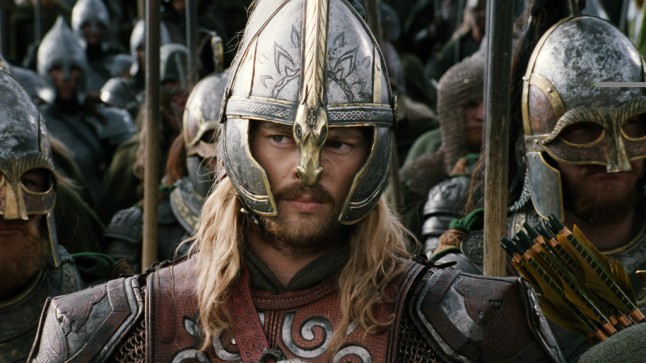
A scene from "Return of the King", the third part of "Lord of the Rings"

Whenever I argue that the copyright monopoly isn’t necessary to incentivize culture production, I hear the counterargument that multi-million-euro movie productions would never happen in case there wasn’t a guaranteed return on investment.

The image for this article is a still image from Return of the King published in 2003, the third installment of The Lord of the Rings, which I’ll use as a concrete example. But first, let’s examine the counterargument above in more detail.

I frequently hear that this-and-that would not happen if there wasn’t a guaranteed return on investment. While most people seem in agreement that music would be played, books would be written, and art would be made without the copyright monopoly, because that creativity happens for other reasons than pure money, the objections usually gravitate towards the subject of blockbuster movies, and how a guaranteed return on investment is necessary for those to be produced in the first place.

Let’s look at that statement.

First, it’s a contradiction in terms. By definition, an investment is the acceptance of a risk for a possible return which is larger than the initial investment; there is no such thing as a right to profit off of any endeavor.

Second, so what? Culture has always been fluent in its forms of expression. A hundred years ago, folk songs and concerts with classical music were the two predominant expressions of culture. A hundred years before still, it was ballets and operettes in French and Italian. Nobody even gives a shrug that ballets isn’t the predominant expression of culture today, and so, we should expect feature films to peak and fade, too: to give way for something else and better. Gaming and immersive culture, perhaps.

But let’s look at the underlying assumption again, that nothing would be produced if the copyright monopoly was reduced to allow file sharing. Let’s assume that everything could spread freely as soon as it was digitized, and that this would result in no more revenue for a certain blockbuster movie once it was shared in the wild (which is a completely false assumption, but one that the copyright monopoly maximalists argue, and so, let’s stick with it for the sake of argument).

This means, that after the opening weekend of a blockbuster, it would yield no more revenue under this (false) assumption. So then, let’s look at hard numbers to examine that argument. We have the numbers for Return of the King, which is frequently used as an example in the debate, right here.

The movie Return of the King cost 94 million US dollars to make. On opening weekend, it grossed 199 million. That’s over a 100% return on investment before a digital copy could be fileshared in the wild.

Now, there are a number of assumptions with this number, like how the gross is distributed and much more. But overall, it shows how ridiculous the argument is that there would never be a return on investment if the copyright monopoly was sensiblized to allow noncommercial copying.

The next wave of that argument is that all movies don’t reach the 100-percent level of return on investment during opening weekend. That is true, of course. Some reach more, some less, some go at a loss. So how much return would be needed, and how much risk is acceptable, to still make investments happen?

In order to answer this question, we don’t look at the Hollywood studios, but at other investors: the… well, investors. Wall Street. A ten-percent return over a year is a considered a good investment that easily attracts hundreds of millions of euros (or dollars). And frequently enough, those investments… just tank. Just like movies do. But you practically never, ever, see the hundred-percent return on investment on Wall Street financial derivatives that you can make on just opening weekend for a movie production.

In summary, the argument that nobody would invest in the production of multimillion blockbuster feature movies if filesharing was allowed is incoherent hogwash on multiple levels, proved so by the industry’s own numbers.

TRANSLATIONS AVAILABLE
This article has been deemed reference material by the swarm, which has translated it into other languages. Translations available: Spanish.

You’ve read the whole article. Why not subscribe to the RSS flow using your favorite reader, or even have articles delivered by mail?

About The Author: Rick Falkvinge

Rick is the founder of the first Pirate Party and is a political evangelist, traveling around Europe and the world to talk and write about ideas of a sensible information policy. He has a tech entrepreneur background and loves whisky.

Update: See Mike Masnick, Once Again, If You’re Trying To Save The $200 Million Movie, Perhaps You’re Asking The Wrong Questions.

Share
{ 0 comments }

Great piece by “anonymous” on Falkvinge.net:


For the rich West and North, the copyright and patent monopolies are a moral nuisance and an impediment to progress, argues this anonymous guest contributor. For the third world, however, the practices are neocolonial and a matter of sovereignty and life and death. These reasons are often much stronger than the right to create.

There are many reasons for those of us in the first world to oppose the current “intellectual propety” regime:

  • Some of us see it as trying to legislate water to run uphill
  • Some of us appreciate the remix culture
  • Some of us see it as blocking specific projects
  • Some of us believe it’s morally iffy to create an artificial scarcity.
  • Some of us simply don’t appreciate the way the system was constructed, on broken promises and overstated figures.

However, what you hear a lot, is the assumption – from others, mostly, that it’s all about not wanting to pay for a movie. Yes, go ahead and shake your head.

It may sound rude, but there’s a huge situation where that can be the logical driving force: the third world. There, the elaborate Pirate Wheel values are not necessarily as important as simple economic realpolitik.

First, for most third-world nations, the monopoly business is a simple net export situation. First-world content is broadly imported, but by and large, nobody is queuing in Los Angeles or Paris for the latest cinema hits from Cameroon, the new patented medicine developed in Tajikistan, or the top 40 music of Zimbabwe. A simple statistical analysis shows they get far less out of the monopoly industries than they pay out to the first world. By quitting the game, they can immediately staunch a flow of hard currency, and improve the balance of trade.

Second, these nations often desperately crave modernization. However, wherever they look, the path to the future goes via foreign monopolies. Want high-yielding, modern seeds for your farms? Sorry, patented, so you’ll pay a premium price and likely be forbidden from saving the resultant harvest for replanting. Need software to bring your business and government operations into the 21st century? Sure, if you’ll pay three times the per-capita income for a copy, and support contract, and forget about distributing it to each office that needs it. Those restrictions go away the moment the monopolies do – the guy running off copies on a street corner, or the local farmer who started with patent seeds, and the plant cranking out generic HIV medications, don’t care what you do with the product once you buy it.

There’s also a softer reason such reforms would appeal to the third world: a lack of entrenched interests. The first world’s monopoly beneficiaries are a small, but disproportionately influential group. In the third world, you might have a few poor local affiliates, backed only by the shadows of distant foreign firms. Abolishing monopolies doesn’t just make economic sense, it’s a strike for your nation’s sovereignty and uncorruptability by outsiders!

In a way, the current intellectual property system bears a surprising resemblance to manufacturing regulations placed on colonial states by their distant masters. It was an obvious system – by preventing the development of manufacturing in the colony, they can both line the profits of the home country, and prevent the colony from developing a free-standing economy of their own.

The second half of the 20th century was a period of great release for the third world, as it threw off formal colonial shackles. I see no reason the first half of the 21st century shouldn’t be the time period they cut that last cord to the old exploitation model.

You’ve read the whole article. Why not subscribe to the RSS flow using your favorite reader, or even have articles delivered by mail?

About The Author: Anonymous

This is an article submission by an author who prefers to stay anonymous (not to be confused with a membership of the group Anonymous). Anonymous submissions of articles can be sent to the addresses under the Contact tab.

Share
{ 0 comments }

I posted this at TLS:

SOPA is the Symptom, Copyright is the Disease: The SOPA wakeup call to ABOLISH COPYRIGHT

Share
{ 1 comment }

Two lessons from the Megaupload seizure

Glenn Greenwald has a great, but chilling, article on Salon about the Megaupload seizure, SOPA, and related matters. His two main points:

(1) It’s wildly under-appreciated how unrestrained is the Government’s power to do what it wants, and how little effect these debates over various proposed laws have on that power. …

(2) The U.S. really is a society that simply no longer believes in due process: once the defining feature of American freedom that is now scorned as some sort of fringe, radical, academic doctrine.

Another point that could be made: websites and services will begin to locate outside the US and to lock out American users in an attempt to avoid the USGov’s extraterritorial, maniacal wrath. As discussed in a recent Tech News Today, this is already happening, and there is a growing chilling effect on other services, such as Filesonic, which has disabled file sharing in wake of Megaupload takedown–others have too, and no doubt services like DropBox, Rapidshare, Grooveshark, even Youtube are now consulting with lawyers or planning to limit services, move out of the US, block US users, or shut down.

Update: see also PCMagazine, After Megaupload, Storage Sites Shutter Services, By Chloe Albanesius, January 24, 2012, “In the wake of last week’s government crackdown on Megaupload for copyright infringement, attention turned to what other cloud-based services might be at risk of prosecution. Could popular offerings like Dropbox, Box, or YouSendIt be targets?…”

Here’s a snippet of Greenwald’s article:

Two lessons from the Megaupload seizure

Two events this week produced some serious cognitive dissonance. First, Congressional leaders sheepishly announced that they were withdrawing (at least for the time being) two bills heavily backed by the entertainment industry — the PROTECT IP Act (PIPA) in the Senate and Stop Online Piracy Act (SOPA) in the House –  in the wake of vocal online citizen protests (and, more significantly, coordinated opposition from the powerful Silicon Valley industry). Critics insisted that these bills were dangerous because they empowered the U.S. Government, based on mere accusations of piracy and copyright infringement, to shut down websites without any real due process. But just as the celebrations began over the saving of Internet Freedom, something else happened: the U.S. Justice Department not only indicted the owners of one of the world’s largest websites, the file-sharing site Megaupload, but also seized and shut down that site, and also seized or froze millions of dollars of its assets — all based on the unproved accusationsset forth in an indictment, that the site deliberately aided copyright infringement.

In other words, many SOPA opponents were confused and even shocked when they learned that the very power they feared the most in that bill — the power of the U.S. Government to seize and shut down websites based solely on accusations, with no trial — is a power the U.S. Government already possesses and, obviously, is willing and able to exercise even against the world’s largest sites (they have this power thanks to the the 2008  PRO-IP Act pushed by the same industry servants in Congress behind SOPA as well as by forfeiture laws used to seize the property of accused-but-not-convicted drug dealers). This all reminded me quite a bit of the shock and outrage that arose last month over the fact that Barack Obama signed into law a bill (the NDAA) vesting him with the power to militarily detain people without charges, even though, as I pointed out the very first time I wrote about that bill, indefinite detention is already a power the U.S. Government under both Bush and Obama has seized and routinely and aggressively exercises.

Read more>>

Share
{ 7 comments }

Update: Harry Potter and the Stolen Font Lawsuit

I noted previously the ridiculous lawsuit against NBC for using someone’s “font” on Harry Potter merchandise, even though fonts are not covered by copyright, because “the software that generates computer-generated fonts are” covered by copyright. So apparently if “NBC Universal used the Cezanne Regular font software when designing merchandise” then they may be liable; but “if the designers traced the font, or reproduced it in some other manner,” they didn’t use the software so are not liable.

Well we have an update: NBC Universal settles dispute over use of “Harry Potter” font. Such a wonderful use of scarce resources.

Share
{ 1 comment }

Excellent–and frightening–ZDNet article by Stephen Chapman:

The death of online piracy: the end of the Internet as we know it

By | January 23, 2012, 8:58pm PST

Summary: Piracy finds its way into just about every legitimate avenue on the Internet. As such, the death of online piracy via shutting down otherwise legitimate sites and services could mean the end of the Internet as we know it.

The death of online piracy: the U.S. government wants it and copyright holders want it, but at what cost? As we’ve seen from SOPA and PIPA, the government would be willing to completely cripple the Internet to see to the death of online piracy; and now, the shuttering of MegaUpload by the U.S. government (as a result of pressure from copyright holders) has caused waves in the file-sharing business; a business that — amongst perfectly legal profits — is rife with HUGE profits that come as a direct result of the sharing of pirated content. Yes, the death of online piracy as we currently know it is going to happen at some point; but to severely cripple (never mind completely obliterate) online piracy would come at the cost of the current freedoms the Internet enjoys — be it from an end-user perspective, a service provider perspective, or both.

You see, I am more fascinated with piracy than most. It’s a topic that has captivated me for many years and the debates sparked on the subject are absolutely riveting when intelligible people opinionate from either side. Plus, my security consulting endeavors and Google hacking escapades have opened my eyes to more avenues of piracy than are readily apparent to most. As such, to effectively end online piracy, I see that FAR more will have to be done than simply shutting down file-sharing sites. I fear that the most significant changes will be brought forth by legislation, and it WILL happen one day if the piracy war continues as it has thus far.

To give you a small and scary sampling of what obliterating online piracy might mean for the Internet, I present the following points for your consideration:

1 – File-sharing site censorship: Put simply, a complete restructuring and lock-down of file-sharing sites would have to occur for them to even exist. And though it could work just fine in theory, it couldn’t work without handing over a certain amount of freedom and convenience. Every file uploaded to a file-sharing site would have to somehow be guaranteed to either not be copyrighted, or the uploader would have to provide credentials which, under certain guidelines/legislation, show that they can share what they’re sharing — most likely with an intended number of receivers who might also have to provide proper access credentials. As it currently stands, it’s FAR too easy to fly in under the radar of current file-sharing sites that try to auto-detect copyrighted files. Gone would be the days of file-name obfuscation and password-protected 7-zip files.

Read more>>

Share
{ 0 comments }