≡ Menu

For more, see The Patent, Copyright, Trademark, and Trade Secret Horror Files.

Share
{ 0 comments }

Kinsella on Thinking Liberty

I was a guest on the Feb. 15, 2011 episode of Thinking Liberty, “an interactive libertarian anarchist talk program.” We talked for quite a while about IP; the hosts asked very intelligent questions. (My segment is from about 25:00 to 1:16:00.)

Share
{ 0 comments }

Two Types of Abolitionism: IP and Chattel Slavery

From the Mises blog; archived comments below. See also KOL190 | On Life without Patents and Copyright: Or, But Who Would Pick the Cotton? (PFS 2015)

Two Types of Abolitionism: IP and Chattel Slavery

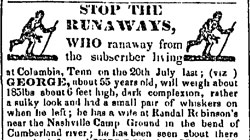
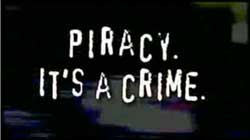
Runaway Slave Piracy. It's A Crime.
Assisting in the liberation of human property was a Federal crime. Unauthorized sharing of “Intellectual Property” is a Federal crime.

Redefining Property: Lessons from American History” is a great article on QuestionCopyright.org showing striking similarities in the arguments made by both advocates of slavery, and of IP, against slavery and IP abolitionists, respectively. For example, advocates of both slavery and IP argued (a) that it’s blessed by the Constitution; (b) that these are “property rights,” being violated by the underground railroad/piracy; (c) punishment for both “crimes” (helping runaway slaves, pirating IP) became increasingly severe; (d) and both types of abolitionists were called extremists (and the related view that any “reform” should be moderate and gradual instead of principled, radical, and instant); and other similarities. And as the article points out, there are other similarities: namely, that slavery enslaves people, while IP enslaves thinkers.

As the article notes,

I hear this a lot:

“IP is problematic, but the decision to free works should be the artist’s choice.” [3]

Legally artists DO have the right to choose whether to release works freely or place copyright restrictions on them.1 So we don’t need to discuss “should.” The nice response is to say, “yes they have that choice, and therefore I wish to present arguments in favor of choosing freedom.” Which I do.

But I can’t help imagining this argument in the early 1800’s:

“Slavery is problematic, but the decision to free slaves should be the slaveholder’s choice.”

As long as the discussion is about “owner’s choice,” we don’t have to question how we define property.

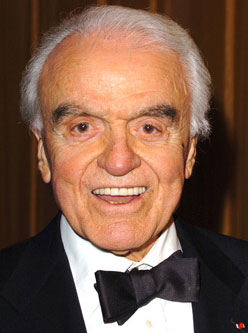
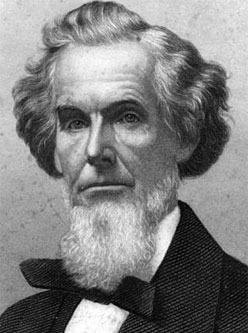
Jack Valenti, former head of the MPAA E. N. Elliott
Jack Valenti: “We are facing a very new and a very troubling assault on our fiscal security, on our very economic life and we are facing it from a thing called the video cassette recorder and its necessary companion called the blank tape.” [1] E. N. Elliott: “(W)itness…the existence of the ‘underground railroad,’ and of a party in the North organized for the express purpose of robbing the citizens of the Southern States of their property….” [2]

(h/t Rob Wicks)

Update: See also KOL190 | On Life without Patents and Copyright: Or, But Who Would Pick the Cotton? (PFS 2015)

archived comments:

{ 151 comments… read them below or add one }

Joshua February 15, 2011 at 9:10 am

Why… to demand the abolition of the private owning slaves would be communist! /sarcasm

REPLY

Stranger February 15, 2011 at 9:19 am

La fuite en avant for Stephan Kinsella. Just after being exposed for his shameless defamation of true economists, he continues with more of his fallacious defamation.

REPLY

Peter Surda February 15, 2011 at 9:57 am

What has been exposed is that you run away from debates.

REPLY

BuckeyeChuck February 15, 2011 at 10:04 am

You have a very low standard for the term “defamation”. Disagreement is not defamation.

REPLY

Stranger February 15, 2011 at 6:24 pm

Accusing IP creators of enslaving people is defamation.

REPLY

sweatervest February 15, 2011 at 7:49 pm

So what if it is?

REPLY

RWW February 16, 2011 at 12:26 am

… or, more accurately, it would be.

Breaking out the strawmen early on this one, eh?

REPLY

Onus Probandy February 15, 2011 at 10:03 am

I’m sorry, but comparing the abolition of slavery with the abolition of copyright is bordering on offensive. Treating a human as property is not the same as treating an idea as property.

Whatever your arguments might be for removal of IP; this is not a good one.

What next? Hitler believed in copyrights therefore they’re bad?

REPLY

BuckeyeChuck February 15, 2011 at 10:08 am

“What next? Hitler believed in copyrights therefore they’re bad?”

Wow. So much for thinking detailed thoughts on detailed topics, huh?

I found the analogy between human slavery and IP very interesting, especially because both people were claiming “their” way of life was being threatened. What about that is taboo?

I don’t understand why there are certain topics which some (obviously, you) think are so sacred as to be beyond commentary or analogy. Human slavery was a tyrannical tragedy of epic proportions. To decide it is not useful for lessons in other areas doesn’t enhance our chances of repeating such tyranny; it limits it.

REPLY

BuckeyeChuck February 15, 2011 at 10:24 am

That last sentence should have said:

“To decide it is not useful for lessons in other areas doesn’t limit our chances of repeating such tyranny; it enhances it.”

REPLY

Stephan Kinsella February 15, 2011 at 10:47 am

“I don’t understand why there are certain topics which some (obviously, you) think are so sacred as to be beyond commentary or analogy. ”

I understand it: as I pointed out in The Death Throes of Pro-IP Libertarianism, “When the holes in their weak arguments are exposed, they escalate and call us IP socialists or communists — even though the idea that people who mentally “labor” “deserve” a “reward” for their labor is itself Marxian …. Their escalating rhetoric is driven by a desperation arising from the growing awareness that they have lost. It resembles a bit the way the state keeps increasing IP protection — copyright terms always lengthening, the West twisting the arms of emerging economies to “strengthen” IP protection and the coming ACTA … — in the face of a growing, unstoppable wave of piracy and torrenting. We are seeing the thrashings of a dying institution and a dying idea.”

REPLY

Stranger February 17, 2011 at 9:05 am

The dying taking place here is the death of the capitalist system perpetrated by the state, and the theft of property counterfeiters engage in is no different from the theft perpetrated against the industries that are deserting America and leaving economic devastation behind them.

The reality is that the economics of intellectual communism only make sense if there is a communist-democratic state to protect pirates and counterfeiters. Under anarcho-capitalism, it is economically impossible for counterfeiters to obtain protection and it is economically impossible for any other system but intellectual property to become law.

REPLY

Stephan Kinsella February 15, 2011 at 10:44 am

It’s not an ad hominem. It’s an analogy. There are similarities. As the article points out, IP partially enslaves thinkers. This is not exaggeration or metaphor. See my post The Patent, Copyright, Trademark, and Trade Secret Horror Files for numerous examples of how copyright law, say, has resulted in literal censorship and even control of how others use their own bodies–slavery.

REPLY

Stranger February 15, 2011 at 6:44 pm

That you cannot use your body with my property is not slavery. If it were so, it would be impossible to object to rape, as it would be control over how others use their body.

In a world where no limits can be imposed on how you use your body, rape must be legal.

REPLY

sweatervest February 15, 2011 at 8:14 pm

“In a world where no limits can be imposed on how you use your body, rape must be legal.”

That’s a great case against someone advocating no property rights. Here it is a straw man.

“That you cannot use your body with my property is not slavery.”

No one ever contested that. The other side of this issue is that *ideas aren’t property*, and so your statement here is totally off topic (unless, of course, you would like to supply a theory of property rights that includes IP).

Also, I think this illustrates very nicely the confusion I so often hear in a defense of IP. The only reason A is allowed to stop B from trespassing on A is because the initiation of aggression is non-cooperative behavior, it is forceful and therefore not argumentative. Coercion and argumentation (not necessary through verbal language) are the only options for interactions among actors. Thus, a forceful act of A to stop B from trespassing is necessary to re-establish cooperative, i.e. argumentative, interaction. Until someone stops the aggressor there can be no cooperation but coercion. This is the only reason why force is justifiable to stop initiation of force. It is the necessary act to re-establish cooperation after non-cooperation is initiated.

Intellectual property fails this test. When a person plays a song or releases a recording or invents a machine and other people acquire these things without trespassing on (physical) property, those other people using that information cannot be conceived of as non-cooperative behavior. Everyone is still able to deal cooperatively, that is argumentatively, with each other because the integrity of their physical property, which is necessary for being able to argue, is in tact. No compromise of this cooperative behavior could possibly come about by breaking an IP law.

Rather, cooperation is compromised when IP law is enforced. When the person who hears a song and plays it himself, only to be arrested for breaking an IP law, this is when the initiation of aggression happens and non-cooperative action begins. It is course non-cooperative to force a person to never play a song he has heard, and this does nothing to re-establish cooperation because cooperation was never compromised (keep in mind cooperation absolutely does not mean you are happy with what everyone else does… insisting that would be the pinnacle of non-cooperation).

The substitution of argumentation for coercion happens at the enforcement of IP law, not at the breaking of it. This is the confusion I see all the time. Property rights exist because they lay out the necessary conditions for cooperation (argumentation) to happen, and IP laws work against this. I have noticed that many proponents of IP also fail to understand why reputation and value cannot possibly have property rights, and I would think it is for the same reason, and they all lead to the same conclusion: to decide what is justifiable behavior, everyone must be asked first what they think (for example, can you copyright 7 notes or 8 notes?). Putting aside how unfeasible that would be, the act of asking for permission could never be justified in this way and so it is logically impossible.

REPLY

Stranger February 15, 2011 at 8:33 pm

You are committing an error by claiming that counterfeiters do not trespass on physical property. They must (as in, it is physically impossible for them not to) trespass on the media carrying the “idea” in order to counterfeit it. They do not have ownership of this media and never will unless the full copyrights are sold to them by the producer.

Intellectual communism, at its foundations, refuses to accept this as true, but it is a physical fact admitted by the actions of market participants. Since it is undoubtedly true even to them, intellectual communists such as Stephan Kinsella unleash an arsenal of fallacies to confuse the issue, such as accusing IP producers of slavery! (A claim so ridiculous and shameful it should have him immediately expelled from the faculty of the Mises Institute.)

Of course, such an approach is a double-edged blade, and we can easily show how Stephan Kinsella can be an advocate of rape if his fallacies are followed to their logical end point.

REPLY

sweatervest February 15, 2011 at 9:15 pm

“You are committing an error by claiming that counterfeiters do not trespass on physical property.”

Counterfeiting is a form of fraud, and fraud is accounted for in this theory of property rights. If I tell you that this good performs a certain function when it does not and I know it does not, and you perform a trade with me on the condition that what I say is true, then the trade never actually happens because the conditions are not met.

In fact, it is this theory of property rights that lays out exactly what is fraud and what is not.

For example, if you tell me the piece of paper you have is redeemable at a certain bank for a certain amount of gold, and I say, “Okay then I’ll trade you this TV for that piece of paper, on the condition that you are not lying about its value”. If we make the exchange and you are lying, then the condition is not met, you are the one violating the terms, and thus you are stealing my TV because you have it even though I never traded it to you. This would carry the same weight as if you swiped the TV when I wasn’t looking.

If you give me a piece of paper, lying about how it can be exchanged at a bank, as a gift to me, then I have no case against you. I didn’t trade any of my property away on the condition that you are not lying, and so you did not commit fraud. It would not be fraudulent to hand someone a counterfeited piece of paper and tell him it is real. It would be fraudulent to tell someone it is real and then have him trade some of his property away for that piece of paper.

“They must (as in, it is physically impossible for them not to) trespass on the media carrying the “idea” in order to counterfeit it.”

As I have explained, counterfeiting as fraud has nothing to do with ideas but with people making conditional exchanges of physical property and then breaking those conditions (a basic contract, if you will). Again, if you simply give someone some counterfeit money you have not defrauded them, and your interpretation seems to miss that entirely.

“Intellectual communism”

I find it hard to take you seriously when you throw out pejorative buzz words that better characterize your own position than the opposing one (though I’d be willing to admit that neither of us are communists).

Playing this game we could, as this article seems to illustrate, call abolitionists “communists” because they are, according to proponents of slavery, against private property. :)

“refuses to accept this as true”

No we refuted it. Refutation is different from refusal. You seem to have a nasty tendency to hide behind some list of “fallacies” you printed somewhere, which represents no more than a stubborn refusal to advance the argument forward (that is, to reply to our arguments instead of to either previous ones or ones you provided for yourself, i.e. straw men).

“but it is a physical fact admitted by the actions of market participants”

Is this all you have to say to this effect, because it isn’t very convincing.

“such as accusing IP producers of slavery”

Dude, you should be embarrassed that this is what you got out of this article! Sheesh, this is like me pointing out that Obama’s (and especially Krugman’s) economic policies are hardly different from Hitler’s, and getting a response of, “So what Obama wants to exterminate Jews?”

No one ever said IP producers are guilty of slavery (you are more than free to try and find an example, good luck). This isn’t even about IP producers, but about the enforcement of IP, which is not done by IP producers. Also, it was not even suggested that the enforcers of IP are guilty of slavery, it has only been pointed out that the arguments used by supporters of IP were also used by supporters of slavery. That’s it.

This just completely missed the mark and I can only imagine that you said this because it is a sensational smear against your intellectual adversaries. It is hardly a notch above screaming, “IP Communists!!”

“A claim so ridiculous and shameful it should have him immediately expelled from the faculty of the Mises Institute.”

I’m guessing the faculty has comprehension skills and didn’t pull such a ludicrous meaning out of this article.

“we can easily show how Stephan Kinsella can be an advocate of rape”

You totally failed to do that. I explained the error you used there.

sweatervest February 15, 2011 at 9:21 pm

“You totally failed to do that. I explained the error you used there.”

Well I thought I did but I actually didn’t.

Your error is in thinking in black and white. Either your restriction on property rights or no restriction what-so-ever.

In other words, by Kinsella arguing that private property rights are incompatible with IP rights, and hence through his support of private property he must reject IP, what Kinsella has miraculously done is thrown out private property as well.

You are totally backwards on this. Rejecting IP does not lead one to a “no property rights at all, people can do whatever” conclusion. Rather, accepting IP leads one to a “no property rights, people can do whatever” conclusion because if IP were taken seriously everyone would be guilty of violating it because everyone uses ideas that were first used by other people, and so any act would be justified because everyone is a criminal.

So, no, Kinsella doesn’t support rape, you do, because the rape victim is a criminal anyways and has no rights. :)

Stephan Kinsella February 15, 2011 at 9:26 pm

“You are committing an error by claiming that counterfeiters do not trespass on physical property. They must (as in, it is physically impossible for them not to) trespass on the media carrying the “idea” in order to counterfeit it.”

Patent law has nothing to do with copying others’ ideas. (as if there is something wrong with learning) It can prohibit you from using your own innovative ideas that you did not learn from a previous inventor. Are you disavowing patent law now?

Stranger February 15, 2011 at 9:54 pm

I disavow patent law to the same extent that Rothbard did, when he demonstrated that copyright is a much more solid system to defend inventions (the invention being the media for the idea).

Your lawyering skills are floundering Mr. Kinsella, you are usually much better at inventing clever fallacies.

Edgaras February 16, 2011 at 12:24 am

“Playing this game we could, as this article seems to illustrate, call abolitionists “communists” because they are, according to proponents of slavery, against private property.”

Good post, sweatervest :D The abolitionists where truly just communists! How could they want to take slaves from their rightful owners? I guess, Stranger would have been a perfect slaver.

Wildberry February 15, 2011 at 3:37 pm

Exactly, Onus.

Ironically, I have argued that opposing all forms of IP rights is tantamount to supporting a form of slavery, as both hold that production for external economies is acceptable. Of course no one would choose to be a slave voluntarily, and so would naturally prefer to spend their time doing something else; i.e. produce for internal economies.

Slaves would free themselves if they could, and eventually they were. Since property rights are a human device, it is possible to hold property to be something, and later abolish it.

No one is saying that IP could not be abolished. The question is whether that is preferable.

REPLY

Phinn February 15, 2011 at 3:58 pm

“and so would naturally prefer to spend their time doing something else; i.e. produce for internal economies”

You’ve stretched this phrase so far beyond its original meaning that you’ve lost sight of what you are actually saying. Here’s the reality of what you are pretending to describe —

There are business practices that are currently built around the Imaginary Property regime imposed by our all-knowing Ministry of Love. These practices would probably have to change, should this monopoly-protectionism to come to an ignominious end. In the absence of IP, there are certain business models that, being wholly dependent on IP protectionism, would no longer be viable.

Cry me a river.

REPLY

Wildberry February 15, 2011 at 4:24 pm

Phinn,

There are life forms that are currently built around the imaginary property regime that air is in the public domain. The practices associated with breathing would probably have to change, should the protectionism of the public domain of air come to an ignominious end. In the absence of air, there are certain life forms that, being wholly dependent on breathing, will no longer be viable.

Cry me a river. Especially if you are one of the affected life forms.

REPLY

Phinn February 15, 2011 at 4:50 pm

You just violated my “property” rights in the words I used. Pay up, buddy, or you’ll soon get to know the “human device” known as SWAT teams and jail cells. $10,000 ought to do it. For now.

REPLY

Wildberry February 15, 2011 at 6:24 pm

You would have to prove it was a derivative work, but I would defend as a parady, and I would win. Sorry, no SWAT for you!

Shay February 15, 2011 at 6:49 pm

There are life forms that are currently built around the imaginary property regime that air is in the public domain. The practices associated with breathing would probably have to change, should the protectionism of the public domain of air come to an ignominious end. In the absence of air, there are certain life forms that, being wholly dependent on breathing, will no longer be viable.

Air isn’t scarce, and doesn’t require any artificial efforts to keep it that way. The default state is plentiful, even in the middle of nowhere.

REPLY

sweatervest February 15, 2011 at 8:16 pm

“You would have to prove it was a derivative work”

Yes, and a “derivative work” is defined as whatever it needs to mean in order to exclude examples that IP advocates agree would be ridiculous.

Shay February 15, 2011 at 6:53 pm

comparing the abolition of slavery with the abolition of copyright is bordering on offensive. Treating a human as property is not the same as treating an idea as property.

I don’t think it’s equating slavery with IP, rather the arguments of their respective proponents, and the way business models based on them are resistant to change.

REPLY

Ohhh Henry February 15, 2011 at 10:44 am

I’m sorry, but comparing the abolition of slavery with the abolition of copyright is bordering on offensive.

The analogy is a good one. If the regime decides that you have violated copyright and if you ignore or resist their attempts to confiscate your property (in vastly greater proportion to the supposed cost of the crime), they will treat you exactly the same as a fugitive slave. They will track you down anywhere in the USA, arrest you at gunpoint, shooting you if you resist, put you in a cage and if you are insufficiently cooperative they will shackle you and torture you with solitary confinement. It may become even worse than slavery, if the copyright treaties permit the extradition or international prosecution of suspected violators. In the 1800s even slaves were not molested if they made it to Canada.

Treating a human as property is not the same as treating an idea as property.

They are treating your thoughts (intellect) as their property, which amounts to slavery. And as stated above, they will physically imprison and confiscate the property of anyone whom they deem to have violated their thought crimes. If that isn’t slavery then what is? Is it only slavery if you’re forced to pick cotton?

Not only the for-profit purveyors of copied materials are threatened but even the poorest students and grandmothers who may be tracked down using their internet addresses are threatened with severe fines (to the tune of hundreds of dollars for “stealing” each song worth no more than one dollar). And of course any of these poor people who decline to be fined will be hauled away to prison and shot dead if they resist. In fact the poorer one is, the more likely to be robbed, enslaved or killed in the name of copyright law, because they lack both the knowledge to evade detection and the financial resources to defend themselves.

What next? Hitler believed in copyrights therefore they’re bad?

Hitler is also a very apt analogy for copyright law. The Nazis never hesitated to physically attack any individual or group who declined to cooperate the “greater good” as their government defined it. The imposition of copyright law is no more moral than anything that Hitler did, merely because the government which enforces the law was elected by popular vote.

If you want to consider copyright law as an issue to be determined by popular consent, then consider the fact that the vast majority of citizens commit offenses under the copyright laws nearly every day (when recording TV shows, photocopying recipes, copying music from CDs onto their MP3 players). Obviously they do not support copyright law. Is the imposition by government of a law which the people clearly do not support, backed by brutal fines, imprisonment and even torture and death, less tyrannical than anything that Hitler did?

REPLY

Ned Netterville February 15, 2011 at 12:27 pm

A closer kin to human slavery is human taxation, which in perhaps its earliest manifestation was known as tribute–the requirement of regular payments of compensation by conquered people to their conquerors. Thus taxation was devised as an alternative to killing or enslaving conquered people because it was more productive of the fruits of those other people’s labor. Of course IP could not exist in the absence of the state and its enslaving taxation, so your analogy is all the more compelling for that reason.

REPLY

GoldBacon February 15, 2011 at 6:15 pm

Interesting. I did not know this history. I learn something new every day. Thanks.

REPLY

Stranger February 15, 2011 at 6:36 pm

That is incorrect, taxation is the result of a king monopolizing justice, and hence being able to unilaterally determine what he is to be paid for this justice.

A conquering tribe may be able to steal from the conquered, but it does not follow that a tribal lord can tax his fellow tribesmen.

REPLY

sweatervest February 15, 2011 at 8:21 pm

“That is incorrect, taxation is the result of a king monopolizing justice, and hence being able to unilaterally determine what he is to be paid for this justice.”

You skipped the very important step of the king being able to compel people to pay for justice at all, which is what taxation is. In other words, the king conquered subjects and offered them an alternative to death or slavery.

“A conquering tribe may be able to steal from the conquered, but it does not follow that a tribal lord can tax his fellow tribesmen.”

Where does this categorical difference come from? Just like with the “citizenry”, if enough of the tribesmen believe that the tribal lord is owed by all the tribesmen, then a dissenting tribesman would suffer the same fate as a tax evading citizen.

REPLY

David C February 15, 2011 at 12:28 pm

You hoo (to those criticizing Kinsella) We all already know that copyright is not the same as slavery. It’s the poor justifications and reasoning they use that’s the same, get it. But even if it was a comparison, it’s a fair one. Copyright has shown itself to be a perfect example of the slippery slope argument. But even if it wasn’t, there are still plenty of examples of where IP is hideously evil. ie. Like how pharmaceutical companies sued African nations in the world court to block the import of generic AIDS drugs from India. Like the role patents played in banning DDT, which by some estimates has caused 50 million malaria deaths. Maybe not copyrights, but comparing patents to crimes against humanity is totally fair on any level.

Even if you believe that something like copyright is free market. This is a perfect example demonstrating that mainstream reasoning on the matter is outright stupid.

REPLY

Robert Wicks February 15, 2011 at 12:54 pm

@Onus. There is nothing offensive about how Nina Paley presented the argument. Forcible government always bears some resemblance to slavery. Indeed, it might well be argued that chattel slavery is simply an extremely abusive form of government, and each plantation was essentially a tiny patch of despotism within the borders of the USA. I myself have compared any number of statist outrages to various aspects of slavery. Being a black man from the south with a strong family background and a fair amount of knowledge about both slavery and its aftermath, I usually don’t get much grief about it, but the perception would naturally be different if a white person did what I do. That’s why, I imagine, Paley mentioned both the similarities and the differences.

REPLY

Tyrone Dell February 15, 2011 at 3:50 pm

Another black Libertarian who uses Linux? High-five!

REPLY

Wildberry February 15, 2011 at 4:13 pm

Robert,

With all due respect to a black man from the south, you are pretty confused about the issues here.

All property carries enforcement privileges against others who violate those privileges. The outrages you have against slavery are not a function of government support for it, it is a function of the vesting of property rights in other humans. Like all logical fallacies, if the premise is wrong the conclusion is wrong.

The premise was that humans can be the property of other humans. Once that premise is accepted, all the other “outrages” are simply an enforcement of those property rights. The means of that enforcement is irrelevant to the central legitimacy of the premise.

It is wrong to define humans as property, not because such property rights are enforceable, but because to do so violates a higher principle, that all [humans] are created equal, and have equal rights to life, liberty and the pursuit of happiness. This conflict was resolved at the time by refusing to recognize African slaves as human. Obviously that was wrong, and explains why we now generally believe the premise of humans as property cannot stand.

The fact that ridiculous arguments were made at the time by today’s standards, is completely irrelevant to the IP argument unless it can be shown that particular arguments being made about slavery are analogous to arguments in the IP debate.

The analogy for IP opponents is that just like slavery, the premise concerning what can be property is wrong; IP as property cannot stand. Why? Is IP the bondage of human being by other human beings? To be against the concept of slaves as property is in no way analogous to “original works” as property. One premise certainly does not prove the other, and whether one or the other or both are enforced by government is completely irrelevant to the issue, unless of course what you are really saying is that all government existence is a “statist outrage”. You wouldn’t be the first. SK has said, “We have IP becasuse we have the state”.

The concept that IP carries property rights is a long way from dead, despite SK’s declaration of victory. Last I looked one can still enforce rights in IP.

REPLY

J. Murray February 15, 2011 at 4:28 pm

My offer stands – put IP in a basket and show it to me. Don’t show me paper, ink, binding, glue, or leather. Don’t show me a CD. Don’t show me a DVD. Don’t play vibrations of air molecules. Show me an indisputable material called IP, in it’s physical manifestation, that cannot be confused with the materials it’s presented on or the means in which it’s transmitted. Demonstrate to me how it can be taken from someone else so they can no longer use it. Demonstrate to me how it can be damaged in such a way that it cannot be used in its intended purpose. Show me what IP looks like and you’ll have a rational argument. Until then, don’t belittle people.

Just count yourself lucky that you can’t, because if you can, I’ll homestead it and shut down your ability to speak, live, or even move without paying me hefty royalties.

REPLY

Robert Wicks February 15, 2011 at 7:23 pm

Wildberry,

Without government support for slavery, it is simple crime. With government enforcement for IP, it is simple crime. It would be criminal for someone to kidnap me and force me to pick cotton, unless we are using state definitions of crime, correct? Would it not be similarly criminal to take a person’s computer simply because he has information on it and did not pay someone to be able have a copy of it? Also, just as you rightly say that slavery violates the higher principle that all humans are created equal, does intellectual property not violate the higher principle that human beings have the right to configure their justly-acquired property in any configuration they find pleasing?

Certainly, IP is not as oppressive as slavery, and Paley did not attempt to claim that it is. However, forcing a man to avoid using the contents of his own mind (such as with a song he has heard, or a formula he has either learned or developed himself) to perform certain tasks with his own property is still a type of oppression. Things can be similar without evoking the same emotions. I would not claim that slavery and IP evoke the same emotions. A star and a marble do not conjure the same sense of wonder within many people, yet they both have gravitational fields. Making an analogy between them does not diminish the star nor does it magnify the marble.

REPLY

Wildberry February 15, 2011 at 10:30 pm

@Robert Wicks February 15, 2011 at 7:23 pm

“It would be criminal for someone to kidnap me and force me to pick cotton, unless we are using state definitions of crime, correct?”

Not sure what you mean here. What you describe is kidnapping by most any definition.

Slavery is state sanctioned kidnapping, meaning the kidnapped slave does not have a cause of action against the kidnapper.

“Would it not be similarly criminal to take a person’s computer simply because he has information on it and did not pay someone to be able have a copy of it?”

It would be a criminal act to take someone’s computer for nearly any reason. If the computer is used to commit another crime or civil offense, that act would be punished or damages would be imposed.

So the question is whether it is an offense to copy someone else’s work. I gather you think not.

“does intellectual property not violate the higher principle that human beings have the right to configure their justly-acquired property in any configuration they find pleasing?”

Not really. Just because you “justly-acquire” some property does not entitle you to do with it as you please without limits. Those limits exist at the margins of the rights of others. So you are back to where we started; Is using your property in a particular way a violation of another’s rights? If so, there is a legitimate basis to limit your rights to that particular use.

“However, forcing a man to avoid using the contents of his own mind (such as with a song he has heard, or a formula he has either learned or developed himself) to perform certain tasks with his own property is still a type of oppression.”

First, if IP laws operated as you say, I would agree that it is wrong. I hope you are not bothered by the fact that they do not. There is no restriction in IP laws on the use of one’s mind, or in recalling a song he has heard, even singing it to himself or his friends and family. Formulas are explicitly excluded from an form of IP protection, except perhaps for some esoteric applications in the context of software/hardware technologies.

“Making an analogy between them does not diminish the star nor does it magnify the marble.”

I like analogies. They are a valuable tool in gaining understanding. They can help distinguish things by pointing to similarities and differences between them. Some people object to them because they are “vague”. Vagueness causes me no real problem, because you can always polish the meaning of things you say to other people and what they say to you and reduce the vagueness. I find it a shallow objection that is used to attempt to derail a discussion about a difficult topic. If there is vagueness about a thing, talking it over often helps. What’s wrong with that? Anyway, I think the analogy here fails.

The analogy being offered here is that slavery was rationalized in ways that appear patently false today. By implication, justification for IP is equally patently false, and if you don’t think so, you should think of yourself as the type of person who once supported slavery. Throw in the hated State for good measure, and anyone who believes in IP rights should feel ashamed.

Sorry, that dog don’t hunt with me.

REPLY

Phinn February 15, 2011 at 11:03 pm

There is no restriction in IP laws on the use of one’s mind, or in recalling a song he has heard, even singing it to himself or his friends and family

Yeah, the legislation merely dictates that you can’t get paid for it! You own your body (for now), which includes your voice, and the neurons that encode the pattern of notes, but if you try to trade an act of your OWN BODY for something, given willingly by someone who owns that thing, on a voluntary, mutually-agreed basis, the State will swarm in on you like locusts.

Which amply shows what Imaginary Property legislation is ACTUALLY concerned with — like all statist monopoly privileges, it’s all about protecting market share.

REPLY

sweatervest February 15, 2011 at 8:29 pm

“Like all logical fallacies, if the premise is wrong the conclusion is wrong.”

That is not a logical fallacy. There are valid arguments with wrong premises and right conclusions.

What you are suggesting here is that if something is ever argued poorly or starting from false premises, whatever the conclusion is it must be false. As a dramatic example of the error here, consider the (obviously) false premise of “A and not A” (a contradiction). Every proposition imaginable follows as a valid conclusion from this premise and so that would lead you to conclude that every proposition is false, because they are all conclusions of an argument that begins with false premises!

And maybe this explains what is going on here! From what I can tell, many of the IP advocates seem to think that if they find a potential hole in the anti-IP side (I don’t think they have but let’s assume they have) that is conclusive reasoning that IP is legitimate! Hence the complete non-existence of a property rights theory to incorporate IP, with only a (poor) attack on the property rights theory that excludes IP.

REPLY

Peter February 16, 2011 at 1:56 am

This conflict was resolved at the time by refusing to recognize African slaves as human.

What are you talking about? Do you mean the “slaves count for 3/5s” rule in the Constitution? You know that’s an anti-slavery measure, right? If the abolitionists had had their way, slaves wouldn’t have counted at all! Counting slaves for the purpose of apportioning votes gives more power to the slave owners — it’s not like the slaves got to cast those votes!

REPLY

Wildberry February 16, 2011 at 2:53 pm

I am simply saying that to resolve “All men are created…”, and not have that apply to slaves, it was necessary to consider slaves somthing other than “All men”, i.e. non-human.

That was a contradiction of principle which eventaully fell, as it had to.

REPLY

Wildberry February 15, 2011 at 4:38 pm

J. Murray,

Put your checking account in a basket and show it to me. Don’t show me paper, ink, binding, glue, or leather. Don’t show me a CD. Don’t show me a DVD. Don’t play vibrations of air molecules.

You don’t believe checking accounts exist?

REPLY

J. Murray February 15, 2011 at 4:58 pm

They do exist because I can demonstrate that your use of mine impedes my use of it because the cash is no longer on account. The money cannot be simultaneously used by two or more individuals (hence why I’m also an opponent of fractional reserve banking) without making the resources unusable by the originator. I can obtain physical representation of that account that fits the requirements – can be rendered unusable by the existing owner via theft or damage. The same cannot be said for IP.

Another way to say it is my bank account follows the Laws of Conservation. My account may be converted and changed, but it cannot be created out of thin air (it also cannot be truly destroyed, just altered in a way that is counter to my desired ends as the owner, rendering it unusable to me). IP can be created and replicated out of thin air, thus violating basic physical laws of the universe thus not being real property but imaginary.

Insert quarter, try again.

Or can you demonstrate to me that IP follows the same Laws of Conservation that matter, energy, motion, etc, do?

REPLY

Wildberry February 15, 2011 at 6:06 pm

J. Murray,

No one else can use it because it is your property. If everyone else could use it, you would not have exclusive economic interest in it. It is not because the particular numbers in a particular ledger are scarce, it is that they are made scarce by vesting property rights to your specific account number. That is just another way of saying that your checking account is your property, and you have exclusive rights to it. Also, you can’t counterfeit money by copying your own numbers into your account, or copying them into another account.

You are simply describing the way property works. It works that way because humans designed it to work that way. Therefore, property is a human device.

Even slaves can be called property if we decided to do it. Our common objection is why it doesn’t exist today. It violates our contemporary ethics because we hold that a superior principle of liberty trumps it.

Laws of conservation includes the conservation of energy. Energy is only tangible when it operates on physical matter. Anyway, no one is saying that IP is subject to these laws in any but the most metaphysical ways. Can you demonstrate that an idea follows these laws in the way you mean? Then why would say that original works, which are of the NATURE of ideas, should? We need only agree to treat something like property for it to be done. It is a human device.

Like many here, you are simply choosing to define property in such a way that it excludes certain phenomena, like original works of authorship. You do that in order to arrive at a desired outcome, much like a scientist who fudges the data to make it reach the “right” conclusion.

REPLY

GoldBacon February 15, 2011 at 6:22 pm

I think your use of a checking account as property is a poor analogy.

Your property is the money that you have deposited into the bank. You own the money; a “checking account” is merely an abstract construct meant to denote that you have property on deposit at the bank.

For example, let’s take the following list of things currently in my living room: TV set, DVD player, couch, Roku, chair, copy of Human Action, and Tivo. Do I own “the list”? Or do I own each of those things on the list?

REPLY

Stranger February 15, 2011 at 6:34 pm

The problem here is that the list of things that your checking account refers to is fiat money, hence it is a purely virtual good. Fiat money is a legal monopoly on a money supply.

If IP communism were valid, then the legal monopoly on printing fiat money would be abolished, and your checking account would instantly become worthless, having either the same amount of money or an unlimited amount (the result would be the same). The money market would be destroyed and no one would be any better off from it.

REPLY

sweatervest February 15, 2011 at 8:35 pm

“IP communism”

For the love of god please read Marx before you re-interpret his theory of property and present it as anti-Marxian.

“then the legal monopoly on printing fiat money would be abolished, and your checking account would instantly become worthless, having either the same amount of money or an unlimited amount (the result would be the same). The money market would be destroyed and no one would be any better off from it.”

Oh, wait, you think a monopoly on the money supply is a good thing!? I think it is deliciously ironic, in only that way a statist (perhaps one in denial) can provide, to say that “no one would be any better off” when they are actually not denied a choice in what to do!!

Yes, the advocates of monopoly (=government) will eventually admit that they in fact know what people want better than those people themselves do, and that’s why they should not have choices and rather there needs to be only one provider: the one deemed best by the dictator.

Wildberry February 15, 2011 at 6:57 pm

GoldBacon,

Are you sure? Is your money actually “there”, physically? Or is it simply a promise by the bank to turn those numbers in your account into cash on demand.

It is the uniform promise to pay that gives value to your checking account and permits you to use it as a money substitute.

If you wrote this list on a piece of paper, along with “I hereby grant free and clear title to the things on this list to Wildberry” and signed it, what would that list have become?

You would have just created a security interest in your things. You have created property out of thin air. I can take that promise, which was intangible just before you wrote it on the paper, and exercise my new exclusive economic rights and sell it, give it away etc., without every actually seeing the goods you have conveyed. I have no idea if they exist. My only evidence is this contract.

You can do this because you owned the physical items, but you created a property interest in them by fixing an intangible promise on a piece of paper. Property of all kinds are a human device. Property may be an actual thing, or a security interest in a thing. One is a tangible, physical thing, and the other is an intangible promise. The paper is not the promise. It is the promise that is enforceable. The paper is simply EVIDENCE of the promise.

A story that I author is intangible, because it comes out of my head, using things (knowledge, experience, words, ideas, time/space relationships, descriptions of characters, dialogue, etc.) that I specifically choose to express. The evidence of that intangible work is the FIXATION upon a tangible medium. It is not the paper that is the property, but the story.

REPLY

Dan February 15, 2011 at 9:07 pm

Can you define property for me? An intangible promise is property?

If I copy a pdf online what exactly am I stealing? If it is a monetary reward, is it stealing when I lend my books or give them away to my friends?

Tyrone Dell February 15, 2011 at 9:39 pm

>>Are you sure? Is your money actually “there”, physically? Or is it simply a promise by the bank to turn those numbers in your account into cash on demand.

Remarkably, you are hitting on a very important topic within Austrian Economics. The debate between full demand-on-deposit vs. fractional reserve banking is pretty fascinating.

If you have time, definitely check out Jesus Huerta de Soto’s brilliant work Money, Bank Credit, and Economic Cycles for a seriously in-depth analysis of this situation.

Wildberry February 15, 2011 at 10:35 pm

Tyrone,
Why “remarkably”?

I read his book in two days. I couldn’t put it down.

J. Murray February 16, 2011 at 12:11 pm

The possibility of it not being there isn’t relevant to the conversation, that falls under the discussion of fraud. The account is but a record of what was deposited. Deleting it or altering it doesn’t destroy the ownership of the base asset deposited. It only masks the ownership chain. The ownership remains, the record is what was changed.

Property must fall under the base conservation rules of the universe. Without this concept intact, the concept ceases being property and becomes fantasy. Basic societal rubes cannot be formed around fantasy. It’s the same concept behind many libertarian rejection of laws like slander and the opposition to fractional reserve banking. They’re entirely based in fantasy. IP is fantasy. It doesn’t exist. Harry potter doesnt exist. An invention doesn’t exist. The paper may be manipulated to talk about a British wizard and metal may be formed to fit the description of the invention. But that’s what IP is attempting to do, hold ownership over an abstract description that dies not have form of any kind. It can’t be stolen or altered because it does not exist. And law and policy cannot be forked around that which does not exist.

There is no iPhone, there is only an organization of silicon, glass, titanium, and other materials that fit an abstract description.

Wildberry February 16, 2011 at 11:02 pm

@J. Murray February 16, 2011 at 12:11 pm
“The account is but a record of what was deposited. Deleting it or altering it doesn’t destroy the ownership of the base asset deposited. It only masks the ownership chain. The ownership remains, the record is what was changed.”

Are you sure this holds up? You can only own what you can prove you own (non-violent) or defend by any other means (violent).

If the record you have that proves that you own $100 in the bank account suddenly goes missing, how will you prove you own it? In this sense, it is the record that is important, because if you have the record, you can claim and defend your ownership of the $100.

You may hold up the bank with a mask and a gun because you “know” $100 in there belongs to you, but how do you think that would really play out?
Just like green paper is a money substitute, the record that you own money is a substitute. Without the green paper or the record, you are SOL.

“It’s the same concept behind many libertarian rejection of laws like slander and the opposition to fractional reserve banking. They’re entirely based in fantasy. IP is fantasy.”

Your use of the concept “fantasy” is interesting. What does that mean? Are you saying that a fantasy is not “something”? Then why do we have a word for it? We interpret “fantasy” a meaning something to do with creation that is not limited by the tangible world. Until we fix our fantasy in some tangible form, it cannot be communicated to others, but the fact that it can must mean there was “something” there to communicate.

“Harry potter doesnt exist.”

He sure made a ton of doe for somebody. Nice fantasy!

“But that’s what IP is attempting to do, hold ownership over an abstract description that dies not have form of any kind.”

I think you are trying to say that the intangible can only exist in the form of some tangible thing, and the tangible thing is all that there is?

Mises wrote about this and Tucker quoted him recently. I can’t recall verbatim but he was talking about the intangible thoughts that precede action, and he said something like, just because they are intangible, they are not phantoms. They are real and affect the world in very specific ways. They are the process of rationalization, for example, that precedes human action. You can only see the action, but it is obvious that that action did not come from nowhere. If you want to know what it is, look at the actions. If you see a production process, that process started as a plan, which is intangible but not a phantom. It exists.

When humans act, their “fantasies” take form. The form cannot exist without the prior existence of rational thought. Just because these thoughts manifest Harry Potter does not make them any less real than the plans to build a forge that can be used to produce a sword.

“It can’t be stolen or altered because it does not exist. And law and policy cannot be forked around that which does not exist.”

Well, you can’t take my “fantasies” directly from my brain. But if I express my fantasies in the form of a story, you can copy that story from the original. If you did that on a scale of production that resulted in very good copies that could not be distinguished from the originals, I would call that counterfeiting. By simply incurring the costs of duplication, you are obtaining the benefit of someone else’s capital investment for a very low cost, just like printing a suitcase of $100 bills for the cost of some paper and ink and spending them like you earned them.

What is the difference in the context of IP or any other form of production?

“There is no iPhone, there is only an organization of silicon, glass, titanium, and other materials that fit an abstract description.”

Case in point. If I put a pile of silicon, class, titanium and other materials on the table, would you be able to produce an iPhone? At any cost, much less $300?

I know you have heard of “I am Pencil”, but did you see the video floating around here, I think it was a TED presentation, called “I am Toaster”? If it was easy, everyone would be doing it. If it is easy (photocopying), that doesn’t make it inherently different. That just makes it a candidate for counterfeiting.

Edgaras February 15, 2011 at 5:01 pm

Why all pro-IP people still assert these kind of analogies when they were refused many times?

REPLY

sweatervest February 15, 2011 at 8:38 pm

I don’t know, why do so many people laugh when I tell them “taxing is stealing”?

REPLY

Tyrone Dell February 15, 2011 at 9:33 pm

Taxation is voluntary!! Didn’t you get the memo, brah?

REPLY

Nuke Gray February 16, 2011 at 8:50 pm

I think the word you want is ‘refuted’, not refused. I would deny they were adequately refuted.

REPLY

Phinn February 15, 2011 at 5:08 pm

Checking accounts arise by express agreement. They are not property, except by metaphor. They are just contractual claims to be paid an amount of money in the future according to certain terms and conditions, and as such are justified by the promise and/or agreement, not by property principles, which are (where valid) applicable to everyone regardless of agreement.

There is no such thing as intangible property, other than that which is built upon agreements, promises, contracts and the like, the rights to which can then be transferred around from person to person as though they were property, although they do not originate in any way comparable to rights in tangible property.

Tangible property is a normative principle arising from a conflict of incompatible uses (sometimes called scarcity, sometimes called rivalry), which is not possible with regard to infinitely replicable patterns.

Perhaps contractual rights (like checking accounts) can be thought of as originating in physical property — i.e., the property rights one has in oneself. Since a man owns himself, he can therefore promise to pay someone X amount of money in the future. Using force to compel performance of that promise is justified, because he had the right to alienate that sum of money from his person by choice. But Imaginary Property doesn’t purport to operate that way, either.

REPLY

Wildberry February 15, 2011 at 6:33 pm

Phinn,
“They are not property, except by metaphor.”

What does this mean? They ARE property by metaphor, or that are not really property, they just act like it?

“There is no such thing as intangible property, other than that which is built upon agreements, promises, contracts and the like, the rights to which can then be transferred around from person to person as though they were property, although they do not originate in any way comparable to rights in tangible property.”

See how hard you work just to avoid actually calling it property? It walks like a duck, talks like a duck, but its really a zepbra?

Property that can arise by contract can be encoded by law. The difference is jsut as you say; laws are universally applicable and do not depend on privity in contract.

“Tangible property is a normative principle arising from a conflict of incompatible uses (sometimes called scarcity, sometimes called rivalry), which is not possible with regard to infinitely replicable patterns.”

Again, you just assume your conclusion; property is limited to the tangible, (except contracts, checking accounts, securities, etc. etc. etc.), so IP cannot be property.

“Since a man owns himself, he can therefore promise to pay someone X amount of money in the future. Using force to compel performance of that promise is justified, because he had the right to alienate that sum of money from his person by choice. But Imaginary Property doesn’t purport to operate that way, either.”

A promise to pay creates a property interest in the promisee, which can be sold, assigned, or borrowed against as collaterial. i.e. it is PROPERTY. Therefore it operates EXACTLY like other property. There even a concept of tresspas, it is called “interference with contract”. See???

REPLY

Tyrone Dell February 15, 2011 at 6:48 pm

>>Again, you just assume your conclusion; property is limited to the tangible, (except contracts, checking accounts, securities, etc. etc. etc.), so IP cannot be property.

Wrong. The assumption is that property rights are derived from scarcity. In the realm of ideas and thoughts, there is no scarcity. Hence, there is no legitimate intellectual property that can arise in a free-market. QED

Any attempts at intellectual property would have to be artificially maintained by a coercive monopoly on violence, viz., a government.

REPLY

Wildberry February 15, 2011 at 7:13 pm

Tyrone Dell,

Again, you just assume your conclusion; property is limited to the SCARCE, (except contracts, checking accounts, securities, etc. etc. etc.), so IP cannot be property.

If I copy one contract exactly, do I get twice as much stuff?
If I make a copy of my bank statement, do I have two bank accounts?

Why not? I didn’t change the scarcity of the originals?
Ideas are not scarce. What is an idea? “Idea” is an idea. Anyone can use the word any way they wish. Ideas are specifically not protectable by patents or copyrights. Yet original works of authorship are.

Does that mean that stories are not simply ideas? Does that mean that a story while having something in common with ideas, are not one and the same thing? A mere interpretation of the same phenomena, (whatever that means)?

If you are a sword maker and you use free oxygen in your furnace, does that mean the sword you produce is free to all takers? I mean, oxygen is free, so how can you claim property rights in the products of your own means of production? Because oxygen comes from the public domain, then everything you produce with oxygen must be free! Yea!!! To each according to their need!! Utopia!

Stories are scarce. If you don’t think so, try to write one. Make it a short one, say 100 pages. But if you use any letters, words, ideas, facts, or knowledge, you must make it a gift to all of humankind. Wonderful…

REPLY

sweatervest February 15, 2011 at 8:45 pm

“Again, you just assume your conclusion; property is limited to the SCARCE”

Scarcity means rivalry, that is there exists conflicting uses of a good (one person’s use of a good at a given time implies no one else is using it at that time). The only reason why property rights exist at all is because of this kind of scarcity. After all, if there was no rivalry there would be no conflict, no disagreement, and no need to establish at all what is “justified” and what is not.

Perhaps what the anti-IP side has failed to illuminate enough is that when we say “there are no property rights in non-scarce (non-rivalrous) goods like ideas” we don’t mean “there shouldn’t be” but rather “there are not”. Nobody is actually concerned with property rights in ideas, which are simply inconceivable. The point is that when people think they are “protecting their ideas” it has nothing to do with the idea but with other *scarce* goods, like bodies, recording devices or productive plants.

People do not have a choice to place property rights in non-scarce goods. There simply is no conceivable form of “rights” in such goods. Some IP supporters have openly admitted this and, I guess, asked “so what?” I guess the best answer to that is, “Well all that property IP grants people rights to, is property whose rights were already granted to someone else through the homesteading principle. It can either be homesteading or IP, not both, and if you give up homesteading you give up your body.”

REPLY

Peter Surda February 17, 2011 at 11:03 am

Very well put sweatervest,

based on my current experience however, IP confusists will however continue to avoid confronting this issue at all costs.

REPLY

Wildberry February 17, 2011 at 1:41 pm

Sweatervest,

“People do not have a choice to place property rights in non-scarce goods.”

Your error is equivocation. If I agree that property rights are only legitimate for scarce goods, that does not mean that I can equate the non-scarcity of “ideas” with the scarcity of “original works of authorship”. That is like equivocating “words” with “information”, or the letter “a” with “word”.

Do you deny that such works are scarce goods, requiring capital and a means of production?

Furthermore, do you deny that a producer who owns the means of production has a property right in the products thus produced?

REPLY

Tyrone Dell February 15, 2011 at 8:52 pm

http://academy.mises.org/courses/logic/

You are quite possibly one of the worst cases of sloppy, confused thinking that I have ever come across on the Internet. Congratulations.

P.S. – No, this isn’t an ad hominem.
P.P.S. – Nobody except you ever assumed their conclusion. You are assuming your conclusion that Intellectual Property really is property. You have yet to prove it. See [1] and [2] for more information regarding how to prove propositions.
P.P.P.S. – I highly recommend the book An Introduction to Mathematical Reasoning by Peter J. Eccles. It’ll help you straighten and streamline your thinking so we don’t have to put up with your dull tirades for much longer.

[1] http://en.wikipedia.org/wiki/Formal_proof
[2] http://en.wikipedia.org/wiki/Axiomatic_system

REPLY

Nuke Gray February 15, 2011 at 9:17 pm

Wrong, Tyrone, because very few people bother to think! And, if you read my earlier contribution, you’ll see my justification for a form of IP.

REPLY

Dan February 15, 2011 at 9:20 pm

Again, you just assume your conclusion; property is limited to the SCARCE, (except contracts, checking accounts, securities, etc. etc. etc.), so IP cannot be property.

Those things are scarce. If I go to a bank and set up a checking account but never get any paperwork at all from them, how do I challenge in court to prove that I have a checking account with them if they just stick the money in their pocket and act like they’ve never seen me before? You think the property is in the promise but good luck with that in court. I’ve never heard of someone claiming a promise was property.

“If I copy one contract exactly, do I get twice as much stuff?
If I make a copy of my bank statement, do I have two bank accounts?

No, you just have created a duplicate of the contract and the bank statement. Do you think that copying a contract or a bank account should be protected by IP law?

REPLY

Peter Surda February 17, 2011 at 11:31 am

Wildberry,

Again, you just assume your conclusion; property is limited to the SCARCE, … , so IP cannot be property.

If this wasn’t true, then it would be trivial to refute it, like I said already on multiple occasions, by showing an example of an action that involves a non-scarce good but does not involve a scarce good. So where’s the refutation?

If on the other hand, such an example is not known of, the claim becomes a falsifiable but not yet falsified proposition. I.e. a proper theory from the point of view of a falsificationist.

REPLY

The Kid Salami February 17, 2011 at 11:52 am

Dan, Tyrone, sweatervest, Peter

I’m going to state in advance that admitting this doesn’t mean that there is necssarily any case whatsoever to IP, just in the interests of getting a straight answer. Because, frankly, I’m genuinely curious at whether you are all unable to grasp this, unwilling to grasp it, or simply think this question is irrelevant. (My personal view is Kinsella has brainwashed you all into a weird combo of the second and third).

Let’s agree that action only ever uses tangible stuff. Do you agree that the suitability of some goods, which are being used as means for some end, depends on their scarcity?

If you don’t want to answer that directly for some reason, to expand – do you agree, for example, that in a society where gold coins were the only money, if some alchemist produced gold from sand, then gold would immediately, that day, become unsuitable for use as money.

Yes or no would be sufficient.

REPLY

J. Murray February 17, 2011 at 12:05 pm

The use of a good is heavily dictated on how scarce it is. If an alchemist did, in fact, find a way to produce gold out of sand, then gold’s valuable use would rapidly expand. Gold is an incredible anti-oxidizer for example. Utilizing gold coating on metal framing in cars, buildings, and other uses of iron and steel would dramatically reduce rusting and improve the lifespan of the structure. Gold also makes a good conductor because of how well it transmits electrons and because of how soft it is, gold would quickly replace copper as the material of choice for electric wiring in homes, buildings, and high tension lines.

As for the increasing amount of gold on the money supply, gold would end up being supplanted by something less likely to be produced in such high numbers to function as money.

And there would be nothing wrong with the above. Gold has valuable industrial uses that aren’t readily explored because of the metal’s scarcity. Money is, in the grand scheme of things, one of the least important uses of physical goods. Replacing gold with some other commodity that has similar produtctive uselessness as gold does now wouldn’t negatively harm the system whatsoever. Pricing would just refluctuate around the new unit of measurement and it’s new relative scarcity.

REPLY

The Kid Salami February 17, 2011 at 2:30 pm

“Gold is an incredible anti-oxidizer for example. Utilizing gold coating on metal framing in cars, buildings, and other uses of iron and steel would dramatically reduce rusting and improve the lifespan of the structure. Gold also makes a good conductor because of how well it transmits electrons and because of how soft it is, gold would quickly replace copper as the material of choice for electric wiring in homes, buildings, and high tension lines.”

You’re winding me up right? What has this got to do with the point at hand? I’m convinced you don’t even read some of the posts you respond to.

I asked a very specific question. You didn’t answer it. Or, if you did, it was lost in your seemingly uncontrollable desire to take this as an opportunity to lecture everyone on points that are utterly irrelevant.

Peter Surda February 17, 2011 at 12:54 pm

Hi Kid Salami,

I’m going to state in advance that admitting this doesn’t mean that there is necssarily any case whatsoever to IP, just in the interests of getting a straight answer.

Even if that was, I would have no problem with that. I didn’t say there is no case whatsoever for IP, but that the theories as they are presented by IP proponents are, well, you know, crap. That does not mean that they can’t fix it.

Do you agree that the suitability of some goods, which are being used as means for some end, depends on their scarcity?

Yes. Scarcity influences the opportunity costs of actions, so it’s kind of obvious. Of course, there are other factors that influence usability too, for example the scarcity of substitutes.

in a society where gold coins were the only money, if some alchemist produced gold from sand, then gold would immediately, that day, become unsuitable for use as money.

Ceteris paribus, I agree. I have actually been hypothesising if non-commodity market-produced money (like bitcoin) would replace commodity money if we had replicators (like in Star Trek). But I suppose that’s getting too far ahead of the debate.

REPLY

The Kid Salami February 17, 2011 at 2:33 pm

“Yes. Scarcity influences the opportunity costs of actions, so it’s kind of obvious.”

Ok.

The Kid Salami February 17, 2011 at 2:34 pm

“Yes. Scarcity influences the opportunity costs of actions, so it’s kind of obvious.”

Ok.

“Of course, there are other factors that influence usability too, for example the scarcity of substitutes.”

What, exactly, do you mean by this?

Peter Surda February 18, 2011 at 1:44 pm

Kid Salami,

What, exactly, do you mean by this?

Strictly speaking, it does not have to do directly with your question, so please accept my apologies. My intention was not to divert attention, but to point out that the sentence is an implication rather than equivalence (the implication does not work the other way around).

Phinn February 15, 2011 at 7:05 pm

Wildberry, you are hopelessly confused. You said all you needed to say when you argued that slavery is justified if enough people think it is.

This is what you reallyean by “human device” — that any unprincipled nonsense can stand if we only believe it makes sense.

Morality must be founded on principle, or it is merely a lie — an instrument of oppression. There is nothing more effective in subjugating humans than false assertions of morality.

You are a hypocrite every single time you trot out the “human device” line. You assert moral principle by merely making a claim of property, but then contradict yourself by arguing that moral rules can be whatever “we” want them to be.

No, they can’t. If they can be whatever we want them to be, they are not a matter of principle. In which case, it’s only your opinion that you’ve asserted, which is worth nothing.

Slavery can’t be both ethical and unethical, depending on who is announcing the human device du jour. Either the principle is that it’s wrong, or that it’s not.

“Human device” is a euphemism for “preference.”. I don’t give a fig what your preferences are. If instead you are going to claim to know what is right and just for all humanity, then you are required to elucidate the universal moral principle at work. You haven’t and you can’t.

REPLY

Wildberry February 15, 2011 at 7:50 pm

@ Phinn February 15, 2011 at 7:05 pm

“You said all you needed to say when you argued that slavery is justified if enough people think it is.”

Now don’t get all righteous on me, Phinn! What I said was: “Even slaves can be called property if we decided to do it. Our common objection is why it doesn’t exist today. It violates our contemporary ethics because we hold that a superior principle of liberty trumps it.”

We did (historically speaking) decide to do it, and then we decided not to do it. It is wrong not because the concept of property is “wrong”, but because attributing property rights in other humans is wrong. Both were decisions made by people and enforced on other people. That is the way property works, no? It worked the same during and after slavery, yes? I’m talking about property rights, not slavery. I think you jumped the gun, but I’ll give you another chance.

“This is what you reallyean by “human device” — that any unprincipled nonsense can stand if we only believe it makes sense.”
Is this not the case? So what do we really believe? That’s what matters. Beliefs have a way of manifesting themselves in society, don’t you think? The trick is to believe in good and right stuff, right? It hasn’t always been that easy.

“Morality must be founded on principle, or it is merely a lie — an instrument of oppression. There is nothing more effective in subjugating humans than false assertions of morality.”

Not sure what you’re getting at here, but it sounds really righteous. Morality is simply a measure of how we conduct ourselves compared to toe prevailing principles of ethics. Getting the ethics right is the history of human struggle. Are we still talking about the ethics of recognizing property rights in the intangible works of authorship?

“You are a hypocrite every single time you trot out the “human device” line. You assert moral principle by merely making a claim of property, but then contradict yourself by arguing that moral rules can be whatever “we” want them to be.”

As distastefully as it may be, that is exactly what morals are. Not YOUR morals, or MY morals, but morals in general. Ubangi cannibals may have a different code of ethics than me, but they still operate within a code of ethics. They still judge each other as committing moral and immoral acts. That’s what human societies do. Our society has its own morals, and they are based on the principles we hold. Are we still talking about IP?

“No, they can’t. If they can be whatever we want them to be, they are not a matter of principle. In which case, it’s only your opinion that you’ve asserted, which is worth nothing.”

I like to think my opinion is not worth nothing, but you have cast your vote, so I’ll have to live with that. Another opinion I have is that you and I probably share many ethical principles, but you want to generalize that I’m a slave monger, or that I have no principles, or whatever, just because we disagree on the principles of the ethics of property relative to IP. Let’s dial it back a few notches, eh?

“Slavery can’t be both ethical and unethical, depending on who is announcing the human device du jour. Either the principle is that it’s wrong, or that it’s not”

Just to be clear, I am certain that my code of ethics calls slavery unethical. It is wrong because it violates the golden rule, among other things. We no doubt agree about that. But in the end it is just an opinion, but one backed up by some strong principles and sound logic. That one is a settled issue, in my mind. But even today, not everyone and not everywhere do humans act morally based on our principles. We should keep after it. Are we still talking about IP?

“Human device” is a euphemism for “preference.”

It is. We can be said to prefer one code of ethics over another. Take any two people, say Phinn and Wildberry, and line their principles up. Some of them will align, like on slavery, and others will not, like IP. That doesn’t make you a bad person, Phinn. You’ll eventually catch on.

“I don’t give a fig what your preferences are.”

No kidding?

“If instead you are going to claim to know what is right and just for all humanity, then you are required to elucidate the universal moral principle at work. You haven’t and you can’t.”

Well, I didn’t presume to be the second coming, so your challenge is a little above my pay grade. However, if we are still talking about IP, I am saying that you and others who oppose the very concept of IP are inconsistent and/or dishonest in your analysis of property rights, what they are and where they come from. You have adopted a single standard test that you try to apply universally across all of creation, and when you encounter inconsistencies, you just define them away and act like you have discovered some kind of moral high ground.

Let your conclusions rest a minute, and you can see that there’s plenty of room around here for differing viewpoints. At the moment, you reside in an ethical position that is not very universal. Your world view is at odds with most of humanity. Certainly you are at odds with the prevailing system of ethics, morality and laws. So I would say you have a tall hill to climb before the rest of us can see your light. Be patient with us.

REPLY

Phinn February 15, 2011 at 9:11 pm

You have adopted a single standard test that you try to apply universally across all of creation …

So has everyone who has ever uttered any phrase along the lines of “You should …”

That’s what all normative assertions pretend to be — an assertion of universal application. Otherwise, it’s really nothing more than an assertion of “I’d prefer it if you did …” Which is fine, I guess, but means nothing in terms of ethics, or certainly carries no more weight than anyone else’s expression of preference. People often try to avoid that obvious insignificance by pretending their preferences are assertions of universal principle.

You want to pretend that your normative assertions are both a “human device” (and thus vary from tribe to tribe, person to person, time to time and culture to culture) and a declaration of universal principle.

Let your conclusions rest a minute, and you can see that there’s plenty of room around here for differing viewpoints.

They’re not viewpoints. They’re assertions of principle. To the extent they differ, either one is right and one is wrong, or both are wrong. Inconsistent assertions of universal principle cannot both be right.

Your self-contradiction and hypocrisy is childish and patently silly.

Your world view is at odds with most of humanity.

So? That makes people right? Popularity?

REPLY

sweatervest February 15, 2011 at 9:34 pm

“So? That makes people right? Popularity?”

I’ve been very surprised at how many people I’ve talked to conceive of ethics as some sort of prior agreement to be reached by as many people as possible on what the rules should be.

My response is, “If that ever happened there’d be no need for ethics”.

REPLY

Phinn February 15, 2011 at 9:56 pm

Some people are VERY uncomfortable with the idea of universality in ethics. But ethics IS universality. That’s what it is. That’s what it claims to be. Otherwise, it’s just your preference against my preference, and for me, my preference wins every time. Same for you, I suspect.

These people are uncomfortable for two main reasons, in my experience:

A. They’re morally corrupt. They deny universality of principle because they are on the wrong side of universal principles, the way that bank robbers deny that they robbed a bank. Corrupt people love to confuse, obfuscate and change rules. The really smart ones become politicians.

B. They are moral relativists, like Wildberry. This denial of universality is clearly a psychological defense mechanism. I have never met someone who exhibits such a trait who did not grow up with an abusive, domineering parent. This abuse invariably takes a very distinctive form — a specific kind of dogmatic, doctrinal domination. The parent imposes some set of irrational beliefs on the child, which the child (being more rational) rejects, but is not allowed to express his rational argument. The child who grows up with a parent who put him in that kind of mental prison finds only one escape — he retreats into the belief that all doctrinal assertions are relative! Meaningless! It’s all a game! There is no universal truth!

People who reflexively balk at universality and ethical certainty, and work so hard to deny universality in matters of ethics, might as well hang a sign on their chests that say, “I had an irrational, overbearing, dogmatic parent.”

REPLY

sweatervest February 16, 2011 at 11:05 am

“I have never met someone who exhibits such a trait who did not grow up with an abusive, domineering parent.”

What about twelve solid years of state “schooling”?

It was there that I was conditioned into moral relativism. In that situation I think the chance of having an oppressive parent becomes the guarantee of having an oppressive teacher (by “teacher” I of course mean a prison guard charged with the duty of brainwashing), and what better way to abandon one’s sense of right and wrong to have to deal with maniacal classroom managers every day? Especially when the highest priority of all teachers (not personally but as described by the job) is to relentlessly crush any deviation from the dull conformity that is so praised in schools (if only because it makes running a school that much easier).

I actually reached a conclusion very similar to yours here. My school administration was particularly keen on constructing arbitrary, shifting and blatantly silly “demerit” systems punishable by detention, and this made it nearly impossible to have respect for any system of rules (if only they knew what part they hard in pushing me towards anarchism!). In particular, I remember that “disrespect to an authority figure” was a more serious offense than “skipping class” or “driving recklessly on campus”. By witnessing this it was only expected, I think, that I decided that all systems of rules are totally arbitrary and only satisfy the whims of those writing the rules.

Of course when you start pretending that you know universally valid things about the world (like, I don’t know, 2 + 2 = 4) you often find people who accuse you of being an “ego maniac” that doesn’t want to acknowledge his own fallibility. The irony is that the one claiming to be infallible is the one claiming there is no truth and thus I can say whatever I want and no one can tell me I’m wrong! Maybe this plays into the whole relativism resulting from oppressive “rulers” in one’s life.

I actually believe that all discrepancies in scientific theories, not just limited to ones in a political context, come ultimately from a disagreement in one’s theory of knowledge, i.e. epistemology. From what I have noticed the people with whom I agree most consistently are the ones that share my rationalist epistemology. The ones who disagree are usually empiricists or historicists.

This intellectual property issue cannot avoid become highly philosophical and as long as there is disagreement over epistemology there will be disagreement over what is property and what is not.

Phinn February 16, 2011 at 12:08 pm

What about twelve solid years of state “schooling”?

Sure! But school is really just a proxy for parents. The emotional trauma to the child arises from the fact that the parents sub-contract the abuse out to these strangers. They tolerate it, support it, promote it.

Whenever irrational moral certainty is used as a weapon against you (particularly when you are in the dependent state of childhood), the common reaction is to learn to reject moral certainty. That’s the only defense that’s available, sometimes.

Of course, the problem all along was never the moral certainty, but the irrationality — the problem was the moral error of the people who engaged in this systematic abuse (parents, teachers, etc.).

Moral certainty, in and of itself, is nothing to be afraid of. But I can see why some people develop an allergic reaction to it. In fact, it can be quite healthy, in the long run, but it can be frightening. It is an often overwhelming prospect to consider the fact that you were systematically abused for the first 20 years of your life by people who claimed to love you, and that it was all for your own good.

When moral certainty reveals that this treatment was monstrous, it tends to make Thanksgiving dinners somewhat awkward. It’s often easier to be a moral relativist than to face the burden of emotional trauma, or to call evil by its proper name.

REPLY

Nuke Gray February 15, 2011 at 7:09 pm

I’ll try once again, though many of the contestants here seem set in their ways.
I stand for Common Intellectual property. I am a minarchist, not an anarchist. I think that the roads, and public spaces not privately owned, should be owned and run by local democratic counties or shires. As owners of the commons, they can licence what goes on in the Common property. This is what copyright and patents could become- licences to use and advertise over common property. If I claim a patent for something I might call The Binary Button, something to replace ordinary buttons, I would be able to advertise on radio and TV, and the counties would use my product. Nothing would stop you developing your own version, and relying on word of mouth to get your version publicity. nobody would interfere with your private property in any way!
I think of this as a middle way between the two arguments, as neither anarchy nor centralism seem like good alternatives.

REPLY

Tyrone Dell February 15, 2011 at 9:22 pm
Nuke Gray February 15, 2011 at 10:44 pm

None of that will prove that Anarchy will work!

REPLY

Tyrone Dell February 16, 2011 at 12:28 am

Too bad democracy has already failed!

http://www.youtube.com/watch?v=PGMQZEIXBMs

REPLY

RWW February 16, 2011 at 12:34 am

It may be true that there will always be a coercive government, just as it may be true that there will always be murder. But advocating for some state violence (as you do as a “minarchist”) is no more justified than advocating for some murder.

REPLY

Nuke Gray February 16, 2011 at 1:05 am

However, advocating that property-owners have rights, as I do for local counties, is entirely consistent with libertarianism! I also believe that counties should be at least democratic, though I would prefer that all citizens have a time-share role in local government (for one month of the year, you and 1/12th of all people who chose to be citizens would have the right to pass or repeal any and all laws, which would only affect the non-private properties within the county).
I reject your claim that I advocate violence! Just as any property-owner can (or should be able to) control what happens on and within his/her owned properties. This is never called violence if the wishes of owners are enforced.

REPLY

coturnxi19 February 16, 2011 at 5:21 am

Some murder is a good thing. Like preventive killing of people who are about to kill you or steal from you or your family. Here it is not a vengeance or a punishment, but a prevention. That is when trespasser is retreating, or is subdued, then killing him would be a bad murder, similar to that of shooting random people in the streets.

REPLY

sweatervest February 16, 2011 at 11:10 am

“Some murder is a good thing.”

Yes, responding to violence with violence is not unjustified. Only initiation of violence is unjustified.

The state is definitely an initiator of violence, and so if you lend some support to the state you are not just saying “some violence is okay”, you are saying “some initiation of violence is okay”, which is no less than a complete compromise of ethics.

Stephan Kinsella February 16, 2011 at 1:37 pm

murder is never good. killing sometimes is.

http://www.stephankinsella.com/favorites/quotes/
Re a reported exchange “many years ago between the Chief Justice of Texas and an Illinois lawyer visiting that state. ‘Why is it,’ the visiting lawyer asked, ‘that you routinely hang horse thieves in Texas but oftentimes let murderers go free?’ ‘Because,’ replied the Chief Justice, ‘there never was a horse that needed stealing!’” —People v. Skiles, 115 Ill.App. 816, 827, 450 N.E.2d 1212, 1220 (1983)

sweatervest February 16, 2011 at 11:08 am

“None of that will prove that Anarchy will work!”

Nothing you can say or cite would prove that anarchy will not work (as in work far better than governments).

REPLY

Nuke Gray February 16, 2011 at 6:53 pm

Not true! Somalia is an anarchy, and nobody seems to want to move to this new anarchic paradise! I think a government would improve the place, as in, people would be happy to move there! (And wouldn’t that be the ultimate proof that a society is successful?)

REPLY

Wildberry February 16, 2011 at 7:56 pm

That is hillarious! This is why John Stewart is so popular. Nothing makes a point better than humor. Well done!

J. Murray February 16, 2011 at 9:02 pm

Somalia isn’t anarchy. It’s groups competing to be government, also known as war. The problem with Somalia is there is way too much government that it can’t function at all.

Phinn February 16, 2011 at 10:41 pm

A few facts:

1. Somalia is a sh*ithole because of 25 years of hard-core Marxism.

2. Ever since the State there collapsed, quality of life there improved in virtually every measurable statistic, especially things like infant mortality.

3. The great prize for the warlords that continue to plague the people there is to be recognized as the Kingpin Warlord by the Kingpin of All Kingpin Warlords — the US government. Without that incentive, fewer Somali children would be dead.

Economics is about understanding cause and effect. You don’t seem to do that.

Tyrone Dell February 16, 2011 at 11:20 pm

Watch this video by Ben Powell titled “Statless in Somalia”: http://fee.org/media/video/stateless-in-somalia/

Michael Richards February 15, 2011 at 7:30 pm

Contract is not property, it is an agreement or claim by one individual on another to perform (or not perform) some said act. A “written contract” is merely this agreement put on paper and thus embodies the agreement between person A and person B. Its a physical way of showing that such and such agreement was made. It is a form of law, not something which is own-able by any person.

Also to the claim that these claims can be sold as a contract and thus property is not correct either. If I made a contract that guaranteed you will get an orange, then by that agreed contract you should get that orange. However, if you do not, then you were frauded out of your orange and thus had your money stolen from you. The claim is merely an agreement, it is not actual property. To put another way, let’s say I give you100 dollars to fix my bathroom and you don’t. Then you committed fraud against me as it wasn’t your yes that I wanted, but my bathroom to be fixed. No “written” contract was made, but it is obvious I did not pay for your agreement, I paid for your services. The last example I can think of is paying someone to keep their mouth shut. What I am actually paying for is the person not to talk (a service), not his agreement to keep silent. If he breaks that agreement, then he has committed fraud against me. Contracts, whether written or not, are thus not property.

The issue with IP is that no such contract was made between the copier and the clement of the IP law. When I buy a book, I have no signature telling the person that I will agree not to copy the content of this book and post it on the Internet. If IP laws were truly valid, then such acts as letting someone borrow the book should be illegal as it is no different r from the basic premises embodied in all IP arguments. The reasoning is that people will not buy the said book if I let someone else see it for free. However, that person did not pay for the privilege in the first place and thus “stole” the money which should have gone to the author according to pro-IP ideas.

Same goes with music. If I pay for a copy of music, but I let other people hear it and even give away the CD, then I should technically be in violation of IP laws as stated by those who believe in IP. Its not the CD I gave the person, but the content which he or she should have paid for. Other people who listen to the music are getting a “free” show as well and should also be, under your justification, the confines of IP. This can go on and on.

As for a checking account, those digits are not the physical money, but a claim on the physical paper money. The reason it is forgery form me to add those digits to my account is simply i am lying about how much real money I have in the account and I am thus stealing from others pile of money. This is why Fractional reserve and fiat banking is unethical since the bank hands out false claims on other people’s money. Once again, a claim is a matter of law not a form of property.

REPLY

Wildberry February 15, 2011 at 8:04 pm

@Michael Richards February 15, 2011 at 7:30 pm

I don’t have time to explain in detail, but your concept of contracts is limited.

Whereas a contract may be for any number of things, it is basically a promise for a promise to do or abstain for doing some act.

A contract that promises performance, say to transfer a bushel of oranges in two weeks, becomes a security interest in a futures contract for a bushel of oranges, and can be traded as property without every taking possession of actual oranges.

There are the tangible oranges, and the intangible security interest. Both are actually property, literally. You can describe a distinction between oranges and a security interest in them, but they are both property in every sense.

This common sense concept of property is rejected by many here who believe that property can ONLY be in scarce goods, and only tangible goods are scarce. By this logic they would have to conclude that the security interest is something other than property.

I say, if it walks like a duck and sounds like a duck, it’s probably a duck.

REPLY

sweatervest February 15, 2011 at 8:49 pm

“Whereas a contract may be for any number of things, it is basically a promise for a promise to do or abstain for doing some act.”

This is too vague. A contract is a bi-directional conditional exchange of property. A grants use of A’s property to B on certain conditions, one of which being that B grant A use of some of B’s property, and B does the same. Thus a violation of the conditions by either party constitutes a trespass on the exchanged property of the other party, which is a mere extension of both party’s already existing rights in their property.

REPLY

Peter February 16, 2011 at 2:28 am

A contract that promises performance, say to transfer a bushel of oranges in two weeks, becomes a security interest in a futures contract for a bushel of oranges, and can be traded as property without every taking possession of actual oranges.

That’s not true. If I promise to give you a bushel of oranges in two weeks, I’m only promising to give you a bushel of oranges, not whoever holds the paper on which the agreement is written. You can sell that paper to someone else if you like, but I’m still giving the oranges to you! Of course we can agree to make it a “pay to bearer” arrangement, but that’s not implicit.

REPLY

Wildberry February 16, 2011 at 8:03 pm

Peter,
What you are saying is not factually correct.

A contract can be freely assigned. So if I have a contract that gives me a security interest in organges that don’t exist yet, and I sell this contract to someone else for a discount, they have a perfectly legal right to show up and collect organges and you would have to pay the bearer of the contract, as long as you had notice from the one you originally contracted with of the assignment.

That’s the way it works (contract law 101). So I am trading on intangible property, which is a promise to deliver organges at some time in the future. That promise is intangible, (except for the fact that it is “fixed” on a piece of paper) and only becomes tangible (i.e. translated directly into actual oranges) at harvest time.

Oh, and it doesn’t have to be expressed to be assignable, although you can prevent assignment in the original contract, but you have to know what you are doing to make it stick.

REPLY

Peter Surda February 17, 2011 at 7:02 am

Wildberry,

A contract can be freely assigned. So if I have a contract that gives me a security interest in organges that don’t exist yet, and I sell this contract to someone else for a discount, they have a perfectly legal right to show up and collect organges and you would have to pay the bearer of the contract, as long as you had notice from the one you originally contracted with of the assignment.

it is a rare occasion that I agree with you. What Peter (the other one) presented is false. Futhremore, what you say makes sense! I have trouble believing it.

So I am trading on intangible property, which is a promise to deliver organges at some time in the future.

This is a non-sequitur.

REPLY

J. Murray February 16, 2011 at 8:36 pm

A contract is not valid unless both parties discuss, are given opportunities to offer amendments, negotiate, and then sign the document. The so-called “IP holder” did not sign a contract with me guaranteeing that I, the purchaser, would not use the product in a way otherwise specified. Contracts are not implied by actions.

Common law states there are six requirements to be a valid contract:

1. An agreement which usually consists of an offer and an acceptance of that offer.
2. The agreement must have consideration which is something bargained for and given in exchange for a promise.
3. The parties must have the capacity, or legal ability to contract.
4. The contract must be based on the genuine assent of each party, that is, both parties must be agreeable to the terms of the contract.
5. The subject matter of the contract must be legal. An agreement to break the law would be illegal, for example.
6. Some contracts must be in proper form. Even though courts will enforce an oral contract, some categories of contracts must be in writing to be legal.

Now, let me buy a hypothetical Metallica CD and go down that list to see if IP is a valid contract.

1. The CD was offered for sale by the store. This does not qualify as an offer and acceptance with Metallica because they are not offering me the product to accept, I’m dealing with the retailer.

2. This doesn’t happen. Lars Ulrich isn’t sitting in a room with me, or on a phone, hashing out the contractual details. If anything, a retail CD or digital download fails to provide a contract at all, attempting to rely on a “This is Copyrighted” sticker or some such thing. This test has failed as the bargaining phase with Metallica or an authorized representative with legal powers does not enter into negotiations, or even provide the opportunity to do so.

3. The retailer does not have legal capacity to enter into a contract on behalf of Metallica, or they’d be able to do things like take out mortgages against them. This fails the test.

4. I’m certainly not agreeable to IP protections, but that doesn’t stop the retailer selling me the product. This aspect fails.

5. This one actually fits, that’s 1 of 5 so far.

6. There isn’t a written contract at all, just some implied IP warning, thus #6 fails the test.

Another consideration is that common law blocks parties entering into contract with minors, the mentally handicapped, or any other condition that may make one party unfit to contract (disease, dementia, etc). Thus, any so-called IP protection is immediately rendered null and void for any of the aforementioned individuals, even if the IP regime does find a way to satisfy all 6 requirements of a contract. This means a child can copy music, books, and software to his heart’s content as he is not bound by any contractual matters.

Basically, it’s practically impossible to create a form of IP that works within the bounds of contract law.

REPLY

Wildberry February 16, 2011 at 10:09 pm

@J. Murray February 16, 2011 at 8:36 pm
“Basically, it’s practically impossible to create a form of IP that works within the bounds of contract law.”

Are you really sure about that?

Offer: “Here is my book. You can read it and give it or loan it to someone else, but you but you cannot make a copy. For that limited use, the price is $1.

Acceptance: “OK. Here’s your Dollar.”

Consideration: $1 in exchange for limited rights of use.

We are both competent and it is not illegal or unconscionable.

It is not subject to the statute of frauds so verbal is OK, but for evidentiary purposes, we put it down in writing and both sign it.

We have just made a valid contract for IP.

REPLY

Peter Surda February 17, 2011 at 6:37 am

Wildberry,

you are yet again confusing the situation by deliberatly using vague language.

J. Murray’s argument was that a situation where if people X and Y enter into a contract, it does not mean that there is a contract between a third party, A (author), and Y. It is the existence of contract between A and Y that he is referring to, however you are referring to a contract that X and Y may have. The deceptive tactics of your logic-mangling are tiresome. You have yet to provide a coherent claim in the first place.

Furthermore, calling the contract between X and Y “IP” is at best redundant, because there is no way of distingiushing it from any other type of contract. The current law (which you like so very much to point to as a deus ex machina) also does not define any of the aspects of IP (e.g. Copyright, Patent, and so on) this way.

Just like in all the other crap you post, your “argument” boils down to the explanation that A does not like what X and Y are doing, and therefore they are violating is rights. You yourself however admitted that not liking something is insufficient to determine that a rights violation occurred.

Your insistence on the usage of misleading statements is regrettable. You should be a professional demagogue.

REPLY

J. Murray February 17, 2011 at 7:31 am

But you didn’t make that offer to me. Sure, you may be able to pull that off, but don’t expect to sell any more than a single book a day in that manner. You could try to demand a retailer do the same, but do you really think Borders or Amazon would sit down and has out a legally binding contract at every point of sale for each and every single book, movie, or album sold? Good luck with that and get used to poverty. Further, where is the legally sound contract? If it does get copied, its your word vs mine without that hard document backing up the sale. Got the space to store thousands of 10 page contracts? You’ll need one for each and every customer. Will you ban sales to anyone that isn’t a mentally sound adult?

REPLY

coturnxi19 February 16, 2011 at 5:09 am

As i see it, IP is a tripartite contract between a ‘right holder’, the consumer and a state whereas the state promises to make people pay for access to information and people to comply with the states rules in return for IP’s creators supposed incentive to create/disclose information. You say you didn’t sign any contracts? Well, that’s state for you, it can do that. Why? Because it can.

It is obvious that IP is not a property from the mere fact that it is (thanks god, still) limited in time as well as invalid under certain circumstances (think fair use), and often limited in space (think patents). This, and the utterly arbitrary values of the constraints prove it is not property.

REPLY

sweatervest February 16, 2011 at 11:13 am

“IP is a tripartite contract between a ‘right holder’, the consumer and a state”

This is all fine and good for people who all agree that they want to conform to IP laws. The issue, of course, comes up when there enters someone who does not want to conform to IP laws, and thus never signs anything and, according to IP proponents, is still liable to be punished if he breaks those laws.

Similarly, I don’t need to sign a contract with all violent criminals in which they agree I can force them off my property if they trespass on it. I reserve the right to do that because it is my property. This would extend to IP as well, if only IP was actually property, but it isn’t.

REPLY

Wildberry February 16, 2011 at 10:10 pm

@sweatervest February 16, 2011 at 11:13 am
“The issue, of course, comes up when there enters someone who does not want to conform to IP laws, and thus never signs anything and, according to IP proponents, is still liable to be punished if he breaks those laws.”

Well, trespass doesn’t require a contract, nor does any other tort. That is because a tort violated a property right, so you arrive right back where you started; whether IP rights are legitimate property rights. You make the point in your next sentence:

“Similarly, I don’t need to sign a contract with all violent criminals in which they agree I can force them off my property if they trespass on it. I reserve the right to do that because it is my property.”

Then:

“This would extend to IP as well, if only IP was actually property, but it isn’t.”

This is called assuming your conclusion. The question remains, why not?

REPLY

Michael Richards February 16, 2011 at 11:26 am

The problem with this statement becomes obvious in a moment “A contract that promises performance, say to transfer a bushel of oranges in two weeks, becomes a security interest in a futures contract for a bushel of oranges, and can be traded as property without every taking possession of actual oranges.”

The person is not buying the contract or agreement. What he is buying is the oranges that will arrive in two weeks. By purchasing the said contract, one is indirectly buying the oranges. This works in the same way that money is used as a form of indirect exchange in the economic system. However, if the person does not give me the oranges in two weeks, then he has, in effect stole my money. Now if someone transfers the oranges by giving me the receipt. He did not transfer the ownership of a promise (which is an abstract item). What he did give me was the oranges. Like I said, we buy the physical items of the contract, not the contract itself.

Here is another example. Let’s say I make a promise to give you an orange in one week if you give me an apple today. Now no written contract is made between you and me. Now you go to another person (without informing me) that you will sell your promised orange to him for a potato now and all he has to do is pick it up from me. Now I had no idea this transfer took place and I don’t give him the orange cause I think he is trying to scam me. Now if your “promise” was truly sold to the individual, then this transfer should have gone off without a hitch. The person isn’t paying for the promise of an orange, but the orange itself.

Also, you failed to explain how come it is, that since the IP laws are justified not for the physical item but the information, that allowing some one to borrow a book or listen to a CD is somehow not theft under your definition. If A is A (sorry couldn’t help putting the Rand statement) then allowing someone access to that information for free is opposed to your notion of IP and should be considered theft.

REPLY

Wildberry February 16, 2011 at 10:12 pm

@Michael Richards February 16, 2011 at 11:26 am
“By purchasing the said contract, one is indirectly buying the oranges.”

Yes. To be more accurate, he is paying for the right to possess some identified oranges in two weeks. That is not the same as having actual oranges right now, so the price is likely to be adjusted up or down on the basis of perceived risks, which like the oranges, is an intangible. He is buying a right, not oranges.

“This works in the same way that money is used as a form of indirect exchange in the economic system. However, if the person does not give me the oranges in two weeks, then he has, in effect stole my money.”

Well, he has violated your rights to his performance. He has failed to perform. Under contract law, you might be entitled to an expectation damages. For example, if you had already sold these oranges for a profit, and you couldn’t get your profit because you don’t have the oranges, then your damages are your expected profits, not the money you paid for the right to possess oranges.

I can’t follow your next paragraph, so let’s move on.

“Here is another example.”

This is an assignment of the orange contract in exchange for a potato. It’s a valid transaction and you must pay up if you received notice of the assignment. That’s how you know if you’re getting scammed. In your facts, you weren’t notified and so you will deliver the orange to the original party to the contract, and potato guy will have to sue him for breach of warranty.

No, it didn’t go off without a hitch because the assignment was botched. It’s otherwise a completely valid transaction, and is still enforceable to arrive at the correct outcome under the contract theories I described.

REPLY

Wildberry February 16, 2011 at 8:06 pm

IP is much more like a tort, because the inforcement of infringement does not depend on privity in contract. If there was a contract, then you would also have a cause of action under contract law.

the state does not have a direct cause of action except in criminal cases, and neither torts or contracts are criminal. that means the cause of action is with the injured party; the copyright holder is the plaintiff and the infringing party is the defendant, (or petitioner and respondent in CA civil cases).

REPLY

Anthony Shelley February 15, 2011 at 8:26 pm

With all due respect I found that it is indeed instructive AND “fascinating [the] “short” comments [made] by science fiction author Neil Gaiman on how he came to realize that there was nothing wrong with people copying his books”.

And that he is DOING the “how” because he gets the why AND that is productive and profitable! Without making people do what they don’t wanna do….

He has taken a direct action and IS enjoying the direct results of that action. He is taking a *direct alternative.

http://blog.mises.org/15647/gaiman-on-copyright-piracy-and-the-web/#comments

Gaimen comes to mind most especially in the following…

*In a prior week’s TLE, (Number 592, October 17, 2010) Paul Bonneau made interesting points to IPR proponents without getting into the “we have copies—you still have your original” issue. He puts the burden of property protection where it belongs—on the one who claims ownership.

Whether intentional or not, he [Bonneau] uses good Harry Browne-like points…. HB saw rights as a trap, and group traps such as government trap… and HB’s answer is to take direct action to get desired results that don’t involve changing, controlling, convincing others–including IPR proponents. (Controlling others is a form of dependence on others.)

Freedom from the treadmill: Do what you want to do. But recognize that there are many things you want to do and you can’t have them all. So establish priorities in your values and stick to the ones at the top. (Innovation is at the top for me but apparently not for Disney.) When you have to give up the lesser values (such as policing others and forsaking the profits of innovation), don’t waste your time bemoaning the loss of what could have been obtained only by giving up something more valuable (which is what Disney, Watt, Whitey, Wright brothers ended up doing.)

In fact HB called this the great milk robbery—leaving one’s milk out on the porch and finding it stolen, there is a risk someone will steal it…. so? Put it somewhere else or continue to leave it alone and write off the cost of the robbery because you have more productive uses of your time than catching milk thieves—productive uses such as innovating!

The Great Milk Robbery

To illustrate this, let’s suppose that I walk out to my front porch one morning, expecting to pick up my milk. But lo and behold, I find that it’s been stolen. What do I do next?

I can bitterly feel that the thief had no right to steal from me. But would that get my milk back? (rights trap)

I could stand on the front porch and deliver an eloquent speech, cursing the disgraceful fact that there are thieves in the world. But what would that get me—aside from a few angry neighbors?

To say that there are thieves in the world is only to repeat what I’ve known all along. To say that it’s disgraceful is to say that if I were God, I’d have made the world differently. But since I’m not God, that point is irrelevant, too.(I would call this the relevance trap)

To say that I would never steal someone’s milk is to acknowledge that I’m different from many of the people in the world and that I have my own way of trying to achieve happiness. But why should I expect someone else to use my way? (identity trap)

Direct alternative / self rule:
The only area of interest is that which I control. I’ve decided to risk theft by having the milk bottles left on the front porch. And I can decide to continue that risk or have the milk handled in some other way.

If I concentrate on the thief’s immorality or on my rights, I’m probably leaving myself vulnerable to another theft. But if I use what I control to make new arrangements, I can see to it that the theft isn’t repeated—and that should be my major concern.

And I can think about that while I’m pouring water on my Wheaties.

Ideas from Harry Browne’s “How I Found Freedom In an UNFree World”

Anthony Shelley is “Living On Freedom Road In an UnFree World”

Excerpted from
http://dennisleewilson.com/simplemachinesforum/index.php?topic=481.0
IPR proponents don’t need our agreement to protect their property
« Reply #1 on: 2010-October-31 08:08:37 PM »

http://www.ncc-1776.org/tle2010/tle593-20101031-04.html

THE LIBERTARIAN ENTERPRISE
Number 593, October 31, 2010
The Great Milk Robbery
by Anthony Shelley
[email protected]
Attribute to The Libertarian Enterprise

REPLY

Art Thomas February 15, 2011 at 11:54 pm

Amen.

REPLY

Gil February 15, 2011 at 11:59 pm

Actually there are two forms of slavery are compatible with Libertarianism: prison slavery and debt slavery. Since Libertarians believe in “self-ownership” then people can trade their bodies to others. Hence when you commit a crime you’ve created a debt to society and forfeit your body and its output to others until the debt is repaid. Similarly with debt slavery since your body is property it can be accepted as collateral so if you can’t voluntarily pay off your debt your body is claimed and you get put to work or sold to others until you can pay off debt (if ever). In the case of American slavery – if (note: IF) it could be shown that the African slave traders couldn’t just kidnap ordinary people, primarily because they feared private revenge attacks from extended family members and instead merely rounded up vicious criminals and those hopelessly in debt (i.e. both whom village members wouldn’t miss) then no great crimes were committed.

REPLY

sweatervest February 16, 2011 at 11:16 am

“prison slavery and debt slavery.”

I see your point, though I hesitate to call those things “slavery”, which merely begs the question of what slavery really is anyways. Is it simply controlling other’s bodies, or is it specifically unjustified control of other’s bodies? Because there is one, and only one, way to give up rights to your body, and that is to use it to violate the rights of others.

REPLY

Nuke Gray February 16, 2011 at 8:39 pm

We can eliminate imprisonment if we have insurance firms and life insurance payouts, or so I have heard some libertarians claim. As for choosing to sell yourself, we already have marriage! Problems solved!

REPLY

J. Murray February 16, 2011 at 8:46 pm

Selling yourself isn’t slavery. You can sell what you own, and you own yourself, thus you can sell yourself.

REPLY

Anthony February 16, 2011 at 9:40 pm

None of that is consistent with Rothbard’s writings on property… that does not mean it is wrong but it does mean that slavery is not necessarily consistent with libertarianism.

Rothbard held (and I agree) that your ownership of yourself is inalienable, because it is impossible for someone to actually substitute their will for your own. I can contract to provide services but I always have the right to withdraw from that contract. If the contract specifies that I owe monetary compensation for breaking it then that is fine, but I can NOT be compelled to take any actions that I choose not to take. Any contract that confers ownership of another person is thus invalid, because the “will” (substitute spirit, consciousness, soul, whatever floats you boat) and the body are inalienable, and it is not logically possible to own somebody’s will).

Similarly with debt slavery, I would not be able to unilaterally discharge debts through bankruptcy in a libertarian system, but owing a property debt would not entitle another person to my body for reasons listed above. Maybe my creditor could garnish my wages in perpetuity (or at least until I had paid the debt) but they could never force me to take a certain job or perform certain acts.

The issue of slavery was definitely a big problem for me when I was starting to come around to libertarianism, once I read Rothbard’s stance on it I dropped my objections.

REPLY

Gil February 16, 2011 at 9:06 pm

Why should we have to eliminate imprisonment?

REPLY

Nuke Gray February 16, 2011 at 11:41 pm

I don’t say we have to, but I do think that we could eliminate imprisonment.

REPLY

Nuke Gray February 16, 2011 at 8:54 pm

Wildberry, thank you. As they say, if you only reach one other person, your effort wasn’t totally wasted, though you might want to keep your day job.

REPLY

Gil February 16, 2011 at 9:07 pm

A third type of fair slavery is war slavery. If invaders lose out to the defenders then the defenders can enslave the invaders until they rebuild and replace all they destroyed.

REPLY

RTB February 16, 2011 at 9:58 pm

I love IP debates here. Always lots of heated comments. Why don’t IP haters understand the difference between an abstract idea and a concrete thing? Of course an abstract idea isn’t anyone’s property, but a concrete thing is. If a man writes a story it belongs to him, no one else. He may choose to share it any way he wants, either freely or for a price – his choice. If he wants a price for it you have no right to take it without paying. If a man has an idea for a story and never writes it, tough luck to him. If I have a brand name called Walmart it is stealing for someone else to use it. If I have an idea for a brand name called Walmart and am not using it, tough luck for me if someone else beats me to the punch. The IP laws need to be rational, not destroyed. Use it or lose it.

REPLY

Anthony February 16, 2011 at 11:27 pm

A cd is a concrete thing. A piece of paper is a concrete thing. A cd can belong to someone. A piece of paper can belong to someone. Saying that a story can belong to someone is a completely different animal.

REPLY

Tyrone Dell February 16, 2011 at 11:28 pm

>>If a man writes a story it belongs to him

How? Why?

You are using the same fallacy that Wildberry is using, namely, you are assuming your conclusion of intellectual property. More explicitly, you are trying to prove the legitimacy that ideas are property — you need to start off with some assumptions and arrive at the conclusion “… and therefore the idea belongs to him.” You have not done this, infact you have assumed the very conclusion you are trying to conclude!

REPLY

Stranger February 17, 2011 at 9:12 am

How? Why?

Because the story would not exist if you did not agree to his terms. It is similar to argumentation ethics – if you do not accept private property, you cannot exist to argue otherwise.

REPLY

Peter Surda February 17, 2011 at 10:14 am

Stranger,

I already asked you to addres this construct:

If X performs action A, and Y performs action B causally related to action A, and X does not like that, then Y is violating X’s rights.

Because that’s the abstract form of your argument.

REPLY

Stranger February 17, 2011 at 6:29 pm

It is non-sense.

REPLY

Peter Surda February 18, 2011 at 1:41 pm

Yes, I agree, you’re talking nonsense, and whenever it is exposed, you cowardly run away.

Edgaras February 17, 2011 at 10:10 am

What are the boundaries of IP? Where your IP ends and becomes public knowledge? Can someone own an alphabet? That’s a problem for IP proponents to solve, but they don’t even try to do that.

For example, RTB wrote a story on a paper, he says it belongs to him. Well, sure it does, because he owns the paper and everything that is “on it” so to speak. But if he releases it for sale, and I buy it, what if I change one letter in that story. Would it become mine? What is the exact amount of letters that needs to be change so that I could be able to “own” a story? What a hell is concrete thing? A book is just random letters written on a paper. What if I write very very short book, it consists of only one word. Can I then FORCE everyone not to use my word?

Anyone? Anyone?

REPLY

Tyrone Dell February 17, 2011 at 1:34 pm

An IP-proponent might argue like this: If you invented/discovered this new word and wrote it down on paper, then yes you are legitimate in using force to prevent everyone else on the planet from using that word (despite the fact that other people using this new word does not prohibit you, the creator, from also using this new word simultaneously). Furthermore, some IP-proponents might even go as far as to say that you are also justified in using force to prevent everyone else on the planet from using entirely new words derived from that new word of yours.

This thought experiment is but one that highlights the ridiculousness of Intellectual Property. The sad fact of the matter is that they are still suck to the flawed Labor Theory of Value. They cry loudly “but he worked, intellectually, so hard to create that new word!” — as if the value had come from the intellectual’s labor (it doesn’t). The Subjective Theory of Value is a central pillar in Austrian Economics, and without a full understanding of it and its implications, I don’t believe that IP-proponents will ever truly figure out the core reasons why we object to IP so ferociously.

REPLY

Wildberry February 17, 2011 at 3:01 pm

Tyrone:

If my arguments and IP laws operated anything like you describe here, I would be the first to object. The facts is, they do not. Ask Kinsella to explain it to you.

“This thought experiment is but one that highlights the ridiculousness of Intellectual Property.”

Therefore you accomplish nothing with your straw man.

“as if the value had come from the intellectual’s labor (it doesn’t).”

Labor is a component of all production, but it is not the basis from which property rights arise in IP. It is you who is imposing this theory on what I’ve said.

So if that is the reason you object, rethink your objection.

REPLY

Phinn February 17, 2011 at 9:01 am

Wildberry’s examples of valid forms of “Intangible property” like checking accounts, promissory notes and security interests in oranges do not help to justify IP. Commercial paper and IP are not remotely comparable.

For starters, commercial paper is not actually property. They’re all merely various kinds of contracts. No one here disputes the validity of contracts, for the simple reason that they are justified by universal self-ownership.

Second, one’s contractual rights as to commercial paper can be treated AS THOUGH ithey were physical property because they function like physical property in one crucial way — they’re rivalrous! The right to assert a contract claim can be sold, but then the seller loses it. It cannot be infinitely replicated and yet have no effect on the original. The buyer’s use is rivalrous with the seller’s use.

Only rivalrous things can be property.

REPLY

Wildberry February 17, 2011 at 1:33 pm

Phinn,

“Commercial paper and IP are not remotely comparable.”

Both are intangible goods. In that sense they can be compared and found to be similar.

My point is that contracts can define the property rights in an intangible good. That is one way that property rights in intangible goods can arise. I am going slowly with you. I think you believe that intangible goods cannot have the attributes of property because they are intangible and intangible means non-rivalous. Is that correct?

“They’re all merely various kinds of contracts. No one here disputes the validity of contracts, for the simple reason that they are justified by universal self-ownership.”

Think about that. If you accept the validity of contracts, then you presumably accept that the subject of a contract, the exchange of a promise for promise, usually involves goods. Goods are owned, and they cannot be legitimately exchanged for consideration unless the offerer has title to the property being exchanged, and the terms of exchange are accepted by the buyer.

These goods are conceptually represented by the concept of “property”. As we have agreed (I think), intangible goods are a valid subject of contracts, and therefore they are within the concept of “property”. They are a human device because humans are free to define the nature and operation of this property in the exchange, memorialized by a contract, within the limitations mentioned already; morality, illegality, incompetence, fraud, etc.

As an aside, contracts for slavery would be illegal because it is immoral and illegal, also on the basis of self-ownership principles.

If these goods were not “rivalous”, there would be no basis for exchange, and no purpose for devising a contract to specify the terms of that exchange. Therefore, intangible goods can be rivalrous, and can, even using your definition, be properly referred to as “property”.

“Rivalrous goods” simply means two or more parties wish to have them, and they can’t both have them at the same time. Is that correct? I presume in this definition you assume that acquiring rivalrous goods by immoral or illegal means makes the acquisition an aggression, is that right?

If stories were not rivalrous goods, why would you argue it is your right to produce them through copying over some other means; for example through exchange, in which you offer some consideration to the producer? If the producer has property rights in the product you wish to possess, an intangible good in the case of IP, aren’t you obligated to purchase an instance of it from the producer?

Therefore a story, as one form of IP, is an intangible good produced by an author, and you may only legitimately acquire it by dealing with the owner, or his agent. To conclude otherwise would require that by acquiring an instance of a story, you have become the story’s producer and its owner. This is clearly false. You are acquiring an instance of an intangible property; this is not equivalent to taking ownership of the intangible property itself. You are acquiring title to the instance, not to the intangible property and capital investment in the intangible property that contributed to its production. You do not acquire the means of production when you acquire a product. Do you agree?

If you claim that making copies means you are the producer of the copy, and therefore you have not taken the original, then we must ask whether the copy is causally related to the original. If that is proven, then your production would be the result of the input of capital goods which you did not own. Therefore the rightful owner would have a cause of action against you for appropriation of his property without compensation.

Under contract theory, such things might be made explicit. However, under tort theory, which does not require privity in a contract to be enforceable, the existence of a property right would be sufficient to have a cause of action. Why? Because of the concept of property rights accrues to the owner of the subject property, and the exclusive rights of use and control are violated by the act of copying. You are appropriating the means of production (the original) for your own benefit, (the copy).

To acquire these means of production in any other way than exchange with the producer is analogous to theft of another’s property. It is possible to acquire the intangible property rights, but the owner would have to explicitly and formerly consent, much exchanges of title in real estate.
To acquire “more” of it by simply duplicating an original story is to substitute something (copy) for something that otherwise would require capital to produce or acquire through a means of production. Therefore it is analogous to counterfeiting. This type of counterfeiting it is analogous to counterfeiting money, because it has a similar inflationary effect on the value of capital goods.

In order to reach a different conclusion, you would have to claim that writing a story involves no capital investment by the author. You would have to claim that the author has no better claim to a story than you, a copier of it.

If that is what you claim, I would like to hear your argument.

REPLY

Phinn February 17, 2011 at 2:26 pm

I’ll go slowly with you, too.

1. The “intangible good” that prompted this discussion was the example of a checking account, or a security interest in oranges. Let’s call this “commercial paper.”

2. Such an “intangible good” is not an example of property the way that physical oranges themselves are property.

3. For the sake of convenience (as opposed to a coherent theory of property), we can say that these “intangible goods” are LIKE rights of physical property in some ways.

4. To be more specific and accurate, commercial paper are actually contracts. They are elaborate, sophisticated contracts, but ultimately just contracts.

5. The subject of this kind of contract is that the parties to the contract agree to do (or not do) certain actions that they WOULD NOT otherwise be required to do (or not do). Like dance a jig, stand on their head, pay money, prance around in a pink dress, give up possession of oranges, etc. No one can justly be compelled to do these things, but the contract creates the right to use force that otherwise would not be just.

6. The “intangible good” in commercial paper is the CLAIM that the other party has the right to use FORCE to make the other party to perform according to the contract. The gist of the contractual right is that this force would be unjust, were it not for the contract. (See No. 5, above.) No one can justly force me to pay him $100, but if I sign a promissory note and fail to abide by my promise, the promissee can justly use force to get his $100. The contract gives away some of the 100% self-ownership that exists in the absence of the contract.

7. These contractual rights (which, by definition, are contrary to the default principles of justice that would apply in the absence of such contracts) are LIKE rights in physical property because, like rights in physical property, they are rivalrous.

8. As to physical property, “rivalrous” means that two people cannot use some physical matter in two incompatible ways at the same time. You cannot drive a car to work at the same time I drive it to the grocery store. You cannot eat an orange that I can also eat.

9. In the context of contractual rights like commercial paper, “rivalrous” means that no two people can enforce the same obligation. The contract (by definition) consists of a right to use force against someone that WOULD NOT EXIST but for the contract. (See No. 5, above). Therefore, when the holder of a promissory note sells it to a buyer, the seller LOSES it. He cannot replicate that note and compel the promissor to pay twice. The contractual obligation is treated as though it is a discrete thing — whatever the buyer acquires, the seller necessarily loses.

10. Therefore, the application of these contractual principles can be said to MIMIC the natural rivarousness that is inherent in the use of physical matter. That’s why intangible commercial paper rights are sometimes treated LIKE property rights, for convenience, by Anglo-American common law — because they can be said to exhibit the same characteristic of rivalrousness that rights in physical objects do.

11. IP doesn’t work this way at all. It is not based on the same principles of either physical property (i.e., rivalrousness) or contracts (which are based on self-ownership, which means that contracts are ultimately based on property rights in your physical body, which is also rivalrous).

12. Calling an IP right an “intangible good” doesn’t ispe dixit make it justified. Using an umbrella term like “intangible good” is not actually an argument. Using this term does not mean that IP rights are based on the same principles of ethics as either rights in physical goods (i.e., property) or commercial paper (i.e., fancy contractual rights). Although the “thing” that IP purports to protect is “intangible,” and hearing a story that you find entertaining is a “good,” it is not a sound argument to say that because commercial paper is a valid form of intangible good that can be treated LIKE it’s property, therefore everything that’s both intangible and good must also a valid form of property. That’s argument by adjective.

13. There is no interference of use of various copies of stories, because the story (the pattern of symbols, sounds, etc.) can be infinitely replicated without altering any instance of it in any way. You can read a book and not even KNOW if there are zero other copies in existence or 10 million.

14. Therefore, stories are not rivalrous because the use of any “instance” of a story in NO WAY interferes with the use of any other instance.

15. The only thing that copying interferes with the use of a story is with regard to the potential for any one holder of an instance of the pattern to SELL it at the price he would like to get in the market, since an increased supply of substitute goods tends to drive down prices.

16. To protect these desired prices, it was devised that a monopoly edict would be a good idea — some people would get a monopoly on the production and sale of all goods of a given type.

(All the stuff you said about “capital goods” is simply irrelevant.)

REPLY

Wildberry February 17, 2011 at 6:20 pm

@Phinn February 17, 2011 at 2:26 pm
1. The “intangible good” that prompted this discussion was the example of a checking account, or a security interest in oranges. Let’s call this “commercial paper.”

Just to get off on the right foot, what prompted this was an assertion that intangible goods cannot be property, and therefore there can be no rights in them. I made up the orange scenario to illustrate my objection.

2. Such an “intangible good” is not an example of property the way that physical oranges themselves are property.

I beg to differ. “Property” is a word that is interpreted here to mean a good which can be owned, and thus entails exclusive rights to use and disposition. If IP were “property”, I would expect it to operate in the market in way that would be analogous to other property. Tangible and intangible goods both behave as property, as my example demonstrates.

3. For the sake of convenience (as opposed to a coherent theory of property), we can say that these “intangible goods” are LIKE rights of physical property in some ways.

I’m not sure what distinction you are making here. If something operates LIKE property, why not just call it property? Property rights enable cooperation and peace, which are convenient to the members of a society.

4. To be more specific and accurate, commercial paper are actually contracts. They are elaborate, sophisticated contracts, but ultimately just contracts.

Written contracts are a memorial of binding agreement reached by the parties to that contract. It is useful for evidentiary purposes, because in order to peacefully resolve disputes concerning the performance of the parties, someone must interpret the terms of the agreement. Written contracts are useful, but in some cases verbal contracts can be enforced. Anyway, the contracts have a subject, and the subject is property. Property interests are being exchanged, contracts are not. Don’t confuse the subject with the agreement, or property with contract.

5. The subject of this kind of contract is that the parties to the contract agree to do (or not do) certain actions that they WOULD NOT otherwise be required to do (or not do). Like dance a jig, stand on their head, pay money, prance around in a pink dress, give up possession of oranges, etc. No one can justly be compelled to do these things, but the contract creates the right to use force that otherwise would not be just.

You are saying that a valid contract is enforceable as to the performance of the parties. By force, you mean of course there are remedies for breach of the contract. (Just trying to keep this discussion orderly)

6. The “intangible good” in commercial paper is the CLAIM that the other party has the right to use FORCE to make the other party to perform according to the contract. The gist of the contractual right is that this force would be unjust, were it not for the contract. (See No. 5, above.) No one can justly force me to pay him $100, but if I sign a promissory note and fail to abide by my promise, the promissee can justly use force to get his $100. The contract gives away some of the 100% self-ownership that exists in the absence of the contract.

Aren’t you simply saying that someone who owns property, say a security interest in a future payment of $100, has the right to possess it under the terms of the contract? If I promise to pay you $100 later for $80 today, I’ve assigned by rights to that $100 to you. You have a security interest in $100 at some time certain in the future. Today, there is no $100, so IT can’t be property. It will be property when I acquire it somehow (legally) and give it to you when I agreed to. At that point, when I acquire it, we can say that the property ($100) CONSTRUCTIVELY belongs to you. When I give it to you, it ACTUALLY belongs to you.

7. These contractual rights (which, by definition, are contrary to the default principles of justice that would apply in the absence of such contracts) are LIKE rights in physical property because, like rights in physical property, they are rivalrous.

If it walks like a duck and quacks like a duck…

8. As to physical property, “rivalrous” means that two people cannot use some physical matter in two incompatible ways at the same time. You cannot drive a car to work at the same time I drive it to the grocery store. You cannot eat an orange that I can also eat.

These are attributes of cars and oranges. As Tucker illustrated in his “Magic Bagel” fable, if you could somehow create an exact copy of an orange, two people could eat it at the same time. We don’t know how to make exact copies of oranges, but we do know how to make exact copies of IP. You have to be careful with your terms here.

If you think about it, a home mortgage and a Collateral Backed Security are both using the same payment streams from the mortgagee. Or perhaps a better example, fractional reserve banking allows many people to use the same “deposit” amounts. That doesn’t make your checking account worth less to YOU than the other 10 people who are also using the same pool of deposits. The way property rights work in the realm of the intangible does not follow directly the rules for goods which cannot be easily re-created, like land.

9. In the context of contractual rights like commercial paper, “rivalrous” means that no two people can enforce the same obligation. The contract (by definition) consists of a right to use force against someone that WOULD NOT EXIST but for the contract. (See No. 5, above). Therefore, when the holder of a promissory note sells it to a buyer, the seller LOSES it. He cannot replicate that note and compel the promissor to pay twice. The contractual obligation is treated as though it is a discrete thing — whatever the buyer acquires, the seller necessarily loses.

Now you are getting to the central point. You are taking the long way around to say something simple. Two people cannot claim exclusive ownership of the same property. By definition, property rights are exclusive.

Using this interpretation of property, IP rights are easily explained. Both you and the author cannot claim the same exclusive property rights in the same copy of a work. When you buy a book, you buy a copy of an original work. You do not buy the original work. Therefore all you can claim rights in is the instantiation (copy) of some property that belongs to another. That explains why your rights are more limited than the owners. You don’t own the good, the IP. You only own a copy. The fact that you can cheaply make another copy does not change these facts. If I “magically” made a copy of an orange and sold it to you, you would not also own the original orange, just the copy.

10. Therefore, the application of these contractual principles can be said to MIMIC the natural rivarousness that is inherent in the use of physical matter. That’s why intangible commercial paper rights are sometimes treated LIKE property rights, for convenience, by Anglo-American common law — because they can be said to exhibit the same characteristic of rivalrousness that rights in physical objects do.

With all due respect, what is the difference between property that MIMICs property, and actual property? You have it backwards; Anglo-American common law, as modified by statute, DEFINES property rights in ways that are distinguishable and enforceable. That is the purpose of the concept of property rights. That is why it is a human device. It doesn’t land here on earth hitchhiking on a comet. We invent them for a purpose that is as old as humans. It is a device aimed at facilitating a cooperative and peaceful society.

11. IP doesn’t work this way at all. It is not based on the same principles of either physical property (i.e., rivalrousness) or contracts (which are based on self-ownership, which means that contracts are ultimately based on property rights in your physical body, which is also rivalrous).

I haven’t elaborated on this much, but I think it would be possible to show that the act of producing an original work of authorship is DIRECTLY connected to one’s right in one’s physical body. Where the body goes, the mind will follow?

It looks to me that you have gone to elaborate means to avoid the obvious conclusion that there is no rational basis to deny that IP is a perfectly legitimate subject of property rights.

12. Calling an IP right an “intangible good” doesn’t ispe dixit make it justified. Using an umbrella term like “intangible good” is not actually an argument. Using this term does not mean that IP rights are based on the same principles of ethics as either rights in physical goods (i.e., property) or commercial paper (i.e., fancy contractual rights). Although the “thing” that IP purports to protect is “intangible,” and hearing a story that you find entertaining is a “good,” it is not a sound argument to say that because commercial paper is a valid form of intangible good that can be treated LIKE it’s property, therefore everything that’s both intangible and good must also a valid form of property. That’s argument by adjective.

If you ask me, the foregoing 1-11 is a pretty tightly reasoned argument for supporting the notion that there is nothing inherent in IP that excludes is classification as property.

By the same token, there is nothing that would prevent, in theory, something that is not considered property, like air, from becoming property and being owned by someone. Fortunately, we have a corollary concept, called the “public domain” that is like anti-property. Things in the public domain, like air, letters of the alphabet, historical facts, and pure ideas, are not property and cannot be owned. To establish property rights in these things would represent a social detriment, so we don’t to it. In fact, we protect the public domain from abuses.

13. There is no interference of use of various copies of stories, because the story (the pattern of symbols, sounds, etc.) can be infinitely replicated without altering any instance of it in any way. You can read a book and not even KNOW if there are zero other copies in existence or 10 million.

In light of the previous discussions above, does this still make sense to you? Stories can only be infinitely replicated because if you trace causality backwards in time, you find an original. Copies cannot exist without an original. It is the original property that is at issue. Once that is decided, then the rights in copies of the original are pretty straight forward. Your interpretation that I have to know there are other copies to acknowledge property rights in the original seems pretty weak as an argument against IP. What difference does it make how many copies there are? Is there some magic number that matters?

14. Therefore, stories are not rivalrous because the use of any “instance” of a story in NO WAY interferes with the use of any other instance.

Again, interference of one copy with another is not a criterion for determining property rights in the original. It is the original that is at issue, not the copies.

15. The only thing that copying interferes with the use of a story is with regard to the potential for any one holder of an instance of the pattern to SELL it at the price he would like to get in the market, since an increased supply of substitute goods tends to drive down prices.

Restated, the issue is what property rights does someone have in a copy of an original owned by someone else? If you have property rights, you can sell all you want, if not, you can’t. That’s how property works. Why do you insist on making a special rule for IP?

16. To protect these desired prices, it was devised that a monopoly edict would be a good idea — some people would get a monopoly on the production and sale of all goods of a given type.

All property represents a monopoly right of the owner to its exclusive use. Stop using the term as a pejorative. It is only a bad thing in the sense you mean it when control excludes all alternatives. You can still write your own story.

Here is an interesting fact that you don’t hear from SK. He very recently said that copyrights originated in censorship. What he is referring to, I think, is the state sanctioned monopoly in England held by the Stationer’s Company, a government-sanctioned printing monopoly which ended in 1695. This situation has NEVER existed in the US. Since 1710 in England, and 1790 in the US, copyrights specifically gave the rights to the Authors, not a trade guild and certainly not the State. It is always the AUTHOR who as a cause of action, and NEVER the state. (you can see this yourself in Eldred v. Ashcroft 537 US 186)

(All the stuff you said about “capital goods” is simply irrelevant.)

Not really, but it doesn’t matter. You don’t take issue with the concept of capital and production. It would be nice to hear you acknowledge that an original work or authorship must be produced by someone before you can copy it, and that production is not simply picking letters from the alphabet and putting them on a page.

Despite what Kinsella says, creation is one of the ways property rights arise. Other ways are capture, homesteading, and adverse possession. Creation requires capital.

REPLY

Andras February 17, 2011 at 6:44 pm

Beautiful! Thank you!

REPLY

Nuke Gray February 17, 2011 at 7:20 pm

As someone who IS working on a new type of Button, I can add my bit here- one of the reasons i keep working on it is because of the hope of profits, which I hope to get by licencing my patent to a company which makes buttons. (Here in Australia we also have a show called ‘The New Inventors’, inspired by an older show, which acts as a showcase for new products and ideas- and which I might use to publicise my patent.) I am not sure if I would bother if we didn’t have patents, so i believe the world has more types of products because of this incentive scheme called Intellectual Property.

REPLY

Phinn February 18, 2011 at 10:07 am

I am not convinced that there is any benefit to be gained by continuing this discussion. There are two barriers to communication that I can see.

First, we seem to have some intractable discontinuities in our descriptions and understandings of literal, physical reality. I have been trying to say that there are two realms we have to consider: (a) physical reality and (b) human, normative interpretations of reality. Reality is not changeable. We can rearrange elements of reality, but we do not create anything. On the other side, there is abstraction, which is bound by words mostly, and it is in this realm where normative principles occur. Abstractions do not exist in reality, but only in the minds of men. (Maybe we can say they exist in reality in terms of neurological impulses, but that’s about it.) The point of intellectual pursuits and personal development is to better conform our minds to reality.

I do not see the point in trying to discuss the abstractions if we can’t even communicate effectively about reality. I say things like “interference with use,” and you don’t seem to understand what I mean. I mean it literally and physically, but you seem to want to go off on tangents about making copies of “IP” which you already describe as intangible (or at least the critical part of it that IP laws focus on). If we can’t get things straight with regard to objective reality, then trying to talk about the abstractions and normative principles is pointless.

Second, whenever people reach an impasse in an abstract conversation, in my experience this means that the people are not actually talking about what they purport to be talking about. The conversation is a proxy for some internal, emotional turmoil that is going unmentioned and unacknowledged. Since the real point of the conversation is something else, there is no possibility of resolving the literal subject matter, since the point of engaging in perpetual impasses is actually to maintain the impasse, to perpetuate the conflict, and thus satisfy whatever perverse psychological need is subconsciously motivating the participant(s).

I have had enough of that for one lifetime. This conversation is starting to sound like a debate with a surly teenager who wants to express his resentment at being told what to think, and uses a “debate” about abstractions (like religious doctrine or theology) as a proxy for asserting the intellectual independence that he was not allowed to have. That kind of conversation is destined to go nowhere, since abstract, religious discussions (having no grounding in reality) have no point of objective reference. They are debates about text and language, not empirical reality. They are sort of reminiscent of debates among science fiction fans about what part of a fantasy series is “canon” or not, or whether a light saber can hurt Superman. Those debates can never be resolved, which is the point of having them — the people participating in them do not want to ground anything they say in reality, only in text, abstraction, doctrine and self-referential fantasy, because they like to argue. It makes them feel good. Because these people have typically been subjected to doctrinal oppression (like growing up with religious schooling, fundamentalist parents, or other forms of dogma), they tend to exhibit very weaselly personalities — they learned how to duck, dodge, evade, and use the inherent ambiguities of language to constantly shift the terms of the “debate,” so that it will go on indefinitely.

In any event, I don’t feel like being a sounding board for your free-floating desire to argue.

REPLY

Andras February 18, 2011 at 11:12 am

Instead of this all you could have just honestly said that you ran out of arguments.

REPLY

Phinn February 18, 2011 at 11:49 am

Your opinion will be given all the credence it deserves.

REPLY

Wildberry February 18, 2011 at 11:42 am

Phinn,

This is the second time you have tried to focus on psychoanalyzing me. It is is indeed revealing. I suspect I’m at least twice your age, so being accused of acting like a teenager is pretty funny from over here.

At any rate, with all due respect, this is a voluntary army so do what you want. I will just leave you with this thought. Do you really think you can get a handle on “reality” without somehow interpreting it through your own experience? I mean, let’s not get all existential or anything, but it is an indication of something like religious fanaticism when someone insists they know what “reality” actually is.

We reach common understandings and then we act on the basis of that understanding. That is what enables us to function as an individual and and society. When we are young, we don’t understand too much. As we get older, we can make larger connections and our world view encompasses greater understanding. Then we die.

That’s the way it works. That is “reality”.

Whatever idea you have about what it “really” is, is just another interpretation. Rearranging elements of reality that we perceive or conceive is in fact an act of creation. It is not necessary that I manifest a hydrogen atom to create something. I am creating this response to you. It didn’t “exist” before I created it. That’s enough to get me there. You don’t need to be a Buddhist to get that. You just need to be honest with yourself and share that with others.

See you around the school yard.

REPLY

Phinn February 18, 2011 at 11:52 am

I suspect I’m at least twice your age

Not unless you’re 90. In any event, the psychological patterns I described tend to go on indefinitely until resolved. Personality traits developed in childhood and adolescence tend to be stable, and they inform a person’s philosophical outlook. I simply see no point in discussing the philosophy or ethics when the real motivator here is personal and psychological.

it is an indication of something like religious fanaticism when someone insists they know what “reality” actually is

So much for science, then.

REPLY

Ned Netterville February 18, 2011 at 4:53 pm

@ STRANGER (way back on this thread) said,”That is incorrect, taxation is the result of a king monopolizing justice, and hence being able to unilaterally determine what he is to be paid for this justice. A conquering tribe may be able to steal from the conquered, but it does not follow that a tribal lord can tax his fellow tribesmen.”

Stranger, what the heck are you talking about. Taxation is stealing! It has nothing whatsoever to do with justice or the cost of justice. When a conquering tribe plunders the vanquished routinely or repetitiously, that is taxation. Read the biblical stories of the Jews’ conquest of the Promised Land. God, speaking through Moses and Joshua, told them to drive all of the inhabitants out so as not to be tempted by their idolatry, but the Israelites, being human, could not resist the innate corrupting desire of all men to live of the fruits of others labor, so they let them stay and put the Canaanites to tribute.

The balance of your comment is gibberish. You should go back and apologize to GOLDBACON for intentionally trying to mislead him, or, if not intentional, for stating something you know nothing about as if you did. As for me, I accept your apology in advance for saying my comment, which was spot on, was incorrect. Better luck next time.

WILDBERRY said, “All property carries enforcement privileges against others who violate those privileges. The outrages you have against slavery are not a function of government support for it, it is a function of the vesting of property rights in other humans. Like all logical fallacies, if the premise is wrong the conclusion is wrong.”

I know that several others have tried to correct you illogical thinking on this score, and perhaps you have already been convinced of your error, but in case you haven’t I thought I’d try:

(Hypothetical premise) If government doesn’t making it a crime to escape slavery; (categorical premise) slaves will choose freedom; (indisputable conclusion) no government, no slavery. Ownership of slaves with property rights thereto is merely part of the elaborate structure of legal fictions and mumbojumbo devised by slaving statists to defend their indefensible behavior. IP is similar to slavery in that it too depends upon the State and its legal fictions.

REPLY

Wildberry February 19, 2011 at 6:11 pm

@Ned Netterville February 18, 2011 at 4:53 pm

Sorry I didn’t get back to you sooner, you may not see this comment:

“IP is similar to slavery in that it too depends upon the State and its legal fictions.”

I’m not sure about this.

IP and slavery are similar because both concepts involve property rights which are sanctioned by the state. As such, they are enforceable by the means made available by the state for the enforcement of one’s rights.

They are distinguishable because slavery is not a legitimate institution of property rights, because it violates a higher principle of one’s right to individual liberty. IP is legitimate property because it does not violate a higher ethical principle of individual liberty, which includes the right of an individual to own the property of his own production.

No one but the author has a better title to this property than him. Certainly a slave has a better title to himself than a slave owner. That is the key difference.

Now you may disagree, and hold that the public has a better title to an original work than the author, but I think that is impossible to hold while also holding onto a principle of private property rights and individual liberty.

In actual fact, copyright law is a compromise between these two positions. The property right of authors is limited in time and scope, and eventually reverts to the public domain. Once in the public domain it is there forever.

As to your argument:

“(Hypothetical premise) If government doesn’t making it a crime to escape slavery; (categorical premise) slaves will choose freedom; (indisputable conclusion) no government, no slavery.”

Your conclusion does not follow from your premises, which I believe are true. Without government, the application of force by slave owners might yet prevail. To whom would the slave appeal for freedom? In actual fact, the same government that granted protection of slavery later abolished it.

However, your premises are powerful economic principles, which can be restated as follows:
If a producer is not forced to produce for external economies, he will choose freedom (i.e. produce for internal economies, where output equals income).

This brings us full circle to the slavery analogy; If slaves have a choice, they will not choose slavery. If authors have a choice, they will not produce for external economies.

Regards,

  1. But see “Let’s Make Copyright Opt-OUT”. []
Share
{ 0 comments }

Nina Paley on This Week in Law: Problems with Copyright

From the Mises blog; archived comments below.

I just listened to the most recent episode of Denise Howell’s This Week in Law. It featured anti-copyright activist and artist Nina Paley, and had a really excellent, fascinating and wide ranging extended discussion of artistic creativity, problems with copyright and the Creative Commons license model, and so on (I was a guest on last week’s show). Refreshingly, the two lawyers on the show, Howell and Evan Brown, as well as the other guest, Siva Vaidhyanathan, all seemed receptive to at least part of Paley’s copyright-abolitionism. All of them seem to favor reform. One interesting discussion involved the problem of copyright now being automatic and the default, ever since copyright law was revised in the 1970s. Before then you had to actively register your work and put a copyright notice on it. But the law was changed so that there are no “formalities” needed; copyright is now automatically granted whether you want it or not as soon as you create the work.

The panelists rightly point out that a big improvement in the law would be to make copyright opt-in instead of opt-out. (I proposed such a change in “Reducing the Cost of IP Law.”) As Vaidhyanathan notes, however, there are two main obstacles to this. First, the RIAA and corporate interests would strongly oppose any calls for legislative reform; and the US is now obligated under international treaties to have no formalities for copyright protection to exist (see my post The Mountain of IP Legislation). So the US would arguably violate international law (largely of its own creation) if it were to change copyright to the pre-1976 system or to any kind of opt-in system.

Another problem is that the current system is not only not opt-in, it is not even opt-out. This is because there is no easy way to get rid of copyright; I am even suspicious of the legal validity of creative commons licenses, and none of these would make the work truly public domain; CC0 comes close but its validity and global applicability is much more doubtful (see my post Copyright is very sticky!). So given the difficulties in making copyright opt-in, one big improvement in the law would be to at least permit people to opt out of it (or partially opt out, whatever)–basically, the copyright law could be amended to recognize the ability of a copyright holder to partially or completely give up copyright protection, by means of creative commons licenses or other manifestations of intent. I am not aware that permitting people to voluntarily get rid of automatically generated copyright law would violate any of the copyright treaties.

The video for this episode is below; it’s also on the TWiL page for this episode; you can also subscribe to the audio or video podcast for this show.

Archived comments:

{ 15 comments… read them below or add one }

Wildberry February 14, 2011 at 3:08 pm

Stephan,

I was unaware this was a problem. Isn’t it true that anyone possessing a copyright can refuse to enforce it, grant an unlimited license, place it in a trust that has no authority to enforce, etc?

Why would one need a formally opt out of the copyright law when they already have the discretion to give away the rights if they choose?

It was my understanding that the Creative Commons license has the effect of requiring attribution. Is that incorrect?

What about the problem that a protected work, if its owner opted out of copyright protection without placing the work forever in the public domain, could then be copyrighted by another, since it is still a protectable work, yet not in the public domain?

Is there no way to place a copyrighted work inthe public domain before expiration?

REPLY

Stephan Kinsella February 14, 2011 at 3:29 pm

“I was unaware this was a problem.”

I’m not surprised. As I’ve said many times, advocates of IP law don’t often realize what a monstrous thing it is they are adovcating.

” Isn’t it true that anyone possessing a copyright can refuse to enforce it,”

Yes, but the point is for people to feel free to use it they have to believe you can NOT enforce it–that you are bound not to.

” grant an unlimited license,”

To whom? A license is a contract; they usually need identifiable parties *and* consideration to be enforceable. And what does “unlimited” mean? If you mean like public domain–not easy. See my Sticky post. Follow the links to the CC0 stuff–they ADMIT on the CC site that it’s not valid everywhere and its enforceability is in doubt.

” place it in a trust that has no authority to enforce, etc?”

Are you kidding? Who will spend tons of money on lawyers to get RID of copyright on their works? Why shouldn’t there be a simple, free way to get rid of the rights the state puts on us?

“Why would one need a formally opt out of the copyright law when they already have the discretion to give away the rights if they choose?”

Because the law says you have a copyright, even if you don’t want it. You can’t “get rid of” it. You can’t “give it away”. All you can do it (a) negotiate with some person and sign an agreement–this is not a way to make it public domain, and it’s not easy for everyone; or (b) put out a CC or similar notice “promising” not to enforce your rights. BUt suppose you post a blogpost tomorrow, “I promise never to collect social security.” I mean does that prevent you from changing your mind later? CC licenses are very problematic IMO. I suppose a court would be reluctant to let you sue someone IF you put out a CC license earlier, on some kind of estoppel defense perhaps, … IF the defendant can prove you “granted” the license. How can they prove this? There’s no signed or bargained for agreement they can easily trot out for proof.

“It was my understanding that the Creative Commons license has the effect of requiring attribution. Is that incorrect?”

Some do. Some don’t. But that assumes the license is valid.

“What about the problem that a protected work, if its owner opted out of copyright protection without placing the work forever in the public domain, could then be copyrighted by another, since it is still a protectable work, yet not in the public domain?”

Copyright is not a verb. You cannot “copyright” something. You GET a copyright automatically IF you fix in a tangible medium of expression an original work of authorship. If my novel is public domain how do you “get” a copyright on it? I mean think of Plato’s Republic. It’s public domain. Why aren’t people “copyrighting” it? because they didn’t AUTHOR it.

Yes, I can incorpoate public domain work into a new, derivative work, bu then all I have protection on is the new work. People always make this comment and it’s a bit ignorant.

“Is there no way to place a copyrighted work inthe public domain before expiration?”

Not that I know of.

REPLY

Seattle February 14, 2011 at 4:32 pm

Copyright is not a verb. You cannot “copyright” something. You GET a copyright automatically IF you fix in a tangible medium of expression an original work of authorship. If my novel is public domain how do you “get” a copyright on it? I mean think of Plato’s Republic. It’s public domain. Why aren’t people “copyrighting” it? because they didn’t AUTHOR it.

I was under the impression that, if you release a work without spelling out the copyright terms, then another person can “claim” it and prevent the author from using it how they like.

REPLY

Stephan Kinsella February 14, 2011 at 5:47 pm

Your impression is wrong.

REPLY

Wildberry February 14, 2011 at 4:57 pm

Stephan,

As strange as this may sound to you, I think we have found some common ground. I can see no reason why a person should not have a mechanism available to place a protected work they own in the public domain.

What would be the justification? Does it avoid lawsuits between users and someone attempting to reclaim their rights? I can think of no other reason.

Thanks for your response.

REPLY

Stephan Kinsella February 14, 2011 at 5:47 pm

Not sure the reason, other than the same reason that does not let you opt out of social security etc. Pure statism, just like the rest of the copyright law you unfortunately support. Wake up.

REPLY

Stranger February 14, 2011 at 6:16 pm

Your defamatory tone against those who reject intellectual communism is a black mark on the Mises Institute. It is utterly false to claim that proponents of intellectual property support the United States IP statutes. (You are employing fallacy 5 with a twist of fallacy 1.) We support them only to the extent that they are preferable to no protection at all for intellectual property.

Similarly, Hans Hermann Hoppe clearly came out in favor of immigration statutes as opposed to open immigration, as this would be a much worse violation of property than the violations created by the immigration statutes (and another imposition of communism on society, it should be noted).

REPLY

Stephan Kinsella February 14, 2011 at 6:19 pm

Why don’t you just specify what IP rights you do favor, instead of what you do not favor abolishing? We cannot tell exactly what state granted monopoly privileges you favor if you won’t specify.

Stranger February 14, 2011 at 6:29 pm

I favor IP rights created by IP producers. It is not my right to deny them these rights, and it makes no economic sense to.

Peter Surda February 15, 2011 at 12:07 am

Stranger,

you favour a self-contradiction. I have already explained to you several times where the self-contradiction is. I also explained to you, should you be right, how to disprove my argument.

babybell February 15, 2011 at 9:27 am

Immigration is not exactly analogous to copying.

Copying is not theft.
Stealing a thing leaves one less left
Copying it makes one thing more;
that’s what copying’s for

babybell February 15, 2011 at 2:39 am

That Siva guy is nuts.

Google exists solely because of the State. Stanford innovates because of the State.
What’s next? Al Gore invented the internet?

Bah. I’m not listening to this guy ramble on …

REPLY

Stephan Kinsella February 15, 2011 at 8:50 am

Well, he does have many good comments and even though he is not a pure libertarian, he seems better than most mainstream law prof types. But yes, if I recall, there were several of his comments that I disagreed with. One was his apparent reluctance to condemn copyright per se, instead preferring to “reform” and improve it. Another was his apparent endorsement of antitrust law to keep an eye on companies like Google; sometimes non-libertarians lose site of the big picture: they condemn the crazy laws imposed on us by the state (like copyright) yet at the same time trust that same irresponsible, incompetent state to competently and justly regulate companies and the market for our interest.

And, like you, I bristled a bit at his comments about how we lose site of how Google etc. have “benefitted” from the state (e.g. NSF grants and the Internet itself); such comments are myopic and fail to take into account the lesson of Bastiat that we have to be aware of the unseen costs of a given policy: whatever “benefits” came from state spending (NSF grants, NASA spinoffs, military research, e.g. Tang, etc.), come at the cost of foregone investment or other use of the taxed/stolen funds. Moreover, there is an implicit assumption that without the state’s NSF grants and Darpa research, there would have been no Google search algorithm, no Internet, etc. In truth, the state greatly impoverishes society; absent a massive spending, regulating, taxing, murdering state, overall prosperity and innovation would be orders of magnitude greater.

Still, I found many of his comments enlightening and it was refreshing how respectfully he and the others discoursed with Nina Paley even given her “extreme” copyright abolitionist views.

REPLY

Sione February 15, 2011 at 12:27 pm

I find it worthy of note that pro-IP advocates continue to admit to problems with IP regulation but fail to carry through to the fundamental. Instead they say they are in favour of “reform” of IP laws (it’s never explained exactly what they’d reform and how it would supposedly “work”).

If you went to a doctor because you had a UTI and rather than eliminating the infection he stated, that while the UTI was uncomfortable for you, he’d rather not treat it. Instead he’d reform it to allow it to work better, well, surely you’d be out of there…

Sione

REPLY

Matt C February 23, 2011 at 8:51 pm

I generally lean toward copyright abolition, but (like Lincoln?) could be persuaded to get behind a gradual emancipation plan. So for the sake of devil’s advocacy, I’d say these reforms could at least get the world a step closer to sanity.

-No more automatic copyright; require registration.
-Derivative works of all kinds (not just parody but your own film of Deathly Hallows part 2) permitted from day one.
-Repeal of Eldred v Ashcroft. By this I mean that copyright statutes would be open to constitutional challenge on the basis that they did not demonstrably promote science and the useful arts (their constitutional purpose)
-Repeal of the NET Act, the DMCA, and the immediate roundfiling of ACTA

Let me be clear: I’m no IP advocate; I think it’s an invalid concept. But these seem like reasonable steps to me, for a simple reason:

If you question the average nonexpert about copyright, she will probably think this is *already* how copyrights are implemented. i.e. she will think that registration is required, that “criminal infringement” requires that someone be setting up a profitable company around unauthorized copying, and that the technological control measures in the DMCA are stupid as hell.

REPLY

Share
{ 0 comments }

What’s Blocking Innovation in America? – IP Laws

Great post on Groklaw: The White House Asks: What’s Blocking Innovation in America? – My Answer: IP Laws. Small wonder that laws specifically designed to protect companies from competition would be anti-innovation.

Share
{ 1 comment }

Gaiman on Copyright Piracy and the Web

Fascinating short comments by science fiction author Neil Gaiman on how he came to realize that there was nothing wrong with people copying his books:

[Mises blog cross-post]

Share
{ 0 comments }

My article, Rethinking IP, was published yesterday on Mises Daily. It details the content and purpose of my upcoming Mises Academy course, “Rethinking Intellectual Property: History, Theory, and Economics,” Mises Academy (March 22, 2011 – April 29, 2011).

This is a 6-week course and will run starting March 22, 2011 (on Tuesday evenings, 9pm EST) and will provide an overview of current intellectual property law and the history and origins of IP.  This is the second time I’ve offered this course (the first offering, during Fall 2010, being very successful), and my third Mises Academy course (I am currently teaching Libertarian Legal Theory: Property, Conflict, and Society).  Click here to read my reflections on teaching the Rethinking IP class the first time.

Here is some feedback provided by past students of this course:

“The class (everything) was perfect. Content wasn’t too deep (nor too shallow) – the reviewed material was just brilliant and the “tuning” was great for someone like myself (engineering background – no profound legal/lawyer experience). It provided all the material to really “understand” (instead of “just knowing”) all that was covered which I find always very important in a class.”

“Instruction was very comprehensive and thought provoking. The instructor was fantastic and very knowledgeable and answered every question asked.”

“Learned more then i expected, the professor seemed to really enjoy teaching the class, and the readings provided were excellent. Overall for the cost I was extremely satisfied.”

“Very interesting ideas I was not exposed to. Inexpensive, convenient, good quality.”

“It is a very fascinating topic and I was quite eager to learn about what I.P. is all about. I thought that Professor Kinsella was able to convey complicated issues to us clearly.”

“Professor Kinsella’s enthusiasm and extra links posted showed his true knowledge and interest in the subject. Great to see.”

As noted, live online lectures will be Tuesdays at 9pm EST, with Office Hours later in the week, probably at 7pm London time.

Sign up!

Share
{ 5 comments }

Google Art Project

The amazing Google Art Project gives a tantalizing taste of what would be possible in a world free of copyright. Copyright censors, restricts, and limits information. Without it the great art of the world could be available to all everyone.


[Mises crosspost]

Share
{ 0 comments }

From the “we’re from the government and we’re here to help” department:

See President Obama signs Executive Order 13565 Establishment of the Intellectual Property Enforcement Advisory Committees. ‘Nuff said.

Share
{ 0 comments }

Rethinking IP

From Mises Daily. Archived comments below.

This related to my Mises Academy course KOL172 | “Rethinking Intellectual Property: History, Theory, and Economics: Lecture 1: History and Law” (Mises Academy, 2011).

Rethinking IP

TAGS EducationLegal System

02/10/2011Stephan Kinsella

In previous decades libertarians viewed intellectual property as a boring and technical area of the law, the province of legal specialists. They also assumed it to be a legitimate, if arcane, type of property in a capitalist, free-market society. After all, it’s in the Constitution, and Ayn Rand blessed it. But we don’t ignore it anymore, and we don’t take its legitimacy for granted. We can’t. The injustices of IP have multiplied in the Internet age, and they are staring us in the face.

The advent of the Internet, digital information, and easy file sharing and duplication have been met with ever more draconian enforcement of the state’s IP law and with incessant lobbying for legislation to make IP stronger and longer lasting. Just as the state wants to tax everything that moves, intellectual properteers want to cover ever more subjects of life with IP protection. But everyone — the young, students, and libertarians — copies files, and we all regularly hear stories about insane patent and copyright lawsuits.

Single moms and college students are sued for file sharing. The IP barons seek three-strikes-and-you’re-out laws banishing accused offenders from the Internet for life. They seek international enforcement of their national monopoly rights, in order to harass street vendors in Third World countries. The legislators, who are in their pockets, have already outlawed the possession of devices that might be used to crack encryption codes. Their propaganda — in TV commercials, video games, magazine ads, and unskippable warnings at the beginning of DVD movies — hectors kids and college students about how uncool it is to copy.

We hear regularly about multimillion- or even billion-dollar patent lawsuits, and about the millions of dollars spent by corporations on patent attorneys and litigators just to cross-license with each other, leaving smaller companies outside the walls of the barriers to entry erected on these patent arsenals. In the name of IP, books are banned, movies are ordered destroyed, singers are prevented from singing, car owners prevented from photographing their own cars, churches are prohibited from having Super Bowl parties, and imports of watches and ramparts of drugs are blocked. And a little mouse keeps getting his life extended, thanks to copyright — from the original 14 years to more than 100. Trumped-up charges of IP infringement are used as an excuse by the government to investigate political opponents.1 IP may still be arcane, but it’s not boring anymore. Scary and outrageous, maybe, but not boring.

Everyone knows something is wrong here. Everyone. Except perhaps for patent lawyers, federal judges, and Orrin Hatch. I take that back. I think even most patent lawyers know something is wrong. But mired in a mainstream, quasi-statist mindset, most people are unable to think clearly about this issue. For libertarians — especially those with a principled view of individual rights and an understanding of Austrian economics — there is more hope.

We must start by taking a close look at the traditional libertarian assumption that IP is, in fact, a legitimate type of property right. And it turns out that advocates of the free market have made a mistake all along. Patent and copyright, to take the two worst manifestations of IP, are nothing but state monopolies that violate property rights. IP is antithetical to capitalism and the free market.

And should this be any surprise? Copyright is rooted in censorship. No wonder it still leads to censorship today. Patent law finds its origins in mercantilist monopoly grants, and even legalized plunder — letters patent were used to legalize piracy in the 16th century — making it ironic for IP to be used against modern-day “pirates” who are not real pirates at all.

Once IP is seen this way, the scales fall from one’s eyes. It’s a transformative moment in one’s libertarian life, akin to the moment when one finally admits to himself that even the minimal state is criminal and thus adopts anarchism. Realizing that IP is not part of a free-market order makes possible a reassessment of aspects of libertarianism, economics, or social thought hitherto neglected or seen confusingly through the IP haze.

But this does not mean that once you realize IP is unlibertarian that is all there is to know. There is so much more. This is a difficult subject in the sense that it requires serious thought, not just a quick intuition. As noted above, libertarians are beginning to grapple with this issue in recent years as we enter the digital-information age. The realization that IP is incompatible with libertarianism is forcing a rethinking about topics that have been neglected or taken for granted.

While the fairly recent advent of the digital revolution has caused most libertarians to turn their attention to this issue, I started focusing on it intensely almost 20 years ago, as a libertarian beginning to practice patent law. I have been criticizing the validity of IP in print since 1995,2 and I kept learning as other insights unfolded in the ensuing 15 years. The history of IP is illuminating. For example, it was not simply invented by infallible, well-intentioned, protolibertarian framers of the Constitution; it originated in censorship and mercantilism. Seen in this light, IP is just another mercantilist-corporatist state intervention in the free market.

And one simply must have a sound, coherent, and libertarian understanding of property rights, the nature of homesteading, and the nature of contractual exchange, to understand the IP issue. Or, more precisely, in wrapping your head around IP, you hone and deepen your understanding of property rights and make new connections. In so doing, new insights become possible, indeed inevitable.

To develop an understanding of property, contract, and homesteading sophisticated enough to understand the nature of IP and exactly how and why it does not fit into libertarianism and the free market, you must look closer at the nature of homesteading (Locke), contract theory (EversRothbard), and at the nature and function of property rights. This last category, in particular, provides a good illustration of why Austrians are especially suited to libertarian theorizing, as it requires a close study of praxeology and the very structure of human action. On this topic, we must examine the work of such Austrian luminaries as Mises, Rothbard, and Hoppe to fully appreciate the relationship between scarcity and property rights, and the unique role of ideas and emulation in a free market and in society in general.

The purpose of my Mises Academy course, Rethinking Intellectual Property: History, Theory, and Economics (six weeks, starting March 22, 2011, Tuesday evenings, with Thursday afternoon office hours for Q&A) is to explore these issues in detail. The history of IP is little known; we will cover it and expose its statist, mercantilist, monopolistic origins. Advocates of IP are often shamelessly ignorant of the nature and details of the very system they support; even skeptics and critics are often unclear about what IP law is. The course will therefore provide an overview of modern intellectual-property law, distinguishing between the various types of IP, with examples and illustrations.

The course will explore and offer critical analysis of various utilitarian and deontological justifications offered for IP. We will seek to analyze the proper relationship between property, scarcity, and ideas, and to integrate the proper perspective on IP and the nature of ideas, emulation, and information with Austrian economics and libertarian theory.

As to putting some of these ideas into practice, the course will conclude by studying or proposing various legal and political reforms that might be implemented. Finally, because even those skeptical of IP naturally ask, “but how would I make money doing X without copyright and patent?” we will discuss types of market and social institutions and practices that could be expected to arise in a post-IP world.

Here are some of the topics that the course will cover:

  • The statist origins of patent and copyright, and how IP, used to persecute “pirates” today, was used in the past to support actual piracy;
  • The types of IP, and the difference between copyright and patent — and trade secret, trademark, moral rights, reputation rights, database rights, and sui generis IP rights like boat-hull designs and semiconductor mask work protection;
  • Problems with utilitarian arguments in general, and with utilitarian arguments for IP;
  • Why empirical arguments for IP’s “success” are flawed;
  • How open-source software depends on IP;
  • Why it’s almost impossible to get rid of copyright, and why it’s not hypocritical to oppose IP and still “have” a copyright;
  • Why patent and copyright cannot originate in the common law (also: what is wrong with legislation, anyway; and what “common-law copyright” was; bonus: what a “poor man’s patent” is);
  • What the most libertarian type of copyright license to use in today’s world is;
  • The relationship between scarcity and property;
  • Homesteading theory, the nature of human action and contract, and their relationship to property and scarcity;
  • Why IP cannot be based on contract;
  • How most patent lawsuits have nothing to do with “copying”;
  • Central mistakes and confusions of natural-law arguments for IP;
  • Common fallacies and mistakes of pro-IP arguments, such as the implicit idea that there are property rights in labor, or that creation is an independent source of rights;
  • What Mises, Hayek, and Rothbard, as well as other notable economists such as Fritz Matchup, thought about IP;
  • The IP arguments of early libertarians like Benjamin Tucker and Lysander Spooner;
  • Legal and political reforms to improve or abolish IP; and
  • Market and social institutions and practices that would arise in a post-IP world.

This is the second run of this course. I presented this course the first time in Winter of 2010 (see “Rethinking Intellectual Property: History, Theory, and Economics,” Mises Daily, Oct. 22, 2010). As I noted in “Teaching an Online Mises Academy Course”:

I had originally planned to ignore the chat window and take up questions in a Q&A session at the end of the lecture. However, I found that I was able to scan the chat window while I was lecturing and see an occasional question pop up among the students’ chatter. They were usually on topic; there was no reason to wait till later — so I would pause to address that question or to clarify. It was very similar to a student’s raising his hand in class during a lecture to make a brief and pertinent comment, to ask a clarifying question, or to request elaboration on a given point. It worked very well. During the 90-minute period, I would usually lecture for about 50 minutes and take questions for 30 or more minutes (with a short break between) — and we often went past 90 minutes; I usually stayed until the questions petered out.

It was gratifying to see the students typing things like the following at the end of the lectures (these are from the actual IP-lecture chat transcripts):

  • “Thank you, great lecture!”
  • “Thanks, excellent lecture.”
  • “Great job.”
  • “Great lecture!”
  • “Thank you, Sir. Great lecture!”
  • “Thanks for an excellent talk.”

And, at the end of the sixth and last lecture, “Thanks for a great course!”

Student feedback was very positive and gratifying. It included the following:

Thank you so very much for all the excellent work — very few classes have really changed my life dramatically, actually only 3 have, and all 3 were classes I took at the Mises Academy, starting with Rethinking Intellectual Property (PP350) (the other two were EH476 (Bubbles), and PP900 (Private Defense)). …

My purposes for taking the classes are: 1. just for the fun of it, 2. learning & self-education, and 3. to understand what is happening with some degree of clarity so I can eventually start being part of the solution where I live — or at least stop being part of the problem.

The IP class was a total blast — finally (finally) sound reasoning. All the (three) classes I took dramatically changed the way I see the world. I’m still digesting it all, to tell the truth. Very few events in my life have managed to make me feel like I wished I was 15 all over again. Thank you. …

[M]much respect and admiration for all the great work done by all the members of the whole team.

For more student feedback, click here. More information on Mises Academy may be found in my article “Introduction to Libertarian Legal Theory,” and Daniel James Sanchez’s, “The Significance and Success of the Mises Academy.”

The truth is that coming to grips with IP is not easy. Thinking it through helps firm up the case for property rights and contract. And the implications of what we learn extend far beyond just this area; it reaches into social theory and competition theory as well.

Those already convinced by the general argument against IP thus have much to learn in this course, which will deepen and extend their understanding of, not only IP theory, but also libertarian theory and economics. The course is also ideal for those who are on the fence, or who are confused, about IP: no intellectual conformity is required. Libertarians who think there are good arguments for IP are also welcome — at the least, they can test their arguments against the best we critics have to offer, and perhaps strengthen, modify, or deepen their own views about the nature of ideas, government, and property rights. (For further details about the course, see my interview about it with Jeff Tucker.)

This should be a fun course. I look forward to sharing ideas with you!

Archived comments:

{ 198 comments… read them below or add one }

J. Murray February 10, 2011 at 11:28 am

As a gamer, I have a personal beef with the whole DRM process. Anti-piracy programs and policies, apart from basically never working, create major system instabilities and conflicts by simply existing. A major problem I had was with a program called SecuROM. The thing embedded itself into my PC, without permission, and started interfering with legitimate programs from operating. It even completely disabled my DVD drive. It was so invasive that it required a special program just to get rid of it and even then I had to go through hell just to get the DVD drive working again. I make it a regular habit of breaking all the copy protection in all the software I purchase.

I’ve never had any urge to just download software and prefer to pay the creator for his time and efforts, but I’d like a product that works and doesn’t interfere with my machine. I’m technically “breaking the law” by wiping out all copy protection on each of my legitimately purchased software, but it’s the only way I can get the best experience out of it.

REPLY

Daniel February 10, 2011 at 2:15 pm

I bought Assassin’s Creed 2

Never again will I buy a product from Ubisoft, what a horrible company

REPLY

J. Murray February 10, 2011 at 4:13 pm

Oh, that. Man, what a joke. “Ya, you have to be online the whole time. If you lose connection, the same shuts down and you lose all progress.” Then their servers don’t work for a few weeks.

REPLY

Vanmind March 7, 2011 at 7:50 pm

Ubisoft is a Quebec company that survives only through subsidies. Please boycott.

REPLY

Ned Netterville February 10, 2011 at 11:31 am

Stephan, if we get rid of IP, how will Sarah and Bristol Palin protect their precious names against plundering name robbers?
http://www.reuters.com/article/2011/02/04/us-palin-trademark-idUSTRE7135WI20110204?wpisrc=nl_pmfix

REPLY

J. Murray February 10, 2011 at 11:37 am

Not doing stupid stuff to convince people to use the names?

As long as their names aren’t used in a way that causes creditors to show up at their door or, if they happen to do something useful in the future like produce a product for sale, someone trying to get a refund on a knockoff they didn’t make, then it doesn’t matter.

REPLY

Sarah Palin February 10, 2011 at 3:49 pm

I’ll only be able to do this a little longer, before they get those signatures. So fun.

REPLY

Shadeclan February 10, 2011 at 12:38 pm

I had an epiphany this morning as I was driving to work. I realized that copyright is the same as fiat currency. That is, just as banks are creating money out of thin air, copyright creates copies of real goods out of thin air and through the same means.

IP therefore is just as fraudulent as fiat currency and should be opposed just as vehemently.

REPLY

Peter Surda February 10, 2011 at 1:41 pm

You know, if I was an IP proponent, I would accuse you of “stealing”, because I said the same thing already a couple of times ago on the blog, here are a couple of links:

http://blog.mises.org/13399/the-death-throes-of-pro-ip-libertarianism/comment-page-1/#comment-706311
http://blog.mises.org/14045/locke-on-ip-mises-rothbard-and-rand-on-creation-production-and-rearranging/comment-page-1/#comment-728420
http://blog.mises.org/14320/understanding-ip-an-interview-with-stephan-kinsella/comment-page-1/#comment-733692

Well, since I don’t think that fiat currency is fraudulent, you probably did not know about my posts. But that’s even better. It shows that the conclusions can be reached by different people independently and do not depend on controversial assumptions.

REPLY

Stranger February 11, 2011 at 8:46 pm

Actually, it is intellectual communism that is an inflationist fallacy – that you can make people wealthier by increasing the number of copies of a media to infinity.

REPLY

Peter Surda February 12, 2011 at 4:51 am

If you think that a world without IP is “communism”, please provide any example of an action that is covered by IP but not covered by physical property rights. Otherwise you are contradicting yourself and merely advocating redistribution of physical property.

REPLY

sweatervest February 18, 2011 at 2:05 am

Which makes way less sense than restricting the number of copies of a good to make people wealthier!

Besides, it’s only natural that the producers of creative works should oppose free advertising of their creations. Turns out advertising actually hurts producers!

REPLY

Allen Weingarten February 10, 2011 at 3:33 pm

Physical property (such as land or a mechanism) belongs to the owner, so anything done with it requires his contractual agreement. Information property which one possesses, ought not prevent others from developing similar information, but only from copying what he does not choose to release.

As Rothbard argues elsewhere, there is no justification for a patent, for it would deny the right of another party to develop that capability independently. Conversely, an owner has the right to a copyright, wherein another party uses it in accordance with his contract. To deny this would deprive consenting adults from making a contract.

Is there anything left out in the above summary on property rights?

REPLY

Peter Surda February 10, 2011 at 4:33 pm

Is there anything left out in the above summary on property rights?

No, not really. Only the voluminous amount of fairy tales IP proponents make up to cover this, and the historical development that lead to the current mess.

REPLY

Anthony February 10, 2011 at 7:04 pm

Only that the contracts you mention are binding ONLY on the signatories. As long a you agree that third parties are not bound by contracts they didn’t sign I don’t think anyone here will have a problem with that.

REPLY

Allen Weingarten February 10, 2011 at 7:32 pm

Anthony, isn’t it understood that a contract (if it truly is a contract) is only binding on the signatories?

REPLY

Anthony February 16, 2011 at 12:00 am

Not by many IP advocates…

REPLY

Wildberry February 10, 2011 at 7:06 pm

Allen,
This is so imprecise that I can’t tell the purpose you mean to derive from it.

“Physical property (such as land or a mechanism) belongs to the owner, so anything done with it requires his contractual agreement.”

“anything done with it” could mean selling it (which is essentially a contract) or abandoning or using it (which does not require a contract). Preventnig someone else from possessing or using it does not require a contract, provided it is actually owned as property.

“Information property which one possesses, ought not prevent others from developing similar information, but only from copying what he does not choose to release.”

Possession of information is not sufficient for property rights to arise.

Do you mean to assume that the possessor has property rights in some given information?
If so, then it matters what you mean by “developing” similar information. For example, a derivative work, whcih is protected under copyright law, is almost by definition “developing similar information”.

Copying means derived from an original, which is protected if the original is protected.

“Choosing to release” could be by contract, or a contract would not be required if the rights were property rights. That is one distinctino between contract and property rights. Contracts can only be enforced on the parties to the contract. Property rights are universal, in that no prior contract is required.

Although independend invention is an issue that patent law resolves by a rule of “first to invent”, it is a special case, not then general case. Simultaneous invention disputes are a small percentage of all patents, I would guess. It is analogous to the problem of “simultaneous homesteading” in reall property. How would you solve that hypothetical situation?

Finally, your idea of “depriving consenting adults from making a contract” can be expanded to derive legitimate “laws” for limited rights transfer. If everyone became a party to a contract, it would then operate as a “law”. Some refer to this as a concept of “social contract”.

My point is not to nit pic you, as there are elements of truth in what you attempt to summarize. My point is that to point out that it is not so simple, and yet is not equivalent to making up fairy tales. General rules work for the general case. When you add addtional facts, general rules are not sufficient and need to be refined and expanded.

For example if you think of the concept of “economic rights”, it seems simple until you think of all of the many, many ways that these right can be defined and used in free markets. This begins to explain the complexity of the body of laws covering these subjects, and why they resist the application of one simple rule that is meant to apply to all fact patterns.

You can make a complex subject simple by simply assuming away the complicating factors, like additional facts. Many who post here like to do that.

Regards,

REPLY

Allen Weingarten February 10, 2011 at 8:29 pm

Wildberry, you believe that my statement of principles was imprecise.

Now it is true that my statement ‘anything done with one’s property requires his contractual agreement’ is technically incorrect (not imprecise) because he can simply use it, without dealing with anyone else, let alone requiring a contract. Yet the context of the discussion on IP presupposes that we are dealing with what occurs with other people. *Did you really believe that I was suggesting that if someone picked a flower, it would require a contractual agreement, or that anyone would give it that interpretation?* Or would you now say that I am imprecise because I did not specify that the flower had to be on one’s property? Such criticisms are called ‘cavil’.

Similarly, when I said that having ‘information property ought not prevent others from developing it’ you counter that “Possession of information is not sufficient for property rights to arise.” Yet that does not contradict or refute that if I have some information, it in no way should prevent another from developing that information. This concept does not depend on whether of not there is copyright law.

Next you ask how I would solve the problem of simultaneous homesteading. Yet whether or not I have a clue, does not mean my formulation had to deal with it. Any and every law can be given boundary conditions that are problematic. Suppose a car is required to provide 20 miles per gallon. Even if one specifies the road, the wind, the speed, etc., etc., there will be cases that do not decide between 19.99 and 20.01.

Now you say that you are not trying to nit pic but want to take into account various additional facts. *Here we have a different perspective on laws.* I hold with Cicero that complicated laws are akin to no laws at all. I do not think it advisable to seek complicated laws that can capture the wide variety of possibilities. Rather it is manageable to get a simple clear concept that handles most things by common sense. Once one tries to go far beyond that (except in science or in developed technical disciplines) the law becomes more of a problem than an aid. That is why my intent is to get brief, simple, and clear laws, rather than what we have today. Consider that the Declaration of Independence was 3 pages (and could have been halved), and our Constitution was 9 pages. Contrast this with the tens of thousands of pages that are in operation today. I submit that if a law is not able to be dealt with in a commonsensical manner it should not have been written at all.

REPLY

Tcostel February 10, 2011 at 4:28 pm

What about copyrights on books? I understand the patent argument, but without a copyright on books, people could literally write the exact same story word for word and sell it as their own work, potentially making more money if they have better marketing skills. Is that not a theft of labor?

REPLY

Stephan Kinsella February 10, 2011 at 4:33 pm

1. can you give a single example of this EVER happening?

2. what is a “theft of labor”? Do you “own” your “labor”? Really? Labor is just a type of action. How can you own it? How.

REPLY

Wildberry February 10, 2011 at 7:19 pm

Tcostel and Stephan,

1. Of course it is so unlikely as to be impossible, so it has probably never happened. But a derivative work is what T is probably trying to point to, where the standard is similarity, not exactness. Nonetheless, in a copyright free world, one could do what he describes with impunity.

2. I bet T probably really doesn’t mean “theft of labor” as you mean it. He seems to be raising the issue of production for external markets. If you don’t control the economic rights to your private productive output, then you can only produce for external markets, which breaks the economic relationship between output and income. Your “output” of a book does not translate to your “income” from its sale.

Of course one could answer that you need a contract to protect that, but that is a solution that is only required in the absence of property rights. Establishing property rights removes the requirement that you have a contract with everyone that could acquire your product. Either way, the boundaries of property rights would have to be well understood in order for any efficient form of economic calculation to take place between potential trading partners. Therefore, it is a matter of economic policy, or social convention.

Tcostel, let me know if I missed your intended meaning.

REPLY

Tcostel February 10, 2011 at 8:57 pm

Stephan and Wildberry:

1. Plagiarism in education is a common example. One individual labors to write a paper, another simply copies it and turns it in to be rewarded with a high grade if he is successful at pulling it off. Something about that does not seem like production. In fact, the individual who did the copying loses out on becoming a better writer himself, the original writer does not receive credit for his work, and the individual who brought the whole mess about is rewarded. Yet he didn’t really produce anything himself, he only copied some other work. And Wildberry I agree with your analysis of what I was saying.

2. When I was referring to theft of labor, I was not being literal. Wildberry summed up what I was getting out nicely. Copyright is a means of protecting private property, in the case of an author his original book. Sadly, I don’t think we can assume people will respect private property with zero enforcement. There will always be those trying to gain an advantage.

REPLY

Peter Surda February 11, 2011 at 8:06 am

Tcostel,

you have not explained what is “wrong” with copying, other than you don’t like it. You also have not explained what copying is, a typical flaw in the arguments of IP proponents. Copying is omnipresent. Competition is also a form of copying. If you were to ban all copying, you would not be able to do almost anything, including eating, preparing food or even moving, and the society adhering to such a rule will die out within a couple of weeks.

Second of all, what you refer to as “theft of labour” is merely a byproduct of the physical property rights. If you want to use force to prevent “theft of labour”, you need to expropriate physical property. Just like some people do not like other people smoking marihuana, trying to stop them by force requires expropriation of physical property.

So, you’re without an argument.

REPLY

Wildberry February 11, 2011 at 11:05 am

The context of this discussion is IP laws. No one is discussing the general act of copying. If you want to use genetic replication as an anti-IP argument, well go for it.

Likewise with competition. Who is trying to outlaw competition?

So, if you want to ask questions about IP, you must be for starving?

And for the shining finish, we have this:

“Second of all, what you refer to as “theft of labour” is merely a byproduct of the physical property rights.”

Huh?

Jay Lakner February 11, 2011 at 11:40 am

Wildberry wrote:

Who is trying to outlaw competition?

You are.

You want threats of physical violence to be used to set up market situations where only one person has the right to sell a certain class of good.

“Outlawing competition” is the perfect expression for what you’re advocating.

Peter Surda February 11, 2011 at 11:54 am

Wildberry,

The context of this discussion is IP laws. No one is discussing the general act of copying.

Now you are trying to divert the flow of the debate again. The argument of Tcostel was based on a very vague term “theft of labour”, which, like other nonsense, IP proponents do not explain.

However, based on the arguments IP proponents provide, I was able to extract the two most common characteristics of IP: causality and similarity/utility (i.e. from economic point of view, externalities and substitutes). IP proponents argue for a mix of:
– the author should have a claim on the outcomes (causality) of his actions
– you can’t sell goods that are similar enough to the one’s author produces

But these criteria are so generic that they match almost everything, including competition in general. I have challenged IP proponents for over a year to explain the difference, but none do.

Likewise with competition. Who is trying to outlaw competition?

In case you do not want to outlaw competition, please explain how to distingiush between enforcing IP and banning competitition, or how you can enforce IP without banning competition.

Huh?

Please explain what part of the argument you do not understand.

Let’s say X performs action A which results in an integrity change of a good G1, and Y is causally influenced by this, performs action B, which in an integrity change of a good G2. X does not like that action B happened, or that G2 changed its integrity, without his approval. However, because G2 belongs to Y, the change of its integrity is a byproduct of Y’s exercising his property rights. If X does not like it, he can screw himself. To call this “theft” is ridiculous.

Stephan Kinsella February 11, 2011 at 8:26 am

“1. Plagiarism in education is a common example.”

But this has nothing to do with IP. It can be prohibited by contract and property rules; and what is wrong with it is that it is dishonest. But dishonesty is not a crime or illegal. The only remedy is reputational, or for the school to eject or punish the student per its policy. Copyright prohibits even cases where you put the author’s actual name on it.

“2. When I was referring to theft of labor, I was not being literal.” But this shows how your arguments are equivocating. If it’s not “literally” theft, then how is it a rights violation, any more than “stealing” your customers or your boyfriend is aggression?

REPLY

Wildberry February 11, 2011 at 11:27 am

Stephan,

As you well know, copyright has nothing to do with student’s cheating on an exam or stealing someone’s boyfriend.

Tcostel is trying to understand the issue from his common sense, not within a context of copyright laws, with which he clearly is not familiar. But instead of leading him down a road that is a legitimate reading of the law, which you Stephan know and Tcostel obviously doesn’t, you attempt to turn his misunderstandings against him.

He is simply saying, it seems to me, that when someone goes to all of the work and effort to write a book, he ought to have some protection from those who would attempt to profit from his work. Common sense indicates this is “wrong”.

The metaphor of plagiarism seems to be meant to show the immorality of trying to get something for nothing. So why not help him out and re-direct him to the subject matter of copyright law and show him why his common sense is actually wrong?

Peter Surda February 11, 2011 at 12:03 pm

So, if you perform an action, and this has a causal relationship to someone else performing an action, they owe you money?

Wildberry February 11, 2011 at 11:42 am

Tcostel,

Your common sense approach, like I said before, leads you to the right conclusion.

It is morally wrong to profit from the work of others, at their expense.

To use an analogy, we generally believe that if you go to the trouble to buy all the ingredients and apply your labor and bake a cake, you ought to be the one who eats it, sells it, or gives it away. We don’t have to recalculate the morality of that and defend it every time we bake a cake, because civilized people have a general sense of morality, and we punish those who try to breach that code of conduct. We try to make the “punishment” fit the “crime”. Common sense.

To apply that common sense to IP law, copyrights for example, you have to learn more about what the law actually is and what it actually does. Few IP opponents here will be that helpful to you, because they have a specific conclusion they want you to reach, and they don’t mind banking on your misunderstandings of the law to get you there.

So Stephan responded to you in a way that only increases your confusion about the law, and in the context of his response, you are supposed to begin questioning the validity of your own common sense.

Fundamentally, IP laws, especially copyright, which you seem to be referring to, are in pretty good alignment with your sense of morality, although you would never know it by Stephan’s response to you.

Regards,

REPLY

Peter Surda February 11, 2011 at 12:07 pm

Wildberry,

It is morally wrong to profit from the work of others, at their expense.

But you just said that copying isn’t always wrong, and competition is good. Make up you mind. Also, since causality extends to infinity, are all actions whatsoever wrong?

Jay Lakner February 11, 2011 at 12:11 pm

Wildberry wrote:

It is morally wrong to profit from the work of others, at their expense.

By this logic, it is morally wrong to set up a business in competition to other businesses. When a new market opens up, anyone who “copies” the original business is acting immorally because they’re taking away the profits from the first business.

Wildberry, your idea of “morally right” completely arbitrary. It is clear to just about everyone here that you have never sat down and reasoned out your beliefs from a fundamental starting point.

Your entire set of morals comes down to this:
If you don’t like what others are doing, you want to make their actions illegal.
Basically you’re a socialist. You wanna stick your nose in other people’s lives and tell them how they can and can’t live. You’re certainly not a libertarian of any sort.

The libertarian position can be summed up as: all actions are legal so long as no property rights violations occur.

Does “copying” violate property rights? No. Therefore copying should be legal.

End of story. There is no more to discuss. Yes you hate copying. Too bad. I don’t like it when people pick their nose in front of me but you don’t see me making arguments to make nose-picking illegal. It’s absurd. Just like your no-copying arguments. Get over it. Move on.

Wildberry February 11, 2011 at 3:46 pm

Jay Lakner.

“By this logic, it is morally wrong to set up a business in competition to other businesses.”

Are you making an effort to understand the plain meaning of language? It is not morally wrong for a competing hotel to open across the street. It is morally wrong to rent rooms to a hotel that you don’t own. Can you see the difference?

“It is clear to just about everyone here that you have never sat down and reasoned out your beliefs from a fundamental starting point.”

Which is what? That property rights can only legitimately arise from an act of homesteading scarce resources? I reject that premise. While a rule of capture is one way to establish ownership of property, it is not the only way. Property is a human device, and therefore rights associated with property can be established by natural rights, contract, or law. That is not necessarily arbitrary.

“The libertarian position can be summed up as: all actions are legal so long as no property rights violations occur.”

Ignoring your insults, I agree with your statement. Of course it avoids the central issue of how, when, and upon what basis are property rights established. How else could you determine if “property rights violations occur”?

“Does “copying” violate property rights? No. Therefore copying should be legal.”

I get your logic, your premise is incorrect. If I have monopoly economic rights to something, and you take it, by copying or any other means, my rights have been violated.

“Move on.”

Are you suggesting that I am not welcome here?

Peter Surda February 11, 2011 at 4:48 pm

Wildberry,

Are you making an effort to understand the plain meaning of language?

Are you?

I reject that premise.

Ok. But you do not provide an alternative. What you provide instead is vagueness.

While a rule of capture is one way to establish ownership of property, it is not the only way. Property is a human device, and therefore rights associated with property can be established by natural rights, contract, or law. That is not necessarily arbitrary.

A great example of what I’m protesting against. What does this even mean? How does it address any of the objections that were brought up to you?

Let’s try it without homesteading or property then. They are not necessary to demonstrate the flawed logic in IP theories.

If you have any system of law, any action can be one of the following:
(1) covered by law and be allowed
(2) covered by law and not be allowed
(3) not covered by law
There cannot be logically any other option.

Most of the IP theories base their arguments on the assumption that in a system without IP, there are actions which fall into category (3). I claim that it’s false. If I was wrong, then it should be trivial to disprove me, simply be providing an example of such an action that falls into that category. I challenged you as well to do that. Did you do that? No. Other IP proponents did not do it either so at least you’re not an anomaly.

If I have monopoly economic rights to something, and you take it, by copying or any other means, my rights have been violated.

So if I make up gobbledygook, I can select any arbitrary action by any arbitrary person and claim that it violates my rights. I think that’s an accurate description of your position.

However, regardless of this, you do not address the self-contradiction. So even if the above claim was correct, the ultimate conclusion regarding IP would still be wrong.

Shay February 11, 2011 at 12:39 pm

Sadly, I don’t think we can assume people will respect private property with zero enforcement. There will always be those trying to gain an advantage.

Agreed. I buy a stack of paper and ink, and have the silly notion that it’s mine and I can deposit the ink in any pattern I like on the paper. But then I find out that someone who doesn’t respect property rights has established an ever-growing list of things I cannot do with my property, without my consent and that I cannot defend myself against.

REPLY

Matthew Alexander February 12, 2011 at 9:35 am

Bingo! This is the number one argument against IP, in my opinion. Property rights serve the purpose of establishing who may do what with scarce resources without resorting to violence and might-makes-right. IP necessarily violates rights in property. It CANNOT exist along with property rights.

Peter Surda February 11, 2011 at 7:03 am

Wildberry,

If you don’t control the economic rights to your private productive output, then you can only produce for external markets, which breaks the economic relationship between output and income.

That’s nonsense. First of all, externalities (causality) extend to infinity, so if its presence is your objection, then there is no solution (i.e. IP does not fix it). Second of all, as I said like a zillion times. all acts, including those that allegedly create a claim on IP, involve alteration of physical property, so you cannot claim that absence of IP “breaks the relationship between output an income”. The most you claim is that it causes a redistribution of the results caused by action. And since IP proponents do not want to explain what IP actually is, the only thing IP can cause is to increase confusion regarding what actions are permitted and what not.

REPLY

Wildberry February 11, 2011 at 10:57 am

Peter, Peter, Peter…

First of all, externalities (causality) extend to infinity, so if its presence is your objection, then there is no solution (i.e. IP does not fix it).

The words were “external markets” so don’t talk about butterfly wings and hurricanes. If you don’t know what I mean, see LVM.

“all acts, including those that allegedly create a claim on IP, involve alteration of physical property, so you cannot claim that absence of IP “breaks the relationship between output an income”.”

In the context of “external markets”, this statement is incomprehensible. Even if I could somehow make a connection, who cares? I don’t know what you are trying to argue, but don’t care about your “alteration of physical property”. It is not relevant to anything I am saying.

“The most you claim is that it causes a redistribution of the results caused by action.”

Huh???

“And since IP proponents do not want to explain what IP actually is, the only thing IP can cause is to increase confusion regarding what actions are permitted and what not.”

With the kind of responses you offer, how can anyone expect you to grasp the concept of IP? I grant you, talking with you leads to an increase of confusion.

REPLY

Peter Surda February 11, 2011 at 11:30 am

Wildberry,

The words were “external markets”

If you want to nitpick, then the term “external markets” has nothing to do with our debate. That’s not an economic term. Just look it up on google. Mises uses the word “external economies”. A more modern word is simply “externalities”. Again, an excellent example of you trying to confuse everyone and avoid confrontation.

It is not relevant to anything I am saying.

On the contrary. It is the core error. You base your argument on an empty set. There is no such phenomenon that fulfills the criteria of your assumptions. There is no IP without the physical.

Huh???

I’ve been talking about this for months and you still are completely oblivious. Can you show me an example of a use of IP that causes something else than a redistribution of the physical goods?

With the kind of responses you offer, how can anyone expect you to grasp the concept of IP? I grant you, talking with you leads to an increase of confusion.

I have been debating IP on this site for about two years now. I have made many claims and provided many definitions. In general, my arguments can be summarised in a couple of sentences. You, just like all the other IP proponents, avoid confrontation and revel in vagueness. Where have you provided any coherent claim? Just look at your current post. Did you address my claim about causality extending to infinity? No. Did you address my claim that IP cannot do anything else than redistribute physical goods? No. What did you do instead? Who knows. Arguing it is not.

Snipe February 12, 2011 at 3:33 pm

“1. can you give a single example of this EVER happening?”

Hmmm, sounds pretty “utiliatarian” to me.

“Do you “own” your “labor”? Really? Labor is just a type of action. How can you own it? How.”

Read For a New Liberty.

REPLY

TokyoTom February 20, 2011 at 6:38 am

Tocsel: people could literally write the exact same story word for word and sell it as their own work, potentially making more money if they have better marketing skills

SKinsella: can you give a single example of this EVER happening?

Stephan, isn’t what Tocsel described precisely the commercial practice for publishing in the US and other countries before copyright and treaties? I understand that US publishers frequently freely copied and republished English books without permission or knowledge of the author or original publishing house.

TT

REPLY

Allen Weingarten February 10, 2011 at 8:42 pm

When something such as a book is made public, it is not capable of being enforced by a copyright. The idea that something available in libraries could be prevented from being copied views the law as having powers that are unattainable.

I recall needing to use the information from a graph in a math book which was protected by copyright from being used. So instead, I took the formula, and generated the same graph by Excel. Can anyone say what the advantage of the copyright law was?

REPLY

Tcostel February 10, 2011 at 9:02 pm

It is not simply about copying, but copying, reselling, and claiming something to be your own work. As for your math example, if all you did was make a graph on your own from a formula in the book I doubt you are violating any copyright law. Math books are intended to give users formulas to..well…do math. If you copied a few pages out of the math book and tried to sell it as your own math book, then there would be a problem. In the case your are referencing, how exactly did copyright infringe on any of your rights, and how was it even involved at all?

REPLY

Peter Surda February 11, 2011 at 8:09 am

If you copied a few pages out of the math book and tried to sell it as your own math book, then there would be a problem.

Why? That’s what we call competition. Are you claiming that competition is a problem?

In the case your are referencing, how exactly did copyright infringe on any of your rights, and how was it even involved at all?

Copyright prevents the use of physical property, e.g. ink, paper, computers, printers, monitors, and most importantly, brains, by their owners.

REPLY

Stephan Kinsella February 11, 2011 at 8:27 am

“It is not simply about copying, but copying, reselling, and claiming something to be your own work.”

Do you think the RIAA is okay with people copying movies as long as they don’t pretend to have produced them?

REPLY

Bill Ross February 10, 2011 at 5:27 pm

Two points:

a) As a viable force, states are going down by their own self-inflicted wounds. Who’s gonna enforce IP? Or, anything? Its up to individuals and those they trade with, including for security needs.

b) As an engineer, I realized long ago, it is better to obfuscate IP to protect it, rather than risk lawyers who will just impoverish me in the protection and, the deeper legal pockets will prevail.

REPLY

sweatervest February 18, 2011 at 2:18 am

“it is better to obfuscate IP to protect it, rather than risk lawyers”

Yes!!! This is what I love about Austrian economics. If you have a problem, there is definitely a better solution to it than sticking a gun in someone’s face.

REPLY

Wildberry February 10, 2011 at 6:36 pm

Hi Stephan,

Although responding to an advertisement for your lecture may not be the best forum to express these thoughts, I can’t seem to resist.

“But we don’t ignore it anymore, and we don’t take its legitimacy for granted. We can’t. The injustices of IP have multiplied in the Internet age, and they are staring us in the face.”

First, I think it is presumptuous of you to speak in the third person, as if your peculiar brand of libertarianism is representative of majority libertarian thought, rather than the particular “Rothbardian/Hoppeian” brand of ancap-speak that is clearly in the minority everywhere else except perhaps on this misnamed website.

“Patent and copyright, to take the two worst manifestations of IP, are nothing but state monopolies that violate property rights. IP is antithetical to capitalism and the free market.”

Case in point. LVM doesn’t seem to hold your views on this issue, but according to you and others, that is simply because he didn’t live long enough; his student Rothbard has since corrected his original oversights, and you carry his torch. For example, LVM in plain language acknowledges the monopoly rights of proprietors as both essential and common features of free markets.

There are those who reject your entire premise regarding property rights and their legitimate origins, including LVM, who properly regards them as a human device for facilitating rational economic calculation. Whether you claim that they arise on the basis of natural rights (as may be the case in some circumstances), claim to better title (as is the case for almost all real property, while “homesteading” can only account for some very small, un-measurable percentage), or legal convention (which is the way rights to real property rights are ACTUALLY established, ie. a human device), property is a result of something, not the definition for something which must pre-exist by virtue of one specific “rule” of property; ie.. “if it isn’t homesteaded, it can’t be property” or something similar.

Property rights define the exclusivity of the proprietor’s claim to the legal use and disposition of a thing. To use or dispose of a thing is an economic activity. Copyright is rooted in economic policy, and thus is not automatically antithetical to capitalism or free markets. They define one’s economic rights to something we agree to treat as property. Certainly by “free markets” you don’t mean that everything that exists is “free for the taking”. You must mean that owners of property are free to trade or not to trade based on their individual freedom to defend their exclusive rights to the use and/or disposition of their property. You simply deny that authors of original works have any legitimate claim to exclusive economic rights to their work. Why? Because you do not believe, in this particular instance, that people should not believe they are immoral simply because they take value from other’s property without compensation. That is your ethics of “free markets”. Producers should be “free” to produce goods for external markets.

“And should this be any surprise? “Copyright is rooted in censorship”

Censorship is a prohibition on expression, and is a Free Speech issue. It is the public domain aspect of the public/private property dichotomy. You only bring censorship into the argument because you know nearly everyone opposes censorship. That copyright has nothing to do with censorship does not bother you, because it is not important WHY libertarians are opposed to IP, as long as they can be counted in your camp.

“Once IP is seen this way, the scales fall from one’s eyes”

Much like saying that “once you see the real meaning of the labor theory of capital, the scales of oppression fall from your eyes and you come to embrace socialism”. If the premise is wrong, the conclusions are wrong, even if logically derived.

“It’s a transformative moment in one’s libertarian life, akin to the moment when one finally admits to himself that even the minimal state is criminal and thus adopts anarchism. .”

As if all libertarians have had this epiphany, or should. At least you didn’t wait too long before you exposed your real agenda. It is not that IP is conceptually illegitimate; it is that ANYTHING that implies a system of governance other than ANCAP radicalism is rejected by definition.

“Realizing that IP is not part of a free-market order makes possible a reassessment of aspects of libertarianism, economics, or social thought hitherto neglected or seen confusingly through the IP haze.”

Of course, the fact that IP has been a part of the “free-market order” for over 200 years is a small detail. Or are you asserting that because we have lived with IP all this time, we have had nothing that could be said to even approximate a free market?

“This is a difficult subject in the sense that it requires serious thought, not just a quick intuition.”

Unless of course you can develop quick intuition by using slogans, like “ideas are free” and “only scarce, homesteaded resources can be property”, or “Even a minimal state is criminal”. Once memorized, then all arguments can be quickly dispensed with. Quick and easy.

“Seen in this light, IP is just another mercantilist-corporatist state intervention in the free market.”

See how quick it is? If you think there are ANY legitimate justifications for a concept of IP in a libertarian world view EVER, then you must also be for mercantilism, and state intervention in free markets! Finito!

“And one simply must have a sound, coherent, and libertarian understanding of [Hoppean]property rights, the nature of [Rothbardian] homesteading, and the nature of [Rothbardian] contractual exchange, to understand the [ANCAP interpretations of the] IP issue.”

To be a little more precise…

“To develop an understanding of property, contract, and homesteading sophisticated enough to understand the nature of IP and exactly how and why it does not fit into libertarianism and the free market, you must look closer at the nature of homesteading (Locke), contract theory (Evers-Rothbard), and at the nature and function of property rights.”

Not that there are any other systems of relevant thought. Read Rothbard and you have the entire subject of contracts nailed. Read Locke, and you know all you need to know about property.

“This last category, in particular, provides a good illustration of why Austrians are especially suited to libertarian theorizing, as it requires a close study of praxeology and the very structure of human action. On this topic, we must examine the work of such Austrian luminaries as Mises, Rothbard, and Hoppe to fully appreciate the relationship between scarcity and property rights, and the unique role of ideas and emulation in a free market and in society in general.”

Nice of you to at least mention Mises, if only in the context of praxeology, although you disavow his views on IP, especially his analysis of the problem of production for external markets. How odd that you would link to Locke and Hoppe, and not Mises. I am curious just where and how you claim to depend on the work of Mises? To my recollection, you simply discount him when he conflicts with Rothbard (or should I say you adhere to Rothbard when he conflicts with Mises?)

An honest and forthright treatment of this subject would contrast existing status-quo legal theories on property, contracts and IP, the principles of Austrian economic theory, and the economic policy of limited property rights in original works. But presenting a parade of horrors is much more fun.

A clear and consistent concept of private property is a necessary condition for free market exchange. How property rights are defined depends upon the means that are adopted to accomplish desired ends. You support a definition of property rights which assumes away the common realities of human activity and production, and which allows you to deny property rights in one case and grant them in other similar circumstances, and then attempt to deal with this contradiction by using a theory of contracts that assumes a similar narrow set of rules, (which by the way, leaves it up to the future legions of libertarians to fill in the gaps in the new “legal code” to try to resolve the contradictions.)

It seems to me that property rights in the context of exclusive economic rights, are a manifestation of economic policy, not merely an outgrowth of a particular theory of natural rights. This is the meaning of the concept of property as a human device. It really doesn’t matter what basis you use to justify their existence as long as it is consistent with an accepted code of ethics. What matters is the economic policies they are meant to support. Those policies are designed to balance the relationship between output and income on the one hand, and the dissemination of new works and the protection of the public domain of ideas on the other. To simply skip this entire analysis because you believe “ideas are free” is far from instructive or useful.

Sorry Stephan, I won’t be signing up.

REPLY

Peter Surda February 10, 2011 at 7:13 pm

I agree Wildberry,

it is pointless for you to sign up. You are not interested in studies. You are interested in writing as much as possible with as little meaning as possible. Have you explained how you can interact with IP without interacting with physical goods? No. Until you do that, your stance is self-contradictory.

REPLY

Wildberry February 10, 2011 at 7:40 pm

Peter,
You are a broken record. At least I try to say something responsive to what is being published here.

As you have been referencing your own voluminous posts here, I have been noticing that I am not the only person who finds your posts impossible to follow.

For example, you keep asking me this ridiculous question. Last time you used the term “immaterial property”, which means irrelevant. So I guess you are assuming your conclusion.

“Have you explained how you can interact with IP without interacting with physical goods? No. Until you do that, your stance is self-contradictory.”

Nice to know the rules.

Anyway, I have no idea what this question has to do with anything, especially since I have no idea what you mean. I have no clue why you think this is important, and anyway, why would I want to try to prove this ridiculous premise? Here is what I do know:

A single person can interact with his own process of cognition, which is a precursor to what may later become intellectual property. I suppose my act of cognition results in some physical interaction with neurochemicals and burns some calories, neither of which are tangible phenomena to human sensory organs. So what?
Intellectual Property rights, as I’ve explained to you countless times, deals with economic rights, which implies another human being and the concepts of communication and understanding, which again, if you want to argue are physical, they are intangible in the absence of a tangible medium of fixation.
When I interact with another human, I do so through tangible phenomena, by definition. Such fixation is a pre-condition for an IP right, such as copyright for example. But not allfixations are sufficient. They must be a permanent (practically speaking). It is only through the fixation of intangible “goods” in a tangible medium that IP rights arise. Limited property rights in the intangible work arises when fixed in a tangible medium of a permanent nature.

Now, what can that possibly have to do with your question or anything else related to the topic of whether limited property rights in the intangible original works of authorship are legitimate?

Beats the hell out of me.

REPLY

Jay Lakner February 11, 2011 at 2:03 am

Wildberry,

Maybe if I break things down you will be able to see the contradiction in assigning ownership to the intangible. I’ll try and go through this step by step. Please tell me the exact point where you disagree.

1. The Universe (ie all of existence) is nothing more than tangible materials existing in various arrangements.
2. These arrangements are spacial (eg geometric configurations like shapes) and temporal (these spacial arrangements change both internally and relative to each other as time goes by).
3. Every entity that we humans describe as “intangible” is simply a possible configuration (either spacial or temporal) that tangible materials can be arranged in to.
4. If two or more humans exist, then a natural conflict arises due to the fact that it is physically impossible for more than one person to alter the integrity or momentum of anything tangible at the same time.
5. Therefore, a system of “rights” must emerge determining which humans can and cannot perform actions that alter tangible materials.
6. This system of rights maybe violent (the guy with the bigger stick wins) or peaceful (all members of a group recognise and respect the assigned rights of others).

It should be obvious from the above points that rights themselves are a natural outcome of the fundamental nature of the Universe.

Now, for some reason you seem to think that the “intangible” should be given the status of “property”. From my above points the following should be clear:

a) The concept fundamentally makes no sense. Property rights exist because it is impossible for two or more humans to alter the integrity or momentum of the same tangible object. By assigning someone ownership of an “intangible” you are giving them the exclusive right to alter the integrity or momentum of an intangible. But an intangible is merely a possible arrangement, a possible pattern. What you propose is granting people the right to rearrange an … arrangement. ‘Tangible property’ and ‘intangible property’ are clearly two completely different concepts.

Now given that the two concepts are different, let’s say you wish to define “intangible property” differently. For example, you wish to grant people the exclusive right to alter tangible materials into the “owned” arrangement. The problems with this should be clear:

b) The is no fundamental conflict between “use” of intangibles. Every human in existence can each “use” the same intangible. Why the exclusivity? This is clearly an arbitrary set of rules. There is no fundamental reason to restrict “intangibles” in this manner.

c) Now getting to Peter’s point. Since the entire universe is simply tangible materials in varying arrangements, then property rights in tangible materials covers EVERYTHING. ie, with simple physical property rights, 100% of the universe is accounted for. The ramifications for this is that by inventing a new type of property, ie your arbitrary “intangible property”, you MUST overlap with physical property. Therefore the two different types of property rights which you wish to implement must continually contradict one another. Enforcing intangible property rights must contradict tangible property rights and vice versa.

If you don’t understand any part of what I just explained above, then please ask for clarification.

REPLY

Wildberry February 11, 2011 at 10:32 am

Jay,
Unfortunately, I have a problem with #1. Certainly you don’t believe that everything that exists in the universe is perceptible by the human senses?

REPLY

J. Murray February 11, 2011 at 10:38 am

Anything with physical form (anything made up of the smallest known particles and occupying space dictated by static repulsion) can be viewed and identified with proximities. Electron scan microscopes, EM shifting, etc. The day you can provide evidence of the physical form of your IP and how that the IP is no longer in your posession by my using it, then the argument may have some merit.

Peter Surda February 11, 2011 at 10:51 am

If you cannot perceive something with your senses (with or without the help of measuring tools), then the existence thereof is empirically indistinguishable from the non-existence thereof and the whole question becomes nonsensical. Such an approach “elevates” the explanation of IP into the realm of the flying spaghetti monster. If that’s your argument, then you succeeded.

Jay Lakner February 11, 2011 at 11:20 am

Wildberry wrote:

Certainly you don’t believe that everything that exists in the universe is perceptible by the human senses?

When the hell did I mention human senses??

And what has your question even got to do with … anything???

Wildberry,
You claim you have a problem with #1.
So does this mean that you do not hold the view that the universe is composed of tangible materials in various arrangements?
So can you please replace #1 with what you believe to be a more accurate sentence.

(I’m not holding my breath while waiting for a response. IMO, disagreeing with #1 demonstrates that Wildberry is one of the stupidest people in the history of mankind. I predict he’ll try to further confuse the issue with nonsense-talk and then run and hide.)

Jay Lakner February 11, 2011 at 2:07 pm

I’m still waiting for Wildberry to reply.

He claims that the Universe is not a bunch of tangible materials in varying arrangements. But then he doesn’t explain why this is incorrect or offer an alternative.

J. Murray February 11, 2011 at 2:14 pm

Try to avoid ad hominems, it only dilutes your argument.

And nothing is really made up of materials. The entire universe is only one of two things: pure energy and empty space. What we think of as “physical” is just energy bound in such a way that it repulses other energy forms such as light and other “objects”. IP isn’t made up of these sub-atomic energy particles and, therefore, doesn’t really exist.

Peter Surda February 11, 2011 at 2:44 pm

It does not really matter what universe is made of. You could also say that the universe is made of causality and states. What matters is that if it is possible to distingiush between the existence and non-existence of something. Or you can put it yet another way, if different interpretations refer to the same phenomenon or different phenomena.

Wildberry February 11, 2011 at 3:31 pm

J.Murray,

Please be patient, I’m not operating in real time here. I have a job, too.

I don’t deny that evidence of physical matter can be obtained through instrumentation, or that there is no doubt matter which we have not figured out how to detect, which would make them intangible by any means.

However, “tangible” means perceptible by human senses, and that is important because “tangible fixation” is relevant to copyright law. So it is irrelevant to talk about a scope of physical matter that is outside the scope of the IP context.

The issue is the nature of the “intangible” that is the subject of IP law. Peter seems to think there is no difference between a book with blank pages and one that has a novel fixed upon otherwise blank pages. He seems to think that it is the physical pages of the book that is the beginning and end of all property.

I don’t know what he makes of other intangible goods, like a security interest, for example. You’ll have to ask him.

Anyway, if the context of your post was copyright, then intangibles outside the scope of an “original work or authorship” is not relevant. This is generally true for other areas of IP as well.

Perhaps we can discuss metaphysics another time.

J. Murray February 11, 2011 at 3:39 pm

Not sure how it came off as me being impatient…

Peter Surda February 11, 2011 at 4:29 pm

Wildberry,

The issue is the nature of the “intangible” that is the subject of IP law.

Yes. And since the “intangible” is an interpretation of the tangible, rather than a separate phenomenon, you cannot have IP when you already have rights in the physical.

Peter seems to think there is no difference between a book with blank pages and one that has a novel fixed upon otherwise blank pages. He seems to think that it is the physical pages of the book that is the beginning and end of all property.

It looks like you still do not comprehend my argument, although I have formulated it many times. I often wonder if you even read what I write. What you describe is not my argument. My argument is that rearranging ink on a page is already covered by physical property rights, therefore it cannot be also covered by other rights (e.g. IP), i.e. IP results in a redistribution of physical property rights. My proof that it is impossible to act without altering physical property. It’s really straightforward.

I don’t know what he makes of other intangible goods, like a security interest, for example. You’ll have to ask him.

Are you claiming that one has a right to security interest without entering into a contract with someone? Really? So who is this third party that owes you money? I’m really interested because it looks like they owe money to me too!

intangibles outside the scope of an “original work or authorship” is not relevant

Of course, none of he IP proponents will the you what “original works of authorship” are, or how to distinguish between goods that are considered a violation IP and those that are not.

Perhaps we can discuss metaphysics another time.

Metaphysics is irrelevant for the debate. That just confuses everyone. The question is not whether IP is real, but whether it can be interacted with directly, without involving the physical word. The question is whether two states that are empirically indistinguishable can contain other differences. The question is whether two different interpretations refer to the same phenomenon or to distinct phenomena. The question is if it is possible from the point of view of property rights to divide causality into relevant and irrelevant. But IP proponents do not want to address these questions.

Wildberry February 11, 2011 at 4:42 pm

Sorry J. Murray, that was meant for Jay.

Got my J’s mixed up.

Jay Lakner February 12, 2011 at 4:18 am

Wildberry,

I’m not interested in your attempts to confuse the issue by redefining the word “tangible”. You know exactly what I mean. Grow a pair and face the actual argument being made.

The Universe is made up of some substance (or substances). Whether we are capable of detecting them or not is irrelevant. I am using the word “tangible” to be a term to describe all these substances. Most people would agree with this definition. Whether or not you do is irrelevant. All that matters is that you know what I mean by the term. Whether you choose to call them “Tangible materials”, “energy”, “space-time curvature”, etc is irrelevant since they all different approaches to the same concept.

It is this fundamental nature of the univese that leads to the concept of property. It is impossible for both human A and human B to simultaneously alter the integrity or momentum of the same chunk of matter. Either A or B will alter the matter, but both cannot. Violence might be one way to decide. Peacefully establishing a system of “rights” is another way.

What we call “intangible” is the possible configurations (spacial and temporal) that “tangible” materials can be arranged into. It should be clear that “intangibles” do not suffer from the same problem of mutually exclusive uses that “tangibles” do.

Either make a genuine counter-argument to this line of reasoning or agree with it. I have neither the time nor the patience to deal with people who aren’t interested in honest debate.

The Kid Salami February 12, 2011 at 7:25 am

“It is this fundamental nature of the univese that leads to the concept of property.”

You Jay (and all the other ancappers) take this as axiomatic. Others don’t. For example, in “Are Patents and Copyrights Morally Justified?”, Tom Palmer says:

“Another tradition of property rights argument bases itself on the necessity of property for the development of personality. Personality develops itself in its interaction with the world; without a sphere of property over which we exercise control, for example, moral responsibilty is unlikely to develop. Property rights, in this tradition, may incorporate and “economic” aspect, but it is fundamentally distinguished from other conceptions of property rights. Rather than looking to moral desert, or to maximisation of utility, or to the omnipresence of scarcity, personality based rights theories begin with a theory of the person. Often harkening back to Kant’s discussions of the nature of authorship and publication to Hegel’s theory of cultural evolution, personality based rights theory forms the basis of German and French copyright law”

The rightness or wrongness of this particular approach is not the point – the point is the fact that this, and other approaches that would question the consistency of your position with an advanced division of labour society, are just dismissed outright with what I would call a “pretence of knowledge” and without so much as a wave of the hand; and calls to study any past or existing laws are ignored as they are “empirical”. This isn’t analysis, it is just the repeating of mantras.

I really wonder why Kinsella had to write 50 odd pages for his Against IP paper. All he had to say was:

1) property comes from scarcity
2) all rights are property rights
3) patterns/information/whatever is not scarce
4) so there can be no rights in patterns/information

Peter Surda February 12, 2011 at 9:05 am

Kid Salami,

my two chief objections (IP contradicts other rights and is too vague) do not require you to accept a libertarian theory of property. Kinsella’s/Hoppe’s even. They do not require any specific system. The examples you bring up does not fix those problems either. I am quite aware that it is possible to construct other theories of rights. But desires cannot beat logic. Merely because people want rights to do something does not mean they can contradict themselves.

I really wonder why Kinsella had to write 50 odd pages for his Against IP paper.

The voluminous amount of crap IP proponents would seem to be a good reason for Stephan’s decision. Stephan attempts to do more than merely refute IP, he attempts to construct a full libertarian theory of property. My goals are not as grand, I merely wish to refute nonsense. So, my position can be summarised in one sentence. It does not refute IP per se, it merely refutes the positions explained by IP proponents. They can, in theory, fix the logical errors. Apparently, they don’t want to do that. But that’s not my problem.

Wildberry February 12, 2011 at 10:20 am

Kid Salami, Pro-IP Libertarian, Stranger,

Thank you for dropping in. I appreciate the company. Your comments were excellent.

Jay Lakner February 12, 2011 at 10:25 am

Kid Salami,

What you seem to miss when commenting on my writing is that I am more than happy to entertain the notion of a different theory of rights. If someone were to form a line of argumentation from a different starting point and demonstrate a consistent theory of rights, I would certainly not object to that.
What I object to is contradictory positions. The point I’ve been trying to convey is that “ownership” of the intangible is entirely contradictory to ownership of the tangible. They overlap and one must take precedence over the other.
This is actually the point that Peter tried (in vain) to explain to Wildberry in about a thousand different ways. (Reading through those exchanges and watching Wildberry continually confuse the issue and evade is the very reason I’ve been somewhat hostile towards him in my posts – that and the fact that he endlessly made ridiculous accusations against people like Kinsella of being dishonest and misrepresenting the law.)

The problem is that none of these pro-IP clowns have yet to present a theory of rights which isn’t immediately contradictory. I don’t think I’ve met anyone with a pro-IP stance who has started from a fundamental level. It nearly always simply boils down to some irrational hatred towards copying and therefore a desire to make it illegal. Maybe it’s something that our socialistic schools brainwashed them into believing during their youth. Hard to tell really.

and calls to study any past or existing laws are ignored as they are “empirical”.

I have no idea why you would say this. If someone presents a law, I immediately analyse whether it is consistent with property rights or not.
If someone presents a theory of property rights, I immediately check to see if it’s self-consistent or not.

Kid Salami, once again I get the feeling you are simply trying to argue for the sake of arguing.

Wildberry February 12, 2011 at 10:38 am

Peter,
“my two chief objections (IP contradicts other rights and is too vague)”

First, there have been so many responses to your “contradiction of other rights” ojection, that they are too numerous to list again. Suffice to say that all rights have limits, and at the margins they encounter the boundaries of the rights of others. In this regard, you would have to make an argument that all rights are anti-libertarian, or why IP rights are a special case.

Second, your vagueness complaint; this comes from someone who refuses to acknowledge the body of laws which clarify your complaints. You expect someone should satisfy your personal standards of “vagueness” yet not use knowledge or language to which you object.

So now we see why discussions with you lead nowhere. But I have learned something; the meaning of that label you love to hang around your neck: “Falsificationist”.

What it means is that you contort the simple meaning of words and language in such a way that they lose their meaning, and then claim that the contradictions you create be explained by someone else. Under such conditions, communication is impossible.

Peter Surda February 12, 2011 at 2:39 pm

Wildberry,

there have been so many responses to your “contradiction of other rights” ojection, that they are too numerous to list again

So instead, you list zero. That trick is too obvious. You are metaarguing again.

suffice to say that all rights have limits, and at the margins they encounter the boundaries of the rights of others.

I have explained my position many times. What you present is not it.

you would have to make an argument that all rights are anti-libertarian

Now, even if I made the assumption that you made a genuine mistake and did not understand it, I think you are deliberately lying. I do not recollect having said that the problem with IP is that it is “anti-libertarian”. I think that you made that up to cover up your fraud.

this comes from someone who refuses to acknowledge the body of laws which clarify your complaints

You are trying to fabricate some nonsense again. To my best knowledge, the law does not mention “IP”. It mentions copyright, patents, trademarks, trade secrets and so on. It does not provide a theory explaining them either individually or as a group. It merely says “don’t do this or be punished”. That’s not a scientific theory.

So now we see why discussions with you lead nowhere.

Since you are not discussing, but evading, I agree that this is kind of pointless.

What it means is that you contort the simple meaning of words and language in such a way that they lose their meaning…

No, that is what you do. You pull random terms (like recently “injury”, “economic rights”, “external markets”) out of nowhere, do not define them and pretend to make scientific arguments.

If you do not understand my definitions, then ask for clarification. If you do not agree with my definitions, feel free to provide your own. Have you done that? No. Instead you fabricate more and more vagueness.

Under such conditions, communication is impossible.

Well, you have yourself to blame for not making sense.

The Kid Salami February 12, 2011 at 7:43 pm

Peter

“my two chief objections (IP contradicts other rights and is too vague) do not require you to accept a libertarian theory of property. Kinsella’s/Hoppe’s even. They do not require any specific system.”

In order to know that “IP contradicts other rights”, we need to know what those other (ie. property yes?) rights are. I’m using the Kinsella theory of PR for this. I don’t see how your first claim can stand with the last sentance above – we need a property rights theory (or system) and then we can see if IP rights would contradict it.

“I am quite aware that it is possible to construct other theories of rights. But desires cannot beat logic. Merely because people want rights to do something does not mean they can contradict themselves.”

You are categorically ruling out the theory outlined by Tom Palmer above then as being not logical? You can prove there is nothing in this? Or is it that even if there is, the only thing consistent with liberty is ignoring it – we need refer only to Kinsella PRs? What?

“The voluminous amount of crap IP proponents would seem to be a good reason for Stephan’s decision.”

This is probably true. But, still, his argument is at root no more sophisticated than those 4 points.

Jay

“What you seem to miss when commenting on my writing is that I am more than happy to entertain the notion of a different theory of rights. If someone were to form a line of argumentation from a different starting point and demonstrate a consistent theory of rights, I would certainly not object to that.”

Ok. So what though? It’s your line of thought i’m interested in, and whether it makes sense. And you’re pretty clear about it.

“What I object to is contradictory positions. The point I’ve been trying to convey is that “ownership” of the intangible is entirely contradictory to ownership of the tangible. They overlap and one must take precedence over the other.”

What’s contradictory about my position? You said elsewhere “The only important issue here is whose property rights were violated and who was the one committing the violation.” and have said the same many other times. The theory I presented above suggests that there my be other considerations aside from what you say is the only important thing. As I asked Peter, I would like to know how you can categorically rule out this or any other subtle variables/processes and categorically state that the only issue is “invasion” in the Rothbard/Kinsella sense. Is this something you’ve arrived at by logic, is a belief/faith? Have you already considered this alternative theory and rejected it? What?

“The problem is that none of these pro-IP clowns have yet to present a theory of rights which isn’t immediately contradictory.”

I’m talking about your theory, that only the Rothbard/Kinsella property rights violations are to be considered.

“I have no idea why you would say this. If someone presents a law, I immediately analyse whether it is consistent with property rights or not.”

On the other fashion thread you said:

“Jay Lakner February 11, 2011 at 6:23 am
Wildberry can you please stop spewing nonsense.
As I already explained to you once before, these discussions are about what the law should be, not what the law currently is. I am sick and tired of seeing you post volumes and volumes of utter crap accusing people of misrepresenting the law, when they in fact are discussing “should” rather than “is”.
The only important issue here is whose property rights were violated and who was the one committing the violation. A third party, whose name/logo/whatever was present when the fraud was committed, SHOULD be completely irrelevant to case.
This is pretty much Stephan’s position. It is so extremely logical and simple that it completely baffles my mind that you were able to completely misunderstand it the way you have.”

Peter Surda February 13, 2011 at 4:25 am

Kid Salami,

You are categorically ruling out the theory outlined by Tom Palmer above then as being not logical?

I am ruling it out because of the second problem: it’s too vague. It’s just blah-blah-blah.

You can prove there is nothing in this?

There is nothing coherent in it.

Or is it that even if there is, the only thing consistent with liberty is ignoring it – we need refer only to Kinsella PRs? What?

Because of it’s vagueness, it is impossible to evaluate it from a scientific point of view. I can’t fix that. The people constructing the vagueness need to do that.

I already did that work for the typical IP proponents. I constructed a definition of copying. Their reaction? They ignore it. Do they provide an alternative? No. To me, this is an indication, just like Stephan said, of stupidity and intellectual dishonesty

By the way, what’s your point?

The Kid Salami February 13, 2011 at 6:08 am

Peter

“I am ruling it out because of the second problem: it’s too vague. It’s just blah-blah-blah.”

I wasn’t putting this forward as a theory of IP per se – IP wasn’t mentioned at all in the Tom Palmer paragraph. You are i fact saying that this theory of (tangible) property is too vague. “Too vague” for what? I don’t know.

“There is nothing coherent in it.”

You think this is “incoherent”? Reads fine to me.

“The people constructing the vagueness need to do that.”

They “need” to do it? What if this theory were true? What if the human personality did have some in-built, instinctive needs over what in its domain, and what from its own labour, is and isn’t considered property? What if the customs and laws in a division of labour society had evolved over many many generations to take care of this but not by way of a single super-law like you seem to demand but in the form of small tweaks here and there, distributed over the entire system of laws and customs? Would anyone trying to explain it then “need” to distort it so it satisfies the almost arbitrary requirements you put on it? So we can argue about it more easily on blogs?

“I already did that work for the typical IP proponents. I constructed a definition of copying. Their reaction? They ignore it. Do they provide an alternative? No. To me, this is an indication, just like Stephan said, of stupidity and intellectual dishonesty”

Well, books that constantly tell the reader that they should be scared aren’t scary. If you want me to appear stupid and intellectually dishonest, it would be better if you just let the exchange speak for itself.

“By the way, what’s your point?”

I don’t know why you’re getting tetchy, although I can guess. Anyway, ditto my last answer. People can see for themselves whether they think I have a point or not.

Peter Surda February 13, 2011 at 11:15 am

Kid Salami,

<blockquote.I wasn’t putting this forward as a theory of IP per se – IP wasn’t mentioned at all in the Tom Palmer paragraph.
And both Jay and me answered that our objections have also nothing to do with IP per se.

You think this is “incoherent”? Reads fine to me.

It says that it might be possible to build a theory of property based on some attribute. But it does not explain how to actually do it. It’s a precursor to a theory, not a theory.

They “need” to do it?

If they want to be taken seriously, they better do.

What if this theory were true?

Well, since the quotation does not actually present a theory, it makes no sense to debate whether it is true or not.

As a falsificationist, I divide claims into three categories:
– (1) not a theory
– (2) false theory
– (3) falsifiable (but not yet falsified) theory

The quotation belongs to the first category. I am merely requesting that my opponents produce something that falls into the third category. Typically they can’t even reach level 2 though.

What if the customs and laws in a division of labour society had evolved over many many generations to take care of this

That still does not address my objection(s). Even if the customs actually developed in some way roughly in the direction the quote describes, that still does not mean that the quote is an accurate description of it, or that a specific attempt to formulate a theory about this is not self-contradictory.

Well, books that constantly tell the reader that they should be scared aren’t scary.

Those aren’t scientific books. Their purpose is not to show that the reader is wrong or correct. Their purpose is to instil emotions.

If you want me to appear stupid and intellectually dishonest, it would be better if you just let the exchange speak for itself.

Well, I know you’re not an IP proponent, and I don’t think you are either dishonest or stupid. But often, just like now, I don’t understand what the purpose of your posts is. Is it that there could be other, non-self-contradictionary, positions unlike those we (e.g. Jay and I) formulate, and those could include things that are kind of like IP? Sure. I have absolutely no problem with that. But where are they? It’s for the proponents thereof to provide them. Not for me.

Wildberry February 13, 2011 at 5:26 pm

Peter says:
” I constructed a definition of copying. Their reaction? They ignore it. Do they provide an alternative? No. ”

Say Peter constucts an alternative the Declaration of Independence forthe purpose of debating government. Their reaction? They refer to the original document to show relevant differences. Peter doesn’t like that.

Peter makes up a definitin of copying relevant to copyright law. Wildberry refers to the law itself to show relevant differences. Peter doesn’t like that.

He also doesn’t like analogies. They are too vague.

The Kid Salami February 13, 2011 at 7:04 pm

I don’t think this is going anywhere now, I don’t think you’re really answering my objection. You’re addressing the specifics of that one paragraph outline of that theory (which I’m not even saying I’ll defend, I know little more than I quoted above) instead of the more general notion of the possibility of there being additional considerations to what should and shouldn’t be considered “ownable property” beyond the “physical invasion” concept. That was an example – I have many other examples like this, but thought that was a good one as it was concise and was the words of someone else who opposes IP.

You say you are amenable to alternative theories, but your arguments do not support this statement. I presented this as an example of a variable that might be a factor but is entirely ignored by the Rothbard/Kinsella notion of “invasion” or “aggression” that you (and Jay and many other) simply take for granted. But you insist that others start from this same point of “property comes from scarcity” and “all rights are property rights” or else say they are contradicting themselves.

“But often, just like now, I don’t understand what the purpose of your posts is.”

I’m trying to get someone to tell me why they think the NAP alone is enough. I’m not encouraged by the answers. All I’ve got so far is “Why, have you got anything better?”. I mean, seriously – non-ancappers are labelled “statists” when this is the kind of thing propping up the ancap edifice?

“Is it that there could be other, non-self-contradictionary, positions…”

You’re missing the point – I think the Kinsella approach (and that of all ancappers) is self-contradictory. And where I think I agree with Wildberry (I think I remember him saying this) is that the anti-IP stance of Kinsella is really just him defending ancap – defend one, you have to defend the other. And cave to one, you have to cave to the other. And I personally don’t think an advanced division of labour society can function unless we add to the NAP – that is, as Frank Van Dun says, there should be some things that are not “aggression” but that are considered “unlawful” in some sense. But if you want me to “prove” this, then ok I can’t. But I don’t insult ancappers with a perjorative term like “statist”, I can accept the limitations of my position.

Peter Surda February 13, 2011 at 7:30 pm

Wildberry,

Say Peter constucts an alternative the Declaration of Independence forthe purpose of debating government. Their reaction? They refer to the original document to show relevant differences. Peter doesn’t like that.

I was not aware that the Declaration of Independence is a scientific discourse, nor that it applies outside of the US.

Peter makes up a definitin of copying relevant to copyright law. Wildberry refers to the law itself to show relevant differences. Peter doesn’t like that.

Again, I was not aware that the law is a scientific discourse or has validity outside of the country who’s legislative body enacted it.

I recommend that next time you bring up the bible, Alice in Wonderland or even better, the Constitution of the Soviet Union.

He also doesn’t like analogies. They are too vague.

It is you don’t like analogies, because they would require you to think, which you apparently also don’t like.

I got an analogy for you in the form of a question. Is it possible to pull a pint of beer without pulling 473.176473 milliliters of beer?

Peter Surda February 13, 2011 at 7:55 pm

Kid Salami,

I don’t get it. I’m not saying that you cannot formulate a consistent theory, let’s call it a theory of law, that contains IP, or is based on personality, or the assumption that it should encourage the division of labour. But where are those theories? Why aren’t the proponents thereof formulating them? And, what I really don’t understand, why are you trying to portray this as my fault? What have I to do with that?

Let me tell you a joke. A fire breaks out in a hotel and affects three rooms. In one of them, a “normal” guy is sleeping. The fire wakes him up, he takes a bucket and keeps it filling with water from the sink and spilling it over the fire. Eventually, he extinguishes the fire and goes back to sleep. In a second room, a physicist is sleeping. He wakes up and realises there is fire. He sits down behind the table, makes some calculations on paper, then fills a bucket and with one swoosh extinguishes the whole fire and goes to sleep too. In the third room, a mathematician is sleeping. The fire wakes him up too. Just like the physicist, he sits down behind the table and makes calculations. After a while, he finishes, proclaims “The problem has a solution” and goes back to sleep.

The mathematician might have been right, but we’ll never know, because he did not explain his position and the paper burned down and so did he.

Wildberry February 13, 2011 at 8:29 pm

Peter,
You say nothing and add nothing.

As to your question about beer, let me share something new I learned.

Meh.

The Kid Salami February 14, 2011 at 4:39 am

Like I say, you (and Jay) rule out arguments with statements that assume your conclusion. Couple of random quotes from each of you, on this page alone:

Jay
“The libertarian position can be summed up as: all actions are legal so long as no property rights violations occur. Does “copying” violate property rights? No. Therefore copying should be legal. End of story. There is no more to discuss. Yes you hate copying. Too bad. I don’t like it when people pick their nose in front of me but you don’t see me making arguments to make nose-picking illegal. It’s absurd. Just like your no-copying arguments. Get over it. Move on.”

“4. If two or more humans exist, then a natural conflict arises due to the fact that it is physically impossible for more than one person to alter the integrity or momentum of anything tangible at the same time.
5. Therefore, a system of “rights” must emerge determining which humans can and cannot perform actions that alter tangible materials.”

Peter

“Did you address my claim that IP cannot do anything else than redistribute physical goods? No.”

“Copyright prevents the use of physical property, e.g. ink, paper, computers, printers, monitors, and most importantly, brains, by their owners.”

******
I regard your two statements, for example, as essentially true though I might word them differently. You regard them as arguments to stop Wildberry in his tracks – they are only this if you assume what I, for one, don’t agree with ie. one only need consider the Rothbard/Kinsella NAP when discussing rights. Am I wrong? How can I interprent these statements without this?

The Kid Salami February 14, 2011 at 6:24 am

My objection is in fact perfectly described by Frank Van Dun:

“To be sure, one may posit non-aggression as the axiom of a liber-
tarian legal code. However, one can hardly maintain without further
argumentation that no legal code can be libertarian if it does not start
from that proposition. At any rate, I have yet to see a convincing proof
that non-aggression is the only axiom that yields a coherent conception
of justice. Besides, I have reasons—not just hunches—for believing
that we shall never get such a proof. There is no inconsistency in the
belief that force may be used lawfully in defence against unlawful acts
that are not physical invasions of person or property. Yet Block and
Kinsella proceed with their arguments on the supposition that such
acts are not unlawful because they are not aggressions. Accordingly,
they also suppose that the use of force in retaliation against such acts
must itself be an aggression, and therefore unlawful. In their system of
thought, the dichotomy of aggression and non-aggression coincides
with the logical opposition between unlawful and lawful acts.”

Peter Surda February 14, 2011 at 7:25 am

Kid Salami,

I regard your two statements, for example, as essentially true though I might word them differently.

Well, that’s why I don’t understand the purpose of your posts.

You regard them as arguments to stop Wildberry in his tracks – they are only this if you assume what I, for one, don’t agree with ie. one only need consider the Rothbard/Kinsella NAP when discussing rights. Am I wrong? How can I interprent these statements without this?

Even if the theory in Wildberry’s head was correct, he uses invalid logic to address my arguments, and he does not formulate his own position with sufficient clarity.

He could say, for example, that my argument is irrelevant for his theory, because at least sometimes, the damage to physical integrity of objects is irrelevant to determine whether “injury” occurred, and exactly those cases are covered by IP (or “economic rights” or whatever) instead. That’s fairly trivial and if he actually had a theory, it would be the obvious first step.

But no, he says it’s incorrect because my theory of rights leaves some areas uncovered. That’s plainly false.

Peter Surda February 14, 2011 at 8:04 am

Kid Salami,

I think I already mentioned I consider myself a falsificationist. So, for me, there is no such thing as a positive proof. You cannot prove, you can only disprove. So at least from this perspective, I can agree with the objection presented by van Dun.

However, unmentioned in the quote is something else. Let’s make the assumption that NAP was insufficient. However, because the Rothbard/Kinsella theory already covers everything, this would logically mean that if you construct a theory that contains rights other than physical property rights, these things need to violate the NAP. That’s all.

People who advocate things like this are typically very uncomfortable with admitting that they want to violate NAP. They will squirm to avoid confronting this. Now, I am not familiar with van Dun in detail. I have read some of his papers but I certainly am not expert on it. He could quite well understand this and address it elsewhere.

I would also understand if someone said that a good society requires more than the NAP. For example, that people need to treasure freedom and avoid self-damaging lifestyles. But that’s not the issue at hand. From the perspective of rights, the question would be whether violating the NAP is either necessary or sufficient to have this effect. It’s a completely separate issue.

nate-m February 11, 2011 at 2:42 am

A single person can interact with his own process of cognition, which is a precursor to what may later become intellectual property. I suppose my act of cognition results in some physical interaction with neurochemicals and burns some calories, neither of which are tangible phenomena to human sensory organs. So what?

meh

Intellectual Property rights, as I’ve explained to you countless times, deals with economic rights, which implies another human being and the concepts of communication and understanding, which again, if you want to argue are physical, they are intangible in the absence of a tangible medium of fixation.

The problem is that ‘Intellectual Property rights’ are manifested in copyright law and patent law which absolutely control what people can do with their own private property.

If you want to argue that people _should_ have some sort of rights regarding pure intellectual activities I suppose you could do that, but your going to have a very hard time figuring out how to actually implement such a beast without invoking the need for the applied government violence and infringements on the individual private property rights.

It’s very easy to go off into lala land about intellectual rights and properties, but when it comes to a actual practical realization of such concepts it’s all ends up really quite horrible and limiting.

IP law in it’s current form does nothing to protect ‘Property of the Intellect’ or promote anything. It’s just draconian and the negative effects of the laws are being amplified by changing technology and human societal evolution. They are misbegotten and ill advised laws in their own age, but as time progresses they are rapidly getting worse and worse with the negative effects they are having on innovation and individual Liberty in the developing world.

To put it another way:
Whatever your arguing about intellectual property has nothing to do with copyrights or patents.

REPLY

Wildberry February 11, 2011 at 10:46 am

Nate-m

“meh”

My sentiments exactly.

“The problem is that ‘Intellectual Property rights’ are manifested in copyright law and patent law which absolutely control what people can do with their own private property.”

There is no “absolute control”, at least in copyright law. As SK likes to point out, actions with property are limited, not property. Therefore you can do whatever you want with your paper, ink and scanner, as long as you refrain from infringing upon someone else’s intellectual property rights for the term of their limited rights. It is a simple case of limiting your rights to engage in economic activity with someone else’s property, which you would support in any other context, I presume.

“If you want to argue that people _should_ have some sort of rights regarding pure intellectual activities”

Neither I nor copyright laws, for example, seek to create rights in “pure intellectual activities”. The subject is “original works or authorship”. So start your argument from a fair reading of the law’s purpose.

“Whatever your arguing about intellectual property has nothing to do with copyrights or patents.”

If you mean my interactions with Peter Surda, I think you are correct.

REPLY

Peter Surda February 11, 2011 at 11:18 am

Wildberry,

There is no “absolute control”…

But elsewhere you say:

Property rights define the exclusivity of the proprietor’s claim to the legal use and disposition of a thing.

How can property be both exclusive and not provide absolute control at the same time?

Therefore you can do whatever you want with your paper, ink and scanner, as long as you refrain from infringing upon someone else’s intellectual property rights for the term of their limited rights.

You omit an important point. If a system does not cover 100% of everything, then there are at least some uses of goods which do not result in a legal limitation. The existence of such actions is a proof that the system does not cover 100% of everything. If, for example, apples were not covered by property rights, the action of eating an apple that someone has on a tree would be uncovered by property rights. Furthermore, there would still be the empirical problem of the impossibility of two people consuming the apple simultaneously (mutually exclusive options), so the legal system would be suboptimal.

However, in a system without IP there are no such actions. There is no action that involves IP but is uncovered by legal rights in physical goods. Also, there is no empirical problem of mutual exclusivity. Copying does not prevent other actions you can do with the “IP”. It only changes the value of the goods the author offers and changes the likelyhood of various interactions that third parties might have with you. But almost anything changes the value of the goods other people sell or the likelihood of interactions with third parties. Which of those are then “injurious” and which not? IP proponents do not explain that.

The concept of mutual exclusivity (which is anoter way of phrasing scarce goods) is a very important one. Without mutually exclusive states, there can’t be an identity. There is no conceptual difference between saying that selling copies requires the approval of the author and saying that any other characteristic of good requires approval of a third party.

nate-m February 11, 2011 at 5:44 pm

There is no “absolute control”, at least in copyright law.

What I meant was that there is absolutely no way you can avoid infringing on my rights to do what I want with my own property.

As SK likes to point out, actions with property are limited, not property.

That is a false distinction. My ability to own property and the liberty I have with the property is one and the same. Controlling my actions on what I can do with the property IS a violation of my private property rights.

Therefore you can do whatever you want with your paper, ink and scanner, as long as you refrain from infringing upon someone else’s intellectual property rights for the term of their limited rights. It is a simple case of limiting your rights to engage in economic activity with someone else’s property, which you would support in any other context, I presume.

Intellect is a property of thought and such things have no physical manifestation. They exist on a plane of reality that is separate and distinct from the physical world. If I copy a idea from you it does not infringe on your ability to use that idea or benefit from your actions in any feasible way. Copying ideas denies nothing to anybody.

Copyrights and Patents only apply restrictions to items that exist in the physical world. This is how they work, their function, their reality. You can argue that ‘oh they only restriction what you can do with another person’s intellect, economically’, but they very plainly do not do that. There is no way that they can do that.

james b. longacre February 14, 2011 at 10:53 pm

which absolutely control what people can do with their own private property……

do contracts do the same thing??

“Whatever your arguing about intellectual property has nothing to do with copyrights or patents.”

the constitution says to ‘secure’ writings and discoveries….if copyright and patents are that effort of securing it seems like they have everything to do with intellectual property.

what does secure mean??

REPLY

Peter Surda February 11, 2011 at 7:36 am

Well, based on the feedback I get, the ones that have problem following my arguments are those that live in a fairy-IP-land. I rephrased my arguments in many ways, and approached them from various angles, arriving at the same conclusion of self-contradiction. I have formulated very careful falsifiable arguments to offer my opponents. Do you tackle them? No.

REPLY

Stephan Kinsella February 10, 2011 at 8:50 pm

tl;dr

REPLY

Wildberry February 11, 2011 at 10:59 am

meh

REPLY

Shay February 11, 2011 at 12:50 pm

“And should this be any surprise? “Copyright is rooted in censorship”

Censorship is a prohibition on expression, and is a Free Speech issue. It is the public domain aspect of the public/private property dichotomy. You only bring censorship into the argument because you know nearly everyone opposes censorship. That copyright has nothing to do with censorship does not bother you, because it is not important WHY libertarians are opposed to IP, as long as they can be counted in your camp.

Censorship is about exerting control over what others can publish, because it benefits the censor in some way. Copyright is about exerting control over what others can publish, because it benefits the copyright holder in some way.

REPLY

Wildberry February 11, 2011 at 4:02 pm

Shay, February 11, 2011 at 12:50 pm

“Censorship is about exerting control over what others can publish, because it benefits the censor in some way.”

Yes, that is why under the constitution it is prohibited in all but the most extreme cases; i.e. shouting “fire!” in a crowded theatre.

“Copyright is about exerting control over what others can publish, because it benefits the copyright holder in some way.”

This is true, but why is it “bad”?

You are incorrect in your analogy that censorship is equivalent to copyright protection. Copyrights assign limited economic rights to the author of an original work. Expressions in all but the very restricted act of copying are explicitly allowed and protected by the individual rights of free speech. IP law has as one of its primary objectives protecting information in the public domain. Fair use is an integral part of copyright law.

So how is preventing one from violating the economic rights of another censorship?

REPLY

Peter Surda February 11, 2011 at 4:57 pm

Wildberry,

Yes, that is why under the constitution it is prohibited in all but the most extreme cases; i.e. shouting “fire!” in a crowded theatre.

I was not aware that constitution prohibits shouting fire in a crowded theatre. But you are still wrong. Since it is impossible to shout fire in a crowded theatre without being in the theatre, if you are doing this, you are either trespassing or, if that goes against the wishes of the owner of the theatre, violating a contract. Furthermore, it is possible to have a theatre that specialises for masochists and sadists and allows them to shout fire. If a government forbids this, they would need to violate their rights. Walter Block writes very good stuff like this (reductio ad absurdum).

This is true, but why is it “bad”?

Why is it “good”? That’s not the argument. The argument is that it’s a self-contradictory position.

Copyrights assign limited economic rights to the author of an original work.

Gobbledygook. You’re trying to mask that you are talking about causality. If X performs an action A, and Y performs an action B causally related to A, does that mean that Y is violating X’s rights? That’s the essence of your claim.

So how is preventing one from violating the economic rights of another censorship?

How is gobbledygook arguing?

REPLY

Stephan Kinsella February 12, 2011 at 10:01 am

Plus, if there IS a fire, you should probably shout it. :)

REPLY

Wildberry February 12, 2011 at 12:11 pm

Hah!

I agree. However, if there wasn’t and people were injured, could the shouter successfully defend on First Amendment grounds, counselor?

Peter Surda February 12, 2011 at 2:54 pm

Wildberry,

are you saying that unless government limits speech, cinema owners cannot make a contract with their customers to not yell fire in the cinema unless there is a fire? Are you serious?

nate-m February 13, 2011 at 7:27 am

> are you saying that unless government limits speech, cinema owners cannot make a contract with their customers to not yell fire in the cinema unless there is a fire? Are you serious?

This is highschool level BS that they teach kids during civics classes. Standard fair. I used to hear this all the time as did most people I knew since I heard it referenced many times during my time there.

It’s a bad way to try to explain how freedom of speech needs to be limited by government to keep us all safe.

Ironically I also worked at a movie theater. Quite a few years. People yelled all sorts of things. The one that came closest was when a man walked in with a gun in a shoulder holster. One of my fellow employees saw it and, being the asshole-moron he was, came tearing around the corner yelling “He’s got a gun!”. It was hilarious. Nobody freaked out, nobody got trampled to death. The two responses that the crowds gave were a combination of “WTF is wrong with him?” and “So?”. Most people didn’t notice and the ones that did didn’t care.

pro-IP-libertarian February 10, 2011 at 8:08 pm

Right – collective ownership of someone else’s labor (which is what anti-IP results in) is a much better way to “honor” property rights. What better way to promote “capitalism and the free market” than to take someone else’s property without paying for it and then use or even resell it as your own. (And possibly even claim some kind of moral superiority…)

Sorry I don’t have time for a long exchange on this, especially not until I’m in a situation where I am actually compensated for my work product. Just wanted to chime in to let you know the pro-IP libertarian view is still out here, underrepresented as we are.

REPLY

Tcostel February 10, 2011 at 9:12 pm

I agree with you completely. Collective ownership of labor does not seem like free market capitalism to me. It falls almost more in the socialist camp where property belongs to everyone, no matter who created it.

REPLY

Dan February 11, 2011 at 1:02 am

How do you own labor again?

REPLY

Peter Surda February 11, 2011 at 7:57 am

You have it reversed, pro-IP-libertarian. It is IP that is based on theft of other people’s property. If you disagree, please explain how any of the processes involving IP (creating, trading, copying) can be done without alteration of the physical. If it cannot and physical property is already covered by property rights, then IP needs to expropriate physical property.

Also, please explain what how one can own labour. Labour is an action, an alteration of the physical world. Same problem as in the previous paragraph: if physical property is already covered by physical property, how can the alteration of the physical be covered by other rights too?

I claim that it cannot. It’s a self-contradiciton, just like all the other explanations of IP.

REPLY

pro-IP-libertarian February 11, 2011 at 1:39 pm

Peter-

I’ll make a quick response while I have a moment:

[It is IP that is based on theft of other people’s property. If you disagree, please explain how any of the processes involving IP (creating, trading, copying) can be done without alteration of the physical. If it cannot and physical property is already covered by property rights, then IP needs to expropriate physical property.]

Aspects of your line of argument actually support my case. In order for a creator to have their ownership of IP recognized they do have to carry out some physical manifestation that proves their mental work – drawings, patents, manuscripts, mailing writings to themselves, etc. So there is some minimum amount of physical labor to prove them mental labor has been carried out. Mental homesteading requires some physical component, just like physical homesteading.
And note again that your framing still equates duplication with creation, and they are not at all equivalent.

[Also, please explain what how one can own labour. Labour is an action, an alteration of the physical world. Same problem as in the previous paragraph: if physical property is already covered by physical property, how can the alteration of the physical be covered by other rights too?]

Perhaps that was a little sloppy, I was emphasizing the idea that anti-IP advocates collectivism. “Fruits of one’s labor” or maybe is a better expression. In any case anti-IP promotes collective ownership of valuable property created by individuals. (Property that does require physical labor to be recognized.)

REPLY

J. Murray February 11, 2011 at 1:57 pm

“In order for a creator to have their ownership of IP recognized they do have to carry out some physical manifestation that proves their mental work – drawings, patents, manuscripts, mailing writings to themselves, etc.”

That doesn’t really answer the question. How is my manipulation of ink, paper, binding, and glue that I own actually alter, damage, or steal the ink, paper, binding, and glue of the original author? The author can still copy, produce, and offer for sale the work at any chosen price point and at no point is derived of the use or utility of the work in question. As no individual has any inherent right to engaging in an actual transaction at a specific price point, arguing that copying and selling a work can reduce the market price is not valid any more than an argument of opening a restaurant next door to an existing one can reduce the customer base of the original establishment is valid, even if they serve the exact same food.

The problem with the argument is that no one can put in a basket what IP is. They can show me ink, paper, photonic images being translated from a series of magnetic patterns on a disk, etc, but can’t actually show me, either directly or indirectly through technology and tools, that “intellectual property” actually exists and has the elements that identify it as property.

For IP to be legitimate property, the following has to be demonstrated:

1. It can be stolen. Stolen as such that the original author is rendered unable to use the property from that point forward until it is confiscated from the theif and returned.

2. Can be damaged or altered in such a way that it impairs the author’s intended use. Itended use such as the author is incapable of writing a science fiction story because a character or universe was altered irreprably by a perpetrator, not as in the author is going to be unable to sell the story for the desired price point.

3. When transferred or sold, the item can no longer be used by the original author in any shape, form, or fashion.

To make the concept of IP possible, it necessitates to not interfere with property rights of another. If an author for instance wants his IP returned to him, he will have to do so in a way that does not block an individual from manipulating paper, ink, binding, and glue in whatever manner of his chosing, block the transaction of the completed work, or alter the pattern of the ink on the pages.

If you can establish an IP system that avoids the problems mentioned in the prior paragraph and rationally answer the three questions above, it’ll be much easier to argue IP as being legitimate property.

REPLY

pro-IP-libertarian February 11, 2011 at 4:32 pm

J. Murray-

[That doesn’t really answer the question. How is my manipulation of ink, paper, binding, and glue that I own actually alter, damage, or steal the ink, paper, binding, and glue of the original author?]

It doesn’t, really. Unless you insist on duplicating (note again – this isn’t creation, it’s based on the fruit of his labor) his work and selling it as your own. Then it interferes with his free market right to set a price for and sell his work.

[As no individual has any inherent right to engaging in an actual transaction at a specific price point, arguing that copying and selling a work can reduce the market price is not valid any more than an argument of opening a restaurant next door to an existing one can reduce the customer base of the original establishment is valid, even if they serve the exact same food.]

Actually, since your production is based on a physical manifestation of his work, it is more like you setting up a hot dog stand in the front lobby of his restaurant, which he does have a right to bar you from. You just have to move your production a little way down the mental street, and of course do creation of your own. (Or use creations that were bought or donated from someone else or in the public domain.) Note this isn’t a monopoly – you are free to create your own competing products, you just can’t block the entrance to his restaurant with your hot dog stand.

Basically, see Rothbard on copyright. Don’t completely agree with him on patents, but I’m not going to get into that here. And any gaps about found works and third parties can be filled with a clause that states found or gifted copies can only be used or sold, not duplicated for resale.

As far as your three points, here’s a quick take:

[1. It can be stolen. Stolen as such that the original author is rendered unable to use the property from that point forward until it is confiscated from the theif and returned.]

Not at all, we recognize all kinds of property torts or offenses that rely on someone interfering with another’s ability to use or market property – both real property and objects – that fall short of or are different from theft. Trespassing, tortious interference, conversion, libel, slander, defamation, fraud, etc.

[2. Can be damaged or altered in such a way that it impairs the author’s intended use. Itended use such as the author is incapable of writing a science fiction story because a character or universe was altered irreprably by a perpetrator, not as in the author is going to be unable to sell the story for the desired price point.]

Similar point as above. We do recognize economic torts of this nature with property.

[3. When transferred or sold, the item can no longer be used by the original author in any shape, form, or fashion.]

Unnecessary. Note that many of the economic torts above do not require that the property be destroyed, made physically inaccessible, be in another’s possession permanently, be fully depleted, etc.

REPLY

Peter Surda February 11, 2011 at 5:21 pm

pro-IP-libertarian,

Unless you insist on duplicating (note again – this isn’t creation, it’s based on the fruit of his labor) his work and selling it as your own. Then it interferes with his free market right to set a price for and sell his work.

So, one has a right to prevent others acting in a way that is causally related to his acts?

his work.
Metaphor. Goods causally related to goods you produce are not “your work”.

And any gaps about found works and third parties can be filled with a clause that states found or gifted copies can only be used or sold, not duplicated for resale.

This still only can bind people who agree to such contracts, but not third parties.

Trespassing, tortious interference, conversion, libel, slander, defamation, fraud, etc.

So, if I change someone’s opinion about you, that violates your rights?

Wildberry February 11, 2011 at 4:36 pm

J.M,
“How is my manipulation of ink, paper, binding, and glue that I own actually alter, damage, or steal the ink, paper, binding, and glue of the original author?”

Does this really address the issue at hand? Let me ask you this: Do you think that a book with blank pages is the same economic good as a book with a novel fixed upon it?

To put it another way, why would you want to manipulate your own paper and ink in a way that would otherwise infringe on a protected work, if that work was really nothing more that blank pages? If they are not equivalent (blank pages/novel), then what’s the difference?

That difference is IP.

REPLY

Peter Surda February 11, 2011 at 5:34 pm

Wildberry,

Do you think that a book with blank pages is the same economic good as a book with a novel fixed upon it?

Do you think that altering the integrity of your property gives you the right to prevent other people from altering the integrity of their property?

why would you want to manipulate your own paper and ink in a way that would otherwise infringe on a protected work, if that work was really nothing more that blank pages?

What does this have to do with the problem? Nothing. It does not explain why such an act violates author’s rights. It just explains the author might not like it. I already told you that not liking something does not necessarily mean there was a violation of rights involved.

If they are not equivalent (blank pages/novel), then what’s the difference?

The question is not whether there is a difference, but whether there is other difference than the physical one.

<blockquote.That difference is IP.
That’s just an interpretation of the physical difference. It’s not a separate phenomenon. Just like swinging a flyswatter and killing a fly refer to the same phenomenon, interpreted differently based on which description is more useful to you at that time. Just like the executioner executing a person, and the state killing the person are the same phenomenon. I already challenged you to disprove this, but you do not even address it.

Wildberry February 13, 2011 at 7:19 pm

Peter,
One more futile shot.

I said: “Do you think that a book with blank pages is the same economic good as a book with a novel fixed upon it?”

You answer by asking:

“Do you think that altering the integrity of your property gives you the right to prevent other people from altering the integrity of their property?”

Have you ever tried to directly answer the question I ask?

Anyway, yes, I do. I am presuming you are asking if property rights have any limits, and you think they do not. And by “altering the integrity” you mean copying the protected works of another. Now that I’ve made my understanding clear so you can interpret my response, I’m sure you will deny the simple meaning of these words, as is your style.

“What does this have to do with the problem? Nothing.”

Are you sure? You believe you have an absolute right to use tangible goods in your possession however you wish. Such an absolute right would mean that if you own a baseball bat, you can use it however you wish, but you don’t really mean that.

You want to raise the non-aggression principle at this point to explain how your actions are limited, even with your own property? Well, that leads us back to the central issue of whether rights in IP exist. If they do, then to violate them would be aggression. This is what I hold. You do not, yet you can’t seem to explain why this is unless you revert back to your belief that intangible property and tangible property are a contradiction of terms, while others at this point revert to the Rothbard/Kinsella homesteading principle, both of which assume their conclusions.

“The question is not whether there is a difference, but whether there is other difference than the physical one.”

Again, I asked a simple question and you ignored it. This is a bad habit of yours and conveys the idea that you are the only one allowed to ask questions. I object.

To make matters worse, I can’t understand what you mean by “other difference than the physical one”. I would answer yes, there is a difference between a book with blank pages and one with a novel inscribed, but I don’t have clue if that is what you want to know.

“That’s just an interpretation of the physical difference.”

And so you grand conclusion is what? That an interpretation of something is meaningless? My interpretation of what a book intends to convey is not meaningless. Why is that?

“It’s not a separate phenomenon. Just like swinging a flyswatter and killing a fly refer to the same phenomenon, interpreted differently based on which description is more useful to you at that time. Just like the executioner executing a person, and the state killing the person are the same phenomenon. I already challenged you to disprove this, but you do not even address it.”

This entire line of reasoning is nonsense, as any rational person can plainly see.

Swinging a fly swatter does not always result in the killing of a fly. Every fly that dies does not do so at the hand of a fly swatter. They are only causally connected if IN FACT the swinging is the CAUSE of death.

And lest you now move on to your “causality stretches to infinity” cliche, let me remind you of the doctrine of proximate cause. It is not relevant that an act which causes an effect may reverberate forever. What is relevant is whether a certain act is the proximate cause of a specific event. In your example, if the fly swatter causes the death of the fly, it is the proximate cause of that death. The fact that a butterfly in Brazil somehow caused the fly to be in that particular spot at that particular time is irrelevant.

Get it?

Peter Surda February 13, 2011 at 8:44 pm

Wildberry,

Have you ever tried to directly answer the question I ask?

I thought I did, but just in case I didn’t, my answer is that you have not defined what “economic good” is. So, I cannot answer whether it’s the same economic good or not. Besides, what does it have to do with my objection? If A and B are different “economic goods”, why should that mean that they can be covered by different rights? That’s a non-sequitur.

I am presuming you are asking if property rights have any limits, and you think they do not.

No, I don’t think that. Again, “limit” is a vague word. I already explained my position by the three different types of evaluations in any given system. You did not address that.

You believe you have an absolute right to use tangible goods in your possession however you wish.

Where did I say that? I certainly don’t believe that. Besides, the problem is not in “beliefs”, it’s in logic.

If they do, then to violate them would be aggression.

If the constitution of the soviet union guarantees the communist party absolute power over the political spectrum, then violating it would also be, within that context, aggression.

Again, I asked a simple question and you ignored it.

I must have missed that. Maybe I was a bit impatient, waiting for you to answer all the questions I posed.

I can’t understand what you mean by “other difference than the physical one”.

Since the physical differences are covered already by physical property rights, and you think that’s not enough, then logically there needs to be another difference.

I would answer yes, there is a difference between a book with blank pages and one with a novel inscribed

So, there is no physical difference between a book with blank pages and one where pages are covered with ink?

And so you grand conclusion is what? That an interpretation of something is meaningless?

No. That’s not my conclusion. Let’s rephrase this into set theory. We have some elements and want to create two sets (A and B) out of them. I have challenged my opponents to show elements which are in set B, but not in set A. They did not do that. So I form the hypothesis that the set A already contains all elements. Then logically the the set B must be a subset of the first one. The sets cannot be disjunct. However, the IP theories presented to me are based on the assumption that the sets are disjunct. So, the theories are self-contradictory. A simple way to disprove my theory is to show an element that is in set B but not in set A, in other words, an action that does not involve alteration of the physical world.

Swinging a fly swatter does not always result in the killing of a fly.

I don’t claim that. I was merely showing an example of one phenomenon having two different interpretations.

They are only causally connected if IN FACT the swinging is the CAUSE of death.

That depends on how you scope each of the phenomena. Admittedly, this example is vague. But I suspect you got my point. The example with a pint versus 473.176473 milliliters is better.

let me remind you of the doctrine of proximate cause

I’ll overlook that it is another deus ex machina and vague. The explanation is still insufficient to support your position. There are tons of examples of proximite causes which still do not result in a legal claim. My favourite is if you find out as a consequence of an illegal act you did not participate in (e.g. a burglar who happened to see them tells you) that your wife is cheating on you, whereupon you decide you to want to divorce her and her friends decide to leave her too. You can’t say that that’s not a proximite cause. However, should anyone do that, that would be benefiting without her permission. So, according to your logic, friends must continue liking her and you must not leave her.

Of course, I formulated the whole problem in abstract terms, the X doing action A and Y doing causally related action B and X not liking it. Did you address this? No.

Wildberry February 11, 2011 at 4:17 pm

Pro-IP,

Well put. Thank you.

REPLY

matt470 February 11, 2011 at 10:08 pm

Okay Wildberry and other IP proponents… if we were to accept that copyright is a valid property right, why should it only exist for 10 years, 75 years or 99 years or whatever before expiring?

Most IP proponents I’ve heard certainly do not suggest that IP “rights” such as copyright should last indefinitely (until exchanged by the owner or the owner’s heirs) yet none of you seem to have a problem with that being the case for tangible (real) property rights.

You may argue this is more a technical issue regarding application and scope (which it is) but I think it helps demonstrate the arbitrary nature of this claimed “property” of an intellectual nature (IP). Clearly IP cannot be alienated from physical property and as Stephen Kinsella and Peter Sudra have I think clearly pointed out… protecting/enforcing IP laws necessarily infringes on existent private property laws.

Another demonstration of IP arbitrariness is how different does my work have to be from an original authorship to then mean I’ve stolen it? What about if I write a novel set in middle earth (ie. as in The Lord of the Rings) or I write a novel about a character (who happens to be called Bilbo Baggins) located in modern day Lithuania? Surely this wouldn’t be “duplication” but yet wouldn’t I still be considered as having stolen the ideas of another or the fruits of their labor?

Maybe IP proponents could suggest a complex algorith depending on the number of words/concepts/characters that have a percentage of similarity and then decide the number of years that others are prevented from expressing those ideas based on that coefficient (reductio ad absurdum).

The case for the IP proponent is dependent on the principle of protecting ideas yet it’s only the manifestation of those ideas that they care about because that’s wherein the monopoly benefit lies.

REPLY

Stranger February 11, 2011 at 11:03 pm

Your question is fallacy 5. You then invoke a variant of fallacy 13.

matt470 February 12, 2011 at 1:49 am

@ Stranger

Your question is fallacy 5. You then invoke a variant of fallacy 13.

Interesting…. for a minute there I thought I must have committed a logical fallacy, that is until I clicked on your link and realised I’ve only committed a fallacy of your flawed normative suggestion that … oh of course, the length of copyright protection should be entirely at the discretion of the copyright holder when we are trying to establish whether such a copy right should exist in the first place.

“Fallacy 5″ is the one that is logically flawed as it begs the question. It assumes what it is trying to prove… ie. that because the state claims it has the right to transgress real (tangible) property rights (eg. in confiscating the estates of the deceased) then it must have the right to do so again in the name of IP.

Your suggestion that I’ve invoked a variant of your “fallacy 13″ is ridiculous. Re-read my post if you’re serious about your criticism because nowhere in it have I suggested that the hypothetical use of Bilbo Baggins or Middle Earth were miraculously reached independently. In fact the intention of my argument was to show the reverse… that it is impossible to draw the line other than in some completely arbitrary manner between how large and all-encompassing can concepts/ideas/characters be in preventing others from using them. Can the concept of a fantasy novel with a ring that has addictive and corrupting powers be used? Please clearly layout a framework for deciding exactly where the line should be drawn in answer to this comment.

Perhaps have another go at actually addressing the points I raised and this time you may even like to try and formulate your own argument?

Wildberry February 12, 2011 at 12:02 pm

Matt470

“if we were to accept that copyright is a valid property right, why should it only exist for 10 years, 75 years or 99 years or whatever before expiring?”

Thank you for bringing something fresh to the discussion.

Copyrights are a limited, exclusive economic right. The limited has two aspects (at least); one is scope and the other is time.

The time is arbitrary, other than it is specifically not perpetual, but then few rights are. That doesn’t mean there is no rational basis for a limited term. Limitations are typically tied to the lifetime of the holder.

In other areas besides IP, like leases and bequests, you can assert your property rights after your death.

One justification for the current time (life+70 years) is that it is commensurate with other precedents, as in the examples above, the 99 year lease and the rule against perpetuities, which limits how many generations you can control your property rights by will, which is also theoretically more than 100 years.

I personally think this is a weakness in the copyright system, and the trend of increasing the terms reflect a bias in the legislative process in favor of the well-organized special interests who have something specific to gain, over the public interests, which are diverse and may not feel the impacts until long after the legislative decision is made.

Because IP rights are economic rights, I tend to favor tying the term to economic events. I’m sure this would have other consequences that would have to be analyzed, but it seems rational to say that the term should be connected to the economics of the work.

For example, most of the sales in a book are in the first 20 years of so, so the justification for extending terms beyond that of economic activity seems to work against the competing policy of IP laws to protect the public domain.

“Another demonstration of IP arbitrariness is how different does my work have to be from an original authorship to then mean I’ve stolen it?”

You are asking a good question, but I have to ask how serious you are about an answer?

Whereas there is some arbitrariness in all laws (i.e. when does homicide become self-defense or voluntary manslaughter), that is not the same as irrational. If you were really interested, I would refer you to the law, which defines the standards for “substantial similarity”. Although you will not be satisfied if you will only accept a bright line that distinguishes all possible fact patterns, it is far from “arbitrary” in the sense that I presume you mean it, i.e. “having no rational basis”.

Peter Surda February 12, 2011 at 2:52 pm

Wildberry,

Copyrights are a limited, exclusive economic right.

You said elsewhere that rights cannot be absolute. I already complained about this, but you do not respond.

Because IP rights are economic rights…

What are “economic rights”? I also complained about this.

Just like Jay said, you are either dumb or dishonest. I already scrapped the hypothesis that you are much smarter than me. There is simply no evidence for that one.

matt470 February 12, 2011 at 9:37 pm

@ Wildberry.
Thanks for addressing the specifics of my comment.

My point about the arbitrariness of the scope and length of protection is not my key issue with IP but I still think it’s an interesting one so lets continue to thrash it out.

You say that “copyrights are a limited, exclusive economic right” but I’m interested in why they should be limited?

The time is arbitrary, other than it is specifically not perpetual, but then few rights are.

Every libertarian I know (pro or anti IP) would strongly advocate that tangible property titles are perpetual (provided there is a verifiable link to an heir) yet you’re claiming that it is rationally different with IP. Again, why?

I agree arbitrariness does not necessarily imply irrationality but I think your homicide example is far less arbitrary and far more rational than trying to balance out everyone’s interests/rights in copyright scope and length discussions. If a person takes someone else’s life then a rational starting point to determine whether or not it was self defence or voluntary manslaughter would depend on whether their life was truly threatened by the initiating incident and most people would probably independently come to a similar conclusion (ie. was an aggressor armed with a firearm or a broomstick?).

If you were really interested, I would refer you to the law, which defines the standards for “substantial similarity”.

No need because I freely acknowledge that there already exists a copyright code but one of things I’ve picked up from Stephen Kinsella’s work (among some others also) is that this law requires an army of lawyers and bureaucrats in its application. In fact even significant resources are spent in asserting or staving off threats of court action in areas of IP because of it’s lack of clear rationale behind its operation (ie. its arbitrariness).

Whenever this type of complexity of law arises then I think we need to ask why is it so necessarily complex and understand that perhaps the flaws lie within the principle behind the law rather than it’s current interpretation/enforcement? In this case is the principle that someone can have an “exclusive economic right”, (ie. be justified to use force against someone over a transgression of this “right”) in a concept or idea when they’re not scarce in nature (they’re non-rival and non-consumable goods)? My answer remains no.

It is firmly my opinion that it is not ethical to use force against someone who produces something of “substantial similarity” to something of someone elses (provided they weren’t party to a contract preventing them from doing so).

J. Murray February 12, 2011 at 10:25 pm

The arbitrary limitation and subjectivity as to where an IP ceases being IP and becomes, something else I guess, are part of the core of the problem of IP. Objectivity is necessary to establish a concept of ownership. The moment a gray area becomes involved, the argument if thoughts and ideas being property begins to break down.

Take the Lord of the Rings example. Bilbo Baggins is fairly clear in the IP side, but anything beyond that starts to break down. Where is the IP line drawn? Is it at Hobbit? Is there an extension of this property to short people with hairy feet by a different name? Or on short people in general? Or enchanted jewelry? Or guys with long beards that practice magical arts? The varying lines can be drawn by different individuals with differing opinions. By this and this alone IP can’t be actual property because there lacks an objective standard to compare it against.

Even when moving into more broader concepts that could be argued to be “public domain”, like the word Lord or the idea of the Orc, both existed at some indeterminate point in the past without any idea of who came up with those words or ideas in the first place. This is where it becomes interesting. Tangible property that has no identifiable owner can be homesteaded and claimed on a first come, first serve basis. Since this works with tangible property, it MUST be allowable for this notion of intellectual property. The rules for the tangible and the “intellectual” must follow the same rules, to the letter. As such, I should be able to lay a homestead claim on the word “the”, which is the most commonly used word in the English language. Since no one currently has an outstanding ownership of this word, I should then be able to copyright it and demand royalties for each of its uses. Certainly, I could go down the list of the 100 most common words and just homestead the whole lot of them and demand royalty payments from anyone that uses the language for any reason, and demand use of government force to shut down any writings, speech, film, or inventions that use or are described by any of the words on that list. Half of the entire printed literature in the English language use those words, meaning I would be owed 50% royalties on each and everything ever done that is printed or spoken. And certainly the IP proponent cannot argue with me as I’m using a well established property rights rule – homesteading and the non-existence of public ownership. The only way to counter my argument is to return to the fact that ideas are not tangible and therefore cannot be property. Otherwise they would be necessitated to live out life unable to communicate without fully inventing a new language (because I would make it a point to copyright the most common words in every language known), which they would have to implicitly give away for free because of their own copyright on that language being created, which can easily be overturned through inheritance as the descendant may dislike how I’m enjoying massive profits on each and every utterance of the words I copyrighted and will do the same. On a purely utility level, I’ve just given the IP supporter the ultimate checkmate, leaving one and only one avenue of argument, which just leads to a new checkmate position – claiming existing words cannot be homesteaded and copyrighted, thus arguing that concepts, words, and ideas aren’t really property at all, nullifying the concept of IP.

Tangible property rights are perpetual as long as the ownership ties can be proven. Because of this, the concept of expiring rights is ridiculous. IP proponents are required to support indefinite IP rights. By introducing the subjectivity, the IP proponent admits that IP cannot be property at all. Property is clearly defined and cannot be opined as something else by the viewer. Either IP is perpetual, thus ensuring permanent monopoly privilege over all concepts, ideas, and inventions, or there’s some thus undiscovered objective standard by which to apply IP ownership limits (objectivity is not the same thing as consensus, consensus is just a majority of individuals holding the same subjective view).

This is the ultimate failure of IP – it cannot operate in tandem and consistently with tangible property rights. The rules are universal and unbreakable. The moment exceptions are rationalized, the rationalizer just failed in the debate. If we apply IP consistently with tangible property rights, all of human civilization will grind to a complete halt. And since no objective standards exist to ignore portions of tangible property rights, it’s an all or nothing affair.

Either IP operates on all the same rules as tangible property without exception or IP isn’t property and the debate ends.

Wildberry February 13, 2011 at 3:52 pm

Matt470,

Courteous, rational discourse can be fun. Let’s try to make it last.

“You say that “copyrights are a limited, exclusive economic right” but I’m interested in why they should be limited?”

Because the objectives of copyright law are competing between two public policy objectives: 1) To encourage authors by granting exclusive economic rights to their works, and 2) to provide for the maximum public access to the works, by providing that if a author publishes, he doesn’t lose his economic rights, and thus encourages publication, and information in the public domain, including copyrighted works which have expired, remain there. For example you can’t get a copyright on something that is already in the public domain, even if it was once protected by copyright.

So they should be limited because they are an economic right, and if they never expired, then eventually less information would be available in the public domain, because it never reverts to public domain. As a result, part of the public policy #2 above is to make sure that all protected works eventually find their way to the public domain. This is true also for patents.

“Every libertarian I know (pro or anti IP) would strongly advocate that tangible property titles are perpetual (provided there is a verifiable link to an heir) yet you’re claiming that it is rationally different with IP. Again, why?”

What you are saying is not actually true. There is not a perpetual right to control alienability of property. That means that when you own something, as long as you are alive, you own it 100%. But that ownership doesn’t last forever. Eventually you die, so ownership must pass to someone. So, the ownership rights of the original owner are not perpetual.

The owner can devise his property to his heirs by will. But there is a limit there too. It is called the rule against perpetuities, and it limits how many generations in the future you can control in your will. It is measured by some life in existence when you die, so it has a limit, which works out to around 100 years.

So actually, IP is not different. Like all property ownership, there are limits. This is because it would not be a good public policy for a person who lived 1000 years ago to still be determining how property is passed down from generation to generation, because otherwise only our ancestors would be free to buy and sell property as they chose, and when you transferred property to a heir, you could make them do what you wanted forever, generation after generation. It is rational to expect this “invisible hand” to die at some point in the future. That is the way IP works also.

“I agree arbitrariness does not necessarily imply irrationality but I think your homicide example is far less arbitrary and far more rational than trying to balance out everyone’s interests/rights in copyright scope and length discussions. “

Maybe, but don’t think homicide is easy. You can always come up with some particular facts which make the rules hard to apply. Just look at how successful the creative writers of Law and Order remain. They keep coming up with new, weird fact patterns that don’t fit into the norm that easily. Actual case law is filled with marginal situations.

“this law requires an army of lawyers and bureaucrats in its application.”

SK overstates the case. At least in copyright, I think many more lawsuits are avoided by having an understandable rule of law, than would be the case otherwise. Also, he uses the most extreme examples, his “parade of horrors”, and often misstates what the law actually does or how it operates. This can be misleading for someone that doesn’t know the law at all. He often gets away with it on this site, because few actually take the time to read the law and see what he’s doing. You would fall into that camp, no offense. If you don’t understand the legal application of “substantial similarity”, it is unfair to argue that it is simply arbitrary.

The fact that we are too litigious is not very controversial. Of course the more important issue is whether the fundamental justification of a given law is legitimate. That is what we are debating here. To put it another way, even if it takes a team of lawyers and courts, as long as what is at stake is worthwhile for the parties in court, who are we to complain?

I might have a complaint about the cost being too high, such that someone who has a claim does not use the courts because it is too expensive, but that’s no different than the situation that I can’t take everyone to court who cuts me off on the highway, even though what they did was a violation of the vehicle code. There seems to be a threshold you have to reach before it is worthwhile.

“In fact even significant resources are spent in asserting or staving off threats of court action in areas of IP because of it’s lack of clear rationale behind its operation (ie. its arbitrariness).”

I disagree. First, this is truer in technology patents and software copyrights, which are testing the limits of existing rules in new ways. One function of the court action is to refine the rules to accommodate new technologies and the special problems they raise.

Second, why do you say they lack “a clear rationale behind its operation”? With all due respect, you are simply repeating something SK has often said. Once you actually understand the rationale and apply it to the challenging facts of new technologies, you can see why it is not easy. On the other hand, once a new technology becomes well handled by new case law, the number of lawsuits goes down. There are very few straight copyright infringement cases being tried today because the likely outcome is well settled.

“Whenever this type of complexity of law arises then I think we need to ask why is it so necessarily complex and understand that perhaps the flaws lie within the principle behind the law rather than its current interpretation/enforcement? “

I think this always the case. Sometimes laws get complex for the wrong reasons. Take the tax code. That is BS. But does saying that mean that the entire CONCEPT of taxation is bogus? SK would say yes, because taxes are theft and government is the thief, and ancap philosophy, la-de-da. I say no for other reasons. That doesn’t make my position irrational or arbitrary.

“In this case is the principle that someone can have an “exclusive economic right”, (ie. be justified to use force against someone over a transgression of this “right”) in a concept or idea when they’re not scarce in nature (they’re non-rival and non-consumable goods)? My answer remains no.”

Yes, I know. But you accept the Rothbardian/Kinsella principles of property rights as an axiom. This “axiom” assumes many things as if they are indisputable fact. From this axiom a logical framework is built which supports the concept that “ideas are free” and therefore IP laws are bogus.

I challenged SK on this and referred him, as an IP lawyer, to the fact that the laws of both copyrights and patents specifically and explicitly state that ideas are not protectable. Did you know that? Well, I say it is irrational to oppose something for reasons that it specifically seeks to avoid.

The axiom that “property” can only apply to “scarce, homesteaded resources” assumes that “original works of authorship” are not scarce, and that all property rights that exist only come from homesteading. Those are two pretty huge assumptions which don’t survive the light of day.

“It is firmly my opinion that it is not ethical to use force against someone who produces something of “substantial similarity” to something of someone elses (provided they weren’t party to a contract preventing them from doing so).”

Again, with all due respect, how can you have a firm opinion about something which you admit you know nothing about, and have no interest in learning? You are only forming your opinion on the particular way SK has characterized it for you.

IP law is consistent with other rights in nearly every way. The distinction that SK continues to make is it itself completely arbitrary. The fact that it is logically derived from an axiom of property rights which assumes its conclusion does not make it unassailable. Viewed from within this very system of logic, you fail to see how it could be any other way. That is not surprising.

Wildberry February 13, 2011 at 5:19 pm

JJ.Murray,

“The moment a gray area becomes involved, the argument if thoughts and ideas being property begins to break down.”

There are those who believe in a systemic approach where all facts resolve themselves into a set of rules. Others base their rules on an understanding of the facts. In the former case, the rules are prime, while the latter, understanding is prime. I subscribe to the latter category. This is the way life and society actually operates, in my view.

“Take the Lord of the Rings example.”

Your example is a fair one, but do you really think it is that difficult in any but the most extreme cases?

If you had two stories side by side, and you read the, and then read the second, would you really have that much trouble identifying the similarities between the two? How similar would they have to be before you would determine that there was little likelihood that the second could have been written independently of the first? Imagine if you gave two authors the same general plot outline, and then they each wrote a book independently, do you expect they would be substantially similar in the setting, other characters, dialoge, etc? Very unlikely. If you could show that the second author had access to the first author’s work, and he simply changed the names of a few characters and created a new creature of two, would you say that they are substantially similar? Would you say that the only rational explanation for this similarity is that the second copied from the first?

There is a saying in medicine, “When you hear hoof beats, think horses, not zebras”. I think you and others are making too much out of this issue. It is not so marginal or arbitrary as you propose.

“without any idea of who came up with those words or ideas in the first place. “

Yes, in that case, based on these facts one would have to conclude they are in the public domain, along with other ideas that are unprotectable by copyright. Ideas are not protectable under copyright or patent laws. Once there, they can NEVER be protected.

“The rules for the tangible and the “intellectual” must follow the same rules, to the letter.”

No so, as we can see in your example.

“As such, I should be able to lay a homestead claim on the word “the”, which is the most commonly used word in the English language”

Public domain means everyone owns it (i.e. use and access) and no one does (no exclusivity). Words, letters, ideas, facts, periods of history, etc. could never be protected. They are in the public domain. This is by explicit design of IP laws in general. So what you propose could never happen, and is specifically and exclusively avoided by IP laws, as a matter of public policy.

You probably wouldn’t know that if you only derived your understanding of IP law from Kinsella, but those are the facts. Ask him.

“And certainly the IP proponent cannot argue with me as I’m using a well established property rights rule – homesteading and the non-existence of public ownership.”

Even applying the homesteading rule in the way you describe would not produce the result you claim. Homesteading depends on first use. You could not show that you had a better title to a word than someone else, because it already belongs to the public domain, and it is already in use. So how could you homestead it?

“The only way to counter my argument is to return to the fact that ideas are not tangible and therefore cannot be property.”

Apparently not. This is how the homesteading rule gets into trouble. Some things that are intangible are not protectable in copyright and cannot be homesteaded as I said above. Also, there are plenty of examples of other property rights in intangible things which even Kinsella accepts, like security interests in a checking account or stock. So intangibility is not a good test. However, tangible goods are always subject to property rights, so SK tries to argue that therefore, all property rights must be tangible by definition. As you can see, this does not hold up.

All intangible property rights must be accompanied by some tangible evidence. In the case of a checking account, it is the contract you have with your bank. You cannot say how much money you have in our checking account unless you refer to that contract and the deposit/withdrawal statements. This is the same with IP; you cannot protect the intangible work unless and until it is fixed in some tangible medium.

At this point, let me dispose of the argument Peter Surda is so fond of making; that all tangible property is already covered by property rights, so claiming rights in the intangible is just another way of interpreting tangible goods, and therefore is a contradiction.

Kinsella recently used the example of how value is created in a hunk of metal by shaping it into a sword. How did that happen? Well someone heated it and hammered it. Yes, but how did they know how to do that? They had knowledge, skill, and a plan, all of which are intangible. In a way, then, you could say that the difference between a sword and a hunk of metal are all of the labor PLUS the intangible things that made its production possible. Mises deals with this issue explicitly in his treatment of human action and by demonstrating that the cognition that comprises rational thought is not a “phantom”.

If Peter was correct, then one would have to believe that a book with blank pages and one with a novel are actually nothing more than blank pages. You cannot attributed any substance to the intangible components, what is called an “original work of authorship” in copyright law, because the blank pages are already covered by property rights.

In all acts of production, the producer incorporates intangible goods with the tangible, and in the end owns the final product. It is valued as that product, not as the sum of components from which it was produced.

In non-intellectual goods, like a sword, it is not necessary to distinguish the intangible components, because it is already implied in the concept of “sword”. But they are certainly there, or else it wouldn’t be a “sword” but would be merely a hunk of metal.

A book that contains a novel is not valued simply on the value of the blank pages upon which it is written. In fact, it is the intangible properties of a book that give it its value. The process of production yields an intangible, intellectual product. It’s value may be communicated in a number of mediums other than a book, but regardless of the medium upon which it is fixed, it still exists in a way that can be communicated, and which can be perceived and understood by humans.

Therefore to claim that a physical book with blank pages and one with a novel on them are equivalent, is clearly ridiculous.

“which just leads to a new checkmate position – claiming existing words cannot be homesteaded and copyrighted, thus arguing that concepts, words, and ideas aren’t really property at all, nullifying the concept of IP.”

I hope you can see the falsity of this conclusion given my explanation above. You are saying that words and ideas are equivalent to an “original work of authorship”. Do you mean that if I took all of the words in a novel, and scrambled them up randomly, that they are the same intellectual product as a novel, where they are arranged in such a way and such a sequence so as to accomplish something which we call a story, and can be perceived and enjoyed by others? To do so is to completely ignore the reciprocal nature of communication. You would be saying that no effort is required on my part to write these words in a way in which you may understand them. Clearly that is not the case. Otherwise you would understand this: ar0uq’oiajv’apsit]w-\emq,wer09. Did you?

“Tangible property rights are perpetual as long as the ownership ties can be proven.”

False. See above.

“Because of this, the concept of expiring rights is ridiculous.”

As I said, all rights expire, unless you think you are never going to die.

“IP proponents are required to support indefinite IP rights.”

False.

“By introducing the subjectivity, the IP proponent admits that IP cannot be property at all.”

Are you saying that nothing exists or can be understood that is not objective?

“Property is clearly defined and cannot be opined as something else by the viewer.”

It is clearly defined, and your claim that it is not is not realistic. In fact, you and others in a very small minority believe that the current, prevailing and operational definitions of property are illegitimate. I have to wonder how you can believe that the rest of us simply missed the obvious?

“Either IP is perpetual, thus ensuring permanent monopoly privilege over all concepts, ideas, and inventions, or there’s some thus undiscovered objective standard by which to apply IP ownership limits”

Objective means any reasonable person viewing the same facts would reach the same conclusion. Obviously, since you and I reach different conclusion about property rights, your system is not objectively valid. It is based on an axiom which assumes its conclusion. This is the real reason the world works along lines different than you propose.

“This is the ultimate failure of IP – it cannot operate in tandem and consistently with tangible property rights.”

I hope you can see how this is false by now. Intangible and tangible goods operate in tandem everywhere. That is the nature of the universe. Gravity is intangible of itself, but its effects can be perceived by its effect on tangible matter. IP is no different.

“The rules are universal and unbreakable. The moment exceptions are rationalized, the rationalizer just failed in the debate.”

Laws of nature are unbreakable. Rules are not laws of nature. We can change the rules. To do so is hopefully a rational act.

“If we apply IP consistently with tangible property rights, all of human civilization will grind to a complete halt.”

We have been living with IP laws for over 200 years, and last I looked civilization has not come to a “complete halt”. It might, but it is unlikely to be the result of IP laws.

“And since no objective standards exist to ignore portions of tangible property rights, it’s an all or nothing affair.”

Non-sequitur. Tangible property rights are the means for enforcing the rights of intangible property. This is a specific objective of making such rights in the intangible arise IF AND ONLY IF they are fixed in tangible medium. In this way, they can follow the existing body of laws in property, contracts and torts. Nothing is ignored.

“Either IP operates on all the same rules as tangible property without exception”

Why “without exception”? As I have amply demonstrated, all laws and all rights have exceptions. Why do you think that IP is some special class that cannot likewise operate in this same way?

I appreciate the effort you put into your response. You make your arguments clearly.

matt470 February 14, 2011 at 4:27 am

@Wildberry

Because the objectives of copyright law are competing between two public policy objectives: 1) To encourage authors by granting exclusive economic rights to their works, and 2) to provide for the maximum public access to the works, by providing that if a author publishes, he doesn’t lose his economic rights, and thus encourages publication, and information in the public domain, including copyrighted works which have expired, remain there. For example you can’t get a copyright on something that is already in the public domain, even if it was once protected by copyright.

Whilst I don’t agree there is a fundamental justification for these public policies, I think what you’ve written here is sensible and probably in the most part true (albeit probably not where copyright law actually originated from).

So they should be limited because they are an economic right

As others here have asked, please define an “economic right”?

As a result, part of the public policy #2 above is to make sure that all protected works eventually find their way to the public domain.

As noble a cause as this may seem to you it isn’t necessarily justified. What evidence is there that not protecting works in the first place wouldn’t result in more of these types of work existing in the public domain? Please also remember David Hume’s is-ought problem, in your case the “is” being less works in the public domain (which you haven’t made a strong case for yet BTW), the “ought” being the government ought to be able to use force to prevent this.

There is not a perpetual right to control alienability of property. That means that when you own something, as long as you are alive, you own it 100%. But that ownership doesn’t last forever. Eventually you die, so ownership must pass to someone. So, the ownership rights of the original owner are not perpetual.

This is a misrepresentation of what I’ve tried to say, really a case of ignoratio elenchi. I’ve spoken of tangible property titles and you’re now speaking about a  perpetual right to control alienability of property. If my language wasn’t clear and this is just a misinterpretation of what I’m saying as a result then I’m sorry. My point was that the title to property does not vanish or expire after a certain period (except perhaps in current legal systems under some very specific conditions) and is hence not limited – and I think my language was probably plain enough to make that clear. Let me be clearer still… If I pass ownership of my house to my son (title transfer) then it becomes 100% his and if he transfers the title to his daughter in 50 years then it will become 100% hers (the 100% may be argued with state taxes etc. but that’s another matter that doesn’t subtract from the point I’m making!). I wasn’t talking someone trying to control property from the grave so we can now ignore your next two paragraphs as they’re part of this diversion (deliberate or otherwise).

Maybe, but don’t think homicide is easy. You can always come up with some particular facts which make the rules hard to apply. Just look at how successful the creative writers of Law and Order remain. They keep coming up with new, weird fact patterns that don’t fit into the norm that easily. Actual case law is filled with marginal situations.

This doesn’t really address my point (and remember you brought up the example of homicide in the first place). Ignoring execution and casualties of war, the fundamental principle of homicide being wrong (e.g. murder) unless it was a result of direct self-defence has been fairly evenly adopted by most societies throughout history that I’m aware of and rarely argued on fundamental principle. What you seem to be referring to (and I’ll admit I’m no Law and Order viewer) is the complexity around evidence and being able to convict or not. No doubt most of the episodes have to go to extraordinary lengths to set-up situations where the facts of the case are very unclear and/or subjective. It wouldn’t make good viewing if they didn’t do this because nearly every person in the world agrees if you kill someone it is wrong unless it was valid self defence. I doubt IP would elicit that same type of response… if so, perhaps we’ll get to see Law and Order – Victims of Intellectual Property Theft Unit (VIPTU).

At least in copyright, I think many more lawsuits are avoided by having an understandable rule of law, than would be the case otherwise.

But shouldn’t the “otherwise” in your above quote be referring to the discussion at hand… i.e. not having IP laws? It’s hard to imagine that more copyright lawsuits would occur if we didn’t have a copyright law. Perhaps you can elaborate?

If you don’t understand the legal application of “substantial similarity”, it is unfair to argue that it is simply arbitrary.

Other than the problem with this coming across as you being high-minded, it is also not right in my opinion. My point has been all along that in order to have justice, laws needs to be crystal clear, as too their fundamental principles and you have agreed in one of your posts above that I would refer you to the law, which defines the standards for “substantial similarity”. Although you will not be satisfied if you will only accept a bright line that distinguishes all possible fact patterns. The law needs bright lines, not wishy washy concepts like “substantial similarity”. FYI – The definition of my use of the word arbitrary in my previous post was Based on or subject to individual judgment or preference – this does not require irrationality as your reply suggests.

But you accept the Rothbardian/Kinsella principles of property rights as an axiom

Not necessarily. One does not have to take this road to have a problem with IP. I don’t recall mentioning homesteading either.

Again, with all due respect, how can you have a firm opinion about something which you admit you know nothing about, and have no interest in learning?

If you believe this is all the respect I’m due then I think I’d prefer to be disrespected by you. You said that courteous discourse was fun so clearly you stopped have fun by the time you wrote this. Do I really sound like an uneducated buffoon with “no interest in learning”? This is simply an ad-hominem attack.

If you decide to reply can I suggest you begin by revoking this last statement – some may take it as you losing your way in the argument?

matt470 February 14, 2011 at 10:50 am

While I’m at it, I’d like to try and clear up something else that keeps cropping up on this blog yet I don’t think has been adequately addressed.

Is a book with blank pages equal in value to a book with jumbled words/ink on it equal in value to a book with a novel printed on it? Definitely not! Even if we ignore the issue of copyright laws and IP this should still be clear. Undoubtedly these items would be subjectively valued differently and even objectively valued (ie. manifested in market prices) differently. To spend time on this supposed conundrum as though it makes or breaks the case for IP is wasteful. Even if we want to consider the sword from a hunk of metal analogy nothing changes. An item’s value (subjectively or on the market) tells us nothing instinctively about whether or not there are rights in it’s creation or by its authorship.

The question at hand from either side of this debate should be focused only on the re-creation/duplication of the good. IP proponents say this shouldn’t be allowed as it is a form of theft from the creator/author (and is likely being used to cash-in on their work), IP opponents say this is not theft because the creator/author still has their good and hence hasn’t been deprived of the physical manifestation of their work (the potential loss of income that may happen from losing their monopoly is not a transgression of a right because they believe there is no such thing as a right to an income).

The direction I err on this dichotomy is probably obvious from my previous posts but I can’t see how someone (A) can claim they have a right to be rewarded for the fruits of their labor that would trump someone else’s (B) right to do what they wish with their legally owned property (even as property is defined currently provided we’re not including IP definitions) that inflicts no damage on A’s physical property other than potentially economic harm (which can also be “damaged” by forces of competition, defamation etc.).Perhaps some folks can now see that this debate shouldn’t have to stall with ancaps and minimalists remaining in a stale headlock about axioms etc.. We each no doubt have our stances worked out and are not readily about to change them, therefore lets try and have debates that aren’t always going to inevitably reach this unrewarding stalemate. Knowing the passions of the bloggers on this site I’ve probably now managed to just alienate myself from both sides ;-) . Hopefully not!

Wildberry February 14, 2011 at 2:05 pm

@ matt470 February 14, 2011 at 4:27 am
Matt470,

Matt, let me start with this. I apologize if you took personal offense at something I wrote. I can assure you I meant no disrespect. I can see you are making an effort here, and I’m committed to do the same. I think you have misunderstood my intentions and meaning on occasions, but don’t read into my comments a lack of respect.

Let me try to address together some points you have made in your last two responses:

“As others here have asked, please define an “economic right”?”

I intend the plain meaning of the words. When you own property,that means you have an exclusive right to dispose of it and to set the price in the market. No one can force you to sell it for less, and you can’t force anyone to pay more than they want. Economic rights are fundamental to a free market, because private property entitles the owner to the economic rights to his own property. If these rights didn’t exist, there would not be a concept of property that could operate in the market. According to Mises, it is one connotation of “monopoly” to recognize that a property owner has exclusive economic rights to his property to the exclusion of others.

“As noble a cause as this may seem to you it isn’t necessarily justified.”

Don’t you believe “ideas are free”? If that is the case, then a law that has information as its subject should respect that idea. IP laws attempt to do that by protecting the public domain on the one hand, and private property rights on the other.

“What evidence is there that not protecting works in the first place wouldn’t result in more of these types of work existing in the public domain?”

Since we have lived with IP laws for over 200 years, I’m not sure how one would gather evidence of how an economy would work in its absence. We would have to speculate.

Mises did that when he discussed the connotations of “monopoly”, and described how that is not antithetical to competition when meant in the context of private property. He asserts that in the absence of IP laws to protect that property right in copyrights, they would be producing for external economies. I have used the phrase “external markets” when discussing this, but in my meaning, they are one and the same. It simple means that output (production) and income are no longer connected casually. That is a disruption to free market operations, similar to slavery. One difference is that a slave who has a choice won’t continue to do it. Therefore, any code of ethics or rules of property that don’t seek to preserve this relationship between output and input is to advocate slavery, it that one would be advocating that producers SHOULD produce for external “economies”. I disagree. Contracts are not adequate either, because they do not bind non-parties, unlike property rights, which are universal.

“ Please also remember David Hume’s is-ought problem, in your case the “is” being less works in the public domain (which you haven’t made a strong case for yet BTW), the “ought” being the government ought to be able to use force to prevent this.”

Although the role of government, if any, is a big part of the debate agenda here, it is not a critical issue at this point; we are debating whether property (i.e. economic rights) in IP are legitimate. I assert they are. Once we agree that they are, we can debate how to enforce them.

“This is a misrepresentation of what I’ve tried to say, really a case of ignoratio elenchi. I’ve spoken of tangible property titles and you’re now speaking about a perpetual right to control alienability of property.”

I disagree that this is not relevant to the argument. To pass a title you must have it first. In fact you cannot pass better title than you have.

If what you mean is that the nature of the property, as being the subject of ownership is perpetual, then I did misunderstand you. The confusion came when you said title does not vanish. It does vanish in relation to an original owner, because he cannot own it forever.

But the property, as a physical, tangible good, may not vanish, especially if it is land. However that is about the only example you can come up with, as nearly everything else has a physical half-life.

So, to use land title as an example, my ownership in it today passes to someone else over time, although the land itself persists. I think this is similar to IP. If I have title to some work protected by copyright, I can only “own” it for my lifetime. Much like disposing of property in a will, I can control the passing of title for some time after I die, but there is a limit. When an author dies, the title to his protected work under copyright must pass to someone of his choosing.

However there is one important difference; the title to that work passes to the public domain after 70 years under current law. From that point on, it is forever “owned” by the public and is no longer protected, and there are no longer rights of ownership, and therefore no economic rights.

If you are asking why this difference? I am saying it is a matter of public policy, just like the rule against perpetuities in land title. There is a goal to protect the free exchange of information that is balanced with the goal of protecting the economic rights of authors, for the purpose of making authorship consistent with other acts of production. If this right was perpetual, then it would overwhelm the other, competing goal of public access and use. Therefore the rights are limited in time. I think they are too long in some cases, but that is a different issue.

“ the fundamental principle of homicide being wrong (e.g. murder) unless it was a result of direct self-defence”

I would like you to think about this some more. You are only raising two facts; the fundamental rule, “Thou shalt not kill”, and the exception to that rule, “self defense”. Even applying this simple case is not always obvious until the specific facts are proven, and the application of the rule to those facts are reasoned out.

Was someone killed (you have a body)? Did the defendant to it? Were there circumstances that would support a plea of self-defense? What if after looking at the facts very carefully, a reasonable person could argue either way? Well, we throw the question to a jury. How do they decide? They use their judgment to assign weight and importance to the facts, taken in the totality of circumstances, and satisfy themselves they have reached a conclusion “beyond a reasonable doubt”. I think you will have to admit there are a number of areas in this process that could be described as “arbitrary”. And we haven’t even touched manslaughter, insanity, negligent homicide, etc. It gets complex. The further the actual facts challenge the fundamental rule, the more arbitrary the decision becomes. But the process is entirely rational, and it reaches a just outcome in all but the most extreme cases, which is being further improved by refinements in the science of evidence, like DNA testing.

IP is no different. In the straight forward cases, they don’t even go to trial. It is only when some unique facts are being raised that the courts have to reach a novel application of the rules.

“It’s hard to imagine that more copyright lawsuits would occur if we didn’t have a copyright law. Perhaps you can elaborate?”

Of course you are right. You assume your conclusion. If there are no rights to enforce, there will be fewer lawsuits attempting to enforce them.

*If you don’t understand the legal application of “substantial similarity”, it is unfair to argue that it is simply arbitrary.*

To be clear about what I said above, “substantial similarity” is a term of art in the law. It is very clearly defined, at least as clear as homicide. If you want to know how the law attempts to draw a bright line between “murder” and “involuntary manslaughter”, the criminal laws would be a good place to start. If you understand how the law actually deals with this issue, then it is completely reasonable to make an argument that the law reaches a wrong outcome, and should be abolished or changed.

However, it is unreasonable to claim it reaches an unjust outcome if you do not refer to the law, and in fact misstate what it actually does. That is the classic definition of a straw man.

IP is no different. You are raising reasonable questions. It is also reasonable for me to point out that the term “substantial similarity” is an operational concept in the context of copyright laws, and the line is much brighter than you might imagine if you only tried to form an opinion about what the law does by trying to understand this concept without looking at the legal context.

Laws strive to create a path of reasoning from a fundamental rule to a logical conclusion that approximated justice. IP is no different in this regard than any other law.

“The law needs bright lines, not wishy washy concepts like “substantial similarity”. “

This statement is a case in point. How do you know that the concept is “wishy washy”? How can I “prove” to you otherwise without referring to the operation of the law itself, which you say you are not interest in knowing? That is a problem that stops the discussion from advancing.

“Based on or subject to individual judgment or preference – this does not require irrationality as your reply suggests.”

I specifically said arbitrary does not mean irrational. Every juror reaches a judgment or preference based on their individual interpretation of the facts. That does not mean they cannot be right. It means that it is a judgment based on a narrative that creates some understanding. That process can be very rational and yet have some lack of “bright lines”. That is the meaning of the word “judgment”.

You say you don’t need to subscribe to the Rothbard/Kinsella ethics of property rights to object to IP. OK, let me ask. How do property rights arise, in your world view? I would need to understand that to be able to see how it works for IP, right?

Don’t you deny that authors have no right to prevent others from copying his work? This means, I presume, that this is because his “rights” do not extend to that act. How do you get to that conclusion?

“This is simply an ad-hominem attack.”

No. I was referring specifically to IP law, not your general qualification to ask questions or state opinions. Like I said, my answer to your objection to the “wishy washy” nature of the concept of “substantial similarity” is to refer to the law to demonstrate how that assertion is false. That is not personal.

@ matt470 February 14, 2011 at 10:50 am

“Is a book with blank pages equal in value to a book with jumbled words/ink on it equal in value to a book with a novel printed on it? Definitely not!”
Of course. This is so obvious one has to wonder why the question should even have to be asked. However, advocates like Peter claim that to recognize intangible goods, (which IS the good in the case of IP) with property rights is a contradiction because the physical book is already covered by property rights 100%. Since you can’t exceed 100% of something, how can there be rights in the intangible? Something else would have to be reduced to less than 100%. Your answer makes this fallacy obvious. That was my only reason for raising the issue.

“An item’s value (subjectively or on the market) tells us nothing instinctively about whether or not there are rights in it’s creation or by its authorship.”

I think this is wrong. It tells us it has value. The question being raised is where does that value originate, and who has better title to it, the author or the copier? The answer to that question tells us where the rights should be vested. If they are vested, they can be protected. Therefore, if copying is a violation of the authors rights, it is wrong and should be punished.

If something has no value in the market, there is not going to be conflict over its use because no one is going to compete for its possession.

However, if it is useful, if it has value, then someone is going to want to possess it and pay for the privilege. To whom should that payment accrue? The author, obviously.

“The question at hand from either side of this debate should be focused only on the re-creation/duplication of the good. IP proponents say this shouldn’t be allowed as it is a form of theft from the creator/author (and is likely being used to cash-in on their work), IP opponents say this is not theft because the creator/author still has their good and hence hasn’t been deprived of the physical manifestation of their work (the potential loss of income that may happen from losing their monopoly is not a transgression of a right because they believe there is no such thing as a right to an income).”

This is not really the way I would characterize the positions, but in general I can agree.

The issue in my mind is over property rights. Most IP opponents have an axiomatic holding about how property rights can arise. They hang their position that IP cannot be “property” on the notion that ideas are free, meaning non-scarce. But of course, it is not accurate to say that a novel, for example, is merely an idea, and IP law doesn’t protect ideas anyway. Because property entails an economic right to exclusive use, they cannot admit IP is property. Yet this position is completely inconsistent with their holding for other property rights. But, you can lead them right to this point with a question like the one about blank pages and a novel, and they run for the hills.

“We each no doubt have our stances worked out and are not readily about to change them, therefore let’s try and have debates that aren’t always going to inevitably reach this unrewarding stalemate.

It is unrewarding. I am investing my time in your post because you seem to be taking a fresh look and haven’t yet descended into ad hominem. Also, you ask rational questions that can be responded to rationally.

Knowing the passions of the bloggers on this site I’ve probably now managed to just alienate myself from both sides . Hopefully not!

I’ve often asked myself, why the passion? I think it is because there is a intellectual fraud taking place, and the defenders of that fraud are frustrated that opponents aren’t being shouted down or intimidated off this site. There is a particular point of view that is being aggressively promoted on this site, which is a total distraction and distortion of the realities of Mises’s view in favor of Rothbard’s. Mises was not an Ancap. Rothbard was. Kinsella books on applying Rothbard’s radical theories to IP law, and in my view, will say just about anything to build this case and gather followers. I object. That is wrong, and I think some of the passion demonstrated here originates from recognition of these facts.

In any case, you have not alienated yourself from me, though I may disagree with many of your conclusions.

Regards,

Wildberry February 14, 2011 at 3:33 pm

Matt470,

“The case for the IP proponent is dependent on the principle of protecting ideas yet it’s only the manifestation of those ideas that they care about because that’s wherein the monopoly benefit lies.”

This is correct. Copyright create limited economic rights in the intangible works (of original authorship) that have been FIXED in a tangible medium. Without this fixation, how could you ever tell what is being protected, and how could anyone use it?

But Kinsella and Peter argue that fixing the intangible work onto tangible medium does not change the properties of the medium, but only transforms it is some otherwise meaningless way.

This is why I ask about blank pages v. novel. The fact that this medium has been transformed in a way that can be easily interpreted as a change which enables communication (of ideas in the form of a story or other work) is evidence of the intangible production. Once fixed, it can be dealt with by the faculties of human perception and cognition, and dealt with under existing laws of property, contracts and torts. This is why the concept of “theft” is not an equivocation, it is an analogy.

The protected expression carries with it an exclusive economic right, but the property is the intangible work. This is the concept that is being rejected by opponents.

Peter Surda February 14, 2011 at 11:05 pm

Widlberry,

But Kinsella and Peter argue that fixing the intangible work onto tangible medium does not change the properties of the medium, but only transforms it is some otherwise meaningless way.

No, that is not my argument. My argument is that “fixing the intangible work onto tangible medium” is already covered by physical property rights. Therefore, if you want to apply “IP” onto it, you need to expropriate physical property. Typical IP proponents (as well as you) do not want to admit this, so they contradict themselves.

If I was wrong, then it should be trivial to provide an example of an action that does not involve physical property rights.

matt470 February 15, 2011 at 4:11 am

Wildberry,

This is good. I appreciate the length and depth you’ve gone to in your reply and I’ll try and address some of the specifics of it but I’ll predominantly focus on the basics because I think that’s where we’re still holding quite different positions.

According to Mises, it is one connotation of “monopoly” to recognize that a property owner has exclusive economic rights to his property to the exclusion of others.

I’ve no argument with this statement. So unless you’re suggesting that exclusive “economic rights” are the only rights that a property owner has over his property then “economic rights” must necessarily be a subset of a broader property right.

It simply means that output (production) and income are no longer connected casually. That is a disruption to free market operations, similar to slavery.

This statement goes way beyond the intention and scope of what Mises wrote about external economies. I, nor other IP opponents that I’ve listened to, suggest that producers “SHOULD” produce for external economies as though they were slaves. You’ve taken too many liberties with this statement (excuse the pun). Let’s stick with what most people would agree on, people will only produce if they prefer production of a good to not producing that good. This preference could be a result of perceived economic benefit from the productive activity or simply from a perceived psychic profit that it would bring about, we can’t know for sure. It is not based in fact to assume that without copyright protection for authors they would not author any works (as your statement attempts to lead us to). Mises is very clear about this in chapter 23 of Human Action.

My is-ought comment is I think fairly critical to this debate because we could potentially agree that from a utilitarian aspect IP laws are better for society (the “is” proposition) yet that would not necessarily mean that it is the government that “ought“ to protect them with the force of law. This is separate to other issues I’ve raised about arbitrariness of how the law is framed or difficulty that may arise in enforcing it.

The confusion came when you said title does not vanish. It does vanish in relation to an original owner, because he cannot own it forever.

This would not constitute the “plain meaning of the words” and I feel is distracting from the real argument. It should be fairly obvious (particularly after my last post trying to re-clarifying the issue) that title in property does not evaporate, it is fully transferable. You are arguing that IP is no different from other forms of property yet does and should expire. The durableness of the good or the life expectancy of the original title holder adds nothing of value to this debate.

Wildberry says…

SK overstates the case. At least in copyright, I think many more lawsuits are avoided by having an understandable rule of law, than would be the case otherwise.

matt470 says…

“It’s hard to imagine that more copyright lawsuits would occur if we didn’t have a copyright law. Perhaps you can elaborate?”

Wildberry drops the context of my last comment (ie. his initial comment) and then makes out as though I’ve committed some logical fallacy…

Of course you are right. You assume your conclusion. If there are no rights to enforce, there will be fewer lawsuits attempting to enforce them.

So it would appear you agree with me and cannot elaborate?

Moving on…
If I want to kill someone I don’t have to familiarize myself with whether or not someone has a right or a claim on that person allowing or outlawing me doing so – in every country I can think of it is clear that the potential victim has a right not to be killed by me. This is good and would constitute a very “bright line” for me at least. This is not the case for copying. Some works I can copy, some I can’t, many I don’t know whether I can or not or to what extent I can or can’t. We do not see advertisements telling us that killing people is wrong because to the vast majority this is already well known and an undisputed fact, whereas we are constantly reminded in many different ways that unauthorized duplication of original works is wrong and is a form of theft or piracy – if this was so self-evident to the majority of people (i.e. a bright line) why the constant re-education and threats? Perhaps we can now leave this analogy here as I think it has finished serving any purpose to this debate.

I’ll revoke my comment about “wishy-washy concepts” as in reflection that was a pejorative statement. I’m not familiar with the legal specifics of “substantial similarity” which you’ve highlighted several times but I can still understand the concept of it and for the purpose of this debate I’m happy to accept your position that it operates with a clear rationale behind it.

You are raising reasonable questions. It is also reasonable for me to point out that the term “substantial similarity” is an operational concept in the context of copyright laws, and the line is much brighter than you might imagine if you only tried to form an opinion about what the law does by trying to understand this concept without looking at the legal context (emphasis added).

How do you know that the concept is “wishy washy”? How can I “prove” to you otherwise without referring to the operation of the law itself, which you say you are not interest in knowing? That is a problem that stops the discussion from advancing.

You seem to be contradicting yourself here?? Is knowing the concept important to the discussion or the knowledge of the current operation of the law itself?

You say you don’t need to subscribe to the Rothbard/Kinsella ethics of property rights to object to IP. OK, let me ask. How do property rights arise, in your world view? I would need to understand that to be able to see how it works for IP, right?

Not necessary to this debate and will just lead us to the dead end you’ve reached with others. As I stated, my argument should still apply even if I accept today’s current property rights (with the exclusion of IP being classified as a property right).

Don’t you deny that authors have no right to prevent others from copying his work? This means, I presume, that this is because his “rights” do not extend to that act. How do you get to that conclusion?

I’ve addressed this already… even within current property laws I can own a printer, a scanner, and some blank paper and should be able to operate them at my liberty. I argue that it isn’t justified to give somebody else a superior right to enforce particular exclusions on how I utilize my own property. I don’t think Mises would’ve necessarily disagreed with this principle but I think was left with your quandary about whether there would be a greater societal benefit in limiting this principle in some ways with some IP. I’m not aware of where he categorically rules it in or out (doing so would be an interventionist stance on a normative principle). Unless you can draw my attention to where he has done this we will have to live with never knowing conclusively one way or another.

Gotta go now, will address the next part of your reply later. Cheers.

Wildberry February 15, 2011 at 11:29 am

Peter,
Your reasoning sucks. A mere transformation doesn’t change anything but the arrangement of things, in the way I understand you mean it.

Intangible works of authorship ARE the product, which is merely fixed on a medium to enable communcation. The tangible property is merely a vehicle for something else. The nature of the medium doesn’t change the nature of the intangible good.

Two artisans with the similar hunk of metal are not going to produce idential swords, even though they are both “transformations” of the physical form. Why is that?

Peter Surda February 15, 2011 at 12:25 pm

Wildberry,

Your reasoning sucks.

Well then how come noone can answer a simple question that would prove me wrong?

A mere transformation doesn’t change anything but the arrangement of things, in the way I understand you mean it.

This has nothing to do with my claim. My claim is that the transformation is covered by physical property rights, therefore you cannot, as you do, claim that without IP something is missing.

Intangible works of authorship ARE the product, which is merely fixed on a medium to enable communcation.

Let us assume that this is correct. However, since there is no such action that covers intangible works without being fixed on a medium, the only logical conclusion is that intangible works are an interpretation of physical phenomena, rather than a separate phenomenon. However, IP proponents, including you, deny this, therefore they contradict themselves. All you need to do to fix that is to say, for example, that IP takes precedence over physical property rights, or if you disagree with my claim, you can show an example of an action that does not involve physical phenomena.

It’s totally trivial logical issue, but the likes of you will do everything to avoid clarity.

The nature of the medium doesn’t change the nature of the intangible good.

Again, let’s assume this is correct. How does that disprove my claim that intangible goods are an interpretation of physical phenomena, rather than a separate phenomenon?

Two artisans with the similar hunk of metal are not going to produce idential swords, even though they are both “transformations” of the physical form.

I don’t understand what relation this has to do with the debate. I don’t recall claiming that two artisans can produce identical goods. In fact, from strictly scientific point of view, it is impossible to produce two identical goods. You can only produce goods that are, from a specific subjective point of view, usable for the same purpose. Then, there is a second aspect which appears in the most arguments about IP: whether these two goods are causally related.

Wildberry February 15, 2011 at 1:22 pm

@matt470 February 15, 2011 at 4:11 am

“economic rights” must necessarily be a subset of a broader property right.”

Yes, property can be withheld from the market. As an aside, I think there are weakness in the law that could be improved concerning this issue, but that can wait.

It simply means that output (production) and income are no longer connected casually. That is a disruption to free market operations, similar to slavery.

“Let’s stick with what most people would agree on, people will only produce if they prefer production of a good to not producing that good.”

OK, let’s do, but it is not as dramatic as the slavery image. My only point in taking poetic license is that copying is an act which has this effect, and by analogy, it has a relationship to the concept of slavery; producing for external economies.

“Mises is very clear about this in chapter 23 of Human Action.”

Yes, I am aware. He says it is not necessary to understand the specific motives of an actor, only that we presume he is rational and has some rational basis for the preference. Good.

“ This is separate to other issues I’ve raised about arbitrariness of how the law is framed or difficulty that may arise in enforcing it.”

Agree. The issue of the enforcement mechanism can only come after we agree whether there is something legitimate to protect. Government or PDA is not relevant to that question. However I will point out that the Ancap opposition to all government is often cited as a reason to oppose IP. To quote SK, “We have IP because we have the State”.

“The durableness of the good or the life expectancy of the original title holder adds nothing of value to this debate.”

I think it does for the following reason. One tenant of the anti-IP camp is that copying is not a violation of anyone’s rights, and prohibiting it is.

When you look at how property rights operate, they are different depending on the nature of the property. Copying is specifically prohibited in copyright, but not for land. Why? Because the nature of land makes it impossible to copy, so no issue.
Then nature of information, however, especially in the digital age, makes it cheap to copy. Is “cheap” v. “impossible” the test of legitimacy? The scarcity argument on this issue is inconsistent. The argument is that ideas are non-scarce, but I would say that novels are scarce, otherwise a need to copy would never arise. I like “stranger’s” analogy to inflation and counterfeiting. Making copies of money does not produce a desirable effect on the economy. Why would counterfeiting a scarce novel not result in the same economic effect?

“So it would appear you agree with me and cannot elaborate?”
I do agree, and I was trying to elaborate. How can your statement be false? I am also saying that when the application of certain laws becomes settled, the number of lawsuits goes down because the parties can more clearly predict how the court will rule. It’s expensive to mount a case you think you have no chance of winning.

Although I haven’t done any research, I suspect that lawsuits over straight title transfer in land has become pretty rare, and that most disputes are resolved out of court.

“I think it has finished serving any purpose to this debate.”

Perhaps, but I want the last word…Fundamentally, both murder and copyright infringement are bright lines. Stop someone on the streets and ask them a straight copyright question, like “Do authors have a right to their own works”, and most people will understand exactly what you are asking. It is at the margins that problems arise, and I would say that your characterization that “there are many” cases when you don’t know whether you are copying or not is probably false. It is only in extreme cases, new technology or some remote derivative use, that this would be vague.

“I’m happy to accept your position that it operates with a clear rationale behind it.”

Good.

“You seem to be contradicting yourself here?? Is knowing the concept important to the discussion or the knowledge of the current operation of the law itself?”

I am saying that it is difficult to say you “know” the concept without digging a little deeper into how the concept operates within the context of copyright law. That is the context, right? In another context, it might operate a little differently. I could simply restate the operation in my own words, but it is much more convenient to just point to the law, especially with SK, since he is expected to be an expert in it.
FYI, in an actual case, copying hast to be proven by the plaintiff. How that is done is relevant to your perception that it is “wishy washy”, which really just means vague, and I take no offense. Seen from your perspective (as I understand it) it would seem vague. When you read through the procedures, it pretty solid.

You say you don’t need to subscribe to the Rothbard/Kinsella ethics of property rights to object to IP. OK, let me ask; how do property rights arise, in your world view? I would need to understand that to be able to see how you think it works for IP, right?

“ (with the exclusion of IP being classified as a property right).”

See, you can’t avoid the issue. If you accept the status quo re: property rights, you have to accept that “homesteading” is not the only means by which these rights arise. You have to acknowledge that property is a human device. Otherwise you cannot explain how intangible property can exist, like a checking account or a derivative security. Contracts, by the way, are a human device too, and can be used to “create” property rights. “Homesteading” is irrelevant.

Don’t you deny that authors have a right to prevent others from copying his work? This means, I presume, that this is because his “rights” do not extend to that act. How do you get to that conclusion?

“I’ve addressed this already… even within current property laws I can own a printer, a scanner, and some blank paper and should be able to operate them at my liberty.”

Why? Do you believe that your property rights in these things are unlimited? I can think of a number of uses, not having to do with IP, which are prohibited. For example, you cannot publish a “wanted dead or alive: $100,000 Reward” poster against the president, even if you use your own ink and paper.

“Unless you can draw my attention to where he has done this we will have to live with never knowing conclusively one way or another.”

My understanding is that he simply states that to eliminate protection would cause authors to be producing for external economies, and that the implication of that is that it would create a new data point in the economic calculation of the actors.

Since there is not an environment available to test the effect in the absence of IP, we can’t run an experiment or look to a contemporary example. However, it seems we can logically deduce that if the production of information did not result in an income, only those who didn’t need or want an income would prefer to do it, and therefore, while authorship would likely not vanish all together, it seems reasonable that fewer people would choose to do it.

See ya.

Wildberry February 15, 2011 at 1:54 pm

@Peter Surda February 15, 2011 at 12:25 pm
“Well then how come no one can answer a simple question that would prove me wrong?”

Well, you don’t ask one, but let’s see…

“My claim is that the transformation is covered by physical property rights, therefore you cannot, as you do, claim that without IP something is missing.”

If I fix my intangible work in a tangible medium, I have added something to the tangible thing. It is not just ink spots, as can be demonstrated by taking the exact same letters and rearranging them randomly on the page. Something is missing. What is it? Without the “IP”, something is missing, yes?

“However, since there is no such action that covers intangible works without being fixed on a medium, the only logical conclusion is that intangible works are an interpretation of physical phenomena, rather than a separate phenomenon.”

What I deny is knowledge of why you think this is important, or why it has become your mantra in every post.

The only conclusion you are reaching is that what is fixed is nothing other than what was already there. The proof of this is that the pages existed before and they exist after.
Therefore one can only conclude that a book with random ink splotches is exactly equivalent to one communicating a novel, because they aren’t “separate phenomenon”. Gee, that sounds real logical.
“However, IP proponents, including you, deny this, therefore they contradict themselves. All you need to do to fix that is to say, for example, that IP takes precedence over physical property rights, or if you disagree with my claim, you can show an example of an action that does not involve physical phenomena.
It’s totally trivial logical issue, but the likes of you will do everything to avoid clarity.”

As if you are one to accuse me of a lack of clarity. Why would I have to prove that there is “an action that does not involve physical phenomena” or that “IP takes precedence over physical property rights”? The meaning of a contract is not governed by the property rights in the paper it is written on. Does anyone think that is unclear or contradictory but you?

“I don’t understand what relation this has to do with the debate.”

Of course you don’t. You don’t believe in metaphors or analogies as a means of communicating common understanding. Of course, you don’t criticize SK if he uses one in opposition to IP, only if I use HIS VERY ANALOGY go support it, not that your criticism means much these days.

“I don’t recall claiming that two artisans can produce identical goods.”

What a fraud. I am asking why that is true? Is there a reason? They are both transformation of physical goods.

“…whether these two goods are causally related.”

Exactly. Unless they are causally related, they cannot be identical. If they are casually related, one is a copy of the other. Copying is not independent transformation of the physical, but a result of the original’s effect on the copy, not the other way around.

I’m beginning to wonder what you actually know of science.

The Kid Salami February 16, 2011 at 4:56 am

Wildberry

“Making copies of money does not produce a desirable effect on the economy. Why would counterfeiting a scarce novel not result in the same economic effect?”

Indeed – I’ve been waiting for someone to say this. I’ve never actually discussed this particular issue on these forums. Not because I don’t agree but on the contrary because Kinsella and Tucker and friends are so totally out to lunch on it that there is no point – and I don’t have any need to clarify what I think on it, it is just an absurdly wrongheaded and idiotic argument. I mean, have you tried reading this drivel?

http://mises.org/daily/4630

They talk of “means” and “guides” to action – but if you follow through these definitions and references in his other papers, I can assure you (I’ve done it) that the whole thing is a house of cards.

I bought a book Robert LeFevre recommened on his talk on property on this site, which I only found out afterwards is online. You might find this interesting. I think the correct analysis of this process destroys Kinsella’s whole argument.

http://www.ditext.com/ardrey/imperative/2.html

Peter Surda February 16, 2011 at 8:58 am

Kid Salami & Wildberry,

I’ve been very busy lately, therefore only a short reply:

Making copies of money does not produce a desirable effect on the economy. Why would counterfeiting a scarce novel not result in the same economic effect?

The issue with FRB/fiat money is not that new pieces of paper are produced, rather than that the law requires you to interpret them in a specific way based on some imaginary constructs, which conflicts with the interpretations that are in place without legal tender laws. The same problem occurs with IP, it requires that you interpret copies in a specific way, which conflicts with the interpretation that are in place without IP laws.

The proponents of FRB/fiat money often argue that by inflating the money supply, you can increase the scope of the economy. The argument fails, because the only thing it achieves is redistribution of scarce goods. While the outcome might be, from a specific normative perspective, more desirable, the reasoning is flawed.

The same logical error occurs with those (i.e. most) IP proponents who argue that by introducing IP, the scope of economy is increased. This is impossible, because the only thing it can achieve is a redistribution of scarce goods. Again, the outcome might be, from a specific normative perspective, more desirable, but the reasoning is flawed.

Peter Surda February 16, 2011 at 9:01 am

As a side note, it might be interesting to hear Wildberry’s opinion regarding FRB/fiat money, i.e. if it is possible to increase the scope of the economy by introducing them. It too me a long time to grasp this.

Wildberry February 16, 2011 at 2:11 pm

@Peter Surda February 16, 2011 at 8:58 am

“The same logical error occurs with those (i.e. most) IP proponents who argue that by introducing IP, the scope of economy is increased. This is impossible, because the only thing it can achieve is a redistribution of scarce goods.”

It is interesting to me how you can apply certain logic to one set of facts, and take a completely different tack on an analogous set of facts. Let me show you.

Counterfeiting, legally by government sponsored monopoly or illegally by print artists, does increase the scope of the economy by creating a bubble that distorts the economic calculation. This distortion is not neutral; it benefits most the counterfeiter, and hurts most those at the end of the economic train in the form of price inflation.

Counterfeiting protected works distorts the economy for the same reason. It make is appear to the copier that “information is free”, when in reality they are distorting the markets and sending a signal that the labor and investment in creating an original work is really nearly worthless.

A rational economic actor would stop doing things which have no positive, personal economic benefit. Therefore, over time, as more and more authors figured this out, the “information goods” would become more and more scarce. We would experience it as an information depression following an information bubble where “ideas were free”.

Introducing IP does not create a bubble, because it is simply a producer satisfying consumer demand. He has to come up with the “capital” to deliver that product, just like any other producer. You have it backwards.

It is the intervention of copying “counterfeiters” that introduces the distortion in the market, which plays itself out as a bust, which affects both producers and consumers in predictable ways.

The only cure is to allow the market to clear and return to a free market operation where output equals income, and capital availability is not distorted by inflationary policies; printing money without saving, or printing books without returning a profit for invested capital to the investor, the author.

All economic transactions are in a very literal sense a redistribution of scarce goods. Original works or authorship are therefore scarce; otherwise there would be no conflict between authors and copiers. They are each competing for the economic benefits of using and controlling a scarce good, i.e. property.

The only way to reach the opposite conclusion is to postulate that original works are not scarce, which is often justified by the concept that “ideas are free” and that “learning is a human right”, etc. This reasoning completely distorts the economic relationship between output and income, and the inherent principles of private ownership of property as the basis for free-market economic activity.

Peter Surda February 16, 2011 at 3:09 pm

Counterfeiting, legally by government sponsored monopoly or illegally by print artists, does increase the scope of the economy by creating a bubble that distorts the economic calculation.

First of all, I define counterfeiting from the point of view of consumer, rather than the author.

However, regardless of how you define it, it does not increase the scope of the economy. The only thing it can do is to change the prices and the decision people make by changing the expected results of these decisions. The bubble is not an economy that expanded outside of its scope, but one that has a different arrangement of its content. The market prices created by inflating money supply (or the rights supply) provide false information with regards to the expected returns. That’s why, eventually, it becomes apparent that the expected returns are not forthcoming, and another rearrangement follows (colloquially called contraction). These descriptions (bubble and contraction) are metaphorical and do not represent the scope of economy, rather they represent the perceived values of goods.

Should I be wrong, it is completely trivial to refute my point. I asked you to do this several times. Why are you not doing that?

I would like to stress again that you are avoiding clarity at all costs and use vague terms to shroud your theory (if you actually have one) in confusion.

Wildberry February 16, 2011 at 4:26 pm

Peter,
“First of all, I define counterfeiting from the point of view of consumer, rather than the author.”

Counterfeiting is a verb. One normally understand that one who COUNTERFITS is a COUNTERFEITER. Therefore CONTERFITING refers to the acts of the COUNTERFEITER Those who experience its negative impacts are CONSUMERS, the victims of CONTERFEITING.

Now, who is the AUTHOR?

English, it’s a wonderful invention; you should try it.

“The only thing it can do is to change the prices and the decision people make by changing the expected results of these decisions.”

The only thing? My, you are so sure of yourself! Price inflation is an effect of counterfeiting, which increase the supply of money. This effect is delayed, so that the victims of price inflation cannot tell where the cause originated, either in time or origin. They just experience higher prices compared to the past. It increased the supply quite apart from any prior economic activity for which money is paid for some value. They get something (goods) for near nothing (they still have to buy paper, ink and a printing press. But according to your ilk, that is their property, so what the hell!). Getting something of value for near nothing is inflationary. Get it?

Inflation also increases the scope of the economy in terms of the measurement of economic activity in units of dollars, for example, say GDP. A $5 trillion economy is now $15 trillion. As a result, production capacity and consumption increases for a short time, increasing the size and scope of products available for consumption until the bubble bursts, and many suddenly find themselves consuming much less.

If you are saying that it does none of those things because the universe is finite, or some other form of navel-gazing, well…you are something accusing me of avoiding clarity.

“The bubble is not an economy that expanded outside of its scope, but one that has a different arrangement of its content.”

Do you just make this stuff up? Each passing moment, the economy has a different arrangement of its contents. How does this tautology advance any rational discussion? Your victory is measured by what, again?

“The market prices created by inflating money supply (or the rights supply) provide false information with regards to the expected returns.”

I said that already, but you seem like it better when hearing yourself say it.

“These descriptions (bubble and contraction) are metaphorical and do not represent the scope of economy, rather they represent the perceived values of goods.”

Gee, that’s really helpful. I can see it all now. THANK YOU!

You are completely trivial. I forget why I bother with you, so I think I’ll stop.

The Kid Salami February 17, 2011 at 5:29 am

Peter – I’m afraid that Wildberry is correct here in that you have your analogy 180 degrees backwards – it’s really quite remarkable how you can apply such different logic/criteria to the two situations in the same post. You have now descended into incoherence.

Peter Surda February 17, 2011 at 7:17 am

Kid Salami,

You have your analogy 180 degrees backwards – it’s really quite remarkable how you can apply such different logic/criteria to the two situations in the same post – and you have now descended into incoherence.

I believe you are in error. Here are the descriptions in proper formal language:

Situation in the absence of IP: X and Y engage in a behaviour that A does not approve of (copying). Therefore, A calls X a counterfeiter and promotes laws that make such a behaviour illegal.

Situation in the absence of legal tender/some types of FRB: X and Y engange in a behaviour that B does not approve of (they trade the money B has produced at a discount). Therefore B enacts a law that makes such behaviour illegal. X and or Y call B a counterfeiter.

Now, apart from the obsession with making it illegal for other people to behave in a way one does not approve, where is the analogy? Logically, the term “counterfeit” is used in a different context. In the first example, it is the one wants to prevent “counterfeiting” who is pushing for a new law, in the second example, the one who is accused of “counterfeiting” is pushing the law. It is clear that the phenomena in the first and second example are different. Using the same term to refer to them is a linguistic error.

Peter Surda February 17, 2011 at 9:18 am

Wildberry,

Counterfeiting is a verb. One normally understand that one who COUNTERFITS is a COUNTERFEITER. Therefore CONTERFITING refers to the acts of the COUNTERFEITER Those who experience its negative impacts are CONSUMERS, the victims of CONTERFEITING.

So, if A writes a novel, and X produces a copy and sells it to Y, the A is the consumer of this transaction? Really? What logic did you use to arrive to that conslusion?

Now, who is the AUTHOR?

Who’s the consumer?

Again, your argument boils down to someone not liking what others are doing. You did not explain what this has to do with counterfeiting. You can replace the word base “counterfeit” in the previous sentence with any other arbitrary term that has a negative connotation, and the term “consumer” with any other term that refers to someone who dislikes what is happening. The expressive value of the paragraph would remain the same and be equally useless as well as irrelevant to the debate at hand.

English, it’s a wonderful invention; you should try it.

You should try adding logic into using English.

The only thing?

From economic point of view, yes.

Price inflation is an effect of counterfeiting, which increase the supply of money.

The supply of money is in interpretation of the relationships in economy, rather than a phenomenon separate from the economy. If the supply increases and is not accompanied by a proportionate increase of the goods available in the economy, Austrians call this inflation.
Futhermore, inflation in the Austrian sense does not require counterfeiting, so your logic in your sentence is flawed. If there is no legal obligation to treat the extra money the same way, there is still monetary inflation although there is no counterfeiting. Like you say, an increase in the money supply is eventually countered by the decrease of market value of that money (which is what corresponds to your term price inflation).

Now, what does this have to do with the problem at hand in the first place?

Inflation also increases the scope of the economy in terms of the measurement of economic activity in units of dollars, for example, say GDP.

But GDP is also only an interpretation of the status of the economy based on units of value.

If you are saying that it does none of those things because the universe is finite, or some other form of navel-gazing, well…you are something accusing me of avoiding clarity.

You are making the same assertion all over again but never prove it. You are claiming that if you can use two different terms, it logically follows that they refer to two separate phenomena. That is a non-sequitur. It only follows if the two terms can occur independently of each other. Again, if you were correct, it should be trivial to prove that.

Let me ask you the question in most formal way. We have two descriptions, A and B, that refer to some phenomena. How can we determine if they are referring to the same phenomenon, or to different phenomena? My claim is that if they cannot occur independenly, they are referring to the same phenomenon. Apparently, you disagree. So, how else can you determine whether they are different phenomena?

Each passing moment, the economy has a different arrangement of its contents. How does this tautology advance any rational discussion? Your victory is measured by what, again?

The inadequaces of English language appear to be the cause for this misrepresentation of my argument. The different arrangement I am referring to is based on two hypothetical states that would exist in the same time (t2) subsequent to a decision available in a preceding time (t1). Your objection refers to comparing states in different times, t1 and t2. You are talking about something else.

Besides, my point was not to provide a complete definition of a bubble, but to pinpoint the exact spot where your argument is in error. I say that by interpreting two states that have a different distribution of expectations, you cannot draw the conclusion that one of them has a bigger scope. Again, it’s a non-sequitur, you are missing an important condition in your reasoning: one that explains why two different terms are in fact referring to two different phenomena.

sweatervest February 18, 2011 at 12:20 pm

Wildberry,

Throughout this threat you have adopted the general strategy of “I you don’t already understand what I mean, they you can’t grasp it.”

Peter has relentless asked you to define your terms, mostly to remove vagueness from your propositions, and your response every time has been something equivalent to, “I’m using the obvious definition and if you don’t understand it, that’s your problem”.

This is similar to the other strategy you use which is to claim that the current form of enforced IP law answers all of these conceptual difficulties, and it’s apparently my burden to go find where in the IP law these answers exist. This is the same thing: if you don’t already believe me, then you are wrong and it’s not my job to set you right.

Kid Salami was doing a better job but he appears to have given up by saying, “you’re 180 degrees backwards, don’t you see that?” No…

It’s all circular reasoning: IP as defined as what it is. It is justified the way it is justified. It has to exist because nothing would work if it didn’t exist. Counterfeiting means counterfeiting and if you don’t understand that then too bad. Economic rights mean what they obviously mean. Property rights are property rights.

I’ll do what I always do, which is present my path to anti-IP as concisely as possible:

What is there “property” and why are there “property rights”? The answer is because of rivalry. There exist actions that actors want to commit, but there are times that multiple actors want to commit actions that are conflicting: one person committing this action means another person cannot be committing this action. A simple example of such “rivalry” is a piece of food, and two people that want to eat it.

Thus conflicts will arise. Conflicts can be solved by might (coercion) or by argumentation, and these two are the only possible solutions to a conflict. If neither might nor argumentation is employed, the conflict will still exist. Property rights constitute the set of arguments concerning what behavior is justifiable and not, and by to the nature of this an “ethical argument” is, as any argument is, constrained by the “a priori of argumentation.” One cannot, in the process of an ethical argument, deny what is necessary for one to be able to argue. In particular, one could not argue if another commits aggression on him, and so this establishes “non-aggression” as the axiom of property rights. Furthermore, one must be able to homestead resources by recognizing them as scarce (i.e. means for an action) and mixing their labor with them. If one could not do this one could not acquire ownership of one’s body, and one could not argue.

Can we be sure this captures the totality of property rights? Yes!! “What if there are other types of property rights?” There cannot be, because this observation describes exhaustively what situations will necessitate property rights and which will not. Any other proposition of a property right will either be redundant (restate the homestead principle) or conflicting (contradict the homestead principle).

IP is not a part of this system for several reasons. The first is that ideas are always non-rivalrous. There is no such thing as a conflict over use of an idea, only conflict over scarce resources like recording media. Thus IP can only be a claim of ownership to scarce resources that is different from, and therefore contradictory to, the homestead principle. That the first user acquires ownership implies unavoidably that no other later user can acquire ownership (without the current owner voluntarily transferring ownership). If one comes under ownership of a blank tape, for example, so long as he did not steal it from a store and that the store did not steal it from the manufacturer, etc. then he is now the owner. Another person claiming partial ownership over this blank tape by insisting what can be stored on it cannot avoid conflicting with the first person’s claim to ownership. Two people cannot own the same thing. Either the person who bought the blank tape owns it, or the person who makes storable creative works owns it.

The anti-IP side has dodged this clear conflict between IP rights and property rights by saying, “You can’t use your property to violate other property”. This is of course true, and is completely off-topic. It is a misunderstanding of the situation, and also an assumption of the desired conclusion, to draw an analogy between a person not being able to use *his* blank tape to copy recordings and a person not being able to use *his* body to rob others.

The reason is that why a person cannot make any use of his body is because some of those uses violate the property rights of others. If I break your blank tape, I have committed aggression by destroying your property.

But when we try to apply this to IP, we end up having to accept that creative authors gain ownership claims over every possible recording device (even human brains, a problem I will address shortly). For if a person is not allowed to use *his* recording device to copy recordings, this can only be because an act destroys or trespasses on the property of the creative author. This is only possible if the creative author owns the blank tape, the only thing that has changed in the process. Otherwise, apparently a person is not allowed to use *his* recording device because it will affect *his* property. It becomes no categorically different from a person not being allowed to take drugs.

It conflicts with homesteading that a creative author gains ownership claims over recording devices by authorship, so this possibility is out. The other possibility is that by copying onto my blank tape, I violate some other property right of the creative author, which could only be his rights in his “ideas”, but this fails the rivalry test and there simply is no such thing as rights in ideas.

Thus there is no way to actually establish that a person using his blank tape to copy a recording, even if he sells it for a profit, is an act of aggression against any other owned property, because the only actual property it even affects is the blank tape, and this is either owned by the creative author or the person who bought the tape, not both. A creative author never homesteaded or was traded the blank tape, so he patently does *not* have any ownership claims over the blank tape and thus cannot claim to have suffered aggression upon the owner of the blank tape copying a recording onto it.

The only possible way “I can’t make every use of my body, for example killing” can have any relation to “I can’t make every use of my blank tape, for example copying” is if we accept that copying violates the property rights of others which implies that creative authors have ownership claims in every possible recording device. This includes every human brain, which means a creative author would have ownership claims over every person’s brain, and one would be violating IP by simply overhearing a protected idea (an act of copying) and inadvertently storing it in one’s memory.

The most important point I am making is that there is *no analogy* between the “limitations” on physical property rights, which exist only because surpassing those limits would violate other physical property rights, and the limitation on physical property rights IP implies. It is an error to draw parallels here, because there are no conceivable property rights in ideas, so IP must be a redistribution of physical property rights that necessarily conflicts with the homesteading principle and pulls the rug out from under the entire theory of property rights at all.

This is why Wildberry has turned to circular reasoning, because if we broke this down into simpler terms the fallacy will be immediately exposed. There is no theory of property rights that incorporates IP without contradicting itself, and this is obfuscated by taking the basis of property rights as “given” or “obvious” so as to avoid explicitly saying what must be directly contradicted in adding IP rights to this system.

REPLY

Wildberry February 18, 2011 at 2:48 pm

@sweatervest February 18, 2011 at 12:20 pm

“Throughout this threat you have adopted the general strategy of “I you don’t already understand what I mean, they you can’t grasp it.”

I disagree, but let’s see where this leads.

“Peter has relentless asked you to define your terms, mostly to remove vagueness from your propositions, and your response every time has been something equivalent to, “I’m using the obvious definition and if you don’t understand it, that’s your problem”.

I am apparently not the only person here who has trouble following Perter Surda, if that is who you are referring to.

Let me make this clear. Are you familiar with Aristotle’s Principle of Non-Contradiction? That is Peter’s mantra. The philosophical debate surrounding that principle has been going on since he articulated it. If it is Truth, as Peter seems to believe, then why, after all these years, has it not been resolved once and for all.

The answer is simple. If I make a simple statement, “My father is old”, you can either take a plain understanding of the meaning, or you can refuse to do that by pointing out the vagueness of the words. What does “my” mean? Define your terms. How “old” is old? To such a response, communication is impossible. Words are ultimately vague at some level, just like a law is vague at some level. This is an obvious truth concerning the approximation of the interpretation of reality by human cognition and expression. Sorry, but I didn’t invent reality.

Peter Surda is a software engineer. That makes him a mathematician, of sorts. If all the realities of the human experience could be reduced to a formal proof in the context of mathematics, it would be obvious to everyone who tried. It cannot, except for very limited formalized expressions like 1+1=2. That kind of statement can be proven to always, in all circumstances, yield the same result. Certain economic postulations can be reduced to a formal proof, as can the theory of Relativity.

Narratives concerning complex levels of perception and expression don’t work like that. So, in my opinion it is childish to answer every statement with a demand to “define your terms” and then to complain that they lack mathematical precision.

It is possible to rely on the common understanding of the English language, and ask for clarification when it impedes communication. It is not necessary to re-define every word. What is important is communication.

“This is similar to the other strategy you use which is to claim that the current form of enforced IP law answers all of these conceptual difficulties, and it’s apparently my burden to go find where in the IP law these answers exist. This is the same thing: if you don’t already believe me, then you are wrong and it’s not my job to set you right.”

You are wrong about this, in my opinion. If you ask me to define how “substantial similarity” works in the application of copyright law, I can say, “it works like this”, and point you to the language of the law that describes how it operates. I could take the time to explain it to you by retyping the scheme here, but you and others have made it clear that you give no authority to the source, since it is merely “statist aggression”, or whatever. So why should I bother to go to the trouble to lay it out for you, especially if you could read a couple of paragraphs of text and get it yourself? Do you see the problem?

“Kid Salami was doing a better job but he appears to have given up by saying, “you’re 180 degrees backwards, don’t you see that?” No…”

At some point, I am not responsible for your inability to understand. Kid was making an obvious observation about how Peter had cause and effect backwards. Peter was saying something like the copy had an effect (or no effect) on the original. What is correct is that that the original is the cause of the copy. That is why copying is tied to the property rights of the original, not the other way around.

“It’s all circular reasoning: IP as defined as what it is. It is justified the way it is justified. It has to exist because nothing would work if it didn’t exist. Counterfeiting means counterfeiting and if you don’t understand that then too bad. Economic rights mean what they obviously mean. Property rights are property rights.”

The fact that you claim tautology doesn’t make it so. Pick one “fallacy” and argue with me. I’m game.

“I’ll do what I always do, which is present my path to anti-IP as concisely as possible:”

I’m bracing myself for defeat…

“What is there “property” and why are there “property rights”? The answer is because of rivalry. There exist actions that actors want to commit, but there are times that multiple actors want to commit actions that are conflicting: one person committing this action means another person cannot be committing this action. A simple example of such “rivalry” is a piece of food, and two people that want to eat it.”

Despite the awkward grammar, I get it. Things that are scarce can’t be used and controlled by the same person at the same time.

If I assert that “original works of authorship” are scarce, whatever that means, then it is property according to our definition, right?

“Any other proposition of a property right will either be redundant (restate the homestead principle) or conflicting (contradict the homestead principle).”

So we agree then? Creating an original work of authorship is an act of homesteading a scarce resource, and therefore you accept that there are legitimate property rights associated with this act?

“IP is not a part of this system for several reasons”

Ooops. I guess not.

“The first is that ideas are always non-rivalrous.”

Irrelevant for two reasons: First, “original works” are not “ideas” and it is an equivocation to claim they are. Second, no IP law seeks to protect ideas, and in fact the language of the law itself specifically and explicitly excludes idea and other things considered to be in the public domain. How do you reconcile your position with this simple, verifiable fact?

“That the first user acquires ownership implies unavoidably that no other later user can acquire ownership (without the current owner voluntarily transferring ownership). “

You have just restated the essence of IP laws. Certainly you would agree then that authors of an original work (original means no one else has owned it before) acquires ownership rights in his work. What’s the problem?

If one comes under ownership of a blank tape, for example, so long as he did not steal it from a store and that the store did not steal it from the manufacturer, etc. then he is now the owner. Another person claiming partial ownership over this blank tape by insisting what can be stored on it cannot avoid conflicting with the first person’s claim to ownership. “

This is where you get all balled up. IP law does not give the holder of IP rights power over your tape. So you own your tape. You can use it however you wish, with the exception of certain prohibited uses. For example, you cannot use it to strangle your neighbor. It is still your tape, which the prosecutor would find convenient to his case. He would NOT claim at trial that your neighbor owns your tape. That would be dumb and inaccurate. He would claim that you used your tape for a prohibited purpose.

Another prohibited purpose is that of fixing the property of another on your tape in specific ways and for specific purposes, say bootlegging movies. Other than that, you can be as creative as you wish with your own tape.

“The anti-IP side has dodged this clear conflict between IP rights and property rights by saying, “You can’t use your property to violate other property”.”

As anyone who takes an honest look can plainly see, what you are saying above makes perfect sense, and in fact is wholly consistent with the way ALL property rights operate.

“This is of course true, and is completely off-topic.”

Huh? How is it off topic? It seems central to the anti-IP argument to me.

“It is a misunderstanding of the situation, and also an assumption of the desired conclusion, to draw an analogy between a person not being able to use *his* blank tape to copy recordings and a person not being able to use *his* body to rob others.”

Well, I do agree that someone here misunderstands the situation. In both cases you use as examples, actions that one takes with his own property conflicts with the rights of others. Since it is a conflict of uses, “we” have to pick who is going to win out. I prefer the non-violent road. So let’s make a rule. I will call it the “non-aggression principle”. The person who is minding his own business prevails over the one whose acts positively impact the other’s rights. So the copier and the robber lose.

“The reason is that why a person cannot make any use of his body is because some of those uses violate the property rights of others. If I break your blank tape, I have committed aggression by destroying your property.”

See? You get that, you just refuse to apply it to the specific case of IP, for no good reason.

“But when we try to apply this to IP, we end up having to accept that creative authors gain ownership claims over every possible recording device (even human brains, a problem I will address shortly).”

This is fantasy. Allow me to demonstrate. If I own a house, then is it fair, (using your terminology) to say that I have an ownership claim to all of the feed in the world that could be used to trespass on my property? That is ridiculous. What I could say is that I have a right to prevent ANYONE from trespassing on my property. Whatever particular pair of feet trespasses will be the ones I focus on. I will not claim that I own that person’s feet, I will just stop him from violating my rights. Hopefully, I can figure out a way to do that non-violently, which is more convenient and cheaper for me, in the long run.

“For if a person is not allowed to use *his* recording device to copy recordings, this can only be because an act destroys or trespasses on the property of the creative author. This is only possible if the creative author owns the blank tape, the only thing that has changed in the process. Otherwise, apparently a person is not allowed to use *his* recording device because it will affect *his* property. It becomes no categorically different from a person not being allowed to take drugs.”

I can follow your reasoning here, but it is fallacious. By analogy, if a person is not allowed to use his baseball bat to bash in the brains of another, it is only because all brains that could be bashed actually own the bat. Does that make sense to you?

The purpose of property rights is to hang out a sign that says, “This is my property. I will protect unauthorized uses of it.” No need to own a piece of everything that could potentially violate my rights. I can just wait until someone aggresses on my rights and defend from that specific act. Doesn’t that seem more logical to you?

“It conflicts with homesteading that a creative author gains ownership claims over recording devices by authorship, so this possibility is out. The other possibility is that by copying onto my blank tape, I violate some other property right of the creative author, which could only be his rights in his “ideas”, but this fails the rivalry test and there simply is no such thing as rights in ideas.”

These are all conclusions you reach by starting with a false premise; that “IP” is equivalent to “ideas” and that “IP” cannot be scarce. I hope you can now see that these are both false.

“Thus there is no way to actually establish that a person using his blank tape to copy a recording, even if he sells it for a profit, is an act of aggression against any other owned property, because the only actual property it even affects is the blank tape, and this is either owned by the creative author or the person who bought the tape, not both.”

o repeat, the tape is not owned by both, and the IP is not owned by both. Problem solved.

“The most important point I am making is that there is *no analogy* between the “limitations” on physical property rights, which exist only because surpassing those limits would violate other physical property rights, and the limitation on physical property rights IP implies.”

I agree, this is your most important point. It is not an analogy and it is not correct. IP is an actual property right, and therefore operates in ways that are very similar to ALL property rights.

“It is an error to draw parallels here, because there are no conceivable property rights in ideas, so IP must be a redistribution of physical property rights”

Just in case you missed the point about equivocation.

“This is why Wildberry has turned to circular reasoning, because if we broke this down into simpler terms the fallacy will be immediately exposed.”

That was entertaining and illuminating. As O’Riley likes to say, “Let’s let the folks decide.”

Peter Surda February 18, 2011 at 5:20 pm

Wildberry,

If it is Truth, as Peter seems to believe, then why, after all these years, has it not been resolved once and for all.

Why has what not been resolved once and for all? I thought that everybody sane agrees with the principle of non-contradiction. Without the principle of non-contradiction it is impossible to refute claims, so a debate is pointless. What, however, often happens, is that the debaters don’t agree on other assumptions.

Words are ultimately vague at some level, just like a law is vague at some level.

Yes, this is correct. but that still does not invalidate that contradictions don’t exist. It only explains that if two people appear to be in disagreement, it does not necessarily mean that they are in disagreement, but could also mean that they are merely talking about unrelated things.

This is an obvious truth concerning the approximation of the interpretation of reality by human cognition and expression.

And?

If all the realities of the human experience could be reduced to a formal proof in the context of mathematics, it would be obvious to everyone who tried.

Actually, my approach is the opposite. I’m a falsificationist. I’m looking for disproof rather than proof.

There is an infinite number of ways of interpreting phenomena. It is pointless to debate which of them, in isolation, is “correct”. However, we can take a set of such interpretations and attempt to determine whether the assumptions in that set are in a contradiction vis-a-vis each other or not. If it is impossible to determine that, than what we have is not a scientific theory. If there is a contradiction, then you have a false theory, if there is not, then you have a falsifiable but not yet falsified theory.

If the defence of your position is that all claims are vague, you are shooting yourself in the foot, because then debate cannot result in one of us persuading the other that they are wrong. Paradoxically, this approach only proves the futility of your posts: either you are wrong, or you can’t persuade your opponents that they are wrong. The same approach that grants you the absolute defence also makes your offence powerless. Maybe someone could make that into anime: Zettai bougyou, muda no kougeki. It would either terribly suck or be totally hilarious.

The fact that you claim tautology doesn’t make it so.

So, instead of confronting your opponent, you say that you disagree with his interpretation. Now it finally makes sense.

Peter Surda February 11, 2011 at 5:16 pm

pro-IP-libertarian,

In order for a creator to have their ownership of IP recognized they do have to carry out some physical manifestation that proves their mental work – drawings, patents, manuscripts, mailing writings to themselves, etc.

How you conclude from this that this act causes a claim on what acts other people can or cannot do is a mystery to me.

So there is some minimum amount of physical labor to prove them mental labor has been carried out. Mental homesteading requires some physical component, just like physical homesteading.

So? That still does not explain why this should result in claims on other people’s acts.

And note again that your framing still equates duplication with creation, and they are not at all equivalent.

This is not at all my argument. My argument is not that “duplication equates creation”. My argument is that “creation” cannot be a separate method of homesteading, because the only thing it can do is to alter physical property, which is already covered by physical property rights. Just like a “right to a job” cannot do anything else than force someone to employ people they would not otherwise employ. If one’s right to employ people based on your wishes is already covered by property rights, there cannot be a right to a job at the same time. Merely interpreting some acts as “creation” does not mean that there are new rights.

Furthermore, you are begging the question. Why should the act of creation make the act of duplication illegal?

“Fruits of one’s labor”

Throughout my time on this blog, IP proponents presented various metaphors to explain what they are talking about. “Fruits of one’s labour” is the most common one. But it’s only a metaphor. It tries to hide the fact that you are talking about causality (if X performs action A, and Y performs a causally related action B without X’s approval, then Y is violating X’s rights). There are multiple problems with that approach. The first one is that causality extends to infinity. Then there is the original problem that the only thing such an approach can result in is that it expropriates Y’s property and gives it to X.

I challenge you to provide a scientific definition of the phenomenon you base IP on (e.g. copying). I’ll make it easier and explain my position. Copying is a mix of causality and similarity/utility. From a point of view of economics, such phenomena are called externalities and substitutes. So, unless your claim is that all substitutes and externalities (which includes all competition as well) should be illegal, you need to explain how to distinguish when it is good and when it is bad.

REPLY

Nuke Gray February 11, 2011 at 12:51 am

I mentioned this once before, but then people like Beefcake came along and obscured the issue. I am a minarchist, in that i believe that we should decentralise to the level of local governments. I am not a Rothbardian anarchist, (perhaps you could shorten this to Free Anarchism, from Free enterprize Anarchism, as opposed to the collective anarchists of tradition and commune) because I think someone will own the roads, so why not just limit governments to being road-owning companies? Whoever owns the roads can set rules for public behaviour, and licence whatever is advertised over local public spaces- so I advocate Public Intellectual Property, where people can make as many copies of something as they like on their own private property, but only the licenced original would be allowed to advertise on, or through, public spaces, and be the preferred version of the public entities (if it was something they could use.)

REPLY

R.P. McCosker February 11, 2011 at 1:06 am

In “Rethinking IP”, Stephan Kinsella wrote:

“[IP is] in the Constitution […]”

Comment: Placed there by the mercantilists amid those seeking to centralize power in the United States.

“[…] Ayn Rand blessed it.”

Comment: And became very rich from it. As is her designated “intellectual heir,” Leonard Peikoff.

“[… T]he state wants to tax everything that moves [….]”

Comment: And that doesn’t move — so long as it belongs to free people and not the coercive entity of government.

REPLY

John Brock February 11, 2011 at 4:49 pm

I am not an IP expert by any means. On one hand I kind of like the power that IP protection affords the IP owner. On the other hand, I find it somewhat rediculous that a single entity can actually have the sole authority to benefit from something virtually indefinitely. If I create a great cup and someone else comes along a creates the exact same cup, with our without prior knowledge of my cup and sells it, now there are two people selling the exact same cup. Wouldn’t that lead to new ways of producing that cup or cutting its cost or making it better, all which is good for the consumer? In other words, wouldn’t no IP (absent a contract) lead to innovation and benefits for the consumer?

REPLY

Stranger February 11, 2011 at 8:42 pm

Stephan Kinsella always evades the most obvious flaw with his reasoning: that intellectual property is a creation of property producers, and that all producers have the right to own their product and to defend this product with the full force of the law (as it exists and is available to them). If producers create intellectual property rights, it is because it is in the economic interests of both producers and their consumers. Only parasites and exploiters oppose them.

For a long list of refutations of Kinsella’s fallacies, see the fallacies of intellectual communism.

REPLY

nate-m February 11, 2011 at 9:01 pm

http://en.wikipedia.org/wiki/List_of_fallacies

Stephan Kinsella always evades the most obvious flaw with his reasoning: that intellectual property is a creation of property producers, and that all producers have the right to own their product and to defend this product with the full force of the law (as it exists and is available to them).

I think this one is covered by “petitio principii”. Restating what your saying:

IP makes sense because people have a right to IP.

If producers create intellectual property rights, it is because it is in the economic interests of both producers and their consumers.

This doesn’t even make sense as a statement. Producers don’t create intellectual property rights. Governments create copyright and patents. Patent holders and copyright holders sell and transfer the ability to not be liable if they violate restrictions enforced by the government.

Also your assumptions are not only unsupported, but also are very incorrect and have obvious counter examples.

Many patent holders don’t actually produce anything. Patent and copyright holders can have items they sell or services they provide, but quite often they do not. I deal with this situation almost daily. Most people that sue on software patents are not programmers and do not produce any products. The only service they provide is licensing their patents and settling out of court. And often they go after companies and individuals that never had anything idea that they existed in the first place.

Only parasites and exploiters oppose them.

This one is very obvious: http://en.wikipedia.org/wiki/Ad_hominem

REPLY

Stranger February 11, 2011 at 9:07 pm

You have made literally no effort to understand what I said before replying.

REPLY

nate-m February 11, 2011 at 9:34 pm

No.From what you said in previous post it’s safe to say that I understand what is being said on that website you linked much better then you do.

edit:

I mean seriously…

“Faced with the problem of producing for a public demanding intellectual goods, the producers invented the concept of copyright limitation.”

How can anybody say such a thing with a straight face?

It’s obvious that the author feels that history or understanding of what IP is, were it came from, and what is does is entirely unnecessary when he can just make up his own reality as he goes along.

REPLY

nate-m February 11, 2011 at 9:58 pm

Here. Just to be nice to you I’ll explain how copyright was ‘invented’.

Copyright (at least the English version) was invented by Mary 1 in the mid 1500′s in order to prevent the spread of Protestant literature and to protect the Caltholic church from competing religious viewpoints.

At the time the printing press was a new invention and the powers-that-be were freaked out over the level of freedom and communication that it offered to their critics. Copyright was established so that the government could control who was and who was not allowed to operate a printing press.

Through that the company that was awarded the copyright monopoly learned how lucrative such monopolies can be.

After that copyright went away for a while and came back when censors, printing companies, and distributors of books conspired to bring back the restrictions decades later. It was never intended to benefit actual authors.

edit:

Oh, here is the first court of copyright:
http://en.wikipedia.org/wiki/Star_Chamber

REPLY

Stranger February 11, 2011 at 10:02 pm

All of this is irrelevant. As I explained, copyright is created by producers, much like concert tickets are created by concert venues. Copyright laws are only constraints placed upon producers as to how they can defend their copyrights.

matt470 February 12, 2011 at 1:59 am

@ Stranger

Are you going to even have a serious go at this?

copyright is created by producers, much like concert tickets are created by concert venues. Copyright laws are only constraints placed upon producers as to how they can defend their copyrights.

So based on that then producers can just create their own laws. I can’t wait to tell my company management on Monday. From now on all our competitors are going to be banned from producing similar products to ours. Pay rise and promotion here I come. Yippee.

nate-m February 12, 2011 at 3:37 am

> As I explained, copyright is created by producers,

Before you were saying that the producers created intellectual property law. This new statement is a bit more accurate, but also misleading.

> much like concert tickets are created by concert venues.

It’s nothing like creating concert tickets. Concert tickets are created by printing out symbols on pieces of paper, which are then cut up into into smaller pieces of paper.

Copyrights are assigned to authors upon creation of a physical work completely regardless of whether they want it or not. For a author to get rid of copyright restrictions can be a troubling and irritating exercise, full of pitfalls and hidden liabilities.

I don’t see the connection.

> Copyright laws are only constraints placed upon producers as to how they can defend their copyrights.

Copyright law determines the scope of copyright. It defines what copyright is, how it can be used, length of term, how copyrights can be transfered, and other such technical legal details.

Stranger February 12, 2011 at 11:06 am

Concert tickets are not pieces of paper, they are claims to access a concert. Ticketing organizations are going paperless due to the fact that the paper itself is irrelevant – it is only a media for the claim to the concert spot.

Creating concert tickets is not creating a “law”, it is creating a good that consumers demand. If pirates began counterfeiting these tickets, then obviously the legitimate property owners would seek out and destroy them, and the conflict would go before a judge who would rule the law in this matter. That is how such a thing as copyright law comes into existence, but copyrights themselves are individual goods created by producers for very specific ends.

Peter Surda February 12, 2011 at 2:44 pm

Concert tickets are not pieces of paper, they are claims to access a concert.

In this case, they are two different interpretations of the same phenomenon. You use one or the other interpretation depending on which is more useful in a situation. To claim they are different is double counting. Just like you can’t drink litres of water without drinking pints of water, just like you cannot transmit information without using a medium.

Peter Surda February 12, 2011 at 4:54 am

If you think that your opponents do not understand your claims, then define IP without referring to causality.

REPLY

Peter Surda February 12, 2011 at 4:46 am

Stranger,

if X performs action A, and Y performs action B causally related to A, does that mean Y is violating X’s rights?

REPLY

Stephan Kinsella February 12, 2011 at 10:07 am

“Stephan Kinsella always evades the most obvious flaw with his reasoning: that intellectual property is a creation of property producers, and that all producers have the right to own their product”

Vague language permits you to equivocate like this. To produce means to rearrange owned scarce resources–goods–into other configurations that are more useful to the owner or potential buyers. Producing means to transform owned things. In this way wealth is created, but not new matter or new things; old things are rearranged. Value is created in the sense that the owner finds it subjectively more valuable in its new arrangement. If you beat metal into a sword you own the sword because you owned the material that it came from; and this “product’ you own for this same reason. But you can’t then say “beause you own the product of your labor” in this case, it means as a general rule that you own patterns of information too–this is the equivocation : you are using “produt’ in two senses. Typical of IP advocates. They are either stupid or dishonest.
http://blog.mises.org/14045/locke-on-ip-mises-rothbard-and-rand-on-creation-production-and-rearranging/

REPLY

Stranger February 12, 2011 at 11:03 am

I am not sure what you meant to say here. In fact, producers of information do exactly what you claim production must be: they rearrange the physical nature of media to create value where there was none. They can then sell this media with limitations on its use so that the capital investment they made into the pattern can be protected.

REPLY

Wildberry February 12, 2011 at 12:22 pm

To follow SK’s logic, you would have to assert that a book with blank pages or random marks of ink is equivalent to a novel. To use his analogy, one would have to believe that a shapeless hunk of metal is equivalent to a sword.

The value is added to tangible goods by incorporating intangibles. Mises acknowledges this fact in his treatment of human action, which much be preceded by rational thought, which is intangible, yet not a “phantom”. This fact does not negate one’s right to one’s production.

REPLY

Peter Surda February 12, 2011 at 2:59 pm

Wildberry,

To follow SK’s logic, you would have to assert that a book with blank pages or random marks of ink is equivalent to a novel.

Well, that’s not correct.

Furthermore if I was to follow your logic, if person X performed action A, and person Y performed action B causally related to action A, and X did not like that, then Y would be violating X’s rights.

The value is added to tangible goods by incorporating intangibles.

I can actually agree with this. Value is added. Not new rights.

This fact does not negate one’s right to one’s production.

What is “one’s right to one’s production”? Another metaphor to cover the fraud.

REPLY

Anthony February 13, 2011 at 6:20 pm

Wildberry,

A book with blank pages or random ink is physically different from from a novel. I am paying for the novel because I want to read the words tangibly written it it. If all I wanted was the intangible ideas I would just ask a friend to summarize the book for me, or read a summary online… in either case I would pay nothing.

REPLY

Wildberry February 13, 2011 at 7:41 pm

I think you are correct. And by the way, copyright laws as they currently exist would not prohibit either of those things you mention.

However, would you admit that either of these things would not be the same experience a actually reading the book? Don’t you think that if you read the book after doing either of the things you suggest, you would get something from the reading that you can’t get by these other methods?

If it was actually possible to get all of the value by asking a friend, who would bother to actually read a book?

Anthony February 14, 2011 at 2:54 pm

The value is in the ink and the paper and their configuration on the page. That is all.

In the exact same way the value of a chair is in the wood and its physical conformation. If I find a piece of wood in the forest that is chair shaped it has value to me in the exact same way a chair I purchased would. The fact that there is no intellectual property in the wood from the forest makes no difference.

Wildberry February 14, 2011 at 4:08 pm

Anthony,
That’s an interesting point. You would agree then that there is a difference between the two?

In the found chair, it’s value for sitting in inherent in its natural form. Who would you compensate for its production? The best you could do is to try to pay God, or Mother Nature. From an IP point of view, you could say that the found chair was in the public domain, and no one has a better title to it than you, the person who found it. Once you “homesteaded” it, however, it would be yours to do with as you please.

In the case of the store-bought chair, however, it exists because some artisan designed it, bought materials, made a plan of construction, produced it, and eventually sold it to the store for wholesale. The store owner now has capital invested in the chair. The fact that people like to buy chairs to sit on makes it a reasonable investment. He makes a profit when you buy it, and now he has to buy another one from the artisan.

If the artisan placed the chair on consignment, to be paid when it sells, and the store owner took money from you but didn’t pay the artisan, what would you call that?

Whether enforced by contract law, torts (i.e. misrepresentation or fraud), or by relying on the rule of bailment in property law, in one way or another the artisan would have a cause of action because the chair was legitimately his property. He has an exclusive economic right in the chair he produced, wouldn’t you agree?

Explain to me where the analogy breaks down for IP?

I think you would have to argue that there was no “production” other than the act of printing words on paper, and when you “bought” the book, you were only buying ink spots.

Is that your argument? That since you can find a chair in the woods, then you are not obligated to pay the artisan if you “find” it in a store? Or that you have the right to set the price for his chair based on your theory that nature produces them for the taking? It is only worth the value you place on sitting, and there is no difference in the two cases, found and produced? Have I misunderstood you?

Anthony February 14, 2011 at 11:47 pm

You are paying for a piece of wood that looks comfortable. That is all you are paying for. I pay the store owner for the chair and then it is up to him to satisfy and contractual obligations he has. That has nothing to do with me.

The pro-IP assertion is that if I see someone else sitting on a chair-shaped piece of wood I am not allowed to go home and re-shape my own wood into a chair (or at least, having done so, I can’t sell or give my chair to someone else). Do you truly not see that my ownership of the wood is being violated by IP?

Or, since you have demonstrated your affinity for American IP laws (you refer to them a lot), if I was already making and selling chairs that I designed and someone else thought to patent the “chair” (even if they thought of it after I did) I would be forced to stop producing my own invention made with my own materials.

However you answer the rest of this question please at least tell me that you are not in support of the use of IP my last example… If you are I am afraid that your sense of justice is too far from mine for any further conversation to be fruitful.

Wildberry February 15, 2011 at 11:49 am

Anthony,
“That has nothing to do with me.”

Perhaps, but it has everything to do with the economic rights of the artisan. Your preference for the chair is the demand which the artisan’s production satisfies. He gets paid and the world goes around. Break that chain and chair might be hard to find.

“The pro-IP assertion is that if I see someone else sitting on a chair-shaped piece of wood I am not allowed to go home and re-shape my own wood into a chair (or at least, having done so, I can’t sell or give my chair to someone else).”

With all due respect, you are confused. In your fact pattern, you are raising a design patent. So you have to stick with the facts of that. A design element that cannot be separated from the useful object cannot be patented or copyrighted, so your example fails, if your purpose is to show how doing what you say is a reason to oppose all IP Laws. It is not reasonable to oppose something for doing what it specifically seeks to avoid.

“Do you truly not see that my ownership of the wood is being violated by IP?”

No. I see that your ownership rights, to act with your own wood, is NOT being violated by IP, only by the assumptions you make about how IP laws operate. Your assumptions are incorrect, so your conclusion is also incorrect.

“Or, since you have demonstrated your affinity for American IP laws (you refer to them a lot), if I was already making and selling chairs that I designed and someone else thought to patent the “chair” (even if they thought of it after I did) I would be forced to stop producing my own invention made with my own materials.”

If this was possible, you are correct. It is not possible, so you are incorrect. The reason is because the IP laws you oppose do not operate this way. Without referring to them further, which you seem to criticize me for, the proof is in the law itself. You can’t base your argument on a claim the law does something it doesn’t.

“However you answer the rest of this question please at least tell me that you are not in support of the use of IP my last example.”

I am happy to inform you that I am not and would not be in favor of IP laws that operate in the way you describe. Chairs designs, meaning 3 or 4 legs and a platform that supports the weight of a human, are not protectable under IP law anyway.

“If you are I am afraid that your sense of justice is too far from mine for any further conversation to be fruitful.”

You will have to decide. I think I am being fair with you.

Anthony February 16, 2011 at 12:12 am

Wildberry,

You have been fair, so I will be fair as well.

I recognize that I was using a simplification by mentioning a chair, and that those simplifications caused a divergence between my example and the law. My underlying points, however, do apply to many instances of IP law that do exist.

If instead of a “chair shaped piece of wood” I saw a manager walking with his staff through the park and I decided to do that with my staff, a patent on the business method for “increasing worker productivity with walks in the park” could prevent me from doing so.

If instead of making a chair I wrote a program that used, for example, information in a certain type of nested table, I could be prevented from selling my program by a patent on that technique, even if the patentee developed their technique after I developed mine.

I was speaking in generalities and I admit that I may have oversimplified in my previous post. However, the intent and effect of patent laws (since that is the type of IP law most related to my examples) are in principle the same as the hypothetical examples I gave earlier.

Wildberry February 16, 2011 at 1:43 pm

@Anthony February 16, 2011 at 12:12 am

“I recognize that I was using a simplification”

That’s OK, I think it illustrates the issue nicely.

“My underlying points, however, do apply to many instances of IP law that do exist.”

I don’t’ think so. Let’s see.

“If instead of a “chair shaped piece of wood” I saw a manager walking with his staff through the park and I decided to do that with my staff, a patent on the business method for “increasing worker productivity with walks in the park” could prevent me from doing so.”

Not really. If you are using the patent standard here, you need unique + useful and it cannot already be in the public domain. So there is no patent of a business method here.

“If instead of making a chair I wrote a program that used, for example, information in a certain type of nested table, I could be prevented from selling my program by a patent on that technique, even if the patentee developed their technique after I developed mine.”

Patent is the highest threshold that has to be met in the IP world. So there is a big question as to whether it would be patentable. It might be protected under copyrights, which is a weaker protection, but still has a pretty high threshold for “original works of authorship”. You would have to show that you met that standard if anyone used your program and you wanted to protect it. By the way, YOU are the one with the cause of action, and you have o make your case before it can ever be brought to trial, and only after you won your case could your rights be enforced.

Next you are raising the issue of prior (or simultaneous) invention. First, the standard is when it is invented, so you would have had the opportunity to patent it before the other guy. Why didn’t you?

Second, let’s say there really is a unique (but very rare) case where two completely independent inventors came up with the very same idea at the same time, and both rushed to the patent office and tried to file. Even under those circumstances, the injustice of patents is going to affect a very small number of people, and is certainly not a sufficient argument to throw out the entire concept of IP protection.

Under the facts above, the first to invent gets the patent, provided that can be PROVEN.

Also, if you are the first to invent, but don’t file for over a year, you also lose to the later inventor who files promptly. If you file just before the year is up, that year counts against your term, so there is no advantage for waiting, which is consistent with the policy to provide for public access as soon as possible.

Nonetheless, I think there is some merit to the idea of compelled patent sharing for real situations of simultaneous invention, however rare. When two companies are competing for the same patentable technological breakthrough that enables some unique and useful invention, some sharing seems reasonable. Maybe the winner gets a bigger share, but the loser, say providing he gets it done within 120 days of the other, also gets economic rights.

My point is this: When you actually take the time to see how the law ACTUALLY operates, it is not really as you have come to understand it.

This is my criticism of SK’s approach to this subject. He would be stronger in his position if he started with a fair reading of the law, and THEN argued why it is wrong. Instead he encourages misunderstandings about how it operates, gives a “parade of horrors” as if they are central to the case, and supports inaccurate representations made by his supporters. As I’ve said before, it seems he doesn’t much care WHY someone is opposed to IP, as long as they are. I think this is because his over-riding agenda is to promote Rothbardian Ancap philosophy. Unfortunately, smart people like you learn to repeat his mantras, and this discussion gets all balled up.

For the record, what I am interested in is exploring where CURRENT LAWS conflict with the principles of the economic policies of Austrian economics, especially as illuminated by Mises. That is why I am even here. IP is just a vehicle for that analysis. For example, through the literature and writings on this site, I understood for the first time WHY fractional reserve banking is a problem. That’s interesting.

Anyway, it has proven to be very difficult to ever get to that topic.

“However, the intent and effect of patent laws (since that is the type of IP law most related to my examples) are in principle the same as the hypothetical examples I gave earlier.”

I hope you can see now, in all fairness, they are not. But the principles you support are not generally in opposition to mine. Isn’t that interesting? You would never know it, would you?

iawai February 13, 2011 at 9:08 pm

No, the anti-IP logic recognizes the difference, but it further sees that a novel imagined, typed, and published by you is different than a novel containing the exact same words that has been typed and published by me.

You may call me a forger, plagiarist, or IP-pirate. But I have not harmed any attribute of the novel you published. Therefore you have no right to harm any attribute of me or my property. You are free to refuse to trade or associate with me, and encourage others to do so as well. You may even demand a “licensing fee” from me if I wish to keep printing my novel and do other business with you and your supporters. The market always has a solution, you just need to allow it to work, and not jump to the use of force.

REPLY

Wildberry February 14, 2011 at 12:42 am

Iawai,

I’m just curious how you come to that conclusion. How are the exact same words in the two books different? Do you think the primary difference is that they are fixed on different pieces of paper, and some of the paper belongs to you?

Is there any way that you can imagine how that could happen without literally copying from an original? Do you believe that a monkey and a typewriter can write a novel, given enough time to randomly put the right letters in the right order to create Gone
With The Wind?

Also, you are aware that the test for infringment is not harming “any attribute of the novel you published”? That is not the issue; it is the existence of an exclusive economic right to an original work or authorship. Do you really claim that you have no idea what that means?

The issue is whether there are rights involved. If there are, the nature of rights is not generally left up to the discretion of others. In your scenario, it is up to you what you do with my novel, not me. That means I have no rights of property to deal with in the market. Therefore, on what basis could I demand licensing fees, or withold them if I wished?

You use the phrase “my novel”. That implies that you have rights in it. Is that what you are saying? I’m not talking about pieces of paper, I’m talking about the other stuff besides paper, ink and binding. I’m talking about that expression of an author that makes a book different that bunch of blank pages. Are you saying that you have some claim to that work becuase you bought some of your own paper and ink?

I would really like to hear your explaination of how you get to that conclusion.
Regards,

Peter Surda February 14, 2011 at 3:12 am

Wildberry,

How are the exact same words in the two books different?

They are different because they are not mutually exclusive. An action involving one of them has no effect on the other. If you disagree, show an example to the contrary.

it is the existence of an exclusive economic right to an original work or authorship

Even though you still have failed to explain what “exclusive economic right” is, you are avoiding the actual problem that even if I agreed that such a right existed, it would contradict other rights. If you disagree, show an example of such an “economic right” that does not involve expropriation of physical property (apart from the obvious one where they are identical, but then the term is redundant).

You use the phrase “my novel”. That implies that you have rights in it.

Just like the phrase “my wife”, “my country”, “my school”, or “my record” does? If you create a record, others beating it violate your rights?

I’m talking about the other stuff besides paper, ink and binding.

That’s merely another interpretation of the same phenomenon. The proof is that you still have not explained how you can have one without the other. How you can have a pint of beer without having 473.176473 milliliters of beer?

iawai February 13, 2011 at 8:59 pm

If I were the first to carve out a chess game, I would have changed the arrangement of the wood/stone to make the end result valuable in my eyes or in the eyes of others in satisfying our demands.

I could sell that manifestation of the chess set, but I could not prohibit others from carving and selling their own sets. The thing made by me, the inventor, was the physical chess set. That is tangible property, and is protected by traditional property law (which itself could be improved by returning to a system of freely competitive courts). IP is everywhere a statutorily created “right”. You could certainly sign a contract with a landlord mall so that they would not allow any other tenant to sell your invention, but you have no authority to tell people generally what they can do with their resources.

As a consumer you are free to decide that you will only purchase from those people you decide are legitimate “inventors”, but on what authority can you tell me that I can not buy the cheap knock-off?

These are all typical arguments of Mercantilism. “We would be more profitable if we cooperated, so lets force cooperation through the state?” The “We” of course is not any industry, like “inventors” in the abstract, no, “we” refers to those already politically connected large firms that are helping write the laws and the bureaucracies built to support them. Never an analysis of the costs of forcing a single central plan without 100% of the people. Never an analysis of how if a monopoly is granted today, then there is no incentive for competitors try to displace their ideas into the future, and no incentive for the monopolist to do an effective or efficient job.

REPLY

Wildberry February 12, 2011 at 12:14 pm

“Typical of IP advocates. They are either stupid or dishonest.”

Very persuasive.

REPLY

Peter Surda February 12, 2011 at 2:54 pm

If IP proponents are not stupid, then where are the definitions? If they are not dishonest, then where are the answers?

REPLY

Wildberry February 14, 2011 at 3:41 pm

Stranger,

I had not seen your site before. Opponents of IP would do well to address the fallacies you have described. This is very well done.

REPLY

Alpheus February 28, 2011 at 6:49 pm

I have looked at these “fallacies”, and they do not persuade me. It contains exactly one fallacy in and of itself: that ideas aren’t scarce.

If this weren’t the case, then why would inventors be so eager to get patents before someone else “scoops” them?

This applies far more to patents than to copyright, but it even applies, to some degree, to copyright: we, as humans, pull ideas from our culture and training, and then re-configure them to our own desire. As a result, independent convergence on an idea happens surprisingly often! While it doesn’t happen word-for-word in literature, it sometimes happens idea-for-idea. One author, I can’t remember his name, mentioned how he would be working on a story that would similar to one that Heinlein would publish, just before he got to publish his.

We even see it in newspapers: when one cartoon is similar to another one just published weeks ago, it’s usually *not* the result of copying–indeed, these things sometimes are submitted weeks in advance, so copying isn’t *possible*–it’s usually because these two cartoonists got the same idea, around the same time.

And sometimes simultaneous discovery results in lawsuits, both in patent law and in copyright law.

Now, there’s been a bit of discussion on what “homesteading” an idea would be. How do you claim an idea for yourself? You study it. You ponder it. You dissect it. You internalize it. You memorize it. You extend it. You try to find flaws in it. Only when you do all these things, and more, can you lay claim to it.

If you recite a poem, a speech, or a short story from memory, you internalize it. If you want to refute something, or to use something to back up your own ideas, you quote it. If you want to share a passage from a novel with a friend, to get that friend interested in the work, you photocopy it. *Heck*, if you just want to read a novel, you just check it out from the library and read it–even though, by doing this, you subvert the “economic rights” of the novelist. And all this is likely to be covered under “fair use”–which shows how arbitrary copyright law is like *nothing* else, hence the term “likely”.

I am a mathematician who has homesteaded many ideas found in linear algebra, topology, and quaternions–and even a few in using these for computer graphics. I’ve spent many years, and am in heavy debt, to obtain this knowledge. I have heard rumors that using these things for computer graphics may be patented–and thus, programs I have written, and may write in the future, may infringe on these patents.

Who are *you* to tell *me* that I can’t use ideas I homesteaded in my own work, just because someone went and patented them? It doesn’t matter if I could drudge up prior art: I cannot afford a patent attorney!

REPLY

Anthony February 14, 2011 at 11:57 pm

Wildberry,

Stranger’s fallacious fallacies (not bad, eh?) have been debunked many times here and elsewhere, the main criticism being that they assume what the seek to prove (that information is property).

In any case, what Stranger discusses in his article is very different from the IP laws we have now. There would be no patent, copyright terms would be infinite, and I assume that there would be no prohibition against derivative works (combined with unlimited copyright duration they would spell the end of progress). Is that the sort of IP that you support?

REPLY

Wildberry February 15, 2011 at 1:56 pm

No. And I do like “fallacious fallacies”. Not bad.

REPLY

Peter Surda February 15, 2011 at 3:09 am

Just in case you’re wondering, Stranger is just as stupid and/or dishonest as other IP proponents.
He does not answer the posts I post here or on his blog, and he also deleted my posts from his blog. The modus operandi of IP proponents is cowardly running away from a debate. Here is an example that he deleted:

Ok then, let me try again. The essence of my post was that you did not address my points.

If the absence of IP was an accurate example of Mises’ description (i.e. factor f that does not carry a price), then it must be possible to show an economic transaction which does not involve factors that carry a price. Or, if you’d like to approach it from another angle, an example of an economic transaction which does not involve the use of physical goods. If your assumption is correct, this should be trivial. Would you be so kind and provide one?

The question is not, as you portray it, whether IP is “real”. It is whether it is something else than an alternative interpretation of the physical. If it is not, then the whole argument for IP falls apart. If it is, then it should be easy to demonstrate that.

If your position is that IP is more important than the physical property, that’s fine. But the position that they are equally valid requires demonstrating that they can be interacted with independently.

Furthermore, you still have not provided a definition of IP. You only explain what it should do and why people should support it, but not what it is.

REPLY

TokyoTom February 16, 2011 at 4:16 am

Stephan, in your eagerness to find a strong “principled” basis to reject IP, you ignore the fact that, like physical substances/resources that we find valuable and worth protecting (which protection our society acknowledges as appropriate via the term “property”), many ideas are valuable, take time to develop and may be worth defending.

Just as people and societies would protect physical property in the absence of a state, so too are they likely to try to protect some ideas, via concepts akin to present-day IP law. If we get rid of IP law, we will not get rid of IP — we will simply push it further into the non-state realm, where private institutions and mores (that’s mine! stealing is evil!) that protect valuable ideas will surely bloom.

It seems to me that many libertarians who disagree with you about the concept of IP can be convinced that the current statist IP regime is corrupt and should be abandoned.

Accordingly, isn’t there ample room for common cause in building opposition to statist IP, and for enlisting help in constructing and understanding free-market alternatives?

Or must every victory be a Pyrrhic one?

Regards,

Tom

PS: For other readers, I’ve gathered some of my previous related comments here:

http://mises.org/Community/blogs/tokyotom/archive/2010/10/05/mises-on-copyrights-by-bettina-bien-greaves-his-student-translator-editor-and-bibliographer.aspx

http://mises.org/Community/blogs/tokyotom/archive/2010/07/23/libertarians-and-ip-shall-we-replace-the-state-with-quot-principled-quot-thoughtlessness.aspx

http://mises.org/Community/blogs/tokyotom/archive/2010/07/20/charitable-discussions-of-ip.aspx

http://mises.org/Community/blogs/tokyotom/archive/2010/07/15/ip-flamewars-community-and-principles-a-few-thoughts-to-stephan-on-quot-the-l-neil-smith-freetalklive-copyright-dispute-quot.aspx

http://mises.org/Community/blogs/tokyotom/archive/2009/12/20/what-is-quot-property-quot-a-few-weird-thoughts-on-evolution-society-quot-property-rights-quot-and-quot-intellectual-property-quot-and-the-principles-we-structure-to-justify-them.aspx

REPLY

Peter Surda February 16, 2011 at 9:46 am

Tokyo Tom,

Stephan, in your eagerness to find a strong “principled” basis to reject IP, you ignore the fact that, like physical substances/resources that we find valuable and worth protecting (which protection our society acknowledges as appropriate via the term “property”), many ideas are valuable, take time to develop and may be worth defending.

In general, I can actually agree with this. If someone said that in his opinion, IP is more valuable than physical property, and therefore takes precedence, that would destroy my most important objection!

However, doing this requires admitting that you are a utilitarian. I guess a typical IP proponent has a big problem with this, so he prefers not to do it.

REPLY

TokyoTom February 16, 2011 at 10:31 pm

Peter, isn’t it clear that is the IDEAS men have about how to use resources that makes them valuable?

While we must have food, water and shelter to survive, in an advanced economy all ‘property’ is a manifestation of an idea and the intellectual component is the primary value. The sand that goes into fiber optics and computer chips is dirt cheap.

Ideas are clearly as important as physical property — the question is simply whether those who want to protect either are justified in using the state to do so.

Afraid I don’t follow you on utilitarianism ….

TT

REPLY

Peter Surda February 17, 2011 at 2:33 am

Tokyo Tom,

my argument is that immaterial goods are an interpretation of the material goods, rather than a separate phenomenon. If I was wrong, it would be possible to show an immaterial good which does not contain a material good, or how to interact with an immaterial good without using the material world, or how to act without changing the physical world.

I don’t object to the claim that ideas have values. However, if we assigned property rights to them, we would need to sacrifice a proportional amount of physical property right. If you, in general, accept the concept of physical property rights (which all of IP proponents I debated so far do), then your only defence of IP can be that the rights you are gaining are more important than those that you are losing (= utilitarianism).

REPLY

TokyoTom February 17, 2011 at 9:31 am

Peter, I’m afraid we may have different understandings of what ‘property’ is; my rather pragmatic concept is here:

http://mises.org/Community/blogs/tokyotom/archive/2009/12/20/what-is-quot-property-quot-a-few-weird-thoughts-on-evolution-society-quot-property-rights-quot-and-quot-intellectual-property-quot-and-the-principles-we-structure-to-justify-them.aspx

Seems to me that humans and the societies they live in have rather flexible views of what is ‘property’, and it is easy to understand the choices in a utilitarian light; that is, resources that are given protection are those that are relatively more important and relatively more easily protected. What can be easily defended personally (and by relatives or employees) may be ‘personal’ property, while other property that requires cooperation may be community property or property in which individuals have limited personal rights and corresponding responsibilities, but in all cases people carry a shared sense of what is ‘right’ and ‘wrong’ — that is, a shared sense of what is ‘property’, whom it belongs to and what that means in terms of rights and obligations.

Intellectual property and physical property are not very different in these regards in our own society, and both would be likely to arise and exist in one form or another even without a state. In cases of both physical property and IP, what is considered property will be based on the relative values placed on those who control such resources and those who wish to be able to make use of them – that is, on the purely utilitarian considerations of the people involved. If those generating ideas wish to control their use by others and others find such ideas valuable, then they will come to mutually agreeable terms of use – such as a contract as to whether a book may be duplicated or shared, or the terms under which manufacturing know-how will be made available. No express social ‘utilitarian’ agreements are needed, though general/widely-accepted norms may of course arise.

Is this something that makes sense to you?

FWIW, my own view is that largely it is the material goods that are an interpretation of the immaterial ones (viz., people’s values and ideas) rather than the other way around.

TT

REPLY

Peter Surda February 17, 2011 at 10:05 am

Tokyo Tom,

I am afraid that you still do not address my objection. The objection is indifferent to the exact definition of property. It merely points out that no matter what your assumptions are, if they are contradictory with respect to each other, your position is wrong. Even if you change the assumptions, as long as they continue to contradict each other, you remain in error.

I’m sorry but I don’t have the time to read your whole article, so I’ll just make a summary based on what I think it says. Please correct me with I’m wrong. You are saying that as society evolves, people create rules of conduct and some of them are mandated by the use of force. Because there is a demand for “IP”, it is possible that people will include “IP” in these rules.

I have no problem with this construct. But it goes too far ahead of the argument. First of all, it does not address the problem that no matter how the rules are constructed, as long as they are self-contradictory, they cannot be based on correct reasoning. It also does not address my second objection (which I mentioned elsewhere) in that it does not actually explain what IP is.

Wildberry February 17, 2011 at 2:15 pm

TT,

In your posted link you said this:

“To the extent we’re past that, which is quite a ways indeed, property is a social construct that is flexible (though rigidified in various ways, including legislation) and based primarily on practical considerations as to what parameters best engender wealth and respond to shared purposes by minimizing free-for-alls, externalities, free-riding & rent-seeking and facilitating voluntary transactions.”

Mises called property a “human device”, and I have been repeating that here in support of the notion that humans agree what property is in order to facilitate the goal of cooperation, which is the very definition of society. The ways we choose, if rational, are designed to achieve goals which we seek to achieve. By “we”, I am referring to humans bound together in a society.

The connection between this and economic theory is that a “good” economic theory leads us effectively to the outcomes we desire. In this context, I have come to believe that the Austrian theory is superior to others. Therefore the operation of property rights and the economic policies employed to achieve desirable social goals should align.

Identifying those areas where the operation of laws and government conflict with the preferred system of economic policies is one way (a very good way) to navigate among the myriad of legal and political issues that most who post here agree are not producing the outcomes we desire.

Change, reform, revolution, whatever form of change one advocates, is best aimed at those specific conflicts. This ongoing debate about IP is simply a vehicle that is useful in the analysis of these conflicts. For this reason, I criticize SK and many of his followers about not granting a fair reading of IP laws in stating their opposition. As a result of this practice, much confusion results about what IP is, why it is tied to the same ethical principles, and in the same way, as any other legitimate agreement between cooperating humans. This in turn results in a non-productive debate, and little progress towards the obvious goal of coming together here on what and how to target desired change.

This makes us pretty ineffective agents for change. This is one explanation for why the libertarian political movement is so ineffective, in my view.

It appears from what I’ve read of your comments, you would generally agree with my views. I would be interested in your comments on this.

Stephan Kinsella February 16, 2011 at 12:51 pm

I don’t ignore the fact that ideas are valuable. This is incorrect. On your blog you say

Stephan Kinsella has another post up at the Mises Daily on “Rethinking IP”; while I share Stephan’s mission of ending state-sponsored IP – which has morphed into gross corporate-statist corruption, oppression and profound waste – as usual Stephan’s aggressive approach has generated as much heat as light in the comments section.

Rather than reaching a shared understanding of how damaging IP has become (there are real frightening aspects to the current situation) and putting heads together as to whether private alternatives are acceptable or likely or already exist, we have proponents and opponents of IP largely arguing past each other; one seems to assume that if there IS a “principled” basis for IP, then a state role must be accepted, while the other seems to assume that if there is NO “principled” basis for IP, then all IP is theft, so that those who produce useful or appreciated ideas, technologies, music, art and literature will go unrewarded.

How sad that even libertarians forget the role of private efforts and of communities in protecting valued resources and productivity!

I disagree that I “forget” this. And I disagree that we have to be consequentialists without principle. If we have a reason to oppose IP on principle, there is nothing wrong wtih communicating and explaning this.

REPLY

TokyoTom February 16, 2011 at 10:46 pm

Stephan, you’ve acknowledged ideas are valuable, so then why you do this weird thing of assuming away the question of whether a free society would protect ideas – and ignoring the growing array of non-statist alternatives (since even state-created and -enforced IP is leaky)?

Widely agreed libertarian principle of no state coercion does not translate into a principle that free individuals, organizations and societies can’t evolve ways to afford protection for ideas – nor is such an effort needed to fight the IP/corporate-statism that concerns us all.

Tom

REPLY

Wildberry February 16, 2011 at 2:47 pm

@TokyoTom February 16, 2011 at 4:16 am,

I disagree with your characterization of how the various positions line up.

The principles of property creation, ownership, and the legitimacy of defending those rights is at issue with regards to IP.

SK and his supporters conflate that issue with whether it ought to be a government or private agency that is in charge of enforcement. For me, this is beside the point, but for SK, “We have IP because we have the State.”

What is displayed here is a fanatic intolerance of anything less that “total victory” along Ancap lines or argument. IP is simply SK’s vehicle for arguing that fundamental position, in my view.

If it is true, as he claims, that SK doesn’t “forget” the issue of the importance of free markets and private property as it relates to the concept that “ideas are valuable”, then why not a showing of more tolerance for discussions about how economic policies concerning how this value exchange SHOULD operate in an Austrian economic model? That is a discussion of principles, which apparently he favors.

This is apparently beside the point, because any discussion that includes any concept other than a stateless society is dismissed as spewing statist nonsense. Is this because the real boogie man is the State, not the principles of IP?

I have spent hours trying to run down complete misstatements and fallacies attributed to IP laws which they in fact do not contain. It is common to hear comments, for example, that imply that the State has a direct cause of action under IP laws; i.e. “the state will come after you with guns and lock you in a cage if you whistle a tune that you heard someone else whistle”.

We would all be better served by a tolerant, respectful and rational discussion of the relative merits of the various legal objectives of IP laws, given a fair reading of what it actually says and how it actually operates, and an analysis of how those laws comport with Austrian economic theory. That is the primary mission of this site, is it not? Austrian economic theory as it relates to libertarian (not Rothbardian/ancap) thought?

REPLY

TokyoTom February 16, 2011 at 11:05 pm

Wildberry, I believe that ‘the real boogie man is the State, not the principles of IP’, and that Stephan’s arguments about the illegitimacy of IP are needlessly turning friends who also share a desire for freer societies into enemies.

I am confident that even if we had no states but free societies, we would have a wide variety of IP, all grounded both on a shared sense of what is right and wrong, and on the value of the information and cost of protection.

And yes, we ought to be able to discussa this civilly AND find many points of mutual agreement. We should all be allies in a community with a shared objective of creating more freedom from state-backed kleptocracy.

TT

REPLY

Wildberry February 17, 2011 at 1:39 am

TT,

I agree. Well said.

REPLY

TokyoTom February 18, 2011 at 1:22 am

Peter, thanks for your further observations. I think you still misunderstand my position about how ‘property’ arises. Property has its roots in competition over resources, and in the choices we faces as to what resources we devote our limited energies in securing and defending. In human societies, this is a process reflecting both competition and cooperation. This piece by Bruce Yandle is useful in illustrating how property arises:

http://www.thefreemanonline.org/featured/the-commons-tragedy-or-triumph/

Now, to address your specific points:

no matter what your assumptions are, if they are contradictory with respect to each other, your position is wrong.

Okay, but what ‘assumptions’ of mine are you referring to?

You are saying that as society evolves, people create rules of conduct and some of them are mandated by the use of force. Because there is a demand for “IP”, it is possible that people will include “IP” in these rules.

A nuance: the underpinnings of property are not deliberately created rules at all, but evolved and shared viscerally felt understandings, as well as culture. It is on this foundation that some mebers of society may consciously build rules that the rest of scoiety may adopt – in which case, our senses of right and wrong kick in.

no matter how the rules are constructed, as long as they are self-contradictory, they cannot be based on correct reasoning.

My position is that most ‘property’ is not consciously constructed at all. There are some deliberate choices involving one or more persons, in which case they rely on the respective preferences of the people involved, not MY assumptions. But yes, some (many!) deliberately made rules can be based on incorrect reasoning – in which case the rules ultimately fail.

It … does not actually explain what IP is.

In my view, IP encompasses various ways that societies protect ideas – from simple personal private protection of them to agreed protection among company employees, to agreed protection by contracting users, to devices/techniques that restrict copying, to feelings and community morals that copying is wrong without permission, to various types of sanctions, such as being expelled from a particular community and other moral sanction.

‘IP’ does NOT require a state.

Does this help?

TT

REPLY

TokyoTom February 18, 2011 at 2:23 am

Wildberry, allow me a few thoughts on your comments above: http://blog.mises.org/15633/rethinking-ip/comment-page-1/#comment-759516

Mises called property a “human device”, and I have been repeating that here in support of the notion that humans agree what property is in order to facilitate the goal of cooperation, which is the very definition of society. The ways we choose, if rational, are designed to achieve goals which we seek to achieve. By “we”, I am referring to humans bound together in a society.

Excvept the Austrian would point out that ‘we’ don’t choose as a whole, individuals make their own choices, typically based on building blocks constructed by others but also including subconscious and cultural ones.

a “good” economic theory leads us effectively to the outcomes we desire.

I think that in the Austrian view, a ‘good’ economic theory is simply one that accurately reflects actual huiman behavior, and notes how states often frustrate problem-solving while enabling the creaming of common resources and other one-sided practices by elites.

Therefore the operation of property rights and the economic policies employed to achieve desirable social goals should align.

The Austrian/libertarian view is that governments shouldn’t be consciously striving to employ any ‘economic policies’ to achieve any ‘desirable social goals”, as these are the objective of differening individuals all with differeing preferences, and that the state mainly just gets in the way, enabling kleptocracy and incompetence and creating rigidities.

Identifying those areas where the operation of laws and government conflict with the preferred system of economic policies is one way (a very good way) to navigate among the myriad of legal and political issues that most who post here agree are not producing the outcomes we desire.

An Austrian/libertarian would agree only in the limited sense that ‘the preferred system of economic policies’ is to get government out of the way. People of more limited ambition like me would say that we should focus first on rolling back the most destructive and outrageous (reflecting a shared social sense that too much ‘theft’ and disruption is ‘too much’!) government interventions. Such an effort requires building a community of people who have shared purposes – even if the shared purposes may not share precisely the same ‘principles’.

Change, reform, revolution, whatever form of change one advocates, is best aimed at those specific conflicts. This ongoing debate about IP is simply a vehicle that is useful in the analysis of these conflicts.

Austrians oppose coercive state interventions that faqvor soem while stifling others. While some want to do away with the state entirely, I believe it is more productive to focus on the most significant state interventions.

I would certainly agree with Stephan that IP is one the state’s significant and now increaasingly counterproductive interventions. In this sense, State-created IP is far more than simply ‘simply a vehicle that is useful in the analysis of these conflicts.’

I criticize SK and many of his followers about not granting a fair reading of IP laws in stating their opposition. As a result of this practice, much confusion results about what IP is, why it is tied to the same ethical principles, and in the same way, as any other legitimate agreement between cooperating humans. This in turn results in a non-productive debate, and little progress towards the obvious goal of coming together here on what and how to target desired change.

Let me disagree slightly: while we DO have an unproductive debate, Stephan and others are very right to point to ways that current state IP is extremely abusive and wasteful, and that the problem is growing. Yes, some may exaggerate.

But the REAL problem is that Stephan wrongly seems to feel that he has to attack ALL IP in order to round up opposition to STATE IP. But the two are entirely different; Austrians should not insist that, without state IP, there will be no free-market mechanisms and institutins that will arise to protect ideas. or that any such mecahisms, voluntarily agreed, would be ‘unprincipled’. Far from arguing with people’s rather visceral senses of what is right and wrong, Austrians should be directing such impulses to protect ideas into voluntary and non-statist avenues.

This makes us pretty ineffective agents for change. This is one explanation for why the libertarian political movement is so ineffective, in my view.

Sadly, I think you have a point. That is why I trouble Stephan by commenting here — I expect and hope for more from this particular community of libertarians.

Not sure how long you’ve been commenting here, but you’re certainly welcome, from my point of view.

TT

REPLY

TokyoTom February 18, 2011 at 2:32 am

Looks like I’m having a problem with italics; Wlidberry’s comments are preceded by dashes:

—Change, reform, revolution, whatever form of change one advocates, is best aimed at those specific conflicts. This ongoing debate about IP is simply a vehicle that is useful in the analysis of these conflicts.

Austrians oppose coercive state interventions that favor some while stifling others. While some want to do away with the state entirely, I believe it is more productive to focus on the most significant state interventions.

I would certainly agree with Stephan that IP is one the state’s significant and now increaasingly counterproductive interventions. In this sense, State-created IP is far more than simply ‘simply a vehicle that is useful in the analysis of these conflicts.’

—I criticize SK and many of his followers about not granting a fair reading of IP laws in stating their opposition. As a result of this practice, much confusion results about what IP is, why it is tied to the same ethical principles, and in the same way, as any other legitimate agreement between cooperating humans. This in turn results in a non-productive debate, and little progress towards the obvious goal of coming together here on what and how to target desired change.

Let me disagree slightly: while we DO have an unproductive debate, Stephan and others are very right to point to ways that current state IP is extremely abusive and wasteful, and that the problem is growing. Yes, some may exaggerate.

But the REAL problem is that Stephan wrongly seems to feel that he has to attack ALL IP in order to round up opposition to STATE IP. But the two are entirely different; Austrians should not insist that, without state IP, there will be no free-market mechanisms and institutins that will arise to protect ideas. or that any such mecahisms, voluntarily agreed, would be ‘unprincipled’. Far from arguing with people’s rather visceral senses of what is right and wrong, Austrians should be directing such impulses to protect ideas into voluntary and non-statist avenues.

—This makes us pretty ineffective agents for change. This is one explanation for why the libertarian political movement is so ineffective, in my view.

Sadly, I think you have a point. That is why I trouble Stephan by commenting here — I expect and hope for more from this particular community of libertarians.

Not sure how long you’ve been commenting here, but you’re certainly welcome, from my point of view.

TT

REPLY

Wildberry February 18, 2011 at 1:00 pm

@TokyoTom February 18, 2011 at 2:32 am

Thank you for your thoughtful response. I have just a few comments:

“Austrians oppose coercive state interventions that favor some while stifling others. While some want to do away with the state entirely, I believe it is more productive to focus on the most significant state interventions.”

I think that ancaps and minarchists could cooperate in this regard. It seems a choice between doing nothing (i.e. even opposition to voting) because the whole government structure is going to collapse anyway, or doing something now. If we decided to do something, it seems rational to pick on the most egregious State interventions first. If we were really intelligent about it, we would identify those issues which have a low threshold to change while making a truly significant difference, or a high threshold for change that are game-changers, like real banking reform for example. If it got down to a point where we had accomplished minarchism and ancaps wanted to keep going, we could part company then. Before that point, it seems unnessary to be adversaries.

“I would certainly agree with Stephan that IP is one the state’s significant and now increasingly counterproductive interventions. In this sense, State-created IP is far more than simply ‘simply a vehicle that is useful in the analysis of these conflicts.’”

You are reading a little too much in my comment. I am saying the discussions here at mises.org are a vehicle for understanding principles upon which we may oppose harmful state interventions. Mercantile/State collusion is harmful and should be eliminated.

“Let me disagree slightly: while we DO have an unproductive debate, Stephan and others are very right to point to ways that current state IP is extremely abusive and wasteful, and that the problem is growing. Yes, some may exaggerate.”

Yes, it is always appropriate to give examples that support one’s position. However, if your examples support a position that is based on an inaccurate or unfair reading of the law, then it creates confusion among those who take SK at his word, given his expertise as an IP lawyer. It seems to me that if the examples are representative of some abuse, then that argument is not diminished by being honest about what the existing law actually is and how it operates.

As an example, it is common here to base an anti-IP argument on the premise that “ideas are free”, while as SK knows, both copyright and patent laws explicitly exclude ideas from protection. To even imply otherwise fosters confusion and undermines real understanding of the problem.

“Far from arguing with people’s rather visceral senses of what is right and wrong, Austrians should be directing such impulses to protect ideas into voluntary and non-statist avenues.”

Exactly. I really like your view about how principles of property rights arise as a result of the human need to cooperate with one another. That is why people HAVE a visceral objection to the assertion that there are no IP rights. It grates against a common-sense understanding of right and wrong. This point is articulated beautifully in a paper (and book) by Kathleen Touchstone. Are you familiar with her?

“Sadly, I think you have a point. That is why I trouble Stephan by commenting here — I expect and hope for more from this particular community of libertarians.”

Likewise, although I have noticed lately that more voices are coming to the fore in support of IP, perhaps because the are seeing that there is no reason to be intimidated by rude behavior.

“Not sure how long you’ve been commenting here, but you’re certainly welcome, from my point of view.”

About a year or so. It’s a pleasure corresponding with you. Thank you.

REPLY

TokyoTom February 20, 2011 at 9:48 am

“IP is antithetical to capitalism and the free market.”

Stephan, isn’t this more than a bit of an overstatement? Is IP impossible in a free-market? Is is antithetical to capitalism to invest in protecting ideas?

“Typical of IP advocates. They are either stupid or dishonest.”

I am tempted to say something flip by mirroring you, but I’ll bite my tongue, and simply say that this is utterly unhelpful, and that I hope you fell at least a little chagrin that you damage our community and your cause in this way.

Yours in striking at the root,

Tom

Share
{ 1 comment }

Will the Fashion Copyright Bill Stifle Innovation?

Good overview of from The Atlantic Wire:

Will the Fashion Copyright Bill Stifle Innovation?

By Erik Hayden | August 10, 2010 1:33pm

Will the Fashion Copyright Bill Stifle Innovation?Click here to find out more!

When Chuck Schumer reintroduced the Innovative Design Protection and Piracy Prevention Act in Congress, industry insiders hailed it as a breakthrough for high-end fashion designers looking to protect their work from the copycats and ripoffs that inevitably appear after a trend comes into vogue. But as opinion begins to trickle in about the proposed legislation, some critics are bit more skeptical about the merits of the bill.

Rather than encouraging innovation, skeptics argue that fashion copyrighting could ensure certain designers maintain a monopoly on fashion trends and stifle the need for constant reinvention.

Here’s a snapshot of how the debate evolved:

  • We Don’t Need Fashion Copyrights explains Matthew Yglesias at ThinkProgress. While copyrighting makes sense in other industries, say, in recording, the bill will only serve to stifle creativity and innovation in the fashion design world. He writes, “Fashion leaders introduce new concepts, and cheaper imitators come along and follow the pack. In order to remain distinctive, the leaders are driven to further imitate. Meanwhile, everybody has plenty of clothes and styles in tie-width, skirt-length, etc. oscillate around.” Yet that doesn’t stop these leading designers from going to Congress to seek “government-sponsored monopolies” on the industry.
  • It’s Totally Unnecessary and Potentially Damaging grumbles Mike Masnick at Techdirt. The fashion industry thrives because of the lack of copywriting for these reasons: “(1) it actually helps disseminate concepts faster, creating important trends that drive the industry forward (2) it helps create important customer segmentation in the market, which actually increases the value of top designers (3) it drives fashion designers to be more innovative and to keep innovating. And all of it works.”
  • Is It the End of the Democratization of Fashion? asks Justin Fenner at Styleite. The bill “extends a three-year copyright protection on virtually all items of fashion from the moment they’re first displayed publicly” which is supposed to promote designer innovation and stifle theft. But he wonders if messing up the delicate balance illustrated in the cerulean sweater scene from The Devil Wears Prada will in fact be productive for the industry as a whole.
  • Seems to Miss The Spirit of What’s Going On notes Gawker’s Bryan Moylan. “It’s not like people are thinking, ‘Hmm, I can either buy this $7,400 Marc Jacobs blazer or buy this identical one for $17.40 at Ye Olde Knockoff Shack.’ Marc Jacobs is not going to sell any more $7,400 blazers because the cheap alternatives have been put out of business. All that is going to happen is that poor people are going to look less fashionable than ever when they have to wait to buy this year’s runway looks…”

See also Fashion Design and Copyright and Project Copyright! Bill Giving IP Protection to Fashion Moves Forward.

Share
{ 1 comment }

http://www.law.nyu.edu/journals/lawliberty/symposia/index.htm

I’ll be a panelist on the “Intellectual Property Law and Policy” panel of Symposium: “Plain Meaning in Context: Can Law Survive its Own Language?”, being put on by New York University School of Law/Journal of Law and Liberty (February 18, 2011). Details below:

[continue reading…]

Share
{ 2 comments }

Objectivists Hsieh and Perkins on IP and Pirating Music

I’ve previously discussed and criticized Objectivist views on IP, including those of Diana Hsieh, Greg Perkins, and Adam Mossoff.1

[Update: Yet another lame Objectivist defense of IP; Objectivist Greg Perkins on Intellectual Property]

In a recent Noodlecast, Hsieh and Perkins have about a 10 minute segment discussing music piracy and IP:

Question 4: The Morality of Pirating Music (34:37)

Is pirating music immoral? Why or why not? In one way I think it must be immoral because it involves gaining the unearned, but there have been (granted I know little of the music industry) many claims that illegal file sharing has actually been good for the music industry in a number of ways. There have also been arguments that it is not technically theft because it involves copying information instead of physically taking it from the owner i.e. the original owner (and creator) has not lost the music even after you have copied it, but this argument seems shoddy by its concrete bound concept of theft and ownership. Simply put, to me, it feels immoral, but I have trouble conceptualizing exactly why.

Links: Adam Mossoff’s Webcast on Intellectual PropertyDon’t Steal This Article by Greg Perkins

My Answer, In Brief: As Adam Mossoff persuasively argues, all property is fundamentally intellectual property. So, contrary to the spurious arguments found in the question, the reason to respect intellectual property is the same as the reason to respect tangible property, namely that the mind is the source of all value.

Perkins’s and Hsieh’s attempts to answer the piracy question help to highlight several flaws in Objectivist thinking. First, they admit the importance of the economic concept of scarcity as it applies to rationing scarce resources; but then they flippantly dismiss emphasis on this for the field of rights as focusing on some incidental feature or “concrete bound.” Scarcity is incidental? But without scarcity we would not have the possibility of conflict. Hsieh says “good ideas are scarce,” thus conflating “not abundant” with “scarcity,” which ignores the precise economic concept of scarcity as being rivalrousness–this kind of confused use of terms leads to equivocation: Hsieh and Perkins both use “scarcity” in the “rivalrousness” sense when they are talking about material objects and “microeconomics,” but in the “not abundant” sense when saying “good ideas are scarce.”

Second, they say that property rights flow from man’s productive nature–his need to have property rights in “values” he produces. I have always thought this was an incredibly crankish and confused concept by Rand: we do not create “values” as values do not exist as some independent entities. Rand appreciated Mises, so it’s surprising more Objectivists do not realize that value is relational, subjective (not in the evil Kantian sense, but not intrinsic or “in” thing). You demonstrate that you value something by your action–this is the Misesian notion of demonstrated preference, which actually parallels Rand’s idea of value as something that you act to gain and/or keep.2 You don’t own “a value”–rather, things are valuable to you. The idea that you “own” “values” because you “create” them is utterly confused. And Rand should have known this: as I explain in my post Locke on IP; Mises, Rothbard, and Rand on Creation, Production, and “Rearranging”, she elsewhere wrote:

The power to rearrange the combinations of natural elements is the only creative power man possesses. It is an enormous and glorious power—and it is the only meaning of the concept “creative.” “Creation” does not (and metaphysically cannot) mean the power to bring something into existence out of nothing. “Creation” means the power to bring into existence an arrangement (or combination or integration) of natural elements that had not existed before. [continue reading…]

  1. See Objectivist Greg Perkins on Intellectual PropertyObjectivists: “All Property is Intellectual Property”. []
  2. I go into this in my post Mises and Rand (and Rothbard. []
Share
{ 1 comment }

Jim Jarmusch’s Golden Rules

From Jim Jarmusch’s Golden Rules:

Rule #5: Nothing is original. Steal from anywhere that resonates with inspiration or fuels your imagination. Devour old films, new films, music, books, paintings, photographs, poems, dreams, random conversations, architecture, bridges, street signs, trees, clouds, bodies of water, light and shadows. Select only things to steal from that speak directly to your soul. If you do this, your work (and theft) will be authentic. Authenticity is invaluable; originality is nonexistent. And don’t bother concealing your thievery—celebrate it if you feel like it. In any case, always remember what Jean-Luc Godard said: “It’s not where you take things from—it’s where you take them to.”

Share
{ 3 comments }