Related:
***
My 2010 post on Against Monopoly and my personal site, each generated a good deal of commentary. I’ve reproduced the modified and updated post below, plus some of the commentary from both previous posts.
Update: From Wired 2022: Inside Big Tech’s Race to Patent Everything:
Cisco has regular Patentathons (hackathons, but for patents) and an annual April Fool’s Patent Contest, where engineers are asked to submit “goofy” patents just to see what might come of them. In a Q&A about the event, Cisco’s vice president of intellectual property, Dan Lang, says “the ability to illustrate how employees are able to work on creative, innovative projects alongside inspiring colleagues and managers truly sets a company apart.”
The “Productivity” of Patent Brainstorming
From my comment on Jeff Tucker’s post, A Theory of Open:
Jeff: “Mainly, I think, this comes from an exaggerated reliance on IP and a belief that it is the key to success.”Michael: “Do IP advocates understand that the system may very well make it a better bet to produce patents than products? Why go through the hassle of producing products for finicky customers when you can wait for someone to go through the trouble of making a successful product and threaten to sue them?”
I am not sure if non-practitioners realize exactly what goes on in patenting. Quite often medium to large sized companies hold “patent mining” sessions. They are usually not trying to come up with ideas that they might use in their business. What you do is you get 5-10 engineers to sit around a coffee table, and they are led by a “facilitor” (often a patent attorney). They talk about what they’ve been working on, and try to find little twists or aspects of a design that they can file a patent on. Or, they’ll sift thru a bunch of patents in an area that competitors are practicing in, and just brainstorm, thinking of things they can file patents on. Not because they intend to use these ideas. But just to build up a thicket of patents that they can use against another company, either defensively (i.e., a countersuit if the competitor sues them); or to extract royalties or to squelch competition.
For example, the attorney shows a powerpoint with diagrams from a bunch of patents or product designs. The engineers throw ideas out there. Most of them are ridiculous. Someone is taking notes. One of them might say, “How about if we had two channels of information there, in parallel, instead of one? Do you think competitor B might some day do that? After all, dual-channels are becoming popular right now; they’ll probably have to do this some day.” The patent attorney says, “Say that sounds alright. What’s your name? Bob? Okay, you’re ‘an inventor’. Anyone else contribute to this? Jim, didn’t I hear you say something like, ‘yeah, that might work?’ Okay, you’re the second inventor. Let’s file a patent on this puppy. You each get a $3,000 bonus.”
So, for about 3 minutes of brainstorming, a patent emerges. Maybe a dozen patent applications are filed from that meeting. These are not flashes of genius. They are not sweat of the brow. It’s just a bunch of engineers torn away from their actual design work to brainstorm ways to hamper their competition. So maybe half the patents are abandoned half-way through “prosecution,” a couple years later, after it’s clear even to the bumbling patent office that they are sh*t. Of course about $20-30k was spent on each of the now-abandoned applications, or about $150k. No matter. PTO employees and patent lawyers have to put food on the table.
The other half might finally issue as patents. Most or all of them are probably sh*t too, but now they are issued, and have a “presumption of validity.” Now we’re up to $30-40k or so per issued patent. Got to recoup those expenses and justify the patent budget, eh? And say, it sure looks like company B’s products are … kinda close to the claims in 2 or 3 of the patents. Let’s send them a friendly cease and desist letter.
Company B’s patent attorney is then called into action. He’s hired to draft 3 or 4 “non-infringement opinions” for, say, $30k each. Why? Just in case B is sued, and loses… so that they can at least plead that the infringement was not “wilful”. They still have to pay damages (or stop selling the accused product), but it won’t be trebled… if the judge believes the opinions were “sincere” and “relied on” by the defendant so that, although they were infringing, it was not “wilful” since they were after all following a lawyer’s advice.. .the lawyer they paid $120k to tell them that … they are not infringing … even though it later turned out that they were. No matter, The $6 million B has to pay in damages is at least not trebled $18 million, so that the measly $120k spent on the patent opinions, plus the $1 million spent on patent litigators, was well worth the $12 million saved! B is better off (well, except for the $6 million verdict), its patent attorneys are better off. As for the patentee company, well, their few hundred grand in patent acquisition fees yielded them $6 million, and reduced competition! A win for everyone… right?
This abomination is what pro-patent libertarians thing is just? They think this is compatible with rights and liberty? They think this is productive, innovative behavior? Give me a break.
Update: From comments on AM cross-post:
Lonnie, I can’t believe you deny such patenting goes on. I have led such sessions myself, for many clients, and believe me I didn’t invent that idea! Further, besides such formal sessions, this goes on all the time in informal fashion in normal patenting. Companies set up bounties for merely submitting invention disclosures. So you’ll have an engineer sitting at his desk one day, and an idea occurs to him as he looks at or thinks about something; he dashes off a 13-minute little invention disclosure memo about just the kind of idea I mention above–something that his company will never make, something he has no idea of its commercial practicability, etc.–the patent committee reviews it along with dozens of other submissions; he gets his bonus check; maybe a second bonus check if the committee decides to file it; and so on. A goodly percentage of patents that are filed are of this type. Why would you weigh in if you are clueless about this? It’s understandable Randroids and the independent inventor lobbying associations would want to cling to a romanticized notion of how the patent system operates, but why would honest people?
[Comment at 01/10/2010 07:04 AM by Stephan Kinsella]
MLS: “I guess I must be “old school” because I do not recall ever having filed or had filed an application without first conducting a Pre-X search.”
Do you mean you paid an outside searcher, or just your own informal Internet search (which didn’t exist “old school”–did you go down to a local PTO shoebox repository and manually do searches pre-1995?).
It is extremely common for patents to be filed with no search at all. That said, I do searches myself–not a formal one, but the informal PTO type search. But it’s often not done.
“I readily admit that my approach is much more comprehensive than most, but as previously noted I believe the filing of an application is not a matter that should be taken lightly.”
The patent system permits and is rife with junk patent filings. That you didn’t do it doesn’t change this.
Lonnie: “Forget it. Stephan lives in some sort of parallel universe different from ours. I know the number of searches I have done myself is in the hundreds, at least.”
Me, too, probably. So what? How does this prove that the patent system is legitimate? How does this militate against the observation that thousands of junk patents are filed (and allowed)?
“He does not believe in IP, so going to work must be mentally painful. How does someone do a good job when they do not believe in what they are doing?”
This is nonsense. More of the “we will penalize you if you don’t toe the line.” See my posts Patent Lawyers Who Don’t Toe the Line Should Be Punished!; An Anti-Patent Patent Attorney? Oh my Gawd!; Is It So Crazy For A Patent Attorney To Think Patents Harm Innovation?.
It is necessary for my own company to obtain patents for defensive purposes, given the evil monopolistic, protectionist, mercantalist system foisted on us by pro-patent types. Given the system we are in, it is good that my client obtain patents, just as it’s good that a tax victim have a good tax attorney. In a free society neither patent lawyers nor tax attorneys would exist.
“Of course, he also believes in filing junk patents without doing a search. Weird.”
It’s not that I “believe in it”, it’s that I believe that it is commonly done. I don’t believe in taxes either, but I believe they exist. Notice that MLS above did not deny that this is done.
“As for your comment about the way patents were meant to be used, no, you are wrong. They were meant to communicate to the world an invention and the recognition that the right to make, use, sell or offer to sell the invention was given to that inventor for disclosing the invention to the world.”
How do you know what they “were” “meant” to do? We know that the statute gives the patentee a right to extort and sue. And it’s predictable that if you dish out this right, people will take and use it. Surprise, Marshall Texas is prospering!
“However, some people, apparently those in the companies you have worked, have twisted this to be a weapon of ambush.”
SHOCKING!!
“Fortunately, the laws are changing so that such ambushes are harder and harder.”
Nonsense. The law is not changing fundamentally. See my Radical Patent Reform Is Not on the Way. Patent shills squeal like scalded dogs when they sense any potential dilution of patent “strength.”
“Also fortunately, statistically less than 1% of all patents are treated in this way, and far less than 1% of all patent holders act in this way. I would also remind you, Stephan, than there is no such thing as an evil system, only evil people and evil actions.”
It is evil for the state to hand out legal monopolies to people, that they can use to extort, sue, ruin in the state’s illegitimate courts.
Lonnie: “Actually, it is more akin to being a priest while being a devout Satanist. The conflict must be tremendous. I am curious as to how one does something well that one does not believe in, or believes is morally wrong? I would think Stephan would give up being a patent attorney and just be a plain attorney, or perhaps an engineer, if he can, of course.”
My career is none of your business and is irrelevant to my case that IP is illegitimate. Of course patent shills would love for any patent attorney to toe the line and for those who don’t to leave the profession so that they can tar and feather any opponents as being ignorant of the workings of the system they oppose. Too bad, podnah.
[Comment at 01/10/2010 09:05 PM by Stephan Kinsella]
MLS, Your comments are about technical details of the practice of patent law–what is best practice, what is prudent, and so forth. My view is a normative one: it is that the patent system is unjustified; it is a violation of individual rights. The state has no right to grant such monopolies to people. The state employs various forms of propaganda to support this immoral system. People buy into it and repeat this to varying degrees. The propaganda succeeds in part because the state and various individuals and groups with a vested interest in the patent system have succeeded in persuading the masses of some kind of idealized picture of how the patent system works. Though the advocates of the patent system routinely trot out a wealth maximization rationale for the patent system, they never bother to try to produce data to support this claim, because it is irrelevant to them; their interest is in maintaining the patent system regardless of its benefit to society. It is its benefit to the state and vested interests that concerns them. Thus the story given to the public never even alludes to any possible costs of the system, even though this would be relevant to a claim that the patent system produces benefits far in excess of its costs. Rather, it is implicitly assumed that it is obvious that there are benefits, and that costs are negligible. Part of painting this mirage is the myth of the flash of genius, the spark of insight, the lone inventor toiling away and finally getting property protection of his creation. Yet you and I and all patent practitioners, to the extent they care to think about it, know this is a mass distortion: that probably less than 1% of all issued patents even remotely qualify for being classified as this type of invention. The vast majority of patents are junk of one type or another: they are trivial; or obvious if we could only find enough art (or if the examiners were competent; or the standards for obviousness were objective); or duplicative; or represent innovations that already exist, or that others “skilled in the art” would come up with in the course of designing products that meet current market demands. This whole patent system is nothing but a mercantilist grant of monopolies that saps and transfers and destroys wealth for the benefit of privileged classes, and is tolerated by the masses because they do not understand the system and place unjustified trust the power-regime elite. It’s the same old story painted time and time again across the canvas of history. And patent lawyers are part of it–and they are on the wrong side. No distracting talk about what is prudent or ethical “as a patent lawyer” will change this. As the Roman jurist Papinian
wrote, “It is easier to commit murder than to justify it.”
[Comment at 01/17/2010 10:17 AM by Stephan Kinsella]
In my post above, I tried to just mention one aspect of the real patent system–to show that it’s not this idealized system that laymen are led to believe. They–and many libertarian IP advocates–have this romanticized notion of the patent system. They think of it as the just reward given to the diligent inventor toiling away for years to produce some amazing, insightful, flash-of-genius, clever contraption that we would not have without his effort. And yet, as noted above, probably less than 1% of all issued patents even remotely qualify for being classified as this type of invention. The vast majority of patents are junk of one type or another: they are trivial; or obvious if we could only find enough art (or if the examiners were competent; or the standards for obviousness were objective); or duplicative; or represent innovations that already exist, or that others “skilled in the art” would come up with in the course of designing products that meet current market demands. This whole patent system is nothing but a mercantilist grant of monopolies that saps and transfers and destroys wealth for the benefit of privileged classes, and is tolerated by the masses because they do not understand the system and place unjustified trust the power-regime elite.
So a few patent agents and attorneys weigh in (also on facebook here), not to mention shills like Gene Quinn and Dale Halling, with either cruddy arguments (Halling and Quinn) or irrelevant, off-topic points. They say that I am wrong to imply that there are patent mining sessions, junk patents, etc.–oh no, why, a search has to be done and a careful review by the attorney. When I say no, searches are not always done, they claim that it’s routine and “old school,” to imply that I’m lying or don’t know what I’m talking about. They assert that it’s good practice (which I never denied) and that I must now know this. I usually do searches; in my practice I recommended them often esp. in the case of an independent or small inventor. But I have been around enough to know it’s not always done and while some companies do it routintely others have a policy against it. Some small-time or part-time practitioners who have only represented a few small clients or worked at one company that happened to emphasize searching might not be aware that it’s not always done that way; but all this is irrelevant. The system permits it; searching is not always done; and patent attorneys howl with outrage at proposals to require searches. And even if they were required it would not improve quality overmuch.
They imply that they have never heard of these patent mining sessions I speak of. Gasp, it’s just not done! Nonsense. Many companies push inventors to submit disclosures–they pay them thousands of dollars in bonuses to incentivize this–and for many of companies it is, at least in part, at least a numbers game. It is very common for a weak application to be filed just to see if even a narrow patent is issued–hey, maybe it’ll slip by the examiner. And it “counts” as another patent on our stack, don’t it? We all know that the patent standards of obviousness and novelty are ambiguous, non-objective and vague; that it’s not possible to be sure you have found all the relevant prior art; that the PTO is just an incompetent government bureaucracy (in fact it’s widely observed among patent lawyers in the US that the European patent examining corps. is (for some reason–maybe because it’s in Germany) much more competent than the US one).
As for the ridiculous contention that patent mining sessions as I describe are the stuff of fantasy—I’m loath to have to even go through the tedious work of demonstrating what is widely known in the patent bar but, sigh, okay. Here are just a few I dug up with easy searching in my own files.
Take for example a patent strategy book I have, Stephen Glazier’s Patent Strategies for Business (I have an earlier edition; the current one is here). Just skimming its table of contents gives one a taste of the wide variety of strategies companies and their patent professionals engage in—most of them are quite obviously market distorting, protectionist, extortionist, and so on.
For example, Chapter 1 lists “Five goals of patents”:
- Protection of a Company’s Products, Services, and Income
- Generating Cash by Licensing Patent Rights to Others
- Obtaining a Legitimate Monopoly for Future Exploitation
- Protecting Research and Development Investments
- Creating Bargaining Chips
Chapter 3 is “Invent Around your Competitor’s Patent (and the Antidote), and Other Patent Strategies”, and covers, inter alia,
- The Picket Fence Strategy
- The Toll Gate Strategy
- The Submarine Strategy: Old and New
- How to Submarine a Picket Fence
- The Counter-Attack Strategy
- The Stealth Counter-Attack
- The Cut Your Exposure Strategy
- The Bargaining Chip Strategy
Chapter 4 teaches you how to “Prevent Product Re-Use With Patents,” and Chapter 7 has topics such as “Three Practical Tips: 1. A competitive Advantage” and “Due Diligence as Industrial Espionage.” Chapter 9 discusses “Patent Litigation As A Business Tool.”
Do these corporate shenanigans sound like the kind of creative, innovative activity most people have in mind when they think of the patent system?
And of course there are various methods companies employ to drum up invention disclosures. From p. 3:
A Nine Step Program
Developing a strategic intellectual property management program can be accomplished in nine basic steps. The following discussion focuses on patents, but analogous steps apply to copyrihts, trade secrets, confidential information, and trademarks.
1. Obtain Disclosure of Inventions. One effective way for some companies to encourage employees or consultants tp disclose their ideas for inventions is to offer a program of cash incentives. This is typically a one-time payment or a regularly paid percentage of the income resulting from an invention. In some companies, patent disclosure forms are distributed periodically as a way of soliciting useful ideas regarding inventions.
Another effective method has been for patent counsel to meet with a company’s technical people to ferret out together innovations that may yield patents of value in the marketplace. It can be particularly useful to do this with a focus on a new product or service just before its market introduction. With companies with a particular intense product development schedule, scheduling regular monthly meetings of the sort can yield good results in identifying important opportunities.
Glazier’s advice is very good—he is talking about how to exploit, use, and navigate this artificial, state-created mercantilist system.
Such techniques and strategies are widespread. That’s one reason companies have in-house patent departments and hire outside patent law firms. For example, one presentation of services a patent firm was pitching to me included:
Recommended patent strategy:
- Analyze current/future business directions
- Identify targets
- Identify defensive risks
- Develop patent portfolio management strategy aligned with business strategy
- Tune your claim drafting strategy to your business objectives
Another part of their presentation, on “Harvesting and Mining Invention Disclosures,” listed these services:
Harvesting
- Train management and engineers with written materials
- Lead Blue Sky and disclosure harvesting sessions
Another service is “Portfolio Analysis For Licensing/Assertion
“.
Another patent attorney I know of has what he calls a “market-domination approach to patent law”.
Another book is Strategic Patenting, by Robert Fish (I have the pre-publication version): it covers topics such as
I. B) Cost-Effective Patenting Produces The Broadest And Strongest Patents. (1) Focus On Patenting As A Critical Component In Defining Goals And Resources.(2) Choose The Market With Patentability In Mind [NSK: obvious market distortion caused by the patent system]
(3) Target Patent Strategies To The Choke Points [NSK: protectionism…]
As for ginning up invention disclosures, the book has this section:
II. B) Gathering Information • (1) Invention Disclosure Forms (Memos of Invention) • (2) Information Gathering Discussions
Some elaboration from the text (of my draft copy):
(1) Information Gathering DiscussionsThe lazy-man’s way of drafting a patent application is to have the inventor draft a lengthy disclosure, and then beef up the disclosure with a few claims. Don’t do that. That process almost always results in bad patents.
The better practice is for the patent attorney to (a) discuss preferred embodiments with the inventor in considerable depth, and then (b) go on to brainstorm alternative embodiments with the inventor. My experience is that the patent attorney should obtain a brief understanding of what the inventor thinks he invented, conduct a search of the field, and then have a lengthy discussion with the inventor to identify the scope of the invention. Shorter discussions can then be used as follow up on particular points. The lengthy discussion is usually needed because it takes awhile, sometimes an hour or more, to guide the inventor into a mental state where he is focusing on possibilities rather than preferences and actual embodiments.
The process can be rather uncomfortable for inventors. It is difficult to get the inventors to help us brainstorm the outer edge of the invention. They typically say “this is what I have invented,” and hold up their drawings or model of a preferred embodiment. When I ask how the embodiment differs from what is known in the field, they usually say that it is unique – that no one else has solved the problem in the same way they have. Well that doesn’t help us at all. I can’t claim a “unique” device. I need to know how the device is unique. I need to identify what is the smallest subset of elements that distinguishes what the inventor thinks is his invention from the prior art.
One strategy I have employed successfully with research companies is to gather together several researchers in a room for a morning, afternoon, or even an entire day. I start the meeting by identifying problems in a field of interest, and then take suggestions on what is needed in that field. To focus the group on an interpersonal level, it is usually very helpful to have a marketing person in the room, and engage the researchers in a tête-à-tête with the marketing person. The goal is to stimulate thought on what can be claimed in a patent application that would provide the company with a competitive advantage, and then work backwards to figure how those goals can be accomplished. Typically the problems are quite difficult to solve, and the solutions proffered at the meeting are only minimally practical. But I try to classify the solutions in some manner, and then figure out how to describe the classes of solutions. As long as I can conceptualize one member of a class of solutions, I can usually claim the entire class. I then go back to the office, run patentability searches on the classes of solutions, and begin drafting claims. If the claims seem broadly patentable, and useful to the company, I then go back and work with the inventors to run experiments that provide examples that support the broad claims. A good meeting usually produces half a dozen or more patentable inventions.
Yep—inventions created during the meeting, on paper only. No working models, etc. N.B., I am not criticizing Fish at all; his advice is professional and competent. These are rational responses and ways to navigate the system Congress and its corporate allies have foisted on us.
And here are some routine comments I found in some patent mining materials I have, in a book review:
“Whether patented ideas will ultimately help or hinder innovation is still under debate (see Owning the Future). In Rembrandts in the Attic, however, authors Kevin Rivette and David Kline get down to business, offering practical advice for competing in today’s intellectual property arena.
Their advice ranges from the simple to the sublime. First, they suggest, take stock of the patents you already own. Many companies are sitting on unused patents that could be worth millions. For example, IBM licensed its unused patents in 1990, and saw its royalties jump from $30 million a year to more than $1 billion in 1999, providing over one-ninth of its yearly pretax profits. And if you can’t find buyers for your unused patents, then look for companies that are infringing upon them–companies that might owe you a piece of their profits. Rivette and Kline offer “patent mining” techniques to spot such potential infringers that can also reveal where your competitors are headed and help you get there before they do. Overall, Rembrandts in the Attic is a crafty and practical guide for companies that may have untapped riches in storage. –Demian McLean
Fish’s book also goes into other strategies:
(1) Choose The Market With Patentability In MindA thorough goals/resources analysis invariably leads to a number of different markets that can be attacked. The question is, which ones should be chosen and which ones passed up. Here it is useful to map out potential growth of different markets with respect to the degree of patent protection available. In the chart below growth is mapped against patentability. The best markets are those that have both high growth and are open to patentable subject matter. High growth markets where there is little chance of securing broad patent protection will likely be inundated with competition. An example might be the wheelchair market. There will certainly be an increase in market as the population ages, but there are relatively few patentable improvements that are likely in that field. Unless there are other barriers to entry, the product will be subject to commoditization, and the margins will be weak. Markets where broad patents are likely, but have little chance of growth, will have good margins but weak sales. In this category I might find an invention that helps window washers handle work in high rise buildings. No matter how great the invention is, the market is likely to be extremely limited.
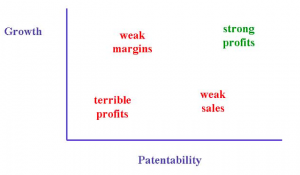
Figure 11 Choosing The Market Based On Growth And Patentability
(2) Target Patent Strategies To The Choke Points
Once a market is selected, the next step is to figure out where the choke points lie. Consider the market below, in which there are four dominant technologies, A-D. Here a contemplated patent portfolio would effectively block or render technologies A and C obsolete, but have no effect on technology B. Technology D is also blocked, but a derivative technology circumvents the patent. This market is probably a poor prospect for a new entrant. The contemplated patent portfolio, even if it could be obtained, would fail to secure a dominant position for the patent holder.
All of this, of course, harkens back to the original goals with respect to dominance in the market. An applicant can be very successful being niche or merely significant player.
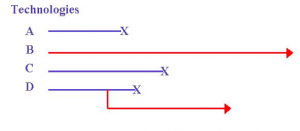
Figure 12 Target Patent Strategies Based On Choke Points
The patent system encourages companies to seek state-granted monopolistic protectionism.
Again, such strategies are common. How patent practitioners can deny all this with a straight face is beyond me. From the table of contents of another book on my shelf, “Strategic Patent Planning for Software Companies: A Look at Some Current Patent and Licensing Strategies at Both Ends of the Software Spectrum: Microsoft and Apache,” by Eric Stasik (2004), for example:
The Strategic Patenting Objectives of Software Companies3.1 The Business Needs of Software Companies
3.1.1 Technology Exchange
3.1.2 Near-Term Competitive Protection
3.1.3 Litigation Avoidance
3.1.5 Royalty Income
3.1.6 Out-License Technology to non-Competitors
3.1.7 Acquire Complementary Technology from non-Competitors
3.1.8 Minimize Royalty Payments to non-Competitors
3.1.9 Product Clearance
3.1.10 Promulgate Open Standards
3.1.11 Promote Interoperability
3.1.12 Deter the Development of Alternative Technologies
3.1.13 Strengthened Position in VAR and OEM agreements
3.1.14 Preserving Future Options
Again, we see what the patent system is really for: it’s protectionisn; it’s to generate income, by extorting it from other companies by the threat of litigation; it’s to cross-license with other big companies: the cost is the patent attorney fees they have to pay to acquire their patent arsenal, but the advantage is the erection of a huge barrier to entry because small and new players have little defense against the patent threats.
***
Comments from the StephanKinsella.com thread:
***
From the Against Monopoly thread:
[Posted at 01/07/2010 09:51 PM by Stephan Kinsella on Patents (General)  comments(73)]
Comments
Engineers being invited to think up ways of hobbling the competition is like doctors being invited to think up non-lethal ways of ‘persuading’ terrorist subjects to confess, but at least with the latter it’s a bit more difficult to get those ways registered with a ‘this is not torture’ registry as legally protected, e.g. filling lungs with water.It should sadden all engineers to think that some of them would stoop so low as to assist the patent miners in their highly unethical pursuits.The patent office is something Dan Brown would dream up as a papal conspiracy to prevent technological progress at all costs by scouring the world for every novel idea or design that anyone can think of precisely to prohibit anyone using it (apart from the filer, as their reward), thus holding back technological progress as much as possible in order to extend the duration of the Catholic church’s theological hegemony.
Aside from the ‘right thing to do’ of abolition, the only other solution that presents itself is to facilitate the equivalent of file-sharing for patents, i.e. let the public flout its own laws supposedly enacted in its interest.
This would be where product manufacturers disintermediate themselves from patent infringement to delegate that crime to sacrificial proxies and the public, e.g. fly-by-night companies that are created per bulk order. 10,000 customers procure the manufacture of an infringing device from the patent infringing proxy company that sources all non-infringing components to assemble into a patent infringing device to be immediately dispatched to the customers (who in turn install any patent infringing software they obtain from file-sharing networks).
There is thus no time for the ‘competing’ patent trolls to get their act together and hold the patent infringer to ransom, because they’ve gone. The only ones left to sue are the public with their patent infringing devices. Good luck suing them for having the gumption to procure the manufacture of patent infringing devices without a license.
[Comment at 01/08/2010 01:45 AM by Crosbie Fitch]
[Comment at 01/08/2010 02:08 AM by Crosbie Fitch]
What an unadultarated piece of manure. Maybe a few people or companies might have so much time on their hands that they do something akin to this, but to make it sound like it is a broad practice is pure BS, and you well know it.If you have a beef with patents, fine. But if in airing your beef you rely on something like this in support you are little more than a misinformation disseminator.
[Comment at 01/09/2010 03:47 PM by MLS]
If it’s “BS” that it’s a broad practice … prove it.
[Comment at 01/09/2010 05:07 PM by None Of Your Beeswax]
It is your economic Messiah who wrote the article. Why not ask him to elaborate with facts, or are your questions limited merely to those who are unimpressed with drivel?
[Comment at 01/09/2010 08:29 PM by MLS]
Wow, two pieces of bullshit in one article.First, I have seen people on this site who have again and again said that engineers never read patents. Now, you are saying that they do? Which is it? It cannot be both ways.Second, statement without proof that “quite often” medium to large size companies hold these sessions where a bunch of engineers sit around and come up with potentially patentable ideas with no intention of marketing them. I have to see proof for this unsupported allegation. I have been in medium to large size companies, including having been in charge of an engineering department, and I have never participated in one of these kinds of sessions.
I guess anyone can make up anti-patent stuff and then have their sycophants kowtow to the brilliance of their fiction, treating it as gospel.
Nice religion you have here.
[Comment at 01/09/2010 08:50 PM by Lonnie E. Holder]
You, of course, were the PHB of that engineering department. In fact I can’t think of anyone worse to choose to run an engineering department than a lawyer, particularly a patent attorney. A three-year-old with ADHD would be a superior selection.As for who has to prove what, the people calling the rest of us liars have the burden of proof to support that allegation, not we to disprove it. We’re innocent until proven guilty. (Actually, we’re just plain innocent.)
[Comment at 01/09/2010 10:01 PM by None Of Your Beeswax]
wow, the trolls are back! The point is that the company which would NOT do this would be stupid. The state creates incentives for this kind of behavior and deforms the market in such a way that it’s rewarding. The problem is in the (artificial) system, not in the people or companies who (naturally) do this.Sorry, I can’t help but feed the troll 🙁 I’m proud of professing a “religion” that says freedom and justice is better than slavery and theft!
[Comment at 01/10/2010 03:38 AM by Samuel Hora]
Yes, Samuel; MLS and Lonnie are back. Unfortunately.
[Comment at 01/10/2010 05:12 AM by None Of Your Beeswax]
Lonnie, I can’t believe you deny such patenting goes on. I have led such sessions myself, for many clients, and believe me I didn’t invent that idea! Further, besides such formal sessions, this goes on all the time in informal fashion in normal patenting. Companies set up bounties for merely submitting invention disclosures. So you’ll have an engineer sitting at his desk one day, and an idea occurs to him as he looks at or thinks about something; he dashes off a 13-minute little invention disclosure memo about just the kind of idea I mention above–something that his company will never make, something he has no idea of its commercial practicability, etc.–the patent committee reviews it along with dozens of other submissions; he gets his bonus check; maybe a second bonus check if the committee decides to file it; and so on. A goodly percentage of patents that are filed are of this type. Why would you weigh in if you are clueless about this? It’s understandable Randroids and the independent inventor lobbying associations would want to cling to a romanticized notion of how the patent system operates, but why would honest people?
[Comment at 01/10/2010 07:04 AM by Stephan Kinsella]
Earwax:Liar, I was not the “PHB” of the engineering department and I am not a patent attorney. Leave your insults for lawyers, not engineers.As for who has to prove what, the statement was made without a SINGLE FACT to back it up. If you want unsupported allegations, I suggest that Against Monopoly has become a joke because the posters have come full circle, accusing people of doing things they already claimed they did not do.
Samuel:
Wrong. In fact, the company that WOULD do this is more than stupid. First, how do you know the field unless you review prior art? If you did not review the prior art, then you are spending hundreds of thousands of dollars with little or no likelihood that you would get a return as prior art from the internet, articles and patents shoot down application after application. As any competent patent attorney or agent will tell you, the starting point for determing whether you should file a patent is the state of the prior art. Then the second point is the value to the company. Filing a bunch of patents with the hope that one of them sticks is not only an unlikely business model, it is a ridiculous business model. I cannot see anyone in any successful medium or large sized company doing such nonsense, and have never seen a documented case of where such companies did so, except on an infrequent basis. Of course, there was one Enron, but how many other companies emulated their insane business model?
Stephan:
You mix up issues that cloud the original post. Let’s stay focused.
You ask how I can deny that “such patenting goes on”? I will do not deny that there may be a company out there that does such. I have seen a couple of posts on Techdirt that allege such behavior. However, I note that those posts were regarding teeny little companies, not medium or large size companies. I demand evidence that “Quite often medium to large sized companies hold “patent mining” sessions” where someone throws up a Power Point slide and then does a bunch of brainstorming to come up with ideas (not inventions) that are then filed for patents. Absurd. Even the one group of people who were alleged to have done this have thus far not been successful in obtaining a single patent.
As for the “13 minute” disclosure, as you well know, the “13 minute” disclosure generates searches, analysis, and ultimately a business decision as to the value of any disclosure. That such disclosures (not as a result of the alleged “patent mining” sessions, I note you said) are filed, undoubtedly, but these are not the results of mythical sessions where a bunch of ideas are generated as the basis of valueless patents. These same disclosures will also be dealt with as any other garbage – it ends up in the land fill.
If someone is going to allege absurd behavior, at least make it plausible. File this one under Libertarians as Standup Comedians.
[Comment at 01/10/2010 08:50 AM by Lonnie E. Holder]
Lonnie: “As for the “13 minute” disclosure, as you well know, the “13 minute” disclosure generates searches, analysis, and ultimately a business decision as to the value of any disclosure. That such disclosures (not as a result of the alleged “patent mining” sessions, I note you said) are filed, undoubtedly, but these are not the results of mythical sessions where a bunch of ideas are generated as the basis of valueless patents. These same disclosures will also be dealt with as any other garbage – it ends up in the land fill.”Lonnie, I’ve prosecuted hundreds of patents. I’ve seen their quality, and how they are produced. I don’t think you know what you are talking about. Disclosures rarely generate searches and analysis. Quite often NO search is done (it’s not required, and a good one is expensive). What happens is you just file it, and the filing fee pays the PTO’s examiner to do his own search. If he comes back with killer art, you might abandon it then. And sure, there’s a business decision but it’s not always based on the value of the invention–do you realize that lots of crap patent apps get approved? It’s like throwing spaghetti against the wall: some of it sticks. If you have a stack of issued patents, so what if 2/3 of them are crap? They still exist; they have a presumption of validity; and they take lots of money and time for your competitors to analyze. If I know XYZ company has 1300 patents, do you think I’m going to pay $17 million to a patent lawyer team to spend 3 years analyzing them all? You have got to be kidding. No–what I’m going to do is build up my own portfolio to use defensively if they sue me. Or, if A and B enter into cross licensing, and A has 1500 patents and B has 300, they don’t analyze them all–but B might have to pay some cash in addition to its 300 patent license just by counting patents.Why laymen feel compelled to weigh in on such matters is beyond me.
[Comment at 01/10/2010 09:26 AM by Stephan Kinsella]
Our resident troll writes:”[insult deleted]:[calls me a liar]”
No, you’re the liar and the cerumen.
None of the nasty things that you have said or implied about me are at all true.
“As for who has to prove what, the statement was made without a SINGLE FACT to back it up.”
The person who called everyone here a liar (and me twice) is the one with the burden of proof.
Stephan Kinsella writes:
“Lonnie, I’ve prosecuted hundreds of patents. I’ve seen their quality, and how they are produced. I don’t think you know what you are talking about.”
I’m afraid that Lonnie knows exactly what he is talking about, and is deliberately lying. He mentioned on this site, months ago, that his own work depends on patents in some way, implying that he was a corporate patent attorney. So if he really IS ignorant about these matters, then he is also incompetent in his job. (Insecurity, whether due to obsolescence or due to incompetence, would go a long way towards explaining his attitude problem, in turn.)
[Comment at 01/10/2010 09:57 AM by None Of Your Beeswax]
NOYB: I find it hard to believe Lonnie is a patent attorney. Even the dimmest and most prevaricating among them (no offense, Gene Quinn, Dale Halling) know what I’m talking about, even if they are loath to admit it.
[Comment at 01/10/2010 09:59 AM by Stephan Kinsella]
SK,Mister Holder is not a lawyer or agent. He is solely an engineer who has worked primarily in the mechanical arts.I am a lawyer, and one who has been working in this area in both private and corporate practice for many years.
In private practice it was not uncommon to have disclosures thrown over the transom for an application to be prepared. In each instance I would personally contact all persons concerned (inventor(s), supervisors, attorneys, etc.) to try and figure out if what has been disclosed is really something important to the their current and/or future business plans. If important, and once I was thoroughly grounded in why this was so and advised on the pros and cons, only then did I move forward. In a significant number of cases applications of inventions(s) were never filed because there was no good reason to do so. It would have been a waste or time and money resources.
In corporate practice, and as counsel to a Fortune 20 company, I made it policy that only truly “important” were considered for filing. R&D dollars were carefully allocated based upon near and long-term business plans, and my primary objective was to make sure that participants in any decision-making process knew the ground rules and applied them consitently. In fact, one of my first acts as counsel was to dismantle all “review boards”, which I view as silly, unproductive, and of virtually no value for some of the reasons you state, and took my cue from lead functional VPs, Directors, Managers, and Supervisors who really knew what was important and what was a trinket. Those considering disclosures were the only ones making initial recommendations, and I served in the capacity as counsel and honest broker.
As a consequence only a very few disclosures ever ended up as a patent application, and even then I would immediately pull the plug on applications and patents as changed circumstances dictated.
In attempting to generalize your personal experience as somehow indicative of the process as a whole in my view demands much more than mere hand waving and caustic comments.
When I first began private practice my mentor, an outstanding lawyer and true gentleman with a large firm in Chicago with he had practice for over 40 years taught me the imperative of providing value-added service versus mechanically responding to whatever was presented to me for action. I took his advice to heart and it has well served clients I have represented over my 31 years of practice.
Just because a minority may proceed without thinking about what I view as incredibly important consideration is no good reason to suggest that laywers prone to practice in “cruise control” are the norm and not the exception.
[Comment at 01/10/2010 11:04 AM by MLS]
@Kinsella: and so is he. Loath to admit it, that is.MLS writes:[calls me a liar]
No, you’re the liar.
None of the nasty things that you have said or implied about me are at all true.
Lonnie himself implied he was in the patent business.
[Comment at 01/10/2010 11:27 AM by None Of Your Beeswax]
NOYB,You must have me confused with another commenter. Easy to do given the format of how comments are posted here.MLS
[Comment at 01/10/2010 02:49 PM by MLS]
NOYB: no way Lonnie is “in the patent business” w/ his ignorant comments.
[Comment at 01/10/2010 02:52 PM by Stephan Kinsella]
Stephan:How interesting, regarding your prosecution of hundreds of patent applications. As a matter of fact, so have I. Indeed, depending on how long after you became registered that you started prosecuting patents, you and I may have started prosecution at approximately the same time.Now, a bit of clarity for all concerned. I am a registered patent AGENT, and have been one for about six and a half years. Prior to becoming registered, I was writing applications, doing searches and drafting office action arguments for nearly a decade before I became registered. Of course, Stephan you would have known that being the highly competent attorney that you are with hundreds of applications under your belt and thus knowing exactly where to find that information.
Stephan: Regarding searches. You and I both know, with our hundreds of applications of experience, that you do not have to analyze every single patent from a competitor, nor is there usually value in doing so. Of course, your hyperbole makes for great sarcasm and a subtle insult. Do not bother to quit your day job and do standout.
Stephan, I am unable to speak to the process that you have observed. Considering all you have said, it is no wonder you are disillusioned being a patent attorney. I would say that the vast majority of disclosures I have been involved with have involved a search and an analysis. How would you know whether you are wasting your client’s money otherwise? Of course, if your client has deep pockets and loves the “hail Mary” philosophy regarding patent application filing, well, slipshod way to run a ship in my personal opinion. If that is truly what you have seen, then I can understand everything you have said and your unhappiness with being a patent attorney. However, I would not work for such a bizarre organization that focuses on junk patents. I have never personally seen such an organization, and you are the first attorney who (probably because of your disillusionment) has admitted for working for such a organization.
As for my “ignorant” comments, I will refrain from commenting on your ignorance as to how patenting works in real manufacturing companies. When you would like to know how companies that make real products file for and use patents, send me an e-mail. Maybe you could come visit me in Indiana and we can show you how a real company does IP versus whatever patent mill you have been working for.
As for MLS’s comments, they are similar to the experiences I have had. Note that MLS clearly indicated that just about EVERY (and maybe all) patent applications had some level of analysis and review, even if it was just himself and a business person. I am guessing that some of that the applications involved got a lot of searching to be sure there was some value. I am also guessing that MLS worked for a real company that actually produced real products, or a firm that worked for real companies that produced real products, rather than just junk patent applications of dubious value, hoping that one of them would “stick.”
Indeed, Stephan, the thought that you participated in such activities just astounds me. Why not find a company or firm that uses patents the way they were intended? There are tens of thousands of such companies, as opposed to the places you have somehow had the bad fortune to be employed.
Earwax:
Let me see. You called me an attorney. I am not. Therefore, that was a lie. Thus, you are a liar. The facts speak for themselves. Do not bother to deny what is quite clear from your comments above. You have said other lies, but I only need one for evidence.
[Comment at 01/10/2010 05:04 PM by Lonnie E. Holder]
Lonnie:”Of course, Stephan you would have known that being the highly competent attorney that you are with hundreds of applications under your belt and thus knowing exactly where to find that information.”Yes, it’s easy to look up the roster of registered agents and attorneys. So what?
“Stephan: Regarding searches. You and I both know, with our hundreds of applications of experience, that you do not have to analyze every single patent from a competitor, nor is there usually value in doing so. Of course, your hyperbole makes for great sarcasm and a subtle insult. Do not bother to quit your day job and do standout.”
I think you mean standup. I htink the reason you don’t analyze them is because it’s impossible. As to there being no value to it–well, given that we are charged with notice of issued patents, why wouldn’t there be value?
“Stephan, I am unable to speak to the process that you have observed. Considering all you have said, it is no wonder you are disillusioned being a patent attorney.”
I’m not disillusioned about it. I came to my views for purely principled reasons, as I’ve laid out.
“I would say that the vast majority of disclosures I have been involved with have involved a search and an analysis.”
I doubt it. And anyway, so what? That the patent system permits and incentivizes this, is part of the problem.
“How would you know whether you are wasting your client’s money otherwise?”
How would you konw? You get them issued, and you are paid. Off on your way!
And patents are useful to companies even if they didn’t have a search and anaysis first.
“Of course, if your client has deep pockets and loves the “hail Mary” philosophy regarding patent application filing, well, slipshod way to run a ship in my personal opinion.”
So what? The patent system permits it.
“If that is truly what you have seen, then I can understand everything you have said and your unhappiness with being a patent attorney.”
I have policy views about patents grounded in libertarian views about property rights. It’s not about a disgruntled patent attorney.
“However, I would not work for such a bizarre organization that focuses on junk patents.”
All patents are junk patents. No patents are. What’s to distinguish? Oh yeah, the standards of obviousness and novelty. Great!
“I have never personally seen such an organization, and you are the first attorney who (probably because of your disillusionment) has admitted for working for such a organization.”
Admitted, exactly.
“Indeed, Stephan, the thought that you participated in such activities just astounds me. Why not find a company or firm that uses patents the way they were intended?”
They are intended to be used to sue competitors, are they not? Wow, how wonderful.
[Comment at 01/10/2010 05:27 PM by Stephan Kinsella]
MLS writes:”NOYB,[insult deleted]. Easy to do given the format of how comments are posted here.”
No. None of the nasty things that you have said or implied about me are at all true.
Lonnie writes:
“Stephan:
How interesting, regarding your prosecution of hundreds of patent applications. As a matter of fact, so have I. Indeed, depending on how long after you became registered that you started prosecuting patents, you and I may have started prosecution at approximately the same time.”
Let the above, together with the fact that Stephan is a patent attorney, constitute Exhibit A.
“[insult]:
Let me see. [calls me a liar repeatedly].”
No, you’re the liar.
None of the nasty things that you have said or implied about me are at all true.
I refer interested readers to Exhibit A, in which Lonnie himself implies the reverse of the premise of his insult here.
“Do not bother to quit your day job and do standout.”
To which Stephan replied:
“I think you mean standup.”
Anyone else find Lonnie reminding them more and more of Biff Tannen?
[Comment at 01/10/2010 05:56 PM by None Of Your Beeswax]
SK,No diatribe here, but merely a comment.I guess I must be “old school” because I do not recall ever having filed or had filed an application without first conducting a Pre-X search. The only exception has been a very few limited cases involving technology where the inventor was, in fact, the “prior art”, i.e., the technology was quite sophisticated (e.g., massive parallel processing) and the only references ever applied were those by the inventor himself. This is indeed a rare occurrence, but it does arise from time to time.
When I became corporate counsel and my duties required that I have work performed by outside counsel, Pre-X searches were mandatory, the person performing the search had to work in close conjunction with the person who would actually prepare the application, if any, senior examiners within the appropriate art units were consulted before the searches were even started so that guidance could be received, the results of the Pre-X searches had to be reviewed and reported back with a detailed analysis by the person who would prepare the application, and then I would independently review the results and present them to cognizant corporate management to determine if that an application was still deemed appropriate and consistent with current and future business plans…placing overriding emphasis on the corporation’s product and service offerings.
I readily admit that my approach is much more comprehensive than most, but as previously noted I believe the filing of an application is not a matter that should be taken lightly. Of course, some may say “But you are filing far fewer applications” than would otherwise be the case. My response is merely that there are many avenues at hand besides patents, and that I have no desire to move down an avenue where the cost in no way justifies the benefit conferred. That would be an unjustified waste of limited time and resources.
[Comment at 01/10/2010 06:22 PM by MLS]
MLS:Forget it. Stephan lives in some sort of parallel universe different from ours. I know the number of searches I have done myself is in the hundreds, at least. I have also reviewed thousands of patents, so many that I would be hard pressed to make even a vague estimate. So, while Stephan may “doubt it,” his standards of conduct as a patent attorney are different than what I was taught as a patent agent. But, hey, I guess he is still going to work and can still live with himself. He does not believe in IP, so going to work must be mentally painful. How does someone do a good job when they do not believe in what they are doing? Of course, he also believes in filing junk patents without doing a search. Weird. Is there something about being Libertarian that causes one to have skewed ethics and morals?Earwax:
You are a joke. Keep it up. I get a laugh out of every one of your posts.
Stephan:
Yes, I meant standup. Hard to catch all the typos.
As for your comment about the way patents were meant to be used, no, you are wrong. They were meant to communicate to the world an invention and the recognition that the right to make, use, sell or offer to sell the invention was given to that inventor for disclosing the invention to the world. However, some people, apparently those in the companies you have worked, have twisted this to be a weapon of ambush. Fortunately, the laws are changing so that such ambushes are harder and harder. Also fortunately, statistically less than 1% of all patents are treated in this way, and far less than 1% of all patent holders act in this way. I would also remind you, Stephan, than there is no such thing as an evil system, only evil people and evil actions.
[Comment at 01/10/2010 07:11 PM by Lonnie E. Holder]
Lonnie writes:”[insult deleted]:You are [insult deleted]. [insults deleted].”
No. None of the nasty things that you have said or implied about me are at all true.
[Comment at 01/10/2010 07:31 PM by None Of Your Beeswax]
Well, ain’t this a cute little troll-fest?He does not believe in IP, so going to work must be mentally painful.That’s silly. Suggesting that there’s something wrong with being an anti-patent patent attorney is like suggesting that there’s something wrong with being an anti-cancer oncologist.
[Comment at 01/10/2010 07:34 PM by Suzzle]
Suzzle:Actually, it is more akin to being a priest while being a devout Satanist. The conflict must be tremendous. I am curious as to how one does something well that one does not believe in, or believes is morally wrong? I would think Stephan would give up being a patent attorney and just be a plain attorney, or perhaps an engineer, if he can, of course.
[Comment at 01/10/2010 07:43 PM by Anonymous]
Earwax:I said I think you are funny. How can that be a nasty thing about you? How can that not be true? After all, I am laughing at your post right now. lolol. You are a funny person. While Kinsella will never do standup, you are like a court jester – amusing no matter what you do.
[Comment at 01/10/2010 07:45 PM by Anonymous]
[Comment at 01/10/2010 07:45 PM by Lonnie E. Holder]
The last two anonymous posts were me…was laughing so hard at Earwax’s post that it was hard to see with the tears in my eyes…
[Comment at 01/10/2010 07:46 PM by Lonnie E. Holder]
Our resident troll writes:”[insult deleted]:I said I think you [insult deleted]. How can that be a nasty thing about you?”
How can it not?
“How can that not be true?”
Easily. None of the nasty things that you have said or implied about me are at all true.
“After all, I am laughing at your post right now. lolol.”
That’s because you’re an asshole. In particular, it says more about you than it does about me.
“you are like a [insult deleted]”
No. None of the nasty things that you have said or implied about me are at all true.
[Comment at 01/10/2010 07:54 PM by None Of Your Beeswax]
The fact that Lonnie lied on the previous occasions when he claimed never to post as “Anonymous” has been duly noted.Moving on now…
[Comment at 01/10/2010 07:55 PM by Suzzle]
The last two anonymous posts were me…was laughing so hard at Earwax’s post that it was hard to see with the tears in my eyes…
[Comment at 01/10/2010 07:56 PM by Lonnie E. Holder]
The last two anonymous posts were me…was laughing so hard at Earwax’s post that it was hard to see with the tears in my eyes…
[Comment at 01/10/2010 08:16 PM by Lonnie E. Holder]
MLS:”I guess I must be “old school” because I do not recall ever having filed or had filed an application without first conducting a Pre-X search.”Do you mean you paid an outside searcher, or just your own informal Internet search (which didn’t exist “old school”–did you go down to a local PTO shoebox repository and manually do searches pre-1995?).
It is extremely common for patents to be filed with no search at all. That said, I do searches myself–not a formal one, but the informal PTO type search. But it’s often not done.
“I readily admit that my approach is much more comprehensive than most, but as previously noted I believe the filing of an application is not a matter that should be taken lightly.”
The patent system permits and is rife with junk patent filings. That you didn’t do it doesn’t change this.
Lonnie: “Forget it. Stephan lives in some sort of parallel universe different from ours. I know the number of searches I have done myself is in the hundreds, at least.”
Me, too, probably. So what? How does this prove that the patent system is legitimate? How does this militate against the observation that thousands of junk patents are filed (and allowed)?
“He does not believe in IP, so going to work must be mentally painful. How does someone do a good job when they do not believe in what they are doing?”
This is nonsense. More of the “we will penalize you if you don’t toe the line.” See my postsPatent Lawyers Who Don’t Toe the Line Should Be Punished!; An Anti-Patent PatentAttorney? Oh my Gawd!; Is It So Crazy For A Patent Attorney To Think Patents Harm Innovation?.
It is necessary for my own company to obtain patents for defensive purposes, given the evil monopolistic, protectionist, mercantalist system foisted on us by pro-patent types. Given the system we are in, it is good that my client obtain patents, just as it’s good that a tax victim have a good tax attorney. In a free society neither patent lawyers nor tax attorneys would exist.
“Of course, he also believes in filing junk patents without doing a search. Weird.”
It’s not that I “believe in it”, it’s that I believe that it is commonly done. I don’t believe in taxes either, but I believe they exist. Notice that MLS above did not deny that this is done.
“As for your comment about the way patents were meant to be used, no, you are wrong. They were meant to communicate to the world an invention and the recognition that the right to make, use, sell or offer to sell the invention was given to that inventor for disclosing the invention to the world.”
How do you know what they “were” “meant” to do? We know that the statute gives the patentee a right to extort and sue. And it’s predictable that if you dish out this right, people will take and use it. Surprise, Marshall Texas is prospering!
“However, some people, apparently those in the companies you have worked, have twisted this to be a weapon of ambush.”
SHOCKING!!
“Fortunately, the laws are changing so that such ambushes are harder and harder.”
Nonsense. The law is not changing fundamentally. See my Radical Patent Reform Is Not on the Way. Patent shills squeal like scalded dogs when they sense any potential dilution of patent “strength.”
“Also fortunately, statistically less than 1% of all patents are treated in this way, and far less than 1% of all patent holders act in this way. I would also remind you, Stephan, than there is no such thing as an evil system, only evil people and evil actions.”
It is evil for the state to hand out legal monopolies to people, that they can use to extort, sue, ruin in the state’s illegitimate courts.
Lonnie: “Actually, it is more akin to being a priest while being a devout Satanist. The conflict must be tremendous. I am curious as to how one does something well that one does not believe in, or believes is morally wrong? I would think Stephan would give up being a patent attorney and just be a plain attorney, or perhaps an engineer, if he can, of course.”
My career is none of your business and is irrelevant to my case that IP is illegitimate. Of course patent shills would love for any patent attorney to toe the line and for those who don’t to leave the profession so that they can tar and feather any opponents as being ignorant of the workings of the system they oppose. Too bad, podnah.
[Comment at 01/10/2010 09:05 PM by Stephan Kinsella]
Stephan:”Do you mean you paid an outside searcher, or just your own informal Internet search (which didn’t exist “old school”–did you go down to a local PTO shoebox repository and manually do searches pre-1995?).”Why would you need to do manual searches for art pre-1995? The USPTO can search patents to 1976. Patent Surf and Google Patents permit pretty darn good searching for much longer than that, I believe back to the beginning. Then there are other software packages that have wonderful search algorithms, such as Goldfire. These searches are not any more “informal” than the searches conducted by the dozens of search firms that exist. That brings up a separate point as to why so many search firms exist if no one is doing any searching, but no need to dilute the conversation further.
“Me, too, probably. So what? How does this prove that the patent system is legitimate? How does this militate against the observation that thousands of junk patents are filed (and allowed)?”
Conversely, how does this prove the patent system is illegitimate? It does not. How does this prove that “thousands of junk patents are filed (and allowed)?” It does not. While there MAY be thousands of junk patents filed (which may be true), and some may be allowed, you have not provided evidence that those thousands of junk patents outweigh the benefits of the patent system.
“It is necessary for my own company to obtain patents for defensive purposes, given the evil monopolistic, protectionist, mercantalist system foisted on us by pro-patent types.”
This sentence is not even an argument, but a pejorative, jingoistic diatribe without meaning or relevance to the topic at hand.
“How do you know what they “were” “meant” to do? We know that the statute gives the patentee a right to extort and sue.”
So, in your vernacular guns give people the right to murder, threaten, and maim. Knives are for cutting, extortion and tortue. Cars are for running people down. Patents do not give a patentee a right to do anything other than prevent others from making, using, selling or offering for sale their invention. That is the only right it gives a patentee. However, it also protects a patentee that goes to a company with an invention when the company takes that invention for their own without any compensation for the inventor who brought it to them, which happens far too often even with patent protection. So, the patent system does give a patentee an opportunity to receive compensation for his invention, especially when the invention was stolen without permission. A patent also permits a company to spend tens of millions or hundreds of millions to develop an invention and then have an opportunity to get a return on that investment rather than having some company without the ability to be as creative steal the invention.
“Nonsense. The law is not changing fundamentally.”
I see. So the elimination of submarine patents was not a fundamental change. I guess Bilski was not a fundamental change. I guess KSR was not a fundamental change. How many would you like? The laws have been changing to be less favorable to patentees for a while. I am perfectly fine with the changes. I think, given that patentees rarely win in court (only about 20% of the time), that patent laws needed changed to be more restrictive, and we have seen that trend over the last half decade.
As for patent shills screaming like scalded dogs, Libertarians scream like little girls every time someone points out that the system is abused far less often than they like to make out, and then roll out their religious dogma rather than using facts.
“It is evil for the state to hand out legal monopolies to people, that they can use to extort, sue, ruin in the state’s illegitimate courts.”
Religious dogma. It is evil for people to steal other’s identities. It is evil for people to take the inventions of others. It is evil for people to run red lights. Evil is everywhere, if you just point it out. Of course, there are two kinds of evil, the kind that creates actual harm (and I remind you that NO ONE has ever pointed out that the balance of patents is harmful, and several researchers with ACTUAL MATH have shown that patents are beneficial), and the imagined kind.
“My career is none of your business and is irrelevant to my case that IP is illegitimate.”
I was not talking to you. I can talk about you and your career to MLS all I like and if you do not like it, too bad, podnah.
I remained stunned at an attorney who does not believe in the legitimacy of his job.
[Comment at 01/11/2010 05:43 AM by Lonnie E. Holder]
Suzzle:You will note that I also pointed out that the posts were mine.
[Comment at 01/11/2010 05:45 AM by Lonnie E. Holder]
Lonnie:”Why would you need to do manual searches for art pre-1995?”I meant if you were practicing before 1995, how would you do it? Etc.
“Conversely, how does this prove the patent system is illegitimate? It does not.”
It doesn’t. Non-practitioners have an unrealistic, romanticized notion of how the system operates and is used.
“How does this prove that “thousands of junk patents are filed (and allowed)?” It does not. While there MAY be thousands of junk patents filed (which may be true), and some may be allowed, you have not provided evidence that those thousands of junk patents outweigh the benefits of the patent system.”
The burden is on you to show that the system as a whole is indeed worth it.
“So, in your vernacular guns give people the right to murder, threaten, and maim. Knives are for cutting, extortion and tortue. Cars are for running people down. Patents do not give a patentee a right to do anything other than prevent others from making, using, selling or offering for sale their invention.”
This is disingenuous. Guns are for shooting and killing people. That may be used for good or evil–for offense, or defense.
Patents are for suing people if they don’t pay protection money. That right should not exist at all.
“A patent also permits a company to spend tens of millions or hundreds of millions to develop an invention and then have an opportunity to get a return on that investment rather than having some company without the ability to be as creative steal the invention.”
You are giving one of hte pro-patent arguments for *why* patent rights should be granted. But this does not change the nature of a patent right–it is a monopoly grant, a right to sue.
“As for patent shills screaming like scalded dogs, Libertarians scream like little girls every time someone points out that the system is abused far less often than they like to make out, and then roll out their religious dogma rather than using facts.”
The problem is not that the system is abused. The problem is it is inherently immoral, by its nature. It cannot help but be abused.
“I remained stunned at an attorney who does not believe in the legitimacy of his job.”
who cares what you are stunned by? This does not gainsay that patents are immoral.
[Comment at 01/11/2010 06:07 AM by Stephan Kinsella]
Our resident troll writes:”Patentees rarely win in court (only about 20% of the time).”A disingenuous factoid.
That’s because losing a patent suit is so damn expensive that most of the other 80% of cases get settled out of court. The ones that don’t are precisely the ones where the defendant feels he has a quite strong case.
Tell me, what percentage of patent suits go to a judgment that the defendant wins?
“I remind you that NO ONE has ever pointed out that the balance of patents is harmful, and several researchers with ACTUAL MATH have shown that patents are beneficial.”
Several industry-paid “researchers” perhaps. Independent researchers have found the opposite, as has been noted at this site several times.
Besides, as others have pointed out, the burden of proof is on those seeking to curtail liberty to prove that it’s beneficial, rather than on those seeking to keep or restore liberty to prove that the curtailment is not.
[Comment at 01/11/2010 06:48 AM by None Of Your Beeswax]
Earwax writes:”That’s because losing a patent suit is so damn expensive that most of the other 80% of cases get settled out of court. The ones that don’t are precisely the ones where the defendant feels he has a quite strong case.”That is not true at all. Indeed, most of the other ones are either dismissed, lost or other situations that benefit the plaintiff.
“Tell me, what percentage of patent suits go to a judgment that the defendant wins?”
Once you get as far as the trial, last I saw about 70 or 80% of those cases are won by the plaintiff – hence the 20%.
“Several industry-paid “researchers” perhaps. Independent researchers have found the opposite, as has been noted at this site several times.”
I have provided several papers by independent university researchers showing that patents provide benefits to society. Every time I provide those papers they are ignored. It is always easier to ignore facts that disagree with dogma versus providing superior facts.
“Besides, as others have pointed out, the burden of proof is on those seeking to curtail liberty to prove that it’s beneficial…”
Already been done…multiple times.
[Comment at 01/11/2010 06:56 AM by Lonnie E. Holder]
Stephan:Why would you need to do manual searches for art pre-1995?I meant if you were practicing before 1995, how would you do it? Etc.
I understand your point. Yes, if you were practicing before 1995 searches were much more of a pain. Indeed, I probably would have recommended against searches at that time as being time consuming and expensive. How wonderful that we live in the era we do where searches are relatively quick and cheap.
“How does this prove that “thousands of junk patents are filed (and allowed)?” It does not. While there MAY be thousands of junk patents filed (which may be true), and some may be allowed, you have not provided evidence that those thousands of junk patents outweigh the benefits of the patent system.”
The burden is on you to show that the system as a whole is indeed worth it.
I have provided numerous papers and studies that show the benefit of the patent system. I note that each time I post those references that they are conveniently ignored, or some excuse is given as to why they are somehow irrelevant (many of them belief related). Oh well.
“So, in your vernacular guns give people the right to murder, threaten, and maim. Knives are for cutting, extortion and tortue. Cars are for running people down. Patents do not give a patentee a right to do anything other than prevent others from making, using, selling or offering for sale their invention.”
This is disingenuous. Guns are for shooting and killing people. That may be used for good or evil–for offense, or defense.
Patents are for suing people if they don’t pay protection money. That right should not exist at all.
Illogical. If patents are “for suing people if they don’t pay protection money,” then why are 98.5% of all patents never involved in a conflict? Answer: because that is NOT the purpose of the patent system.
I should also point out that guns are NOT for shooting and killing people. Guns are for expelling a projectile at high velocity. That function is neither moral or immoral. When the projectile is used to acquire food, then I argue that the function is moral. When the projectile is used to ward off those who would harm my family or take my property, its function is moral. When the projectile is used to kill without provocation or for threatening someone to take that which legally belongs to them, it is immoral.
A patent also permits a company to spend tens of millions or hundreds of millions to develop an invention and then have an opportunity to get a return on that investment rather than having some company without the ability to be as creative steal the invention.”
You are giving one of hte pro-patent arguments for *why* patent rights should be granted. But this does not change the nature of a patent right–it is a monopoly grant, a right to sue.
*Sigh* You have a one-track mind. Very few patents are ever involved in a suit. If the only purpose of a patent is right to sue, then the overwhelming number of companies are doing it wrong.
“As for patent shills screaming like scalded dogs, Libertarians scream like little girls every time someone points out that the system is abused far less often than they like to make out, and then roll out their religious dogma rather than using facts.”
The problem is not that the system is abused. The problem is it is inherently immoral, by its nature. It cannot help but be abused.
This statement is one of belief or religion and not one of fact. All systems, whether home-owner associations or Libertarianism, have the capability of being abused. The existence of a system lends itself to being abused, if the intent of the person involved with the system is abuse. Of course, lack of systems also generate abuses as well. Darned if you do, darned if you don’t. The question is whether we are better off with systems rather than without. I believe we are better off with systems – though less onerous (SOX) and less complicated (taxes) systems than we have right now.
I remained stunned at an attorney who does not believe in the legitimacy of his job.
who cares what you are stunned by? This does not gainsay that patents are immoral.
lol…Who cares what YOU believe in? However, I care what I am stunned by. But, your statement is not a proof that patents are immoral. I could just as easily believe Libertarianism is immoral, and in some respects I believe it is an unjust and immoral system, but that is a statement of belief and not one of fact.
[Comment at 01/11/2010 07:17 AM by Lonnie E. Holder]
Stephan:Why would you need to do manual searches for art pre-1995?I meant if you were practicing before 1995, how would you do it? Etc.
I understand your point. Yes, if you were practicing before 1995 searches were much more of a pain. Indeed, I probably would have recommended against searches at that time as being time consuming and expensive. How wonderful that we live in the era we do where searches are relatively quick and cheap.
“How does this prove that “thousands of junk patents are filed (and allowed)?” It does not. While there MAY be thousands of junk patents filed (which may be true), and some may be allowed, you have not provided evidence that those thousands of junk patents outweigh the benefits of the patent system.”
The burden is on you to show that the system as a whole is indeed worth it.
I have provided numerous papers and studies that show the benefit of the patent system. I note that each time I post those references that they are conveniently ignored, or some excuse is given as to why they are somehow irrelevant (many of them belief related). Oh well.
“So, in your vernacular guns give people the right to murder, threaten, and maim. Knives are for cutting, extortion and tortue. Cars are for running people down. Patents do not give a patentee a right to do anything other than prevent others from making, using, selling or offering for sale their invention.”
This is disingenuous. Guns are for shooting and killing people. That may be used for good or evil–for offense, or defense.
Patents are for suing people if they don’t pay protection money. That right should not exist at all.
Illogical. If patents are “for suing people if they don’t pay protection money,” then why are 98.5% of all patents never involved in a conflict? Answer: because that is NOT the purpose of the patent system.
I should also point out that guns are NOT for shooting and killing people. Guns are for expelling a projectile at high velocity. That function is neither moral or immoral. When the projectile is used to acquire food, then I argue that the function is moral. When the projectile is used to ward off those who would harm my family or take my property, its function is moral. When the projectile is used to kill without provocation or for threatening someone to take that which legally belongs to them, it is immoral.
A patent also permits a company to spend tens of millions or hundreds of millions to develop an invention and then have an opportunity to get a return on that investment rather than having some company without the ability to be as creative steal the invention.”
You are giving one of hte pro-patent arguments for *why* patent rights should be granted. But this does not change the nature of a patent right–it is a monopoly grant, a right to sue.
*Sigh* You have a one-track mind. Very few patents are ever involved in a suit. If the only purpose of a patent is right to sue, then the overwhelming number of companies are doing it wrong.
“As for patent shills screaming like scalded dogs, Libertarians scream like little girls every time someone points out that the system is abused far less often than they like to make out, and then roll out their religious dogma rather than using facts.”
The problem is not that the system is abused. The problem is it is inherently immoral, by its nature. It cannot help but be abused.
This statement is one of belief or religion and not one of fact. All systems, whether home-owner associations or Libertarianism, have the capability of being abused. The existence of a system lends itself to being abused, if the intent of the person involved with the system is abuse. Of course, lack of systems also generate abuses as well. Darned if you do, darned if you don’t. The question is whether we are better off with systems rather than without. I believe we are better off with systems – though less onerous (SOX) and less complicated (taxes) systems than we have right now.
I remained stunned at an attorney who does not believe in the legitimacy of his job.
who cares what you are stunned by? This does not gainsay that patents are immoral.
lol…Who cares what YOU believe in? However, I care what I am stunned by. But, your statement is not a proof that patents are immoral. I could just as easily believe Libertarianism is immoral, and in some respects I believe it is an unjust and immoral system, but that is a statement of belief and not one of fact.
[Comment at 01/11/2010 07:17 AM by Lonnie E. Holder]
Stephan:I should also have mentioned In re Seagate regarding searches. As you know, Seagate was another of those big changes in the law, this one meant to encourage reading of patents, which helped encourage searches before filing.
[Comment at 01/11/2010 07:32 AM by Lonnie E. Holder]
Lonnie:”‘I meant if you were practicing before 1995, how would you do it? Etc.'”I understand your point. Yes, if you were practicing before 1995 searches were much more of a pain. Indeed, I probably would have recommended against searches at that time as being time consuming and expensive. How wonderful that we live in the era we do where searches are relatively quick and cheap.”
Yes, but MLS said above he does searches before filing, and that he is “old school.” I’m saying that “old school” was pre-1995, and back then, a search meant paying a searcher in DC a lot of money. So I doubt it was done as a matter of course, and thus, it’s not “old school” to search first. It’s new school, if anything.
“‘The burden is on you to show that the system as a whole is indeed worth it.’
“I have provided numerous papers and studies that show the benefit of the patent system.”
I don’t recall having ever seen a single one. Can you please simply provide one study, the best one, that shows conclusively that the patent system is worth it overall? Such a study would need to show (a) the costs of the patent system, in dollar terms, (b) the benefits of the patent system, in dollar terms, and (c) the net difference, presumably positive. I’ve assembled the large number of studies I’m aware of; none of them concludes this. See: Yet Another Study Finds Patents Do Not Encourage Innovation.
“Illogical. If patents are “for suing people if they don’t pay protection money,” then why are 98.5% of all patents never involved in a conflict? Answer: because that is NOT the purpose of the patent system.”
I didn’t say it was the purpose of the patent system. I said it was the purpose of patents themselves. There is no single purpose of the patent system. It’s a legislatively cobbled scheme and different legislators and interest groups have various motivations for favoring it. The stated purpose is to encourage disclosure, and innovation. But the stated or official purpose is just that–the official statement by the lying state.
“I should also point out that guns are NOT for shooting and killing people. Guns are for expelling a projectile at high velocity. That function is neither moral or immoral. When the projectile is used to acquire food, then I argue that the function is moral. When the projectile is used to ward off those who would harm my family or take my property, its function is moral. When the projectile is used to kill without provocation or for threatening someone to take that which legally belongs to them, it is immoral.”
True. But the only moral use of a patent is to countersue someone suing you first for patent infringement; which means that the whole system is nothing but a waste.
“*Sigh* You have a one-track mind. Very few patents are ever involved in a suit. If the only purpose of a patent is right to sue, then the overwhelming number of companies are doing it wrong.”
There are companies out there in fear of lawsuits from patent sharks, because each patent is a potential lawsuit. Everyone knows this.
“‘The problem is not that the system is abused. The problem is it is inherently immoral, by its nature. It cannot help but be abused.’
“This statement is one of belief or religion and not one of fact.”
Here, you betray your typical engineer scientism and lack of familiarity with ethical reasoning (see my various posts on the limitations of the scientistic engineering mentality here). Belief is not exclusive of “fact”; and not everything that is not a fact is “religion.” This is nonsense. You obviously don’t know what you are talking about. Doing what typical engineers do: trying to cram the philosophy of science by brute force into your scientistic categories, trying to reinvent the wheel with limited tools. We all have values and norms, and they are not all religion. You yourself seem to be in favor of the patent system–this is a normative position, not a merely factual one. Your reasoning in turn rests on more basic norms. By your own “reasoning” this is some religion of yours too.
“All systems, whether home-owner associations or Libertarianism, have the capability of being abused.”
True, and since I am not mired in unprincipled pragmatism, empiricism, and scientism, like typical engineers, that is not my argument at all. Some things are evil or unjust per se. Examples would be Nazi concentration camps, jailing tax evaders or marijuana users, raping someone, and so on. The problem with such things is not that they are “abused,” but that they occur at all.
“your statement is not a proof that patents are immoral.”
True. My monograph Against Intellectual Property, however, is.
“I could just as easily believe Libertarianism is immoral, and in some respects I believe it is an unjust and immoral system, but that is a statement of belief and not one of fact.”
Here you go again with crude engineer-type philosophizing about epistemology and scientific methodology. If you really want to inform yourself before spouting off on such topics read Mises’s Ultimate Foundations of Economic Science or Hoppe’s Economic Science and the Austrian Method.
[Comment at 01/11/2010 07:54 AM by Stephan Kinsella]
Our resident troll writes:”[insult deleted] writes:”No, you’re the cerumen.
None of the nasty things that you have said or implied about me are at all true.
“”That’s because losing a patent suit is so damn expensive that most of the other 80% of cases get settled out of court. The ones that don’t are precisely the ones where the defendant feels he has a quite strong case.”
[calls me a liar]”
No, you’re the liar.
None of the nasty things that you have said or implied about me are at all true.
“”Tell me, what percentage of patent suits go to a judgment that the defendant wins?”
Once you get as far as the trial, last I saw about 70 or 80% of those cases are won by the plaintiff – hence the 20%.”
That isn’t what I asked. I asked what percentage of suits that get filed, not just ones that go to trial, and I even explained why the distinction was important. You ignored that — deliberately. Because the answer doesn’t support your attempts to refute the evidence that patents are evil.
“”Several industry-paid “researchers” perhaps. Independent researchers have found the opposite, as has been noted at this site several times.”
I have provided several papers by independent university researchers showing that patents provide benefits to society.”
Yeah, right. “Independent”. In a pig’s eye.
“”Besides, as others have pointed out, the burden of proof is on those seeking to curtail liberty to prove that it’s beneficial…”
Already been done…multiple times.”
For values of “multiple” not reliably different from zero, perhaps.
“Illogical. If patents are “for suing people if they don’t pay protection money,” then why are 98.5% of all patents never involved in a conflict? Answer: because that is NOT the purpose of the patent system.”
If handguns are “for shooting people”, why are 98.5% of all guns never involved in a conflict? Answer: because that is NOT the purpose of handguns.
Oops. But that IS the purpose of handguns. So obviously there is something wrong with the structure of Lonnie’s argument, and it says nothing about the purpose of guns OR that of the patent system.
Of course, Lonnie already has backpedaled and tried another tack:
“When the projectile is used to ward off those who would harm my family or take my property, its function is moral. When the projectile is used to kill without provocation or for threatening someone to take that which legally belongs to them, it is immoral.”
But we have a law against using a gun extortionately instead of in self-defense. Note the conspicuous lack of laws against using a patent extortionately instead of in self-defense. (To whatever extent you ever could use a patent in self-defense. To deter others from suing you over patents, perhaps, but getting rid of the patent system entirely would defang them anyway.)
“If the only purpose of a patent is right to sue, then the overwhelming number of companies are doing it wrong.”
OK, then let’s keep patents but just take away the right to sue. That ought to be fine, then, right? If patents are useful even without the right to sue.
“All systems, whether home-owner associations or Libertarianism, have the capability of being abused. The existence of a system lends itself to being abused, if the intent of the person involved with the system is abuse. Of course, lack of systems also generate abuses as well. Darned if you do, darned if you don’t. The question is whether we are better off with systems rather than without. I believe we are better off with systems – though less onerous (SOX) and less complicated (taxes) systems than we have right now.”
Shockingly, Lonnie says something I agree with here — though I think one system we can definitely do without is the patent system. Copyright, too.
[Comment at 01/11/2010 08:19 AM by None Of Your Beeswax]
Just trying to fix the italics issue. Did this work. Did it.
[Comment at 01/11/2010 08:21 AM by Stephan Kinsella]
No, you fucked it up even worse.
[Comment at 01/11/2010 08:56 AM by Suzzle]
Stephan:The most objective paper with actual, genuine calculations that I have yet seen is one by Albert G.Z. Hu and I.P.L. Png, “Patent Rights and Economic Growth: Cross-Country Evidence,” found a positive mathematical relationship between patents and economic growth. From their conclusion:Using an ISIC 3-digit industry level database that spans 54 manufacturing industries in 72 countries between 1981-2000, we found evidence that stronger property rights were associated with faster industrial growth measured by value added. The impact of stronger patent righs was both statistically and economically significant in three of the four periods we analyzed: 1981-85, 1991-95, and 1996-2000, and had become stronger in the 1990s compared to the in the 1980s.
Our analysis also showed that the stronger patent rights promoted industrial growth through technical progress in the 1981-85 and 1996-2000 periods and through more rapid factor accumulation in the 1991-95 period.
However, their paper is not the only one. There are others that also present evidence of societal benefit to the patent system. Most of the papers I have are from independent researchers, including those with a Libertarian bent. I find it humorous when a Libertarian writes a paper that attempts to be objective and grudgingly states that maybe there has been some good from the patent system, and then they fall all over themselves trying to figure out how to keep the benefits but eliminate the system.
Boldrin and Levine might be among the most humorous. They explain how wonderful patents have been for pharmaceuticals and then (groan!) suggest replacing patents with some sort of government award system would be better (not!). If you do not like the patent system, replacing it with yet another government system is NOT the answer. At least the patent system is approximately uniform in application. An award system would be absolutely rife with favoritism, cronyism, and a bunch of other ism’s.
You made other points I would like to discuss (interesting points), but no time right now.
[Comment at 01/11/2010 09:08 AM by Lonnie E. Holder]
“a positive mathematical relationship between patents and economic growth”Correlation does not, of course, prove causation. Most likely, more money to spend meant more spent on patenting, among many other things.
[Comment at 01/11/2010 09:15 AM by None Of Your Beeswax]
Lonnie: Of course stronger property rights lead to economic growth. The paper you cite appears to assume that patents are part of property rights, which is question begging. Moreover, it does not appear that the paper calculates the cost of the system or its benefits. You cannot know if there is a net positive unless you have both numbers. If the paper shows this please just tell me: what is the cost of the patent system on the economy, per year, in billions of dollars? And the value of marginal benefits it gives rise to–again, in billions of dollars? What exactly are these numbers?”I find it humorous when a Libertarian writes a paper that attempts to be objective and grudgingly states that maybe there has been some good from the patent system, and then they fall all over themselves trying to figure out how to keep the benefits but eliminate the system.”There has been no good from the patent system. Your capitalizing “Libertarian” shows you are not very familiar with libertarianism.
“Boldrin and Levine might be among the most humorous. They explain how wonderful patents have been for pharmaceuticals and then (groan!) suggest replacing patents with some sort of government award system would be better (not!).”
Do they advocate a state-sponsored prize system? Where is this?
“If you do not like the patent system, replacing it with yet another government system is NOT the answer.”
How do you konw? (I agree, it is not, but I have my reasons.)
[Comment at 01/11/2010 09:35 AM by Stephan Kinsella]
Lonnie E. Holder: http://www.comp.nus.edu.sg/~ipng/research/patent_text.pdfLooking at this study some, I can see how some might want to claim it supports strong patent laws, but the study results don’t actually do that at all.The paper looks to me to be a very believable (perhaps even obvious) statement about the power wielded by monopolists vs. the power wielded by others: monopolists have a greater power to pull money from the rest of society.
The authors begin: “We hypothesized that industries in which patents are a more important means of protecting innovations would be more responsive to strengthening of national-level patent protection. For instance, the pharmaceutical industry, which relies heavily on patents to protect its proprietary knowledge, should exhibit a higher rate of growth in response to stronger patent protection than the food and beverage industry, where patents are much less important in appropriating the returns from innovations.”
And eventually concluded (based on most of the data) along the same lines: “We found that more patent intensive industries experienced higher growth as a result of stronger patent rights.”
The essential statement is that if we strengthen patents further and if group X leverages patents more than group Y, then group X will benefit even more than group Y with these stronger laws.
What was not shown was that patents somehow help society. The study only makes a statement on the dynamics among players once patents are already in play: crudely, the study showed that if you are allowed to take a gun to a fight, take ten.
An analogy would be WMDs, where societies benefit the most if none exist, BUT, if they must exist, then you might find it short-term self beneficial to stockpile as many as you can. However, unlike with physical weapons of mass destruction, we can actually do away with patents entirely relatively easily. To keep them and make them stronger will hurt societies, though naturally, it will help those groups (*relative* to everyone else) which own a significant number of them.
I may post later with comments on specific parts of the study.
[Comment at 01/12/2010 08:17 PM by Jose_X]
Jose, good point. And note: I asked Lonnie to show what the benefit to society is in dollar terms, as a net–what the cost is, and the gain, so we can calculate the net. What’s his answer? Crickets chirping. He, like all utilitarian IP advocates, have no basis for asserting patents benefit society overall. If they did, they could tell us how they know this, and what the measure is. If you don’t know the amount how can you know whether it’s positive or negative? That they claim the system benefits society as their justification for this terrible legal system, but then clam up when you ask them for evidence, is dismaying.
[Comment at 01/12/2010 08:20 PM by Stephan Kinsella]
Beware of the utilitarian trap! “Benefit to society” is impossible to calculate, because we can’t compare and sum all the “values” on the market. The only thing we can say is when a free exchange occurs – that both sides gained. It follows that even if it was true that artists would produce less without copyrights and innovators innovate less without patents it would mean that the marked didn’t want them to. It would mean that with the state monopolies resources were pointlessly wasted on unwanted intellectual work.
[Comment at 01/13/2010 02:13 PM by Samuel Hora]
Samuel Hora writes:”Beware of the utilitarian trap! “Benefit to society” is impossible to calculate, because we can’t compare and sum all the “values” on the market. The only thing we can say is when a free exchange occurs – that both sides gained. It follows that even if it was true that artists would produce less without copyrights and innovators innovate less without patents it would mean that the market didn’t want them to. It would mean that with the state monopolies resources were pointlessly wasted on unwanted intellectual work.”Well said. Another way to put it, following on your statement that “…when a free exchange occurs – that both sides gained,” is that when a free exchange is prohibited by the monopoly formerly known as intellectual property, both sides lost ex ante. We can’t know if they would have gained or lost ex post.
[Comment at 01/13/2010 04:44 PM by Bill Stepp]
I agree re utilitarianism: it is not MY argument for or against patents. My argument against patents is principled, and based on property rights. But most people who favor IP say that it’s justified because it produces a net gain. I think this kind of claim is incoherent both economically and morally (and I criticized this entire line of reasoning explicitly, on those grounds, in my Against IP), but even if you ignore these problems, they have not even tried to produce evidence to satisfy even their own test. Their justification fails *on its own terms*.BTW, regarding the alleged patent practitioners here who want to imply that I’m wrong about pre-filing searching not being required, or widespread–I was just speaking with one of the best patent attorneys in the country, who does some patent work for me, and who is the former Chief IP lawyer for Intel–he agreed with me that pre-filing searching is not usually done. So the commentor above who insinuates that it’s “old school” to do searching is wrong. It’s a minority practice at best.
[Comment at 01/14/2010 09:57 AM by Stephan Kinsella]
Stephan:Crickets are chirping because I am caught up in something and have no time to respond. Unfortunate, but nothing I can do about it.However…I will point out that I was not the one to start the whole “value” thing. If you read “Against Intellectual Monopoly,” Boldrin and Levine take the stance that patents are bad because of their cost to society. However, they do not look at the debits and credits at all, only the debits.
I will note that I read this week an article in “Invention and Technology” magazine and an online article that claim that innovation is either at record levels or at the greatest level since the 1870-1880 decade. As has been claimed, patent protection is about at the highest level it has ever been (it has been growing weaker since 2004, but for the sake of simplicity let’s say that patent protection is about as high as it has been).
Logically:
If the level of innovation is higher than it ever has been, or is at historic highs, and
if patent protection is the highest it has ever been,
then one can conclude that high levels of patent protection do not stifle innovation (or do not stifle innovation in any apparently measurable sense).
I will not bother pointing out the possible correlation between high levels of patent protection and innovation. No sense in getting the natives all riled up, again.
Re searches:
I spoke with a former IP attorney for IBM. He claims that IBM routinely does searches. I have also spoken with several (huge) IP firms in Chicago. Though they admit that they have recommended against searches in the past, they have changed that stance and routinely recommend searches.
So, while your one expert (who may or may not have been practicing for some time) may claim it is not widespread, that is not in agreement with my experience, my practice, all the attorneys I have spoken with, and MLS, also an IP practitioner. I counter your “it’s not widespread” with a simple summary: BULLSHIT.
I also add the following recommendations FOR patent searching:
Gee, here is a practitioner saying searches are a good idea.
Patent Searches: US Patent Search FAQs
http://www.virtualpet.com/industry/howto/psearch.htm
http://www.freepatentsonline.com/help/item/Patent-Search-Types-and-Methodologies.html
Note that the law firm below says it is not recommended to file a patent application without a search. What a SHOCK.
http://www.patent-ideas.com/psearches.htm
http://www.soyouwanna.com/site/syws/patent/patentfull.html
http://www.patentinfo.net/Faq13_MinLegalCosts.html
http://www.patentarea.com/patent_india_faqs.html
Home
http://ipmall.info/hosted_resources/tools_strategies/bp97/patentsearch.htm
I should also point out that a Google search for the term “patent search” yields over 30 MILLION hits. Whoa. Self-help sites recommend searches, firms recommend searches, individual practitioners recommend searches.
Now, if you show me a bunch of internet sites recommending against patent searches (I tried to find one, but all the sites I found said: do the search) or saying that patent searches are rarely done, well, I might have to rethink my position.
I have not forgotten about you guys and I will get back to you.
Brief comment on morality: Stephan, your morality and mine are different. I think patents are amoral. However, as I have pointed out before, morality is a system of beliefs; i.e., akin to a religion. I do not believe in your religion. In fact, I am diametrically opposed to your belief in this area by my own beliefs. Beliefs are funny things, it is rare that beliefs can be proven or disproven because they are beliefs, and that is the case here. I could never agree with your beliefs because I think they are the wrong beliefs, and you could never agree with mine. I doubt there is anything either of us could say that will ever change the minds of the other person.
Brief digression: I know many people who post here do not like, understand, or outright disagree with Ayn Rand. I somehow stumbled across a discussion of Ayn Rand on some libertarian site. There was explanation and argument of her viewpoints of intellectual property. I admit that while I sometimes have a difficult time grasping exactly what she meant, to the extent that I understand her, I agree with her.
When I have more time, I shall return and the crickets will have company.
[Comment at 01/15/2010 09:02 AM by Lonnie E. Holder]
Lonnie:
However…I will point out that I was not the one to start the whole “value” thing. If you read “Against Intellectual Monopoly,” Boldrin and Levine take the stance that patents are bad because of their cost to society. However, they do not look at the debits and credits at all, only the debits.
Let me be clear: my approach is principled and rights (property rights) based. It is not utilitarian. However, most advocates of IP are utilitarian and give utilitarian grounds for it. The burden is on them to show that the patent system is a net benefit to society. I point to studies in this respect to show that they have not met their burden of proof.
“If the level of innovation is higher than it ever has been, or is at historic highs, and
if patent protection is the highest it has ever been,
then one can conclude that high levels of patent protection do not stifle innovation (or do not stifle innovation in any apparently measurable sense).”
Your reasoning is bad for several reasons. First: you are talking “highest levels”–without numbers and quantities, we can’t compare, or talk meaningfully. Second: correlation is not causation. There are lots of other institutional, societal, governmental trends that might correlate with this too; there is no reason to assume there is causation. For all you know this innovation was *despite* the patent system, and would have been even higher. Counterfactual analsysis is needed.
Third: even if you are right, that the patent system is encouraging innovation, we still need to know (a) the value, in dollar terms, of the extra innovation so encouraged; (b) the value of innovation that is lost due to distortions and costs of the system; and (c) the costs of this system. Let’s say (a) is $30 billion, (b) is $10 billion, and (c) is $27 billion. That means the patent system stamps out $10 billion of innovation but gives us $30 billion, leading to an innovation gain of $20 billion. BUT it COSTS $27 billion, so it’s STILL not worth it.
And, I suspect that (b) is actually greater than (a) in the first place. It’s probably more like: (a) $10 billion, (b) $30 billion, and (c) $15 billion, so that you are costing society $15 billion just to cause a $20 billion overall loss of innovation, for a total loss of $35 billion.
I tried to do a crude estimate of this myself here, and came up with net cost of about $31 billion a year in the US alone, and this is a conservative (under) estimate, if anything.
I spoke with a former IP attorney for IBM. He claims that IBM routinely does searches. I have also spoken with several (huge) IP firms in Chicago. Though they admit that they have recommended against searches in the past, they have changed that stance and routinely recommend searches.
There are some companies who do it. There are others who do not. I do not know the percentages, but my extensive experience leads me to think pre-filing searches–especially official ones–are NOT anywhere near universal or widespread. You, or the quasi-anonymous alleged patent practitioner above, in your comments seemed to insinuate that it is “old school” and good practice to do so. This is just false. It is clearly not old school, since before the mid-90s the only searching was to pay for an extra one, and though maybe IBM can afford this such a pracice would not be widespread; and it is not “good practice”–people differ on this; budgets matter too; and in any event, the critical point is, it is not required by the law nor is it universal. The point is that the practice of just filing a patent on an idea that took the inventor 15 minutes to come up with, and with no requirement to do a pre-filing search, is NOT PROHIBITED and IS DONE–even if it’s not a majority practice. The point is THE PATENT SYSTEM PERMITS THIS.
In fact, when proposals for patent reform include the idea that the applicant MUST do a search and MUST disclose the art found along with an analysis showing why their claimed invention is new and nonobvious in view of every prior art reference, patent attorneys go nuts and oppose this tooth and nail (for links to discussions of various proposals for reform see note 2 to my article “Radical Patent Reform Is Not on the Way”). Why do they oppose it? Because they don’t want to have to search, and they sure as hell don’t want to be forced to — gasp! — take A POSITION on the patentability of their client’s claimed invention. They don’t want to state one way or the other than a given piece of prior art is or is not relevant to the patentability of the claims they are drafting. Why should THEY have to figure this out? Let the poor patent victim defendant spend $2 million in lawyers fees at trial to pay some experts to help the judge figure it out! Why, the NERVE at asking a supplicant requesting a state-backed license-to-sue others to put in writing some comments that may hinder his right to sue! We can’t tie his hands, can we?
So, while your one expert (who may or may not have been practicing for some time) may claim it is not widespread, that is not in agreement with my experience, my practice, all the attorneys I have spoken with,
My expert is one of the best in the country, and I myself have extensive experience. I am well aware that some companies do searches; and that some do not. You seem to be aware of the former half, but not the latter, for some reason. To suggest that every “good” patent attorney or every “responsible” applicant does searches is utter nonsense, and completely false. If it were true you would have no patent bar opposition to a requirement to do a search, since they are all doing them anyway.
“and MLS, also an IP practitioner.”
So he says.
“I counter your “it’s not widespread” with a simple summary: BULLSHIT.”
This is in any event a red herring. IT DOES NOT MATTER for my argument whether it’s widespread or not. The point is IT’S NOT UNIVERSAL. The point is that THE PATENT SYSTEM PERMITS YOU TO JUST FILE WHATEVER YOU WANT, with no search. And THEN, given the vagueness of patentability standards of novelty and espcially non-obviousness, the vagueness in whether multiple references can or cannot be “combined”, the inability to be sure a search finds all relevant prior art, and the incompetence of a government bureacracy, it’s no wonder that many of these junk patents ARE ISSUED and now stand as a potential threat and cost to market actors.
Gee, here is a practitioner saying searches are a good idea.http://www.ipwatchdog.com/patent/patent-search/
I never said it’s not a good idea. It is irrelevant whether it’s a good idea. I personally always do a search, but not a paid one, usually. But some people don’t know how to do a good search, and/or can’t afford to pay for one.
Note that the law firm below says it is not recommended to file a patent application without a search. What a SHOCK.
so what?
“Now, if you show me a bunch of internet sites recommending against patent searches (I tried to find one, but all the sites I found said: do the search) or saying that patent searches are rarely done, well, I might have to rethink my position.”
I never said it was rarely done. In my post I never mentioned searches. YOU in a comment wrote: “As for the ’13 minute’ disclosure, as you well know, the “13 minute” disclosure generates searches, analysis, and ultimately a business decision as to the value of any disclosure.”
You here imply that searches are always done. You are wrong. They are not always done. Nor are they required.
Brief comment on morality: Stephan, your morality and mine are different. I think patents are amoral.
Morality is not something you own or that is personal to you. Stealing is immoral–not “for me”–but in general. It’s immoral whether you agree with it or not. If you are criminal and steal, you are doing something immoral–it’s not that it’s immoral for the victim but moral for the criminal. If you are a subjectivist about morals, you are confused and just wrong.
Likewise, patent grants are licenses to steal, or trespass, since it permits someone to use the criminal state’s court system to take property from other people. That is theft, and that is immoral. Period.
[Comment at 01/15/2010 09:41 AM by Stephan Kinsella]
Stephan:Let me be clear: my approach is principled and rights (property rights) based. It is not utilitarian. However, most advocates of IP are utilitarian and give utilitarian grounds for it. The burden is on them to show that the patent system is a net benefit to society. I point to studies in this respect to show that they have not met their burden of proof.I have read many, many papers on IP. Opponents of IP ultimately fall back on faith-based arguments because, as it is difficult to calculate the value of IP, it is just as difficult to calculate a cost of IP. IP foes have yet to prove that IP is in fact a cost to society.
If the level of innovation is higher than it ever has been, or is at historic highs, and if patent protection is the highest it has ever been, then one can conclude that high levels of patent protection do not stifle innovation (or do not stifle innovation in any apparently measurable sense).
Your reasoning is bad for several reasons. First: you are talking “highest levels”–without numbers and quantities, we can’t compare, or talk meaningfully. Second: correlation is not causation. There are lots of other institutional, societal, governmental trends that might correlate with this too; there is no reason to assume there is causation. For all you know this innovation was *despite* the patent system, and would have been even higher. Counterfactual analsysis is needed.
Actually, my reasoning is good. Note that I was careful to state two “if’s,” and I stand by those “if’s.”
Correlation is not causation, but it is quite clear that patents are apparently not “stifling” innovation, which has been a big argument by some IP foes. As for the possibility that innovation would be even higher without patents, I would enjoy seeing your proof of that.
Third: even if you are right, that the patent system is encouraging innovation, we still need to know (a) the value, in dollar terms, of the extra innovation so encouraged; (b) the value of innovation that is lost due to distortions and costs of the system; and (c) the costs of this system. Let’s say (a) is $30 billion, (b) is $10 billion, and (c) is $27 billion. That means the patent system stamps out $10 billion of innovation but gives us $30 billion, leading to an innovation gain of $20 billion. BUT it COSTS $27 billion, so it’s STILL not worth it.
And, I suspect that (b) is actually greater than (a) in the first place. It’s probably more like: (a) $10 billion, (b) $30 billion, and (c) $15 billion, so that you are costing society $15 billion just to cause a $20 billion overall loss of innovation, for a total loss of $35 billion.
I tried to do a crude estimate of this myself here, and came up with net cost of about $31 billion a year in the US alone, and this is a conservative (under) estimate, if anything.
Interesting. Of course, I chose different numbers and end up with a substantial NPV in favor of IP. However, I also chose different assumptions that you. I also went the other way and estimated how many inventions would never be made and would never be revealed to the world if patents were unavailable and if inventors chose to either not invent or develop new, innovative ways of keeping their inventions secret. My guesstimate was that the loss in knowledge and value of delayed innovation would eventually be in the trillions of dollars.
I spoke with a former IP attorney for IBM. He claims that IBM routinely does searches. I have also spoken with several (huge) IP firms in Chicago. Though they admit that they have recommended against searches in the past, they have changed that stance and routinely recommend searches.
There are some companies who do it. There are others who do not. I do not know the percentages, but my extensive experience leads me to think pre-filing searches–especially official ones–are NOT anywhere near universal or widespread. You, or the quasi-anonymous alleged patent practitioner above, in your comments seemed to insinuate that it is “old school” and good practice to do so. This is just false. It is clearly not old school, since before the mid-90s the only searching was to pay for an extra one, and though maybe IBM can afford this such a pracice would not be widespread; and it is not “good practice”–people differ on this; budgets matter too; and in any event, the critical point is, it is not required by the law nor is it universal. The point is that the practice of just filing a patent on an idea that took the inventor 15 minutes to come up with, and with no requirement to do a pre-filing search, is NOT PROHIBITED and IS DONE–even if it’s not a majority practice. The point is THE PATENT SYSTEM PERMITS THIS.
In fact, when proposals for patent reform include the idea that the applicant MUST do a search and MUST disclose the art found along with an analysis showing why their claimed invention is new and nonobvious in view of every prior art reference, patent attorneys go nuts and oppose this tooth and nail (for links to discussions of various proposals for reform see note 2 to my article “Radical Patent Reform Is Not on the Way”). Why do they oppose it? Because they don’t want to have to search, and they sure as hell don’t want to be forced to — gasp! — take A POSITION on the patentability of their client’s claimed invention. They don’t want to state one way or the other than a given piece of prior art is or is not relevant to the patentability of the claims they are drafting. Why should THEY have to figure this out? Let the poor patent victim defendant spend $2 million in lawyers fees at trial to pay some experts to help the judge figure it out! Why, the NERVE at asking a supplicant requesting a state-backed license-to-sue others to put in writing some comments that may hinder his right to sue! We can’t tie his hands, can we?
I think your comments went a little astray from the original subject. Touch a nerve, maybe?
Anyway, I never said that searches were “old school.” In fact, I would suggest that before Seagate searches were discouraged. All of us have noted that prior to the internet it was extremely difficult and expensive to do searches. Prior to Seagate, all I heard was how searches had to the potential to backfire. However, I no longer hear that and it seems to be fairly widespread, amongst the group of IP professionals I personally know, that searches are beyond routine; they seem to be an integral part of practice.
So, while your one expert (who may or may not have been practicing for some time) may claim it is not widespread, that is not in agreement with my experience, my practice, all the attorneys I have spoken with,
My expert is one of the best in the country,
Ah, yes. Another of those alleged, unnamed experts. About as credible as mine, I dare say.
and I myself have extensive experience. I am well aware that some companies do searches; and that some do not. You seem to be aware of the former half, but not the latter, for some reason. To suggest that every “good” patent attorney or every “responsible” applicant does searches is utter nonsense, and completely false. If it were true you would have no patent bar opposition to a requirement to do a search, since they are all doing them anyway.
I have an objection to the requirement to do a search because of the rules associated with the search and the statement that was proposed to be signed by the practitioner. The government does a great job of coming up with good ideas and then figuring out how to mess it up with ridiculous rules.
As for being familiar with companies (or firms) that do searches versus not, I grant that it is possible that in the art fields in which I work searching is more common than in your art field(s). Maybe a regional thing, too? The Midwest is weighted toward manufacturing and perhaps those kinds of companies do more searching? Just wondering.
“and MLS, also an IP practitioner.”
So he says.
I have no reason to doubt his statement. I generally give people the benefit of the doubt when it comes to making statements, until they have clearly proven to be liars.
“I counter your “it’s not widespread” with a simple summary: BULLSHIT.”
This is in any event a red herring. IT DOES NOT MATTER for my argument whether it’s widespread or not. The point is IT’S NOT UNIVERSAL. The point is that THE PATENT SYSTEM PERMITS YOU TO JUST FILE WHATEVER YOU WANT, with no search. And THEN, given the vagueness of patentability standards of novelty and espcially non-obviousness, the vagueness in whether multiple references can or cannot be “combined”, the inability to be sure a search finds all relevant prior art, and the incompetence of a government bureacracy, it’s no wonder that many of these junk patents ARE ISSUED and now stand as a potential threat and cost to market actors.
Searching is a topic all on its own. It is not a red herring if the subject is searching.
As for your other comments, it is true that the system lets you file whatever you want. It is also true that rejections are up massively. It is also true that rejections for enablement and patentability are climbing rapidly. It is also true that the BPAI is upholding examiner rejections at record levels. It is also true that ex parte and inter partes reexamination are available to challenge junk patents. It is also true that most courts stay litigation if a reexamination is progress (depending on other facts).
Gee, here is a practitioner saying searches are a good idea. http://www.ipwatchdog.com/patent/patent-search/
I never said it’s not a good idea. It is irrelevant whether it’s a good idea. I personally always do a search, but not a paid one, usually. But some people don’t know how to do a good search, and/or can’t afford to pay for one.
I have done free searches for independent inventors, because it is not in their best interest or the best interest of the system to have people waste money on patent applications that will get killed by a fast 102 rejection.
Note that the law firm below says it is not recommended to file a patent application without a search. What a SHOCK.
so what?
Just pointing out that lots of practitioners recommend searches. You know, just supporting my position with lots of facts.
“Now, if you show me a bunch of internet sites recommending against patent searches (I tried to find one, but all the sites I found said: do the search) or saying that patent searches are rarely done, well, I might have to rethink my position.”
I never said it was rarely done. In my post I never mentioned searches. YOU in a comment wrote: “As for the ’13 minute’ disclosure, as you well know, the “13 minute” disclosure generates searches, analysis, and ultimately a business decision as to the value of any disclosure.”
You here imply that searches are always done. You are wrong. They are not always done. Nor are they required.
Not being required but being good business are two different things. It is not required to give a customer a replacement with no questions asked, but it is good business. We do lots of things because they are smart things to do. Searches are one of those smart things.
As for “always” generating a search, I grant you that I spoke from personal observation. If you only see blue skies, you assume that the sky is blue for everyone. You appear to have seen lots of cloudy skies, and have spoken accordingly. So, we both agree that our experiences have been different. Woo hoo.
Brief comment on morality: Stephan, your morality and mine are different. I think patents are amoral.
Morality is not something you own or that is personal to you. Stealing is immoral–not “for me”–but in general. It’s immoral whether you agree with it or not. If you are criminal and steal, you are doing something immoral–it’s not that it’s immoral for the victim but moral for the criminal. If you are a subjectivist about morals, you are confused and just wrong.
Likewise, patent grants are licenses to steal, or trespass, since it permits someone to use the criminal state’s court system to take property from other people. That is theft, and that is immoral. Period.
For many Moslems, an uncovered female head is immoral. I disagree. So, I take issue with your statement that morality is something that is not personal to me.
I was taught in church as a child (you know, that institution that is fundamentally the basis for morality in much of the western world) that taking something that does not belong to you is immoral. If I have been granted rights over a design, then it would be immoral for me to make a copy of that design without permission. As I was taught, that is theft and that is immoral. I will point out that there are numerous christian web sites that have debated the taking of intellectual property, and as far as I can tell, all of them have decided that taking of intellectual property without permission falls under the category of theft.
Incidentally, you said something which I may have understood, but I do agree if you meant it the way I read it. Your sentence seems to state that morality applies to the criminal and not the victim. I absolutely agree. It is irrelevant whether the victim was harmed or deprived. From a moral viewpoint, those are specious arguments. In fact, again as I was taught, it is the intent of the criminal that determines the morality of the action. If the criminals intent was to acquire something without permission, the action is immoral. The question in the case where the victim does not know that harm is occurred is what was in the criminal’s heart at the time of the action.
Patents are not licenses to steal or take property from other people. They are only a license to prevent others from creating the same property described in the patent, and that license is for a limited period. Fortunately, our system has huge checks on patents to keep a balance. Smaller and smaller awards for infringement and the small percentage of times plaintiffs prevail shows how significant the burden is for patent holders to assert. I just love a system that works. Thank you Thomas Jefferson.
[Comment at 01/15/2010 12:03 PM by Lonnie E. Holder]
Lonnie,If you are sincere, please bear with me, and hear me out; and please try to answer my questions sincerely:
Let me be clear: my approach is principled and rights (property rights) based. It is not utilitarian. However, most advocates of IP are utilitarian and give utilitarian grounds for it. The burden is on them to show that the patent system is a net benefit to society. I point to studies in this respect to show that they have not met their burden of proof.
I have read many, many papers on IP. Opponents of IP ultimately fall back on faith-based arguments because, as it is difficult to calculate the value of IP, it is just as difficult to calculate a cost of IP. IP foes have yet to prove that IP is in fact a cost to society.
The burden of proof is on pro-IP to show that this state intervention is justified. That means you have to show that the benefit is greater than the cost–so that there is a net benefit.
You are wrong to say we have to show there is a cost. If you mean “cost”, then it’s obvious there is a cost–the fees spent on patent lawyers alone is a cost. If you mean “net cost,” then the burden is on you to show there is a net benefit, not on us to show there is a net cost.
And despite this: studies DO support our case, even though it’s not our burden. See Yet Another Study Finds Patents Do Not Encourage Innovation.
Correlation is not causation, but it is quite clear that patents are apparently not “stifling” innovation, which has been a big argument by some IP foes.
You cannot support this assertion by pointing to a large absolute degree of innovation, or a large increase in it. You’d have to show it’s larger than it would have been absent the state intervention. See Fact and Counterfact in Economic Law.
You write: “As for the possibility that innovation would be even higher without patents, I would enjoy seeing your proof of that.”
I have no proof of it; in fact I think that the entire utilitarian approach is flawed economically as well as morally, not to mention empirically (see pp. 19-23 of Against Intellectual Property). I believe that for reasons Rothbard lays out in Toward a Reconstruction of Utility and Welfare Economics. But you are the one who said that patents cannot be harming innovation since innovation is high or rising. This is simply a false statement, since patents could be harming innovation by decreasing the innovation that would be occurring. That is not my but your burden, if you are going to assert patents are not harming things. In fact by the view of utility laid out by Rothbard and the Austrians, we can know that any transaction forced by coercion of the state presumptively harms people and reduces wealth, as the flip side of the Pareto observation that there are overall welfare gains when there is a voluntary transaction. In other words, the fact that the state coerces people is prima facie proof that there is a welfare loss: the loss of the gain that would have occurred absent the intervention.
I tried to do a crude estimate of this myself here, and came up with net cost of about $31 billion a year in the US alone, and this is a conservative (under) estimate, if anything.Interesting. Of course, I chose different numbers and end up with a substantial NPV in favor of IP. However, I also chose different assumptions that you. I also went the other way and estimated how many inventions would never be made and would never be revealed to the world if patents were unavailable and if inventors chose to either not invent or develop new, innovative ways of keeping their inventions secret. My guesstimate was that the loss in knowledge and value of delayed innovation would eventually be in the trillions of dollars.
Your guesstimate is not sufficient to prove your case that the state interventions you favor are justified because they do generate overall societal wealth. Nor was that of the Founders, who inserted the patent clause with no empirical support for their implicit interventionist assumption.
Anyway, I never said that searches were “old school.” In fact, I would suggest that before Seagate searches were discouraged. All of us have noted that prior to the internet it was extremely difficult and expensive to do searches. Prior to Seagate, all I heard was how searches had to the potential to backfire. However, I no longer hear that and it seems to be fairly widespread, amongst the group of IP professionals I personally know, that searches are beyond routine; they seem to be an integral part of practice.
How common they are, neither of us know for sure. My point is not dependent on this issue. Even if searches were always done, the patent system would still be a disaster. But your typical layman, and typical libertarian IP proponent, has an uninformed, unrealistic notion of what really goes on. I do not think they realize what really goes on: that applicants are free to submit patents at will, without a search; that the PTO is incompetent and can never be sure they have found the relevant prior art; that junk patents will continue to issue in huge numbers. Each of which is a threat to commerce.
My expert is one of the best in the country,Ah, yes. Another of those alleged, unnamed experts. About as credible as mine, I dare say.
? he’s a practicing practitioner, Howard Skaist, head of Berkeley firm, one of the best practitioners I know, former IP head of Intel, and has a great book on claim drafting strategies coming out from Oxford (my own publisher), which I’ve read in draft. He does not share my policy views on IP but he agrees that searching is not universal or widespread by applicants. But this is not about dueling experts. You may see a slice of the bar that usually does searches. I know for a fact that searches are not always done. Anyway this is just a tangential point that you are using to distract from the main issue.
and I myself have extensive experience. I am well aware that some companies do searches; and that some do not. You seem to be aware of the former half, but not the latter, for some reason. To suggest that every “good” patent attorney or every “responsible” applicant does searches is utter nonsense, and completely false. If it were true you would have no patent bar opposition to a requirement to do a search, since they are all doing them anyway.
I have an objection to the requirement to do a search because of the rules associated with the search and the statement that was proposed to be signed by the practitioner.
Exactly. You want to have free reign to file these request-for-state-licenses-to-sue, with nothing tying your hands. I find it disgusting, to be honest. This reform is near the top of my list, if only because patent lawyers hate it.
The government does a great job of coming up with good ideas and then figuring out how to mess it up with ridiculous rules.
You may not have noticed but the patent system you exalt is nothing but a government program. For you to support the state’s existence and right to enact a monopoly-granting institution, but then to whine that the state gets to set the rules is chutzpah squared.
As for being familiar with companies (or firms) that do searches versus not, I grant that it is possible that in the art fields in which I work searching is more common than in your art field(s). Maybe a regional thing, too? The Midwest is weighted toward manufacturing and perhaps those kinds of companies do more searching? Just wondering.
Dunno. It’s not really that relevant. The point is tons of junk patents are filed; even when searches are done; and junk patents issue (and even the non-junk patents that issue are unjust).
“and MLS, also an IP practitioner.”So he says.
I have no reason to doubt his statement. I generally give people the benefit of the doubt when it comes to making statements, until they have clearly proven to be liars.
What people? “MLS”? who is that? He’s a nym. I don’t rely on the word of nyms, since I don’t even know who they are. He’s entitled to be a nym but lack of credibility goes w/ the territory. I use my name; you are using yours (I’ve been registered since 1994 BTW).
it is true that the system lets you file whatever you want. It is also true that rejections are up massively.
Be that as it may, there are tons of patents issued that should not be, even by the patent law’s own standards. There is no way to prevent this, since the PTO is a government bureaucracy; you can never do a perfect search; and the standards for patentability are inherently vague and not subjective. You know this. We all know it. Obviousness is not a rigorous category or test. Nor is enablement, or even best mode, or even inventorship. They are completely arbitrary, legislated standards of a criminal gang, with no connection to reality or justice.
“It is also true that rejections for enablement and patentability are climbing rapidly. It is also true that the BPAI is upholding examiner rejections at record levels. It is also true that ex parte and inter partes reexamination are available to challenge junk patents. It is also true that most courts stay litigation if a reexamination is progress (depending on other facts).”
so? This is good, but a drop in the bucket.
Gee, here is a practitioner saying searches are a good idea. http://www.ipwatchdog.com/patent/patent-search/
Quinn is not the most intellectual impressive mind to cite, N.B.
Just pointing out that lots of practitioners recommend searches. You know, just supporting my position with lots of facts.
Yes, I know lots do. And still: this does not justify the patent system.
As for “always” generating a search, I grant you that I spoke from personal observation. If you only see blue skies, you assume that the sky is blue for everyone. You appear to have seen lots of cloudy skies, and have spoken accordingly. So, we both agree that our experiences have been different. Woo hoo.
No. I am well aware that my experience is only anecdotal, incomplete. I am aware that some people do searches, and others do not. I would never have said or implied, loose cannon style, that searches are never done.
For many Moslems, an uncovered female head is immoral. I disagree. So, I take issue with your statement that morality is something that is not personal to me.
I think you are a rank amateur like most engineers, on philosophy and related issues. You don’t know what you are talking about, and your framework that you have jury-rigged by brute-force, engineer style, is incoherent. You may know how to write a patent application but this is a weak display here.
[Comment at 01/15/2010 02:17 PM by Stephan Kinsella]
Stephan:*sigh*I do not have time to respond to you right now. I will be back. I am pushing to get my basement, flooded last summer, restored. So, to work and then home to work on the basement. Lack of time. You raise some interesting points, though you keep (it seems to me) switching subjects and mixing issues. I will point that out when I have time to respond.
Re philosophy: You might have a point there. I laughed when I read what you said.
I have a philosophy founded in Southern Baptist (now THERE is a philosophical basis of life – trust me on that), and modified by years of experience and life. However, at the end of the day, most of life is simple if you just follow a simple rule: do unto others as you would have them do unto you. If people would follow that simple rule, most things would be just fine. Unfortunately, people get greedy (even when they need not be) and then life goes to hell. Yes, that is an overly simple philosophy, but for most situations it works.
[Comment at 01/15/2010 07:19 PM by Lonnie E. Holder]
Stephan:*sigh*I do not have time to respond to you right now. I will be back. I am pushing to get my basement, flooded last summer, restored. So, to work and then home to work on the basement. Lack of time. You raise some interesting points, though you keep (it seems to me) switching subjects and mixing issues. I will point that out when I have time to respond.
Re philosophy: You might have a point there. I laughed when I read what you said.
I have a philosophy founded in Southern Baptist (now THERE is a philosophical basis of life – trust me on that), and modified by years of experience and life. However, at the end of the day, most of life is simple if you just follow a simple rule: do unto others as you would have them do unto you. If people would follow that simple rule, most things would be just fine. Unfortunately, people get greedy (even when they need not be) and then life goes to hell. Yes, that is an overly simple philosophy, but for most situations it works.
[Comment at 01/15/2010 07:26 PM by Lonnie E. Holder]
Lonnie writes:”I have a philosophy founded in Southern Baptist (now THERE is a philosophical basis of life – trust me on that)”A basis for a life of madness, perhaps.
It certainly explains a great deal, though, including why you think that anyone gaining something for free is somehow being immoral, even if it’s not at anyone else’s expense. That “if you don’t work hard for it or do something to earn it or pay money for it, it’s a sin” thing stems from a naive, zero-sum view of things that really should have gone out of style two thousand years ago.
[Comment at 01/15/2010 07:56 PM by None Of Your Beeswax]
Lonnie E. Holder writes:
I have a philosophy founded in Southern Baptist (now THERE is a philosophical basis of life – trust me on that), and modified by years of experience and life. However, at the end of the day, most of life is simple if you just follow a simple rule: do unto others as you would have them do unto you. If people would follow that simple rule, most things would be just fine.
If I wouldn’t mind if people copied my creative works without paying anything or getting my permission, then, in your book it’s ok for me to file share?
Cool!
[Comment at 01/15/2010 07:58 PM by Nobody Nowhere]
Lonnie: “I have a philosophy founded in Southern Baptist (now THERE is a philosophical basis of life – trust me on that), and modified by years of experience and life.”There’s a recipe for disaster–seriously. My simple country grandma has lots of common sense, but doesn’t pretend to truck with philosophy.”However, at the end of the day, most of life is simple if you just follow a simple rule: do unto others as you would have them do unto you. If people would follow that simple rule, most things would be just fine.”
Yes, and “don’t steal” is one of these common sense morals; and IP violates it. simple.
[Comment at 01/15/2010 08:26 PM by Stephan Kinsella]
If it makes you feel good to question my integrity merely because I choose to use my initials and not my entire name, then there is little I can do about that other than to note it is not good form and is quite impolite.Merely FYI, I am a lawyer who been admitted to practice in California and before the USPTO since 1979. My practice, however, has never been limited solely to the area of patent law. It has primarily, but not exclusively, embraced all disciplines within what I believe is more aptly described as “business torts”,i.e., all facets of patents, copyrights, trademarks, unfair competition and related causes, both domestically and internationally.
[Comment at 01/16/2010 04:40 PM by MLS]
MLS, You seem credible but the nature of anonymity is that it reduces credibility.In any event, your comments do nothing to bolster the case against IP, nor my observation that searching need not be done and is not routinely done.
[Comment at 01/17/2010 07:30 AM by Stephan Kinsella]
I post using my full name on some sites. No algorithm involved, just my perception of when appropriate and when not.You can identify me quite easily using 29,590.Pre-x searches are something I happen to believe are quite important. I had the extremely good fortune when starting out to be mentored by an outstanding individual who impressed upon me that filing an application without a fundamental understanding of the prior art was a “fool’s errand” and ill served the interests of clients. The same pertained with equal facility to applications for trademark/service mark registration.
At the time I commenced the practice of law (private practice) in the late 1970’s those of my colleagues with whom I regularly dealt followed a similar practice. It was not until about the mid 80’s when I first noted that a new generation of counsel were entering the field of patent law who held somewhat different views. This happened about the time when “intellectual property” was “discovered” by some withing the legal profession as a financially attractive addition to their practice, and particularly those in hitherto general practice firms who were focused just on litigation and largely eschewed getting their hands and fingernails dirty by actually learning the law from the ground up, a learning process that in my view requires a thorough mastery of the MPEP, 37 C.F.R., Title 35 and associated case law. The same likewise perptained to international practice, a significant part of the services I provided clients (largely pharmaceutical companies and what is commonly referred to as “high tech” companies”). Of course, back then examiners could easily be reached, the cost for a Pre-x search was modest in relation to the cost of preparing and application, and Pat Frederico was just a phone call away.
When I left private practice in the late 80’s in favor of corporate practice I carried my “methods” with me and continued them. However, I implemented these methods in a very deliberate manner. Even though I joined a then Fortune 100 company, which is now a Fortune 20 after major restructuring of the aerospace industry starting in the early 90’s, I came to realize that my approach was even more important to ensure that corporate funds were being expended in a business-like manner so that informed decisions could be made during the course of prosecution. I had no interest in pursuing applications merely to decorate someone’s “ego” wall. My focus was solely on securing rights that reflected actual and prospective products and services that were deemed by management to be critical to its pursuit of current and future business plans. Even then I well realized that the only opinion’s that counted were those of the “business” community. My responsibility was that of an advisor, and not that of a decision maker.
I also departed from what some of my predecessors have practiced. I placed all responsibility for prosecution in a single law firm in Alexandria (with the clear understanding that if it did not have a member of the first fully conversant in the applicable subjext matter area that I be so informed in order that a potential application could be reassigned to another firm), I established as a firm rule that all submittals would receive a Pre-x search performed either by the counsel who would actually prepare the application if it was deemed appropriate to do so, and that such counsel would analyze the results and report back to me with a general discussion of the prior art and the likely scope of protection available in view of the prior art discovered by the Pre-x search. Their analysis and my independent analysis of what I was informed was then presented to business management for a filing decision. Moreover, even if an application was filed, as prosection continued and it became clear that what was originally being sought and what was likely available protection, this information was quickly reported to business management so that it could quickly pull the plug in the event that any resultant patent would be of little or no use in the implementation of its business plan. Otherwise valuable time and resources would be wasted to secure something having no value.
Was this more work? Of course, but I know of no other way to keep business management fully and accurately informed so that informed decisions can be made by it. This is common practice is mergers, acquitions, purchases of real property, etc, and I see no good reason to depart from this common practice.
I completely agree that “review boards” serve no useful purpose and are a complete waste of time. One of my first acts when I shifted to corporate practice was to relegate this idea to the waste can. I relied entirely on walking around to try and find out what was taking place across the company’s spectrum of activities. I also liaisoned very closely with other functional groups to constantly inform myself about the company’s business plan in both domestic and specific international markets.
BTW, you may search issued patents using my name and will likely find only a few dozen or so. This is so because I have always believed that the credit for “authorship” should always go to the person or firm that actually prepared and prosecuted an application, and even if I was intimately involved throughout the process. The same is also true of briefs. Unless I actually wrote either in toto or to a significant extent, I simply do not believe in taking credit where I believe credit would be inappropriate to do so.
I hope this provides a bit more background to help you better understand comments I may make.
[Comment at 01/17/2010 09:15 AM by MLS]
MLS, Your comments are about technical details of the practice of patent law–what is best practice, what is prudent, and so forth. My view is a normative one: it is that the patent system is unjustified; it is a violation of individual rights. The state has no right to grant such monopolies to people. The state employs various forms of propaganda to support this immoral system. People buy into it and repeat this to varying degrees. The propaganda succeeds in part because the state and various individuals and groups with a vested interest in the patent system have succeeded in persuading the masses of some kind of idealized picture of how the patent system works. Though the advocates of the patent system routinely trot out a wealth maximization rationale for the patent system, they never bother to try to produce data to support this claim, because it is irrelevant to them; their interest is in maintaining the patent system regardless of its benefit to society. It is its benefit to the state and vested interests that concerns them. Thus the story given to the public never even alludes to any possible costs of the system, even though this would be relevant to a claim that the patent system produces benefits far in excess of its costs. Rather, it is implicitly assumed that it is obvious that there are benefits, and that costs are negligible. Part of painting this mirage is the myth of the flash of genius, the spark of insight, the lone inventor toiling away and finally getting property protection of his creation. Yet you and I and all patent practitioners, to the extent they care to think about it, know this is a mass distortion: that probably less than 1% of all issued patents even remotely qualify for being classified as this type of invention. The vast majority of patents are junk of one type or another: they are trivial; or obvious if we could only find enough art (or if the examiners were competent; or the standards for obviousness were objective); or duplicative; or represent innovations that already exist, or that others “skilled in the art” would come up with in the course of designing products that meet current market demands. This whole patent system is nothing but a mercantilist grant of monopolies that saps and transfers and destroys wealth for the benefit of privileged classes, and is tolerated by the masses because they do not understand the system and place unjustified trust the power-regime elite. It’s the same old story painted time and time again across the canvas of history. And patent lawyers are part of it–and they are on the wrong side. No distracting talk about what is prudent or ethical “as a patent lawyer” will change this. As the Roman jurist Papinian
wrote, “It is easier to commit murder than to justify it.”
[Comment at 01/17/2010 10:17 AM by Stephan Kinsella]
…and your original article was likewise, only I limited my comments to those based on personal experience.
[Comment at 01/17/2010 05:34 PM by MLS]
As for ways companies elicit invention disclosures, google phrases such as “patent mining tools”, “patent mining workshop”, “patent workshop,” and so on.
[Comment at 01/18/2010 08:34 PM by Stephan Kinsella]
“Patent mining tools,” etc., are used to acquire information from expired patents. They may also be used to help “elicit invention disclosures,” but I have yet to see anyone actually do this.
[Comment at 01/19/2010 06:25 AM by Anonymous]
In my post above, I tried to just mention one aspect of the real patent system–to show that it’s not this idealized system that laymen are led to believe. They–and many libertarian IP advocates–have this romanticized notion of the patent system. They think of it as the just reward given to the diligent inventor toiling away for years to produce some amazing, insightful, flash-of-genius, clever contraption that we would not have without his effort. And yet, as noted above, probably less than 1% of all issued patents even remotely qualify for being classified as this type of invention. The vast majority of patents are junk of one type or another: they are trivial; or obvious if we could only find enough art (or if the examiners were competent; or the standards for obviousness were objective); or duplicative; or represent innovations that already exist, or that others “skilled in the art” would come up with in the course of designing products that meet current market demands. This whole patent system is nothing but a mercantilist grant of monopolies that saps and transfers and destroys wealth for the benefit of privileged classes, and is tolerated by the masses because they do not understand the system and place unjustified trust the power-regime elite.So a few patent agents and attorneys weigh in (also on facebook here), not to mention shills like Gene Quinn and Dale Halling, with either cruddy arguments (Halling and Quinn) or irrelevant, off-topic points. They say that I am wrong to imply that there are patent mining sessions, junk patents, etc.–oh no, why, a search has to be done and a careful review by the attorney. When I say no, searches are not always done, they claim that it’s routine and “old school,” to imply that I’m lying or don’t know what I’m talking about. They assert that it’s good practice (which I never denied) and that I must now know this. I usually do searches; in my practice I recommended them often esp. in the case of an independent or small inventor. But I have been around enough to know it’s not always done and while some companies do it routintely others have a policy against it. Some small-time or part-time practitioners who have only represented a few small clients or worked at one company that happened to emphasize searching might not be aware that it’s not always done that way; but all this is irrelevant. The system permits it; searching is not always done; and patent attorneys howl with outrage at proposals to require searches. And even if they were required it would not improve quality overmuch.They imply that they have never heard of these patent mining sessions I speak of. Gasp, it’s just not done! Nonsense. Many companies push inventors to submit disclosures–they pay them thousands of dollars in bonuses to incentivize this–and for many of companies it is, at least in part, at least a numbers game. It is very common for a weak application to be filed just to see if even a narrow patent is issued–hey, maybe it’ll slip by the examiner. And it “counts” as another patent on our stack, don’t it? We all know that the patent standards of obviousness and novelty are ambiguous, non-objective and vague; that it’s not possible to be sure you have found all the relevant prior art; that the PTO is just an incompetent government bureaucracy (in fact it’s widely observed among patent lawyers in the US that the European patent examining corps. is (for some reason–maybe because it’s in Germany) much more competent than the US one).
As for the ridiculous contention that patent mining sessions as I describe are the stuff of fantasy–I’m loath to have to even go through the tedious work of demonstrating what is widely known in the patent bar but, sigh, okay. Here are just a few I dug up with easy searching in my own files.
Take for example a patent strategy book I have, Stephen Glazier’s Patent Strategies for Business (I have an earlier edition; the current one is here). Just skimming its table of contents gives one a taste of the wide variety of strategies companies and their patent professionals engage in–most of them are quite obviously market distorting, protectionist, extortionist, and so on.
For example, Chapter 1 lists “Five goals of patents”:
- Protection of a Company’s Products, Services, and Income
- Generating Cash by Licensing Patent Rights to Others
- Obtaining a Legitimate Monopoly for Future Exploitation
- Protecting Research and Development Investments
- Creating Bargaining Chips
Chapter 3 is “Invent Around your Competitor’s Patent (and the Antitode), and Other Patent Strategies”, and covers, inter alia,
- The Picket Fence Strategy
- The Toll Gate Strategy
- The Submarine Strategy: Old and New
- How to Submarine a Picket Fence
- The Counter-Attack Strategy
- The Stealth Counter-Attack
- The Cut Your Exposure Strategy
- The Bargaining Chip Strategy
Chapter for teaches you how to “Prevent Product Re-Use With Patents,” and Chapter 7 has topics such as “Three Practical Tips: 1. A competitive Advantage” and “Due Diligence as Industrial Espionage.” Chapter 9 discusses “Patent Litigation As A Business Tool.”Do these corporate shenanigans sound like the kind of creative, innovative activity most people have in mind when they think of the patent system?
And of course there are various methods companies employ to drum up invention disclosures. From p. 3:
A Nine Step ProgramDeveloping a strategic intellectual property management program can be accomplished in nine basic steps. The following discussion focuses on patents, but analogous steps apply to copyrihts, trade secrets, confidential information, and trademarks.
1. Obtain Disclosure of Inventions. One effective way for some companies to encourage employees or consultants tp disclose their ideas for inventions is to offer a program of cash incentives. This is typically a one-time paymetn or a regularly paid percentage of the income resulting from an invention. In some companies, patent disclosure forms are distributed periodically as a way of soliciting useful ideas regarding inventions.
Another effective method has been for patent counsel to meet with a company’s technical people to ferret out together innovations that may yield patents of value in the marketplace. It can be particularly useful to do this with a focus on a new product or service just before its market introduction. With companies with a particular intense product development schedule, scheduling regular monthly meetings of the sort can yield good results in identifiying important opportunities.
Glazier’s advice is very good–he is talking about how to exploit, use, and navigate this artificial, state-created mercantilist system.Such techniques and strategies are widespread. That’s one reason companies have in-house patent departments and hire outside patent law firms. For example, one presentation of services a patent firm was pitching to me included:
Recommended patent strategy:
- Analyze current/future business directions
- Identify targets
- Identify defensive risks
- Develop patent portfolio management strategy aligned with business strategy
- Tune your claim drafting strategy to your business objectives
Another part of their presentation, on “Harvesting and Mining Invention Disclosures,” listed these services:
Harvesting
- Train management and engineers with written materials
- Lead Blue Sky and disclosure harvesting sessions
Another service is “Portfolio Analysis For Licensing/Assertion“.Another patent attorney I know of has what he calls a “market-domination approach to patent law”.
Another book is Strategic Patenting, by Robert Fish (I have the pre-publication version): it covers topics such as
I. B) Cost-Effective Patenting Produces The Broadest And Strongest Patents. (1) Focus On Patenting As A Critical Component In Defining Goals And Resources.(2) Choose The Market With Patentability In Mind [NSK: obvious market distortion caused by the patent system]
(3) Target Patent Strategies To The Choke Points [NSK: protectionism…]
As for ginning up invention disclosures, the book has this section:
II. B) Gathering Information • (1) Invention Disclosure Forms (Memos of Invention) • (2) Information Gathering Discussions
Some elaboration from the text (of my draft copy):
(1) Information Gathering DiscussionsThe lazy-man’s way of drafting a patent application is to have the inventor draft a lengthy disclosure, and then beef up the disclosure with a few claims. Don’t do that. That process almost always results in bad patents.
The better practice is for the patent attorney to (a) discuss preferred embodiments with the inventor in considerable depth, and then (b) go on to brainstorm alternative embodiments with the inventor. My experience is that the patent attorney should obtain a brief understanding of what the inventor thinks he invented, conduct a search of the field, and then have a lengthy discussion with the inventor to identify the scope of the invention. Shorter discussions can then be used as follow up on particular points. The lengthy discussion is usually needed because it takes awhile, sometimes an hour or more, to guide the inventor into a mental state where he is focusing on possibilities rather than preferences and actual embodiments.
The process can be rather uncomfortable for inventors. It is difficult to get the inventors to help us brainstorm the outer edge of the invention. They typically say “this is what I have invented,” and hold up their drawings or model of a preferred embodiment. When I ask how the embodiment differs from what is known in the field, they usually say that it is unique – that no one else has solved the problem in the same way they have. Well that doesn’t help us at all. I can’t claim a “unique” device. I need to know how the device is unique. I need to identify what is the smallest subset of elements that distinguishes what the inventor thinks is his invention from the prior art.
One strategy I have employed successfully with research companies is to gather together several researchers in a room for a morning, afternoon, or even an entire day. I start the meeting by identifying problems in a field of interest, and then take suggestions on what is needed in that field. To focus the group on an interpersonal level, it is usually very helpful to have a marketing person in the room, and engage the researchers in a tête-à-tête with the marketing person. The goal is to stimulate thought on what can be claimed in a patent application that would provide the company with a competitive advantage, and then work backwards to figure how those goals can be accomplished. Typically the problems are quite difficult to solve, and the solutions proffered at the meeting are only minimally practical. But I try to classify the solutions in some manner, and then figure out how to describe the classes of solutions. As long as I can conceptualize one member of a class of solutions, I can usually claim the entire class. I then go back to the office, run patentability searches on the classes of solutions, and begin drafting claims. If the claims seem broadly patentable, and useful to the company, I then go back and work with the inventors to run experiments that provide examples that support the broad claims. A good meeting usually produces half a dozen or more patentable inventions.
Yep–inventions created during the meeting, on paper only. No working models, etc. N.B., I am not criticizing Fish at all; his advice is professional and competent. These are rational responses and ways to navigate the system Congress and its corporate allies have foisted on us.And here are some routine comments I found in some patent mining materials I have, in a book review:
“Whether patented ideas will ultimately help or hinder innovation is still under debate (see Owning the Future).In Rembrandts in the Attic, however, authors Kevin Rivette and David Kline get down to business, offering practical advice for competing in today’s intellectual property arena.
Their advice ranges from the simple to the sublime. First, they suggest, take stock of the patents you already own. Many companies are sitting on unused patents that could be worth millions. For example, IBM licensed its unused patents in 1990, and saw its royalties jump from $30 million a year to more than $1 billion in 1999, providing over one-ninth of its yearly pretax profits. And if you can’t find buyers for your unused patents, then look for companies that are infringing upon them–companies that might owe you a piece of their profits. Rivette and Kline offer “patent mining” techniques to spot such potential infringers that can also reveal where your competitors are headed and help you get there before they do. Overall, Rembrandts in the Attic is a crafty and practical guide for companies that may have untapped riches in storage. –Demian McLean
Fish’s book also goes into other strategies:
(1) Choose The Market With Patentability In MindA thorough goals/resources analysis invariably leads to a number of different markets that can be attacked. The question is, which ones should be chosen and which ones passed up. Here it is useful to map out potential growth of different markets with respect to the degree of patent protection available. In the chart below growth is mapped against patentability. The best markets are those that have both high growth and are open to patentable subject matter. High growth markets where there is little chance of securing broad patent protection will likely be inundated with competition. An example might be the wheelchair market. There will certainly be an increase in market as the population ages, but there are relatively few patentable improvements that are likely in that field. Unless there are other barriers to entry, the product will be subject to commoditization, and the margins will be weak. Markets where broad patents are likely, but have little chance of growth, will have good margins but weak sales. In this category I might find an invention that helps window washers handle work in high rise buildings. No matter how great the invention is, the market is likely to be extremely limited.
Figure 11 Choosing The Market Based On Growth And Patentability
(2) Target Patent Strategies To The Choke Points
Once a market is selected, the next step is to figure out where the choke points lie. Consider the market below, in which there are four dominant technologies, A-D. Here a contemplated patent portfolio would effectively block or render technologies A and C obsolete, but have no effect on technology B. Technology D is also blocked, but a derivative technology circumvents the patent. This market is probably a poor prospect for a new entrant. The contemplated patent portfolio, even if it could be obtained, would fail to secure a dominant position for the patent holder.
All of this, of course, harkens back to the original goals with respect to dominance in the market. An applicant can be very successful being niche or merely significant player.
Figure 12 Target Patent Strategies Based On Choke Points
The patent system encourages companies to seek state-granted monopolistic protectionism.Again, such strategies are common. How patent practitioners can deny all this with a straight face is beyond me. From the table of contents of another book on my shelf, “Strategic Patent Planning for Software Companies: A Look at Some Current Patent and Licensing Strategies at Both Ends of the Software Spectrum: Microsoft and Apache,” by Eric Stasik (2004), for example:
The Strategic Patenting Objectives of Software Companies3.1 The Business Needs of Software Companies
3.1.1 Technology Exchange
3.1.2 Near-Term Competitive Protection
3.1.3 Litigation Avoidance
3.1.5 Royalty Income
3.1.6 Out-License Technology to non-Competitors
3.1.7 Acquire Complementary Technology from non-Competitors
3.1.8 Minimize Royalty Payments to non-Competitors
3.1.9 Product Clearance
3.1.10 Promulgate Open Standards
3.1.11 Promote Interoperability
3.1.12 Deter the Development of Alternative Technologies
3.1.13 Strengthened Position in VAR and OEM agreements
3.1.14 Preserving Future Options
Again, we see what the patent system is really for: it’s protectionisn; it’s to generate income, by extorting it from other companies by the threat of litigation; it’s to cross-license with other big companies: the cost is the patent attorney fees they have to pay to acquire their patent arsenal, but the advantage is the erection of a huge barrier to entry because small and new players have little defense against the patent threats.
[Comment at 01/19/2010 03:08 PM by Stephan Kinsella]
They imply that they have never heard of these patent mining sessions I speak of. Gasp, it’s just not done!
Sounds like how Victorian ladies would react to suggestions that men sometimes sleep with different men’s wives.
Many companies push inventors to submit disclosures–they pay them thousands of dollars in bonuses to incentivize this–and for many of companies it is, at least in part, at least a numbers game. It is very common for a weak application to be filed just to see if even a narrow patent is issued–hey, maybe it’ll slip by the examiner. And it “counts” as another patent on our stack, don’t it?
And there’s another problem. Patenting as a way of closing the “missile gap”, perceived or actual, between your company’s and a rival company’s strategic arsenals. Or widening it, as the case may be.
Of course some of the missiles in both arsenals are duds, but the more you have, the surer you can be that you have enough non-duds for mutual assured destruction. (MAD! A perfect acronym if ever there was one.)
[Comment at 01/19/2010 04:59 PM by Nobody Nowhere]
>> “…I need to identify what is the smallest subset of elements that distinguishes what the inventor thinks is his invention from the prior art.”This maximizes broadness of coverage. Essentially, the filer(s) wants to cover everything in the world. Then they remove from the universal set all prior art. So rather than to patent a narrow subset or a few points in the universal set, the patent has scope over as large of a set as possible (as describable, efficiently) minus the prior art points. At least this is the ideal scenario to maximize the monopoly grant’s reach.Why “smallest subset”? Because each attribute requirement in the claim lowers the number of other inventions that would match all of these attributes (and hence infringe), so you want to keep the number of requirements as low as possible to maximize infringing cases. [First grade elementary school has lower requirements than 8th grade; thus, you will see more students achieve entry (infringement) into first grade than into eighth.] So, *ideally* you want to come up with a list of characteristics that you think makes your actual invention unique, and then after weeding out which (singly or in combination) probably aren’t different from at least one other prior art, you then would patent each such individual characteristic or combination of characteristics as a distinct claim (or using Either/Or logic). In practice, you’d likely prioritize based on your guesswork about prior art (and novelty) and based on how much money you want to spend on multiple claims.
An example of a broad language phrase might be “security system” rather than to detail the aspects of the actual security system you actually contrived and are developing. Or state “sort algorithm” instead of the actual one you used (eg, quicksort). If you use very general description phrases to start off, you can then get only as detailed as necessary to avoid all prior art. Keep the rest of the claim description with the general terms.
This other quote also captures this idea:
>> “But I try to classify the solutions in some manner, and then figure out how to describe the classes of solutions. As long as I can conceptualize one member of a class of solutions, I can usually claim the entire class. I then go back to the office, run patentability searches on the classes of solutions, and begin drafting claims. If the claims seem broadly patentable, and useful to the company, I then go back and work with the inventors to run experiments that provide examples that support the broad claims.”
The approach suggested is to focus on blocking entire classes of solutions. This approach would allow for a simple and broad starting draft claim that can then be adjusted modestly to avoid prior art.
>> And if you can’t find buyers for your unused patents, then look for companies that are infringing upon them–companies that might owe you a piece of their profits.
It’s impossible to write down or to implement anywhere near every idea you have or could have.
Let’s look at an analogy:
Many people get up in the morning, but each does numerous different things before arriving at work. That you don’t take certain action doesn’t mean you need someone else to point it out to you (someone who might then want to claim a monopoly for being so generous with you and working so hard to discover that other possibility you had neglected or “failed to discover”).
You can’t be the first to cover all possibilities, unless you are the only person in the world or everyone else is a lemming. For example, if you brush your teeth right away, you are unlikely to be the first to read the paper. You simply have to pick.
Spending time to patent something related to the benefits of brushing teeth right after getting up will leave you vulnerable to someone else first patenting on the benefits to reading the paper right after waking up. You aren’t any less creative or needed their patent “help”, but because of the monopoly powers of patents, you now can’t participate or participate on fair terms in many markets besides the one (or few) you picked.
This becomes an increasing problem as more inventors enter the market. Not only is it more difficult to gain a broad patent, but you won’t be able to build a product that avoids other patents.
Also, this weakness in the monopoly granting system can be leveraged (abused) by those that already control a market significantly or who have significant sway over standards. Two arbitrary patents, neither worth very much in terms of knowledge given to the world, now has the one that covers a particular established market (or standard) be worth much more than the one not covering a market. In this case, the patent (with ordinary invention details) protecting an existing market didn’t serve to gain that market, but acquired super-duper powers by covering that established market. The patenting super powers system really decreased the chances of finding success in that market. Everyone with a large print in some market can now leverage patents to help solidify their position tightly.
The nonobvious and novelty tests of the patent-granting (USPTO) are very weak. This truly enables all major market players to be able to come up with patents as necessary. However, even with patents that show true cleverness, we don’t want monopolies if we can avoid them: A fictional test using 50 brilliant inventors… http://www.unionsquareventures.com/2010/01/we-need-an-independent-invention-defense-to-minimize-the-damage-of-aggressive-patent-trolls.php?dsq=30100479#comment-30100479
[Comment at 01/20/2010 12:29 PM by Jose_X]




 A tactic used by the Russian government when officials are

 Paul Vahur January 9, 2010 at 5:49 pm [

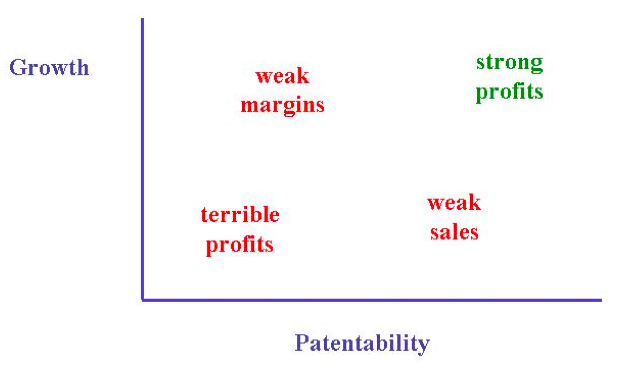
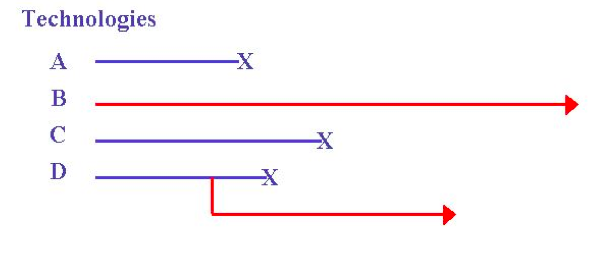




{ 6 comments… read them below or add one }