≡ Menu

White House Petition Demands TPP Process Be Open & Transparent

From Mike Masnick at Techdirt:

White House Petition Demands TPP Process Be Open & Transparent

from the yeah,-like-that-will-happen dept

It seems that, with every issue that comes up around here, people are quickly putting together White House petitions on the White House’s “We The People” site. The latest, in response to all of these stories about secrecy concerning the negotiations on the Trans Pacific Partnership (TPP), is a petition demanding that the process be more open and transparent.

The USTR needs to be more transparent and inclusive in the Trans-Pacific Partnership treaty. The public should be informed by regular drafts of language released and open for comment. Members of Technological and on line civil rights groups should be invited to the negotiations.

It doesn’t have many signatures yet, but perhaps we can help change that…

Of course, as I was finishing up this post, I discovered that there’s actually another, similar petition that probably should be signed as well. This one asks the White House to stop participating in the TPP negotiations, which is a much stronger request, and unlikely to actually get agreement from the White House (it also has some silly stuff about “the 1%” which is kinda off topic). I think the more straightforward request that any negotiation actually be open makes a lot more sense. But, either way, it’s good to see more people recognizing that the TPP is the next big problem when it comes to Hollywood expanding copyright laws against the will of the public that it will impact. Help make sure the White House knows this is a concern by signing one or both of these petitions.

Share
{ 0 comments }

Anonymous Declares War on Patent and Copyright

And on IPolice State acronyms: from a tweet by Anonymous (I suppose):

@AnonyOps
Anonymous
Down with copyright! Down with patents! End false property now! #AcronymWar #SOPA #PIPA #ACTA #TPP #OPEN #PCIP #C11 #RWA #SOPAIreland

Share
{ 0 comments }

Politicians as Pirates

This whole copyright enforcement business is getting so crazy that Republicans can’t find music for their rallies. I’ll just say it: the complaining rock bands are entirely in the wrong from a moral and ethical point of view. A song is part of the culture, a gift. If you want to control how it is used, don’t let anyone hear it. There is a reason why use the term “release” – as in release a song.

Share
{ 0 comments }

Falkvinge: “The US as an ‘idea’ is dying.”

Post below from Falkvinge.net. Money quote: “The US as an ‘idea’ is dying. The country that used to pride itself on free speech, democracy, and being ‘the last remaining superpower’, is now apparently drunk on its own power.”


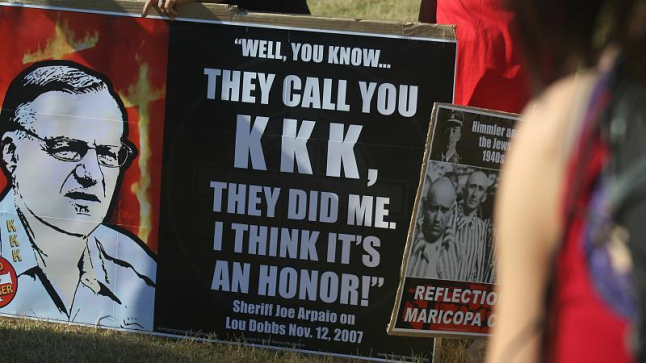
A poster of Joe Arpaio proud of being associated with the KKK. CC-BY-NC-ND by katerkate
0
+20

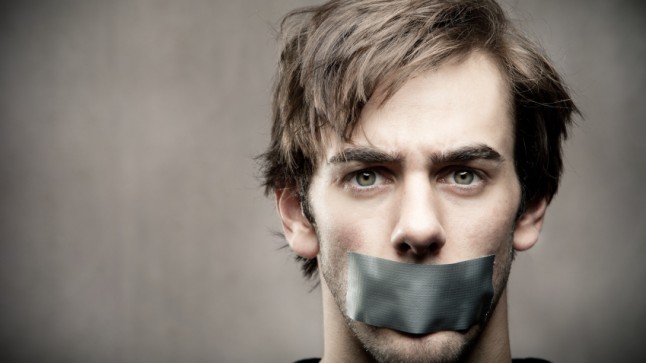
Freedom of Speech – Andrew Norton

Freedom of Speech – Andrew Norton

The US as an ‘idea’ is dying. The country that used to pride itself on free speech, democracy, and being ‘the last remaining superpower’, is now apparently drunk on its own power. With unchecked powers expanding at every turn, and terror laden missives booming out from government departments, the country seems to be taking a counterbalancing position from those who embraced freedom in the Arab Spring of last year, and is actively cracking down on freedoms previously embraced as a national advert.

The US likes to be known as the land of freedom and integrity; indeed the first verse of the US National Anthem – the Star Spangled Banner – ends:

O! say does that star-spangled banner yet wave,
O’er the land of the free and the home of the brave?

Over the last ten years, the answer has turned into a resounding NO!

Over the last ten years there have been many laws passed ostensibly about ‘fighting terrorism’, but which boil down to naked fear. A fear from the populace that some nebulous ‘terrorist attack’ will kill them all (despite the fact you’re more than 70x more likely to be just plain ‘murdered’ and 150x more likely to die on America’s increasingly poor quality roads than be present at a terrorist attack) which has supported a government that is increasingly spineless and cowardly. Nowhere is that more apparent than in the many instances over the last few months involving the uses of the police, when it comes to the First Amendment. [continue reading…]

Share
{ 0 comments }

Falkvinge on ACTA Censorship


In an inadvertent slip, the European Commission reveals that ACTA will indeed bring censorship to the Internet. As usual, they say this in the calmest soothing tone of voice.

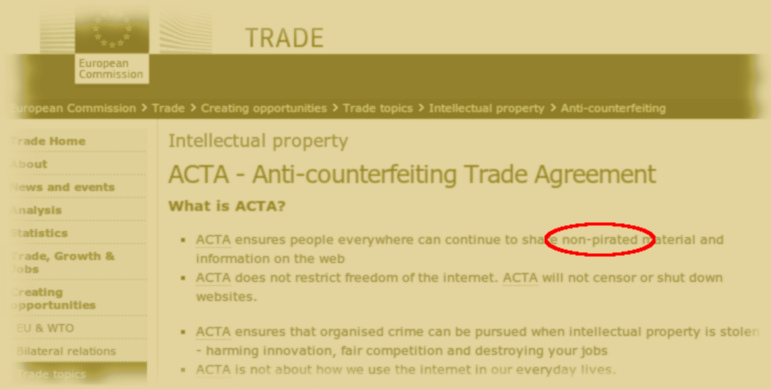
The European Commission, which is sort of the Administration in the EU, published a rebuttal to “rumors on the net about ACTA” and tries to set the record straight. Note the two first points: “ACTA ensures people everywhere can continue to share non-pirated material and information on the web. ACTA does not restrict freedom of the internet. ACTA will not censor or shut down websites.”

There is one word on their web page that stands out and reveals so much more about the nature of ACTA:

“Non-pirated”. Everybody will be free to share “non-pirated” material. All of a sudden, there is a qualifier  to what information we are able to share on the net; this qualifier has never been there before. We have always been able to send whatever we like, and possibly answer for it afterwards.

This is very, very serious. For what it says here is that the net will only be usable for government-approved communications; the government takes itself the right to determine what the net is usable for and what it isn’t usable for. To 250 million Europeans who share culture and don’t see anything wrong with defying an immoral monopoly, this is an arrogant slap in the face, but it’s more  than that and worse  than that. Any qualifier  to what can be communicated — “non-pirated” in this case — always means “government-approved”, that only governmentally approved communications may take place.

And this is serious for the deepest of democratic reasons: Any communications technology must be compatible with dissent.

At the same time as the government takes itself the right to determine what can be communicated and what cannot, a communications technology stops being compatible with dissent.

Now, the prudent question here would be if it isn’t true that some information has never been free to share, and that you can get prosecuted for doing so? This would be a very relevant observation.

There are many things you’re not allowed to share in terms of information. Military secrets, medical journals, libel/slander, ongoing criminal investigations, just to name a few. All of these have always been possible to share on the net, but if caught doing so, you can be hauled off to court for it. After the fact.  The postal service has always still been usable  to share this information.

And yet, the one single thing listed as impossible to share over the net is violations of the copyright monopoly. If the Commission really was referring to things that you were legally  unable to share, you’d expect military secrets to come first, followed by governmental hush-hushy documents. But no.

This is an obvious slip trying to calm people into saying that everything will be as before, but the forced factual correctness of it reveals that we are indeed talking about censorship.

Another objection here would be that the language requiring ISPs to police the net was taken out of ACTA. That is… not quite so. The specific phrase requiring that was taken out in one revision, yes. But in the same revision, the same thing was re-inserted in another place. Specifically, this text was inserted:

Desiring to promote cooperation between service providers and rights holders to address relevant infringements in the digital environment;

It looks fairly innocent, like most legal text where you don’t have the full context. To fully appreciate the impact of this text, one needs to know the background leading up to it and the negotiations. Hax writes a bit about it here (in Swedish). The gist of it is that it’s enforcement of extrajudicial censorship, plain and simple, through threats of third-party liability.

ACTA will bring censorship. Extrajudicial censorship. At the request of a bloody entertainment  industry. That is shameful.

Tomorrow, Saturday February 4, large-scale rallies against ACTA take place. I will be at the rally in Stockholm, Sweden at Plattan at noon.

Share
{ 3 comments }

History of Copyright, part 1: Black Death

From Falkvinge.net:

Painting of Black Death from 1411. Copyright has expired.
22
+338

Copyright Monopoly

Copyright Monopoly

In this seven-part series, I will look at the history of copyright from 1350 until present day. The story of the history books differs quite strongly from what you usually hear from the copyright industry.

We’re starting with the advent of the Black Death in Western Europe in the 1350s. Like all other places, Europe was hit hard: people fled westward from the Byzantine Empire and brought with them both the plague and scientific writings. It would take Europe 150 years to recover politically, economically and socially.

The religious institutions were the ones to recover the slowest. Not only were they hit hard because of the dense congregation of monks and nuns, but they were also the last to be repopulated, as parents needed every available child in the family’s economy, agriculture, et cetera, in the decades following the Plague.

This is relevant because monks and nuns were the ones making books in this time. When you wanted a book copied, you would go to a scribe at a monastery, and they would copy it for you. By hand. No copy would be perfect; every scribe would fix spelling and grammatical errors while making the copy, as well as introduce some new ones.

Also, since all scribes were employed (read controlled) by the Catholic Church, there was quite some limitation to what books would be produced. Not only was the monetary cost of a single book astronomical — one copy of The Bible required 170 calfskins or 300 sheepskins (!!) — but there was also a limit to what teachings would be reproduced by a person of the clergy. Nothing contradicting the Vatican was even remotely conceivable.

By 1450, the monasteries were still not repopulated, and the major cost of having a book copied was the services of the scribe, an undersupplied craft still in high demand. This puts things in proportion, given the astronomical cost of the raw materials and that they were a minor cost in ordering a book. In 1451, Gutenberg perfected the combination of the squeeze press, metal movable type, oil based print inks and block printing. At the same time, a new type of paper had been copied from the Chinese, a paper which was cheap to make and plentiful. This made scribecraft obsolete more or less overnight.

The printing press revolutionized society by creating the ability to spread information cheaply, quickly and accurately.

The Catholic Church, which had previously controlled all information (and particularly held a cornered market on the scarcity of information), went on a rampage. They could no longer control what information would be reproduced, could no longer control what people knew, and lobbied kings across Europe for a ban on this technology which wrestled control of the populace from them.

Many arguments were used to justify this effort, trying to win the hearts of the people for going back to the old order. One notable argument was “How will the monks get paid?”.

The Catholic Church would eventually fail in this endeavor, paving the way for the Renaissance and the Protestant movement, but not before much blood had been spilled in trying to prevent the accurate, cheap and quick distribution of ideas, knowledge and culture.

This attempt culminated in France on January 13, 1535, when a law was enacted at the request of the Catholic Church, a law which forced the closure of all bookshops and stipulated death penalty by hanging for anybody using a printing press.

This law was utterly ineffective. Pirate print shops lined the country’s borders like a pearl necklace and pirate literature poured into France through contraband distribution channels built by ordinary people hungry for more things to read.

Next: England and a vengeful daughter.

Share
{ 1 comment }

From Falkvinge.net:

A recreation (not copy) of the image found infringing on the copyright monopoly.

Copyright Monopoly Goes Insane: Non-Copy Judged As Infringing

54
+696

Copyright Monopoly

Copyright Monopoly

In a shock ruling in the UK this Tuesday, a photo was found to be in violation of the copyright monopoly of another photographer. There’s only one hitch with this ruling: the infringing copy was not a copy at all, but another original with a similar composition.

Read more>>

Share
{ 0 comments }

Daily Reckoning: How Piracy Works Against an Unnatural Monopoly

Nice piece from The Daily Reckoning:

How Piracy Works Against an Unnatural Monopoly

By Joel Bowman

leadimage02/02/12 Buenos Aires, Argentina – What the market giveth, the state rises to taketh away.

One of the more striking features of this whole modern spectacle must surely be the stark contrast between the state and the free markets that exist stubbornly, gloriously, in spite of its best efforts. Wherever evidence presents itself, it appears to do so with the sole purpose of expressing this juxtaposition in ever-higher relief.

This is no mere coincidence, Fellow Reckoner. The two entities are day and night…white and black…truth and government statistic. To the extent that the former exists, the latter does not. One produces; the other consumes. One adds value and meaning to peoples’ lives; the other subtracts value and feeds on the self-worth of those it engulfs. One is dynamic, responsive, nimble and creative; the other is brittle, deaf, lethargic and breathtakingly inelegant in all its forms. One serves customers, the other serves sentences.

It might well be said that, while the free market bends over backwards to serve the needs and desires of individuals, the state merely bends individuals over backwards.

The latest battle between these diametrically opposed nemeses is today being played out in the theater of intellectual property rights. Thanks to shared, copied articles, you’ve no doubt read all about it here and elsewhere. (In addition to some excellent commentary in these very pages, we would further refer interested Reckoners to this piece, penned by Mr. Stephan Kinsella, a man many consider the libertarian expert on this most important subject).

To be sure, the IP skirmish is just one of many such political hot spots, but it may well be one of the most important.

Free individuals’ ability to copy and learn from each other (without denying anyone else a single atom of realized, tangible or even “ownable” property in the process) is an important — arguably vital — tool in our ongoing struggle against the oppression of the state. It is an advantage, in other words, of immeasurable importance and one we surrender at our peril.

To illustrate the point, here is an excerpt from an excellent article by Kevin Carson that appeared on the Center for a Stateless Society website earlier this week:

Because local nodes in self-organized networks are free to take action or innovate without waiting for permission from an administrative apparatus, and every other node in the network is similarly free to learn by example and adopt the innovations without permission, they fully exploit agility advantages of networked communications in ways that authoritarian hierarchies are unequipped to.

[And here is a link to the full article, which we are happy to share with you without permission from the author, in case you’re interested: Why the State Will Fail.]

By larding itself with bureaucracy, inefficiency and structural rigidity — all designed to serve the privileged, politically-connected looter class working the machine behind the curtain — the state positions itself at a considerable disadvantage with respect to the free markets — the self-organized networks — that it seeks to crush.

Happily, we don’t have to follow this path by subscribing to the state’s sinister web of dysphemisms and doublespeak. We can, instead, reject its definition of sharing and learning and emulating as “pirating,” and as something, therefore, to be outlawed. We can likewise reject the state’s logically-circular notion that ideas — non-scarce, un-ownable patterns of knowledge — ought to enjoy violence-backed protection against “aggression”…from a violence-based institution that exists only because of aggression.

Most private citizens would have the decency to feel embarrassed if they had to defend this warped sort of logic. The state, on the other hand, revels in its position…but only because it doesn’t have to defend it. It simply claims the right to enforce it. A big difference, you’ll surely agree.

But here, too, the state’s designs to undo all that humanity has come to enjoy as a result of said copying, emulating and learning from each other comes unstuck. How, exactly, does one grant — much less enforce — an unnatural monopoly on intangible, infinitely reproducible concepts? How does one erect a protective circle around things that have no physical properties?

The state’s strategic efforts (SOPA, PIPA, ACTA and the like) to crack down on the spread of ideas ultimately amount to little more than a woeful, modern day adaptation of the mystical dream snare. Fortunately for us, ideas (and dreams) cannot simply be “caught” in a net…just as they won’t be caught on the net. The brave individuals who daily resist this tyranny ingeniously find workarounds to the state’s feeble-minded aggressions. And bravo to them!

Continues Mr. Carson:

We saw this recently with the development of Firefox’s DeSopa circumvention utility before SOPA even came up for a vote, and Anonymous’s massive same-day DDOS attack in response to a federal takedown of MegaUpload that had been months in the planning. Last summer Tor developers released a workaround the very same day Iranian authorities thought they’d shut down the encrypted router network.

The second the state constructs a wall, 2…4…8…10,000 copies of the very idea it was built to contain emerge on the other side. They are like ornery little neutrinos, seemingly popping in and out of existence as if only to mock the government’s Neanderthalic, cinder block goals.

Fortunately for us, good ideas don’t need or seek protection, nor do they exist to serve any one master. They are non-scarce entities and, as such, are here to serve us all.

On that last note, if you would like to share, copy or “pirate” any article you see appear in The Daily Reckoning, we’re making it as easy as possible. You can:

1) Go to our website and forward the link to your favorite articles to friends or,
2) Find and “like” us on Facebook, where you can share our articles or,
3) Do likewise by following us on Twitter.

As the author Paulo Coelho recently wrote in a fantastic blog post (which you are free to read here):

“Pirates of the world, unite and pirate everything I’ve ever written!”

Joel Bowman
for The Daily Reckoning

Share
{ 0 comments }

Cory Doctorow tweeted this BoingBoing post, saying: “This is, hands-down, the most batshit insane copyright proposal of the decade“. Now if he would only come out against copyright instead of merely copyright “reform”. Copyright is the disease. ACTA, SOPA, TPP are merely symptoms. Strike at the root, Cory!

Son-of-ACTA, the TPP, wants to legislate buffers

By at 8:02 am Thursday, Feb 2

Ars Technica’s Nate Anderson takes a good look at the Trans-Pacific Partnership, the secret copyright treaty whose latest negotiation round just took place in Hollywood (see last night’s post about the scandalous abuse of authority by the US Trade Rep in bullying the hotel to keep out civil society groups).

Now, this is a secret treaty, so we don’t know most of what’s going on in the room, but one jaw-dropping leak is that that the treaty contemplates requiring licenses for ephemeral copies made in a computer’s buffer. That means that every buffer in your machine would need a separate, negotiated license for every playback of copyrighted works, and buffer designs that the entertainment industry doesn’t like — core technical architectures — would become legally fraught because they’d require millions of license negotiations or they’d put users in danger of lawsuits.

This isn’t the first time that buffer licensing was proposed. Way back in 1995, the Lehman white paper, proposed by Clinton’s copyright czar to Al Gore’s National Information Infrastructure committee, made the same demand. It was roundly rejected then, because the process was transparent and the people who would be adversely affected by it (that is, everyone) could see and object to it.

This is about legislating chip designs and software architecture, and the only people allowed in the room are entertainment execs. The future of silicon itself hangs in the balance. Will Intel and other giants demand a fair, transparent, equitable negotiation process?

Last year, versions of the TPP’s US-written IP chapter leaked; its provisions went well beyond even ACTA, which was already the new high-water mark for IP enforcement. Where do things stand now? Are the other TPP countries on board with the US approach? Who knows! It’s all secret.

While ACTA at least claimed not to exceed US law, Flynn and other professors allege that the leaked TPP IP chapter does go beyond what’s in US law, doing things like extending copyright protection even to temporary “buffer” copies so crucial to digital devices.

As for USTR, it claims to be conducting “an unprecedented fifty-state domestic outreach strategy for TPP,” and it’s even hosting a largely worthless TPP blog. People can send comments to USTR through a special Web form, and negotiators do take in presentations from civil society groups on some occasions.

Beyond ACTA: next secret copyright agreement negotiated this week—in Hollywood

Share
{ 0 comments }

Yet Another Randian Recants on IP

I previously wrote about An Objectivist Recants on IP. This is just part of the overall phenomenon of growing libertarian rejection of intellectual property (The Death Throes of Pro-IP Libertarianism). I get notes quite often from people who have changed their minds on IP. And the latest is Gary Gibson, who in writing against SOPA and copyright, says:

This is still fairly new territory we’re exploring. A couple of years ago, we were far more in the Ayn Rand/Objectivist camp when it came to intellectual property (though not as far as the entertainingly pro-IP libertarian Andrew Joseph Galambos, who reportedly changed his name from Joseph Andrew Galambos so as not to infringe on his father’s claim to the specific name and who dropped a nickel in a box every time he used the word “liberty” to pay the estate of the reputed coiner of the word, Thomas Paine). It’s only recently that our friend Jeffrey Tucker got us thinking — and rethinking — the issue.

(Quoted in my post SOPA is the Symptom, Copyright is the Disease: The SOPA wakeup call to ABOLISH COPYRIGHT; see also Why Intellectual Property is the State’s Latest Taser.)

Update: See also the anti-IP views of Brant Gaede and quasi-Objectivist Shayne Wissler in this SOLO (Sense of Life Objectivists) thread about IP (and “Locke’s Big Mistake: How the Labor Theory of Property Ruined Economics and Political Theory,” Liberty in the Pines Conference (March 2013); but see his article An elegant argument against patents).

See also Complete Liberty: The Demise of the State and the Rise of Voluntary America, by Wes Bertrand, discussing the anti-IP (and anti-state) views of Objectivist-influenced Wes Bertrand.

And Timothy Sandefur, “A Critique of Ayn Rand’s Theory of Intellectual Property Rights,” Journal of Ayn Rand Studies 9:1 (Fall 2007), pp. 139-61

James Hughes is also an Objectivist anarchist and IP opponent.

David Veksler

Sid Smith.

@FabianLiberty

@LiquidZulu

See also others listed in this Facebook thread.

Selfish John is an anti-state and anti-IP Objectivist: “I’m an Objectivist and Anarcho-Capitalist: I integrate reality through reason for sovereign celebration. If I haven’t responded, they blocked me. No matter how annoying they are, I don’t block anyone who adheres to NAP: I accept they do exist.” On IP, see these posts:

Religion vs. Human Nature,” subsection “The Monopolization of Thought: The War on Creation and Communication”

The Monopolization of Thought: The War on Creation and Communication


It is essential to recognize that copyright and patent law—collectively known as “intellectual property” or, more accurately, intellectual monopoly—are not separate battles but the same war waged on a different front. They represent the secular, legalistic extension of the consciousness-primary assault on human independence, applying the same corrosive logic to the realm of production and creativity.

If the war on sexuality, ambition, and doubt targets the individual’s internal faculties, the war waged by copyright targets their externalized output. It is an attempt to control the consequences of a free mind operating in the world. Human cognition is inherently generative and integrative; we learn, we build upon existing knowledge, we transform and combine ideas to create new value. This process is the engine of material and cultural progress. To claim a monopoly over an idea or a pattern is to claim a right to dictate how other minds may use their own property and their own cognitive processes. It is a declaration that the creator’s consciousness has primacy over the existential reality of others.

The Conceptual Corruption:
The system corrupts the concept of property itself. In a reality-based framework, property rights are conflict-avoidance protocols for scarce resources. My use of my hammer excludes your simultaneous use of it. This protocol is necessary for peaceful coexistence and social cooperation.

Copyright attempts to apply this framework to non-scarce goods: ideas, patterns, melodies, narratives. The use of an idea by one person does not exclude its use by another. You reading a book I wrote does not prevent me from reading it. You building a mousetrap based on my design does not stop me from building another. There is no conflict to avoid. Therefore, the very concept of “property” in an idea is a stolen concept—it attempts to use the ethical and legal weight of a principle designed for one context (scarce goods) in a context where its foundational justification is absent.

This creates a floating abstraction: “intellectual property.” It has no perceptual referent in reality. You cannot point to “a copyright.” You can only point to a state-enforced legal claim that threatens people who arrange their own property (paper, ink, computers, raw materials) in a pattern similar to one a monopolist has registered. This is punishment for learning and reasoning.

The Mechanism of Enforcement:
This conceptual corruption is enforced with the full violence of the state, mirroring theocratic punishment for heresy.

  • Theocratic Parallel: A theocracy arrests you for blasphemy—for using your mind and voice to express ideas that contradict divine dogma.
  • Copyright Enforcement: A corporation, through the state, can seize your property, bankrupt you with lawsuits, or have you imprisoned for infringement—for using your mind and property to express or replicate patterns that contradict their state-granted monopoly.

In both cases, the “crime” is a thought-crime. The theocrat punishes you for wrong belief. The copyright holder punishes you for wrong arrangement—using your property in a way they have decreed, through the state, is their exclusive domain. The mechanism is identical: the use of initiated force to make reality conform to a consciousness-derived decree.

The result is a deliberate stifling of human creativity and communication. It creates a culture of permission, where every act of creation must be pre-approved by existing rights-holders, a logical and practical impossibility that leads to a perpetual state of guilt and legal peril for creators. The filmmaker, the writer, the musician, and the inventor must operate in constant fear that their independent, value-creating mind might unconsciously replicate a pattern already claimed by a monopolist.

This system does not protect the “little guy”; it protects the established and the litigious. It creates a modern priesthood of lawyers and corporate executives who derive their power not from productive genius but from the ability to navigate and weaponize a byzantine system of state-granted privileges. It encourages rent-seeking and legal warfare over innovation and production, precisely as the Watt patent stifled the development of steam engine technology for a generation.

Furthermore, it severs the causal connection between value creation and reward. In a free market, an artist profits by producing a value that others voluntarily choose to purchase. Under copyright, a corporation can profit primarily by preventing others from producing values people clearly want (e.g., fan edits, adaptations, competing implementations). The business model shifts from creation to control, from production to prohibition.

Copyright is the ultimate expression of the war against human nature because it attacks the bridge between the mind and the world. It says: You may think, but you may not act on your thoughts if they resemble ours. You may learn, but you may not build upon what you have learned without our permission. You may be inspired, but you’re not going anywhere from the patent holder. It is a tax on inspiration, a fine for integration, and a prison for the creative process.

It is a perfect example of a consciousness-primary system: it places the alleged “rights” of a consciousness (the original creator) above the existential reality of all other individuals, forbidding them from acting with their own property according to their own judgment. It creates a manufactured guilt around the very act of learning and building, ensuring that creators are made to feel like criminals for the crime of being human. The abolition of intellectual monopoly is therefore not merely a legal or economic imperative; it is a moral one, essential for freeing the human mind from its final shackles and securing the individual’s sovereignty over their thoughts, their actions, and their property.

https://selfishjohn.substack.com/i/170857616/taboos-and-censorship

Pragmatism is the transformation of meaning into garbage,” the section “My License”:

My License

https://selfishjohn.substack.com/i/172456596/the-monopolization-of-thought-the-war-on-creation-and-communication

This document and all my works are governed by a principle more fundamental than any man-made law: the Primacy of Existence.

Property rights are objective, conflict-avoidance protocols derived from the nature of scarce resources. A right to a thing means the right to use it without physical interference. Ideas are not scarce. My use of an idea—a pattern of information—in no way excludes you from perceiving it, analyzing it, or using it to guide your own actions. There can be no conflict over a non-scarce resource.

Therefore, the concept of “Intellectual Property” is a metaphysical error. It is an attempt to claim a right not to a specific physical object, but to a concept itself—and by extension, to control the actions of others who would use their own property (their minds, their computers, their paper and ink) to replicate that pattern. This is not the protection of property; it is the initiation of force and the foundation of a state-granted monopoly.

In accordance with reason and the objective nature of reality, I make the following declarations:

  1. Renunciation of Monopoly Claims: I explicitly renounce all legal claims, past, present, and future, to the patterns of information contained within my work that are falsely known as “copyright,” “trademark,” “moral rights,” or any other form of intellectual monopoly. These claims are invalid and I will not initiate force to enforce them.
  2. Grant of Absolute Permission: I grant to any person an absolute, perpetual, and unconditional right to use this work for any purpose whatsoever. This includes the rights to copy, distribute, modify, create derivative works, and use it commercially. This is not a license from me; it is a recognition of a pre-existing right you possess. I am merely formally waiving my own false claim to stop you.
  3. Attribution as Choice, Not Duty: The requirement of attribution is a subtle demand for a non-material royalty—a tax on credit. It sustains the romantic notion of the “creator-owner” that underpins the intellectual monopoly ethic.
    Therefore, attribution is expressly waived. You may use this work anonymously, pseudonymously, or attribute it to me. The choice is yours, based on your context and values—whether for honesty, humor, or strategy. The truth of the idea exists independent of its source.
  4. The Freedom Clause (Anti-Monopoly Defense): To prevent anyone from using the state’s monopoly machinery to privatize and restrict this work—to turn a free pattern into their own captive property—any derivative work you create must be released under these same terms.
    This is not a restriction on your freedom, but a defense of it. It is a logical extension of the Non-Aggression Principle applied to information. It ensures that the chain of freedom remains unbroken, creating a ever-expanding territory of thought that is permanently liberated from the aggression of intellectual monopoly. It makes the freedom viral, and the aggression impotent.

This is more than a license. It is an anti-monopoly declaration. It is a commitment to the principle that ideas are for using, testing, improving, and building upon—not for fencing in. You have my word, my reason, and my unwavering commitment to this principle. You do not need, nor should you seek, the state’s permission slip to use it.

This ends with a link to LiquidZulu’s youtube:

Share
{ 10 comments }

Copy(right) and paste

Nice column in the North Carolina State University paper, the Technician, from a student who understands that copying is not theft, and that to oppose SOPA you must oppose copyright:

Copy(right) and paste

By Brian Anderson, Staff Columnist

Published: Tuesday, January 31, 2012

Updated: Wednesday, February 1, 2012 21:02

Brian Anderson, Staff Columnist© 2012 N.C. State Student Media

Brian Anderson, Staff Columnist

I was happy to see Technician release an editorial two weeks ago in opposition to the Stop Online Piracy Act (SOPA). While I agree with the editorial board’s view on SOPA, though, I cannot help but worry about its view on piracy.


For example, the editorial summarized Reddit founder Alexis Ohanian’s depiction of SOPA, writing, “…its treatment of piracy is liken to a robbery being committed in a neighborhood, and then the neighborhood being demolished to prevent future robberies.”


I do not agree with this context for the clear reason piracy should not be a crime. And I would change Ohanian’s story to a version reading, “A man takes a photograph of a house and magically creates a new house out of thin air based on the original image. Then homebuilders lobby Congress to throw him in jail for teaching others how to do it.”


Indeed, if you were able to download a free Lamborghini without stealing anyone else’s Lamborghini, would you do it?


The reason it is vitally important to discuss the illegitimacy of intellectual property as opposed to the legal failures, i.e., guilty-by-accidental-association provisions, of SOPA is because the former feeds the latter. SOPA is a natural extension of stances in favor of intellectual property, which, contrary to real property, is simply a monopoly granted to corporations by governments that will later fine or imprison individuals who do the same.


After all, the original intention of copyright legislation was purposeful censorship, not some kind of incentive allowing musicians and other artists to make money. We shouldn’t be surprised copyright has finally returned to its maker. A more modern example of intellectual property-fueled censorship is the Church of Scientology’s usage of Digital Millennium Copyright Act-required takedown notices against its critics.


Many insist people would have no incentive to produce new entertainment, or particularly important in our technologically-advanced age, new software. Yet a quick look at Linux and Apache demonstrates even open source companies—those without a reliance on intellectual property—can thrive in the free market. You’ll be surprised how often you can find Linux’s source coding used around your house, e.g., in your TiVo.


As for entertainment, we can look back to the 1909 revision of the U.S. Copyright Act, which extended the copyright renewal period to 28 years. One would think that a major extension like this would surely give artists incentive to create newer pieces of work, but, from that time until 1999, the world saw no increase in artistic productions.


And thus Napster began. In 1999, the Recording Industry Association of America—yes, the same organization patting SOPA on the back—sued Napster. Not only did this lawsuit fail in stopping downloads, but the trial’s publicity turned Napster’s less than 500,000 user base into a huge peer-to-peer file-sharing community of 38 million people by mid-2000.

No matter what any government does, decentralized individuals will always find new ways to download these commodities for free. It is time that musicians, artists and other Los Angeles suit-and-ties realize we’re entering a new economy filled with non-scarce resources for which we would have only been able to dream a few decades ago.


Musicians should feel lucky to have their content displayed so frequently on websites like YouTube. Few people these days will even consider buying a song without hearing it at least once, and even fewer will attend a concert without such an experience. If nothing else, it is amazing advertising for established and upcoming musicians.

Read more>>

Share
{ 0 comments }

Ed Lopez: Fashion Copyright: A New Defense of Design Copying

Interesting talk by Ed Lopez, given last fall as one of the SJSU Econ Department’s Provocative Lectures on the topic of intellectual property and the fashion industry. According to Jeff Hummel: “It was a truly outstanding presentation, and is now available for viewing online in a very professionally edited video. I cannot recommend it too highly”.

For more on this topic, see here.

Note: The talk is very informative, but near the end Lopez does seem to endorse some form of copyright in fashion, which I completely oppose. This is the problem with the empirical approach.

Share
{ 1 comment }

I received the email below from the Federalist Societyabout a Teleforum its Intellectual Property Practice Group is putting on tomorrow on “Stopping Online Piracy: Where Should We Draw the Line?”. It’s free and no registration is necessary. To attend just dial 888-752-3232 at 1:00 p.m. (EST), Thursday, February 2, 2012.

The speakers are Larry Downes, “Consultant and Author, Technology, Strategy and the Law,” and Steve Tepp, “Chief Intellectual Property Counsel, Global Intellectual Property Center, U.S. Chamber of Commerce”. Now which one do you think will be the IP shill, eh? Not hard to guess, is it. Hint: Tepp. The US Chamber of Commerce is horrible on this. Here’s what their site is promoting:

U.S. Chamber Calls for Immediate Action on Rogue Sites Legislation

We all agree—theft of American jobs and innovation is not a business model we can continue to allow. Congress cannot ignore this massive loophole in enforcement of intellectual property online. Foreign e-criminals are bleeding our most creative industries in this critical time of economic recovery. A vote for rogue sites legislation is a vote for American jobs and American consumers.

Visit www.fightonlinetheft.com to learn more about the campaign against rogue sites.

If even Tepp comes out against SOPA and in favor of more “reasonable” anti-piracy laws, I’d be surprised. And I’d be even more surprised if Downes comes out against copyright or for a radical scaling back of copyright. He’ll probably say we need more “balance” and while piracy is a “real problem” and while intellectual property is “important” laws “like SOPA” “go too far.” Wow, what a debate.

No one is calling for the real reform we need. Let’s hope Downes surprises me and attacks the disease (copyright), not merely the SOPA-censorship-police state symptom. But I’m not betting on it.

Don’t believe me? Tune in and see for yourself. Here’s the FedSoc email:


The Federalist Society
Stopping Online Piracy: Where Should We Draw the Line?

A Teleforum Sponsored by the

Intellectual Property Practice Group

 Featuring

Mr. Larry Downes, Consultant and Author, Technology, Strategy and the Law*


Mr. Steve Tepp, Chief Intellectual Property Counsel, Global Intellectual Property Center, U.S. Chamber of Commerce**





Thursday, February 2, 2012

at 1:00 p.m. (EST)

No registration is necessary.
To participate in this practice group Teleforum, please dial 888-752-3232
on Thursday at 1:00 p.m. (EST) via telephone.

SOPA, the Stop Online Piracy Act, is a bill before the U.S. Congress that is designed to expand the authority of U.S. law enforcement to police and stop online trafficking in copyrighted material. But what are the exact contours of the government’s authority under the proposed legislation? Under what circumstances can the government shut down, or order the shut down, of a website? Why has the bill produced so much controversy? Who are the winners and losers if the bill is enacted? These and other questions will be discussed on our Teleforum.

*Larry Downes is a consultant and speaker on developing business strategies in an age of constant disruption caused by information technology. Downes is author of the Business Week and New York Times business bestseller, “Unleashing the Killer App: Digital Strategies for Market Dominance” (Harvard Business School Press, 1998), which has sold nearly 200,000 copies and was named by the Wall Street Journal as one of the five most important books ever published on business and technology. His new book, “The Laws of Disruption: Harnessing the New Forces that Govern Business and Life in the Digital Age” (Basic Books 2009) offers nine strategies for success in the emerging world of information law. It combines Downes’s unique perspective on economics, law, and innovation in the digital age. Downes is also a Partner with the Bell-Mason Group, which works with Global 1000 corporations, providing corporate venturing methodologies, tools, techniques and support that accelerate corporate innovation and venturing programs. He has written for a variety of publications, including USA Today, Harvard Business Review, Inc., Wired, CNet, Strategy & Leadership, CIO, The American Scholarr and the Harvard Journal of Law and Technology. He was a columnist for both The Industry Standard and CIO Insight. He writes regularly for both Forbes and CNET, covering the intersection of technology, politics and business. Downes has held faculty appointments at The University of Chicago Graduate School of Business, Northwestern University School of Law, and the University of California-Berkeley’s Haas School of Business, where he taught courses on corporate strategy and technology law. From 2006-2010, he was a nonresident Fellow at the Stanford Law School Center for Internet & Society. He is currently a Senior Fellow with TechFreedom, a non-profit, non-partisan technology policy think tank.

**Steve Tepp is the chief intellectual property counsel for the Global Intellectual Property Center (GIPC) at the U.S. Chamber of Commerce. Tepp, who joined the Chamber in July 2010, provides expert legal counsel across the GIPC at the strategic and operational levels. He is also responsible for leading the GIPC’s efforts, long term and short term, foreign and domestic, to reduce trademark counterfeiting and copyright piracy, especially in the digital and online environments. Previously, Tepp served as senior counsel for Policy and International Affairs at the U.S. Copyright Office, where he negotiated numerous free trade agreements and played a major role in drafting and negotiating the Anti-Counterfeiting Trade Agreement. Tepp had principal responsibility for all copyright matters in the Asia-Pacific and Latin America regions and litigated the U.S.-China IPR dispute before the World Trade Organization. He also worked on domestic legislative matters and litigated many federal court cases. Tepp co-authored the Copyright Office’s Digital Millennium Copyright Act Section 104 Report to Congress (2001), as well as its 2003 and 2006 Section 1201 Rulemakings. Earlier in his career, Tepp was an attorney for the U.S. Senate Judiciary Committee on the staff of the chairman, Sen. Orrin Hatch (R-UT), specializing in intellectual property. Collectively, Tepp has been in or around every copyright-related matters before the U.S. Congress since the mid-1990s. Tepp taught copyright law at the Georgetown University Law Center and the George Mason University Law School. He is a graduate of American University’s Washington College of Law and received his undergraduate degree from Colgate University. He resides in Virginia with his wife and children.

Upcoming Calls 

Monday, February 6, 12:00pm
Golan v Holder
with Adam Mossoff, Chris Newman and David Olson
**All calls listed are EST.

No registration is necessary. 


Dial in number is 888-752-3232.   

The Federalist Society
1015 18th Street, NW, Suite 425
Washington, District of Columbia 20036

To receive updates on topics pertaining to other areas of law, please click here.


Share
{ 4 comments }

CreativeAmerica Literally Resorts To Buying Signatures

From Mike Masnick at Techdirt:

CreativeAmerica Literally Resorts To Buying Signatures

from the grassroots! dept

Remember CreativeAmerica? This is the slickly produced operation that claims to be a “grassroots” organization in favor of SOPA and PIPA… but which is actually funded by the major studios, staffed by former MPAA employees, and has had all the major studios directly pushing employees and partners to sign up for the program — even to the point of threatening to take away business if they don’t sign.

This is also the group that was caught copying an anti-SOPA activism letter, and using the exact same words as if it was written by themselves (I guess they’re fine with plagiarism). It’s also been caught using funny math to pump up its tiny number of supporters.

In December, we joked that CreativeAmerica had resorted to buying support, after it released a big (and expensive) advertising campaign all over TV and on some big screens in Times Square. Not exactly a “grass roots” operation.

Either way, it appears the group has gone more direct now: to the point that it’s literally paying people for signatures. I’ve received very credible evidence, that a consulting firm hired by CreativeAmerica is now offering to pay people to get signatures on CreativeAmerica’s petition. The following email was forwarded to me, with some details redacted to protect privacy:

the organization I am doing work for is Creative America, which is a grassroots organization that is working to stop foreign rogue websites from illegally distributing American content such as books, music, films, etc…. These specific websites costs the U.S. and the 2.2 million middle class industry workers $5.5 billion in wages and hundreds of thousands of jobs. Your job would be just collecting signatures from whoever is interested in signing up for updates. A newsletter may come once a month and anyone can unsubscribe if they don’t want it. We don’t care if they do; all I care about is getting initial signups.

The hours are flexible and we will pay you $1/signature, so if you collect 100 signatures a week, we would pay you $100/week. We will also pay for you to go to local film festivals in the area (SXSW, Austin Film Festival, etc.). We are also taking as many people as possible, so if you have some friends who are interested in doing it we can take them as well. Let me know your thoughts….

This raises even more questions about the already anemic number of people supporting CreativeAmerica and its pro-SOPA, pro-PIPA, MPAA-driven agenda. As the email makes clear, they’re willing to pay as many people as possible to get signatures to make the group look larger than it is. That’s pretty crazy. I think we can be pretty sure that the millions of people who spoke out against SOPA/PIPA did so without someone paying them $1 per call or email.

Share
{ 1 comment }