≡ Menu

Two HUGE, HUGE developments in the education world. HUGE!!!

From DailyDirt: Teaching Technology:

MIT is developing a certification process for its open education projects. MITx students will not receive degrees from MIT, but a yet-to-be-named non-profit organization within MIT will award certificates of completion to students who demonstrate a mastery of MITx subjects made available online. [url]

And, from Marginal Revolution:

Udacity

by  on January 25, 2012 at 7:35 am in EducationWeb/Tech | Permalink

In The Coming Education Revolution I discussed Sebatian Thurn and Peter Norvig’s online AI class from Stanford that ended up enrolling 160,000 students. Felix Salmon has the remarkable update:

…there were more students in [Thrun’s] course from Lithuania alone than there are students at Stanford altogether. There were students in Afghanistan, exfiltrating war zones to grab an hour of connectivity to finish the homework assignments. There were single mothers keeping the faith and staying with the course even as their families were being hit by tragedy. And when it finished, thousands of students around the world were educated and inspired. Some 248 of them, in total, got a perfect score: they never got a single question wrong, over the entire course of the class. All 248 took the course online; not one was enrolled at Stanford.

Thrun was eloquent on the subject of how he realized that he had been running “weeder” classes, designed to be tough and make students fail and make himself, the professor, look good. Going forwards, he said, he wanted to learn from Khan Academy and build courses designed to make as many students as possible succeed — by revisiting classes and tests as many times as necessary until they really master the material.

And I loved as well his story of the physical class at Stanford, which dwindled from 200 students to 30 students because the online course was more intimate and better at teaching than the real-world course on which it was based.

So what I was expecting was an announcement from Thrun that he was helping to reinvent university education: that he was moving all his Stanford courses online, that the physical class would be a space for students to get more personalized help. No more lecturing: instead, the classes would be taken on the students’ own time, and the job of the real-world professor would be to answer questions from kids paying $30,000 for their education.

But that’s not the announcement that Thrun gave. Instead, he said, he concluded that “I can’t teach at Stanford again.” He’s given up his tenure at Stanford, and he’s started a new online university called Udacity. He wants to enroll 500,000 students for his first course, on how to build a search engine — and of course it’s all going to be free.

Share
{ 0 comments }

From Falkvinge:

iStock_000009167758Small

Today, the verdict was announced in the case of Uppsala, Sweden, where a 60-year-old had shared 2,880 music tracks on a DirectConnect hub. The man was sentenced to two years of conditional jail, and fined for 40 days’ worth of his income (day fine).

Two years in jail is the maximum sentence under Swedish law for ignoring the distribution monopoly on culture. Swedish Public Radio reports on the verdict (in Swedish). This is just insane beyond words.

Not surprisingly, the Swedish Pirate Party leader, Anna Troberg, doesn’t pull punches in her comments.

Media downplays the verdict somewhat, as the jail sentence was conditional (equivalent to probation), but that doesn’t matter from a legal standpoint — while the man will probably never set foot in jail, that was because of his specific circumstances.

Here are some other recent verdicts in Sweden, just for scale:

…and, apparently, sharing your favorite music: two years, although on probation in this case.

I have no words. This needs to come to senses. The copyright monopoly needs to dismantle, the worst pieces first. One of those worst pieces is obviously the one that could put a man in jail for two years for sharing music.

Two years ago, when these and similar laws were written, I said that the politicians are acting like drunken blindfolded elephants trumpeting about in an egg packaging facility. Now, we are starting to see the results.

If this is not enough to cause an uproar of “enough is enough!”, then what is?

Share
{ 1 comment }

The copyright industry never seems to have had enough. Starting today in Sweden, they demand a private tax for external hard drives and USB memory sticks.

The tax they demand is about 9 euros for an external hard drive, or 10 eurocents per gigabyte for USB memory sticks. They have previously demanded a tax for cassette tapes, which was how this private taxation right started, and gradually expanded it to blank CDs and DVDs, as well as media players with built-in hard drives. Yes, that includes the latest game consoles — Swedish kids pay about 15% tax to the copyright industry on a Playstation 3.

This stems from the entitlement that since you theoretically can make legal copies of your media onto blank storage, the copyright industry demanded — and got – compensation for this hole in their monopoly.

Thus, it is important to remember — as is pointed out in this morning’s press release from the Swedish Pirate Party — that the blank media taxation right isn’t intended to cover the imaginary losses from file sharing online. It’s intended to cover a completely different imaginary loss, the one from when you copy your purchased media onto blank media in your own home.

Thus, they are getting away with demanding money for actions that are even explicitly outside of the copyright monopoly. Demanding compensation for violations of your monopoly is one thing; demanding compensation for actions outside of your monopoly is something else, and demanding compensation for the theoretical possibility of such actions lands us at where we are.

We’ve now arrived at a point where they can demand and get away with anything, apparently.

Just because you can theoretically store their crappy music on a general-purpose storage device, which you probably never will, they have been given the right to tax you. More likely, you use external hard drives to store vacation and family photos, or backups of your work.

It remains to be seen if they actually get away with this tax demand, though. The electronics business in Sweden has said “take a hike” and will meet the copyright industry in courts over their interpretation of the taxation right.

You’ve read the whole article. Why not subscribe to the RSS flow using your favorite reader, or even have articles delivered by mail?

About The Author: Rick Falkvinge

Rick is the founder of the first Pirate Party and is a political evangelist, traveling around Europe and the world to talk and write about ideas of a sensible information policy. He has a tech entrepreneur background and loves whisky.

Share
{ 0 comments }

Great post by Falkvinge:

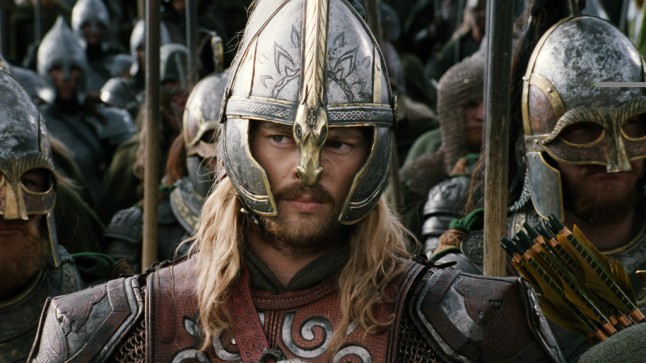
A scene from "Return of the King", the third part of "Lord of the Rings"

Whenever I argue that the copyright monopoly isn’t necessary to incentivize culture production, I hear the counterargument that multi-million-euro movie productions would never happen in case there wasn’t a guaranteed return on investment.

The image for this article is a still image from Return of the King published in 2003, the third installment of The Lord of the Rings, which I’ll use as a concrete example. But first, let’s examine the counterargument above in more detail.

I frequently hear that this-and-that would not happen if there wasn’t a guaranteed return on investment. While most people seem in agreement that music would be played, books would be written, and art would be made without the copyright monopoly, because that creativity happens for other reasons than pure money, the objections usually gravitate towards the subject of blockbuster movies, and how a guaranteed return on investment is necessary for those to be produced in the first place.

Let’s look at that statement.

First, it’s a contradiction in terms. By definition, an investment is the acceptance of a risk for a possible return which is larger than the initial investment; there is no such thing as a right to profit off of any endeavor.

Second, so what? Culture has always been fluent in its forms of expression. A hundred years ago, folk songs and concerts with classical music were the two predominant expressions of culture. A hundred years before still, it was ballets and operettes in French and Italian. Nobody even gives a shrug that ballets isn’t the predominant expression of culture today, and so, we should expect feature films to peak and fade, too: to give way for something else and better. Gaming and immersive culture, perhaps.

But let’s look at the underlying assumption again, that nothing would be produced if the copyright monopoly was reduced to allow file sharing. Let’s assume that everything could spread freely as soon as it was digitized, and that this would result in no more revenue for a certain blockbuster movie once it was shared in the wild (which is a completely false assumption, but one that the copyright monopoly maximalists argue, and so, let’s stick with it for the sake of argument).

This means, that after the opening weekend of a blockbuster, it would yield no more revenue under this (false) assumption. So then, let’s look at hard numbers to examine that argument. We have the numbers for Return of the King, which is frequently used as an example in the debate, right here.

The movie Return of the King cost 94 million US dollars to make. On opening weekend, it grossed 199 million. That’s over a 100% return on investment before a digital copy could be fileshared in the wild.

Now, there are a number of assumptions with this number, like how the gross is distributed and much more. But overall, it shows how ridiculous the argument is that there would never be a return on investment if the copyright monopoly was sensiblized to allow noncommercial copying.

The next wave of that argument is that all movies don’t reach the 100-percent level of return on investment during opening weekend. That is true, of course. Some reach more, some less, some go at a loss. So how much return would be needed, and how much risk is acceptable, to still make investments happen?

In order to answer this question, we don’t look at the Hollywood studios, but at other investors: the… well, investors. Wall Street. A ten-percent return over a year is a considered a good investment that easily attracts hundreds of millions of euros (or dollars). And frequently enough, those investments… just tank. Just like movies do. But you practically never, ever, see the hundred-percent return on investment on Wall Street financial derivatives that you can make on just opening weekend for a movie production.

In summary, the argument that nobody would invest in the production of multimillion blockbuster feature movies if filesharing was allowed is incoherent hogwash on multiple levels, proved so by the industry’s own numbers.

TRANSLATIONS AVAILABLE
This article has been deemed reference material by the swarm, which has translated it into other languages. Translations available: Spanish.

You’ve read the whole article. Why not subscribe to the RSS flow using your favorite reader, or even have articles delivered by mail?

About The Author: Rick Falkvinge

Rick is the founder of the first Pirate Party and is a political evangelist, traveling around Europe and the world to talk and write about ideas of a sensible information policy. He has a tech entrepreneur background and loves whisky.

Update: See Mike Masnick, Once Again, If You’re Trying To Save The $200 Million Movie, Perhaps You’re Asking The Wrong Questions.

Share
{ 0 comments }

Great piece by “anonymous” on Falkvinge.net:


For the rich West and North, the copyright and patent monopolies are a moral nuisance and an impediment to progress, argues this anonymous guest contributor. For the third world, however, the practices are neocolonial and a matter of sovereignty and life and death. These reasons are often much stronger than the right to create.

There are many reasons for those of us in the first world to oppose the current “intellectual propety” regime:

  • Some of us see it as trying to legislate water to run uphill
  • Some of us appreciate the remix culture
  • Some of us see it as blocking specific projects
  • Some of us believe it’s morally iffy to create an artificial scarcity.
  • Some of us simply don’t appreciate the way the system was constructed, on broken promises and overstated figures.

However, what you hear a lot, is the assumption – from others, mostly, that it’s all about not wanting to pay for a movie. Yes, go ahead and shake your head.

It may sound rude, but there’s a huge situation where that can be the logical driving force: the third world. There, the elaborate Pirate Wheel values are not necessarily as important as simple economic realpolitik.

First, for most third-world nations, the monopoly business is a simple net export situation. First-world content is broadly imported, but by and large, nobody is queuing in Los Angeles or Paris for the latest cinema hits from Cameroon, the new patented medicine developed in Tajikistan, or the top 40 music of Zimbabwe. A simple statistical analysis shows they get far less out of the monopoly industries than they pay out to the first world. By quitting the game, they can immediately staunch a flow of hard currency, and improve the balance of trade.

Second, these nations often desperately crave modernization. However, wherever they look, the path to the future goes via foreign monopolies. Want high-yielding, modern seeds for your farms? Sorry, patented, so you’ll pay a premium price and likely be forbidden from saving the resultant harvest for replanting. Need software to bring your business and government operations into the 21st century? Sure, if you’ll pay three times the per-capita income for a copy, and support contract, and forget about distributing it to each office that needs it. Those restrictions go away the moment the monopolies do – the guy running off copies on a street corner, or the local farmer who started with patent seeds, and the plant cranking out generic HIV medications, don’t care what you do with the product once you buy it.

There’s also a softer reason such reforms would appeal to the third world: a lack of entrenched interests. The first world’s monopoly beneficiaries are a small, but disproportionately influential group. In the third world, you might have a few poor local affiliates, backed only by the shadows of distant foreign firms. Abolishing monopolies doesn’t just make economic sense, it’s a strike for your nation’s sovereignty and uncorruptability by outsiders!

In a way, the current intellectual property system bears a surprising resemblance to manufacturing regulations placed on colonial states by their distant masters. It was an obvious system – by preventing the development of manufacturing in the colony, they can both line the profits of the home country, and prevent the colony from developing a free-standing economy of their own.

The second half of the 20th century was a period of great release for the third world, as it threw off formal colonial shackles. I see no reason the first half of the 21st century shouldn’t be the time period they cut that last cord to the old exploitation model.

You’ve read the whole article. Why not subscribe to the RSS flow using your favorite reader, or even have articles delivered by mail?

About The Author: Anonymous

This is an article submission by an author who prefers to stay anonymous (not to be confused with a membership of the group Anonymous). Anonymous submissions of articles can be sent to the addresses under the Contact tab.

Share
{ 0 comments }

I posted this at TLS:

SOPA is the Symptom, Copyright is the Disease: The SOPA wakeup call to ABOLISH COPYRIGHT

Share
{ 1 comment }

Two lessons from the Megaupload seizure

Glenn Greenwald has a great, but chilling, article on Salon about the Megaupload seizure, SOPA, and related matters. His two main points:

(1) It’s wildly under-appreciated how unrestrained is the Government’s power to do what it wants, and how little effect these debates over various proposed laws have on that power. …

(2) The U.S. really is a society that simply no longer believes in due process: once the defining feature of American freedom that is now scorned as some sort of fringe, radical, academic doctrine.

Another point that could be made: websites and services will begin to locate outside the US and to lock out American users in an attempt to avoid the USGov’s extraterritorial, maniacal wrath. As discussed in a recent Tech News Today, this is already happening, and there is a growing chilling effect on other services, such as Filesonic, which has disabled file sharing in wake of Megaupload takedown–others have too, and no doubt services like DropBox, Rapidshare, Grooveshark, even Youtube are now consulting with lawyers or planning to limit services, move out of the US, block US users, or shut down.

Update: see also PCMagazine, After Megaupload, Storage Sites Shutter Services, By Chloe Albanesius, January 24, 2012, “In the wake of last week’s government crackdown on Megaupload for copyright infringement, attention turned to what other cloud-based services might be at risk of prosecution. Could popular offerings like Dropbox, Box, or YouSendIt be targets?…”

Here’s a snippet of Greenwald’s article:

Two lessons from the Megaupload seizure

Two events this week produced some serious cognitive dissonance. First, Congressional leaders sheepishly announced that they were withdrawing (at least for the time being) two bills heavily backed by the entertainment industry — the PROTECT IP Act (PIPA) in the Senate and Stop Online Piracy Act (SOPA) in the House –  in the wake of vocal online citizen protests (and, more significantly, coordinated opposition from the powerful Silicon Valley industry). Critics insisted that these bills were dangerous because they empowered the U.S. Government, based on mere accusations of piracy and copyright infringement, to shut down websites without any real due process. But just as the celebrations began over the saving of Internet Freedom, something else happened: the U.S. Justice Department not only indicted the owners of one of the world’s largest websites, the file-sharing site Megaupload, but also seized and shut down that site, and also seized or froze millions of dollars of its assets — all based on the unproved accusationsset forth in an indictment, that the site deliberately aided copyright infringement.

In other words, many SOPA opponents were confused and even shocked when they learned that the very power they feared the most in that bill — the power of the U.S. Government to seize and shut down websites based solely on accusations, with no trial — is a power the U.S. Government already possesses and, obviously, is willing and able to exercise even against the world’s largest sites (they have this power thanks to the the 2008  PRO-IP Act pushed by the same industry servants in Congress behind SOPA as well as by forfeiture laws used to seize the property of accused-but-not-convicted drug dealers). This all reminded me quite a bit of the shock and outrage that arose last month over the fact that Barack Obama signed into law a bill (the NDAA) vesting him with the power to militarily detain people without charges, even though, as I pointed out the very first time I wrote about that bill, indefinite detention is already a power the U.S. Government under both Bush and Obama has seized and routinely and aggressively exercises.

Read more>>

Share
{ 7 comments }

Update: Harry Potter and the Stolen Font Lawsuit

I noted previously the ridiculous lawsuit against NBC for using someone’s “font” on Harry Potter merchandise, even though fonts are not covered by copyright, because “the software that generates computer-generated fonts are” covered by copyright. So apparently if “NBC Universal used the Cezanne Regular font software when designing merchandise” then they may be liable; but “if the designers traced the font, or reproduced it in some other manner,” they didn’t use the software so are not liable.

Well we have an update: NBC Universal settles dispute over use of “Harry Potter” font. Such a wonderful use of scarce resources.

Share
{ 1 comment }

Excellent–and frightening–ZDNet article by Stephen Chapman:

The death of online piracy: the end of the Internet as we know it

By | January 23, 2012, 8:58pm PST

Summary: Piracy finds its way into just about every legitimate avenue on the Internet. As such, the death of online piracy via shutting down otherwise legitimate sites and services could mean the end of the Internet as we know it.

The death of online piracy: the U.S. government wants it and copyright holders want it, but at what cost? As we’ve seen from SOPA and PIPA, the government would be willing to completely cripple the Internet to see to the death of online piracy; and now, the shuttering of MegaUpload by the U.S. government (as a result of pressure from copyright holders) has caused waves in the file-sharing business; a business that — amongst perfectly legal profits — is rife with HUGE profits that come as a direct result of the sharing of pirated content. Yes, the death of online piracy as we currently know it is going to happen at some point; but to severely cripple (never mind completely obliterate) online piracy would come at the cost of the current freedoms the Internet enjoys — be it from an end-user perspective, a service provider perspective, or both.

You see, I am more fascinated with piracy than most. It’s a topic that has captivated me for many years and the debates sparked on the subject are absolutely riveting when intelligible people opinionate from either side. Plus, my security consulting endeavors and Google hacking escapades have opened my eyes to more avenues of piracy than are readily apparent to most. As such, to effectively end online piracy, I see that FAR more will have to be done than simply shutting down file-sharing sites. I fear that the most significant changes will be brought forth by legislation, and it WILL happen one day if the piracy war continues as it has thus far.

To give you a small and scary sampling of what obliterating online piracy might mean for the Internet, I present the following points for your consideration:

1 – File-sharing site censorship: Put simply, a complete restructuring and lock-down of file-sharing sites would have to occur for them to even exist. And though it could work just fine in theory, it couldn’t work without handing over a certain amount of freedom and convenience. Every file uploaded to a file-sharing site would have to somehow be guaranteed to either not be copyrighted, or the uploader would have to provide credentials which, under certain guidelines/legislation, show that they can share what they’re sharing — most likely with an intended number of receivers who might also have to provide proper access credentials. As it currently stands, it’s FAR too easy to fly in under the radar of current file-sharing sites that try to auto-detect copyrighted files. Gone would be the days of file-name obfuscation and password-protected 7-zip files.

Read more>>

Share
{ 0 comments }

Sharing Is Not Piracy

And copying is not theft. Despite intellectual properganda to the contrary.

Update: See Who are You Calling a Pirate?: Shaping Public Discourse in the Intellectual Property Debates, by Christina Mulligan and Brian Patrick Quinn.

Note: The SSRN link is bad at present; I have posted it here with Mulligan’s permission.

So, Stop calling patent and copyright “property”; stop calling copying “theft” and “piracy”. Just. Stop. It.

Share
{ 3 comments }

Nina Paley sent me this from “a friend who publishes eBooks,” and asked for my take on how to reply. Here is the question and my response (edited):

Author:

Here is a scenario I have a hard time getting past. Suppose there were no legal protection against anyone copying anything, and suppose there were a bunch of people trying to sell ebooks or apps or whatever in a nice convenient store. Within weeks of any ebook/app being released for sale, a company set up for the purpose of doing exactly this would have released a copy of it for free, framed with a small ad at the bottom. A few people would think this is despicable and always seek out and buy the one put up by the creator, but most people most of the time would go for the free one. Maybe not the people you hang out with in New York, but the people I hang out with in Longview would consider it laughably stupid to pay when they can get it for free with just a little ad at the bottom. They would not care *one iota* about who made it, they simply do not think that way.

Shouldn’t there be some way for me to prevent someone from taking my ebook and reposting it with an ad? I know you’ve heard this all before, but humor me, talk me out of it….

Me:

First I would refer to John Hasnas’s comments in his classic The Myth of the Rule of Law.
After arguing against the state and for anarchy, he says:

I am aware that this explanation probably appears as initially unconvincing as was my earlier contention that the law is inherently political. Even if you found my Monosizea parable entertaining, it is likely that you regard it as irrelevant. You probably believe that the analogy fails because shoes are qualitatively different from legal services. After all, law is a public good which, unlike shoes, really is crucial to public welfare. It is easy to see how the free market can adequately supply the public with shoes. But how can it possibly provide the order-generating and maintaining processes necessary for the peaceful coexistence of human beings in society? What would a free market in legal services be like?

I am always tempted to give the honest and accurate response to this challenge, which is that to ask the question is to miss the point. If human beings had the wisdom and knowledge-generating capacity to be able to describe how a free market would work, that would be the strongest possible argument for central planning. One advocates a free market not because of some moral imprimatur written across the heavens, but because it is impossible for human beings to amass the knowledge of local conditions and the predictive capacity necessary to effectively organize economic relationships among millions of individuals. It is possible to describe what a free market in shoes would be like because we have one. But such a description is merely an observation of the current state of a functioning market, not a projection of how human beings would organize themselves to supply a currently non-marketed good. To demand that an advocate of free market law (or Socrates of Monosizea, for that matter) describe in advance how markets would supply legal services (or shoes) is to issue an impossible challenge. Further, for an advocate of free market law (or Socrates) to even accept this challenge would be to engage in self-defeating activity since the more successfully he or she could describe how the law (or shoe) market would function, the more he or she would prove that it could be run by state planners. Free markets supply human wants better than state monopolies precisely because they allow an unlimited number of suppliers to attempt to do so. By patronizing those who most effectively meet their particular needs and causing those who do not to fail, consumers determine the optimal method of supply. If it were possible to specify in advance what the outcome of this process of selection would be, there would be no need for the process itself.

Although I am tempted to give this response, I never do. This is because, although true, it never persuades. Instead, it is usually interpreted as an appeal for blind faith in the free market, and the failure to provide a specific explanation as to how such a market would provide legal services is interpreted as proof that it cannot. Therefore, despite the self-defeating nature of the attempt, I usually do try to suggest how a free market in law might work.

So, what would a free market in legal services be like? ….

then Hasnas proceeds to make some ejumacated guesses.

See also Leonard Read’s classic I Don’t Know, which makes some related points.

So: on to my reply.

It’s hard to answer such questions, because you are right away agreeing with their background assumption which is that the law and policy ought to be designed around a certain result, and, in this case, the result being the perpetuation of the model people have been used to that developed because of copyright. It’s almost like if you can’t find an answer, then the assumption is that your normative theory is wrong. That if you can’t predict the future that would happen in a world that followed your recommendation to abolish copyright, then you have no right to abolish it.

Still, we have to sometime try to talk their language, on their level. I guess one approach would be to note that there are a variety of principles reasons to oppose copyright, even if we can’t predict what the world will look like in such a — more free — society. Some Russians under communism would have asked you who would make toothpaste and how many brands there would be, if you abolished the state toothpaste agency. If you don’t know the answer does that mean communism should continue?

Also, note in her example the fact of the ad is irrelevant, yet she is bothered by this. She is bothered by the “pirate” making money, when in fact the real problem she points at is her loss of revenue. If the other site was free and had no ad she’d be even worse off. So her concern is someone copying her and putting it up for free. NOt the ad.

I would also note that they are not literally “taking” her ebook. She still has hers. What they are “taking” from her, in her view, is the money in the hands of customers that they “would have” otherwise spent on her. But she has no property right in the money in prospective customers’ wallets, does she? If they want to refrain from buying her ebook that is their right.

As for the ad she has somewhat of a point: the main reason someone else would bother to put her ebook up is for some gain. So they sell it–which is hard to do… why would someone buy it from a pirate instead of from the author? or they put up ads. But of course the more obtrusive the ads are, the more irritating they are to buyers which will drive some away.

Also: many people who get it for free, are not people who “would have” bought it anyway. I would imagine 90% of them would not have bought it at all–they can’t afford it, or they were not willing to buy it. For those free downloads, she is not worse off at all; in fact she is better off as she now may have more fame or fans etc.

But I think she is wrong that most people would not prefer to get it from the author. If it’s for a reasonble price, I think many would. Louis CK sold a million dollars of his recent video on his own site for $5 a pop, in 2 weeks, even though people could pirate it elsewhere. One reason, I think–is if I get an ebook from the author for $1 say, I know it’s the latest version, authorized, etc. How can I be sure the one I am pirating is the latest, or not messed with by the pirate or someone else?

Consider also: either this is a popular book/author, or not. If it’s not, they don’t make much money anyway in today’s world, and they might not in a copyright free world either. This is not the fault of no-copyright. If the book is popular, then the author has to find a way to make money even though there are pirated copies out there. But this is the case NOW. Right? The author knows pirated copies will be available. The author really only needs to make sufficient money from paying customers. In a copyright free world, imagine someone like JK Rowling. She writes a Harry Potter novel. She sells copies on her site and makes a bit of money, but then it gets popular so pirated copies start circulating too. She then becomes wildly popular, in part due to piracy. And probably 90% of the people who got bootleg copies would not have bought the book anyway. So she loses some sales, but now she is very popular.

So she has book 2 written. She posts a note on her site to her fans saying that she has book 2 ready to go, and she’ll release it as soon as she gets a million pre-orders for $5 each. iN a month she has $5M in the bank and so she releases the book. And then she makes another couple million more, and then sales taper off because of piracy and normal attenuation. Then she repeats this with the next 5 books. Soon she is worth $100M.

Meanwhile three different movie studios begin making a movie version of her first novel–without her permission. She gets no payment but on the other hand this drives more sales of her earlier and upcoming books–it acts as advertising for her. But one of the three movie studios, realizing it has competition from the other two, seeks a way to distinguish its movie. It approaches Rowling and asks her to consult on the movie and to promote the movie as the “best” and “authorized” version. They pay her $1M plus 2% of box office receipts, and she consults, helps improve it, and makes sure they don’t adulterate her plot too much etc. Or maybe she helps with the screenplay. In any case the “authorized” movie does way better at the box office than the unauthorized versions–if you were a Harry Potter fan which of the 3 would you want to see? Maybe all 3. but if you could only see one…. the one the author authorized of course.

And let’s say all this was on a lower scale. The money might not be as much, … but maybe the author is famous enough to get a job offer teaching in an English literature department. Or writing or polishing screenplays. Or copyediting others’ draft novels for a fee.

So in my view, if you write a book that people like, then there are a number of ways you can find to profit from it.

See also: Examples of Ways Content Creators Can Profit Without Intellectual PropertyThe Creator-Endorsed Mark as an Alternative to Copyright

Share
{ 8 comments }

Terence Corcoran: No oil meets no copyright

A somewhat confused op-ed in The Financial Post, Terence Corcoran: No oil meets no copyright. He’s sees similarities between the opposition to SOPA, the copyright enforcement bill that was just defeated by the Internet blackouts, and the opposition to the Keystone pipeline from Canada to the US, which Obama just (for now) rejected:

the pipeline proposal and the SOPA copyright protection law are being derailed by remarkably similar radical ideologies that go far beyond the narrow impact of the pipeline and Internet legislation.

Behind the Keystone campaign is the No Oil movement, which aims to shut down fossil fuels as a source of energy to save the planet from climate change. Behind the anti-SOPA campaign stands No Copyright, which wants shut down intellectual property as a right and make information free. Both movements are at root religiously anti-corporate and share a deep conviction that the current economic regimes must be overthrown.

But the opposition to SOPA (and copyright) has nothing to do with being anti-business or anti-free market or anti-corporations. In fact the real reason to oppose copyright is that it violates private property rights. Most civil libertarian and leftist and Internet/tech opponents of SOPA do not oppose copyright in principle, but argue that SOPA “goes too far.” But among principled libertarian opponents of copyright and SOPA, most are either left-libertarian or Austro-libertarian. (The Rand-influenced libertarians are pro-IP; the utilitarians avoid extremes or principle.) But even the left-libertarians do not root their opposition to IP in being opposed to corporations. Most of them are opposed to corporatism, sure–but any good libertarian should be opposed to the fascist linkages between the state and business.

The opposition to Keystone is different. In part is is based on environmentalist antipathy toward industrialism and increased production of energy. But the opponents of IP are not per se opposed to industrialism or energy–though the free market capitalist could easily oppose the state’s corporatist role in approving the Keystone project, including the various eminent domain takings the state would have to engage in to push the project forward. In short: SOPA opposition is based in respect for property rights and the free market. Opposition to Keystone is mostly motivated by anti-capitalist environmentalism. Corcoran is confused.

Share
{ 1 comment }

Tucker: Violating Rights in the Name of Property

see Jeffrey A. Tucker on Intellectual Property

By Jeff Tucker, from Laissez Faire Today:

Violating Rights in the Name of Property

·

16550710_BG1

You know that anti-piracy video you sometimes see at the beginning of movies? It explains how you wouldn’t steal a handbag, so neither should you steal a song or movie by an illegal download. Well, it turns out that the guy who wrote the music for that short clip, Melchoir Rietveldt, says that his music is being used illegally. It had been licensed to play at one film festival, not replayed a million times in DVDs distributed all over the world. He is demanding millions in a settlement fee from BREIN, the anti-piracy organization that produced the thing.

Interesting isn’t it? When you have hypocrisy that blatant, criminality this rampant, practices called piracy this pervasive – it reminds you of the interwar Prohibition years – you have to ask yourself if there is something fundamentally wrong with the law and the principles that underlie the law. Yes, people should keep to their contracts. But that’s not what we are talking about here; this case is being treated not as a contract violation but a copyright violation, which is something different. We are dealing with a more fundamental issue. Is it really stealing to reproduce an idea, an image, or an idea? Is it really contrary to morality to copy an idea?

The verdict here is crucially important because ever more of the state’s active intervention against liberty and real property is taking place in the name of intellectual property enforcement. The legislation SOPA could effectively end Internet freedom in the name of enforcing property rights.

If people who believe in liberty do not get this correct – and it no longer possible to stand on the sidelines – we will find ourselves siding with the state, the courts, the thugs, and even the international enforcement arm of the military industrial complex, all in the name of property rights. And that is a very dangerous thing at this point in history, since IP enforcement has become one of the greatest threats to liberty that we face today.

Another case in point to consider here. This week a judge in Nevada, acting in a case brought by the luxury Chanel, ordered the takedown of some 600 websites that he alone was guilty of trafficking in pirated products, that is selling fake Chanel products. There was no extensive research done; the claim of the company was enough. The judge then issued an order that went beyond the parties to the lawsuit itself and ordered the complete de-indexing of such site by GoDaddy, Facebook, Google, Twitter, Yahoo and Microsoft. Meanwhile, there is legislation before Congress that would permit similar takedowns of any website regarded as a violator of intellectual property.

Every time one of these cases comes along, I’m reminded a scene from the streets of Washington, D.C. that I saw years ago. Some immigrant families were doing a brisk business in knock-off fashion goods and watches. A new convert to the cause of free enterprise, I stood there in admiration of their entrepreneurial skill. They weren’t ripping anyone off. The good looked very much like the real thing but with a few difference, and the consumer was not defrauded in any way. All buyers knew exactly what they were getting, and they were also aware that they were getting their goods at a tiny fraction of the price they would pay for the real thing at the department store.

I recall thinking: isn’t the market grand!

A few days later, the Washington Post carried a story about how those very vendors were arrested for trafficking in fakes and violating trademarks. A judge issued the order and their property was confiscated. And so it was. The bustling businesses was now shut down by the police. Consumers and producers were thereby denied a chance to trade peacefully to their mutual benefit. And this was all because some third parties complained, invoking a government regulation.

But wait a minute? If you own a trademark, isn’t it stealing for someone else to come along and make your product, hocking it as a great knockoff but selling it at a fraction of the price? If so, can the judge’s order be seen as the enforcement of property rights, and isn’t property rights enforcement exactly what we free enterprisers are supposed to favor?

Let us grant that trademark – which is what is being enforced here – is the most intuitively plausible of all forms of intellectual property protection. Trademark concerns a federal registration of a name or logo, one that forbids competition from using those protected things in commerce. I don’t think that is compatible with free enterprise, but much less defensible forms of IP are copyright and patent. They both stand the competitive principles of free enterprise on their heads, and illustrate just how contrary to free markets IP really is.

The idea of competition is that you are free to emulate the success of others, improve on the product or process involved in making or marketing it, and chip away at the market share held by another producer. Because of this freedom, every producer must constantly innovate and cut costs in service of the consumer, and there is constant change taking place among the firms that seek to profit from enterprise.

With patent protection, however, a single company owns a government-protected monopoly on a product or process, and can thereby exclude all competition. This is a variation of the old “infant industry” fallacy for protectionist policies. One company is effectively sheltered by law for a period of time from the demands of competitive commerce. It doesn’t really matter if another firm stumbled on an idea independently. The patent forbids anyone from becoming a competitor to the privileged firm.

With copyright, everyone in society is bound for a very long period of time from producing any words or making any image that would seem to reflect a learning process used a copyright holder as an example. We have a similar granting of monopoly privilege here but instead of having to seek out protection, it is granted automatically. This might seem to be a benefit to the creator, artist, composer, or author, but the reality is that these people nearly always sign away their rights to the production company, the publisher, the filmmaker or whatever, and this most often occurs for the lifetime of the copyright. Even the creator, then, must beg or pay in order to use his or her own material. The law has been expanded and internationalized so that the monopoly lasts 70 years after the death of the person who wrote the song, drew the picture, or wrote the book.

If you look at the origins of these two institutions, we can see the essence of what is going on. Copyright originated as a government restriction on printing during England’s religious wars. As it developed, it had nothing to do with individual rights and everything to do with protecting dominant publishing firms against competition. It is the same with patent, which grew out of the mercantilist experience of Europe in which the prince would grant one producer rights against all competitors. Both are designed to slow down innovation and drag out the process of economic development with government restrictions. For this reason, the idea that IP somehow creates an incentive to innovate is completely wrong; in fact, the reality is precisely the opposite.

The advent of the liberalism of the 18th century gradually wiped out most of these antique institutions and replaced them with competitive capitalism. But in the world of ideas, these protections remained and became worse, especially in the latter part of the 20th century. They are remnants of a precapitalist age.

In the digital age, when ideas can be multiplied by billions of times in a matter of seconds, the notion of IP protection becomes ridiculously outmoded. And it is for that very reason that enforcement is being stepped up and now threatens free speech and the freedom to innovate. Ultimately, a consistent enforcement of IP would shut down free enterprise as we know it.

This is not an easy subject and it does take some serious thinking to sort out all of the issues. But here is one clue about where people who love freedom should come down on the question. When the state is totally dedicated to using its enforcement arm to harm so many businesses and so many free associations, and it does it in the name of private property, you have to wonder if something has gone terribly wrong. The state is the least trustworthy institution when it comes to defending our freedoms; there is no reason to suppose that this gang of thieves has been converted to the cause of real property rights just because that is what it claims to be defending.

[This article is based on a speech I gave at the University of Alabama, Birmingham, December 5, 2011.]

Author Image for Jeffrey Tucker

Jeffrey Tucker

Jeffrey Tucker, publisher and executive editor of Laissez-Faire Books, is author of Bourbon for Breakfast: Living Outside the Statist Quo and It’s a Jetsons World. You can write him directly here.

View

Share
{ 1 comment }

Why Intellectual Property is the State’s Latest Taser

This Whiskey and Gunpowder posting is reprinted here, and below:

Whiskey & Gunpowder — The Daily Missive of Laissez Faire Books

Gary Gibson, Minneapolis, Minnesota…

Normally on the weekends we turn the floor over to letters from you bar patrons…But today
we thought you’d enjoy this exchange between us and a friend on Google chat. It concerns the escalating Internet war between the state and …well, everybody else.

And of course, the peg upon which the state has hung its case is intellectual property…copyrights, patents and all that jazz…

Read on below…

me: How do you feel about the idea of copyright?

friend: It’s difficult… because I’m a person who makes things I understand that there should be protection against someone stealing one of my illustrations and selling it and profiting off of it and not giving anything back to me… BUT, I dunno it’s a fine line… because as Thomas Jefferson said:

“If nature has made any one thing less susceptible than all others of exclusive property, it is the action of the thinking power called an idea, which an individual may exclusively possess as long as he keeps it to himself; but the moment it is divulged, it forces itself into the possession of everyone, and the receiver cannot dispossess himself of it. Its peculiar character, too, is that no one possesses the less, because every other possesses the whole of it. He who receives an idea from me, receives instruction himself without lessening mine; as he who lights his taper at mine, receives light without darkening me. That ideas should freely spread from one to another over the globe, for the moral and mutual instruction of man, and improvement of his condition, seems to have been peculiarly and benevolently designed by nature, when she made them, like fire, expansible over all space, without lessening their density at any point, and like the air in which we breathe, move, and have our physical being, incapable of confinement or exclusive appropriation. Inventions then cannot, in nature, be a subject of property.”

me: That’s what Jeffrey’s been writing about. Copyright — especially with today’s tech — is artificially trying to make a non-scarce good into a scarce one.

friend: I just read that hes an Auburn man… ha! Thats awesome

me: Yes, he’s my newest Best Friend Forever. Ideas are infinitely reproducible. If I copy it, you still have it. It’s not like land, or clothes, or a car.

It’s almost impossible not to break IP laws with the Net. Your only real hope is not to paste anything or link to anything.

friend: But everything I know I stole from someone else according to IP law. All culture, all progress comes from sharing and remixing of ideas.

friend: But that doesn’t mean that all intellectual property is open for anyone to profit off of. My mentor was big on one thing. There is taking and there is stealing. Stealing is ok [because stealing acknowledges the idea is someone else’s property]. Taking is not [i.e. passing it off as your own].

[Ed note: One can plagiarize without violating copyright and violate copyright without plagiarizing.]

me: But what is “Intellectual property”? You profit from the initial bringing to market and from the marketing and delivery of content. Imitators come along and make it better and cheaper. That’s progress. That’s why things get cheaper over time, benefiting us all. Imagine if all the great things at the start of industries were copyrighted.

friend: Forceps were. The idea was stolen and redistributed.

me: Imagine if the tech that made clothes and books easy to reproduce had been copyrighted. Can’t really steal an idea.

That’s our point. You can’t lock ideas up and get the state to back up prosecution of theft. This is being played out in realtime now.

If you really don’t want anyone to have your idea, don’t ever share it.

friend: well, my problem is that you all are only looking at this philosophically, youre not people who make things… again, stealing an idea and making it your own is totally cool… taking someone elses work and presenting it as your own… is wrong and should have repercussions.

me: Ah, but the same technology that makes it possible to plagiarize makes it impossible to get away with it.

People are called out all the time. If you become known as an unoriginal hack, you will lose market share.

If some unoriginal hack just reposted everything Jeffrey wrote as his own work, how long before he was found out?

I daresay it would take a couple days at most.

friend: I wouldn’t say impossible to get away with it… I’d say with the amount of information available you’re more likely to be held accountable, but you also have to take into account the misinformation factor and how quickly and easily misinformation spreads on the Internet.

me: It’s also corrected pretty quickly too.

friend: No way. Look at any music file sharing site and you’ll see that its just not true.

me: I don’t go to those places. Explain.

friend: With so much information available (in this case well use the billions of mp3s available as an ex) it’s literally impossible for all of the file names to be corrected…

You get one “Marvin Gay- Lets Stay Together” and that one bit of misinformation will spread and never ever be corrected… how many Youtube videos have you seen with the wrong artist attached to a song? And Youtube is pretty heavily policed by its own users…

I guess what I’m saying is that the internet is not perfect … it is notorious for spreading misinformation and as we both know… even when that info is corrected, only a small percentage of people will “take” to that corrected info… aka every [expletive] child alive thinking that Marvin Gay wrote “Lets stay together”!

me: Meh. Life is that way. Before the Internet people were even more generally misinformed. People believe all kinds of stupid myths. Cracked.com has made its entire existence about humorously correcting things like this.

It’s not a big enough deal to halt the sharing of information. That’s the stuff on which progress is built.

friend: and they’re wrong half the time too

me: Ha ha. Especially when they contest economic theories I champion. No one’s perfect. We’re not perfect now because of the Internet. But that’s the same argument people used against Wikipedia which is right enough often enough and which keeps getting better.

friend: because its self policed

me: Hell, before the Internet, wrong [expletive] would get into encyclopedias and stay there for decades.

I’m saying, don’t sweat wrong attributions too much. They will happen. The world is better off if we don’t make it the police state’s job to correct them.

friend: I guess what I’m saying is that, I believe copyright laws and Internet censorship should be treated as separate beasts… not mutually exclusive but dealt with separately and probably on a case by case basis, like the internet is just the medium

me: Ah, but the state is using “intellectual property” as a backdoor to censorship. Like Jeffrey says, IP is just the convenient taser. They understand that the Internet is a threat to their legitimacy.

friend: It’s not a threat to their legitimacy. Their unwillingness to evolve and adapt is a threat to their legitimacy.

me: The spreading of anti-state ideas has taken off thanks to the Net. What if the future is a stateless society?

How do you adapt to extinction? Not willingly I’d imagine.

The crusty monopolists at the head of the recording industries are the same kind of people who seek political power and figure the world needs it and them. They aren’t going to wither away quietly and leave the rest of us alone.

friend: gary, sometimes talking to you is like talking to a stoner grad student who’s read too much Nietzsche

me: My philosophical stance is based on no coercion. Ever. I believe in purely mutual exchange with no state involvement. It’s market anarchy or agorism. So I look at it from that perspective. I think what’s developing in the digital world now with Creative Commons is the non-coerced, non-political way to handle this.

The answer is to let people figure it out for themselves with each other, given what the technology makes inevitable.

friend: Yes, I like that actually.

And that’s pretty much where we both left it, good patrons. And now we go to this quote (that we hope falls under “fair use” laws thanks to the legal magic of quotation marks and proper attributions)…

From Sheldon Richman in his article “Patent Nonsense”:

“In practical terms, when one acquires a copyright or a patent, what one really acquires is the power to ask the government stop other people from doing harmless things with their own property. IP is thus inconsistent with the right to property.

“An IP advocate might challenge the proposition that two or more people can use the “same” idea at the same time by noting that the originator’s economic return from exploiting the idea will likely be smaller if unauthorized imitators are free to enter the market. That is true, but this confuses property with economic value. In traditional property-rights theory, one owns objects not economic values. If someone’s otherwise unobjectionable activities lower the market value of my property, my rights have not been violated.

“This objection exposes what is at stake in IP: monopoly power granted by the state. In fact, patents originated as royal grants of privilege, while copyright originated in the power to censor. This in itself doesn’t prove these practices clash with liberty, but their pedigrees are indeed tainted.

“Property rights arose to grapple with natural scarcity; ‘intellectual property’ rights were invented to create scarcity where it does not naturally exist.”

And we finish on an ominous note. From the Atlantic Wire concerning the attacks by Anonymous:

“…yesterday’s events were both good and bad news for those hoping Congress will keep its mitts off the Internet. First, the shutdown inadvertently proved that the U.S. government already has all the power it needs to take down its copyright villains, even those that aren’t based in the United States. No SOPA or PIPA required.

“Of course, no government is ever satisfied with ‘just enough’ power, which is why opponents lashed out at the regime that already exists. But rather than forcing Congress to back off, the shutdown of government and corporate websites is likely to anger and re-energize those anti-piracy zealots who think the web needs to be brought under control. Instead of surrendering in fear or even taking a more measured approach, they are more likely to double down on new legislation and harsher penalties meant to corral those who thumb their nose at the government. That in turn will lead Anonymous, LulzSec, or some other group (perhaps one with even more nefarious intentions) to raise the stakes even higher, causing more chaos and keeping the cycle going.

In other words, there can be no grand compromise. In the end, we get neither air-tight copyright enforcement nor an “anything goes” digital freedom, but instead see an escalation of ‘scorched-web’ tactics and a never-ending war where more and more people lose.”

Oh my.

We surely have some “interesting times” ahead. January 18 may turn out to be the Archiducke Ferdinand event we’ve been expecting. And here we were looking at Iran!

The U.S. vaporized an American citizen in another country. It’s held people without charge for years at a time. It’s codified all this into law. But that codification is just the icing, not the cake.

The federal police have just raided homes on the other side of the planet in order to arrest non-U.S. citizens in a foreign country.

The kid gloves are off. And nowhere is out of reach. If the state wants you, it will get you, no matter where you are.

That’s why we’re sticking it out here for now. We figure the fight’s gone global.

But we’re not terribly worried. It will sort itself out. Our bets are on liberty, the free markets and progress. The state may do a great deal of harm as it senses its demise, but ultimately it will lose. Lord, haste the day.

In the meantime, those who bet on progress now are likely to come out the other side of this very well off. So make sure to keep tuning into these pages as we ride this out…

…But be sure to click here to make sure your wealth is set to increase as the innovation curve goes vertical.

Regards,

Gary Gibson
Managing editor, Whiskey & Gunpowder

Share
{ 1 comment }